
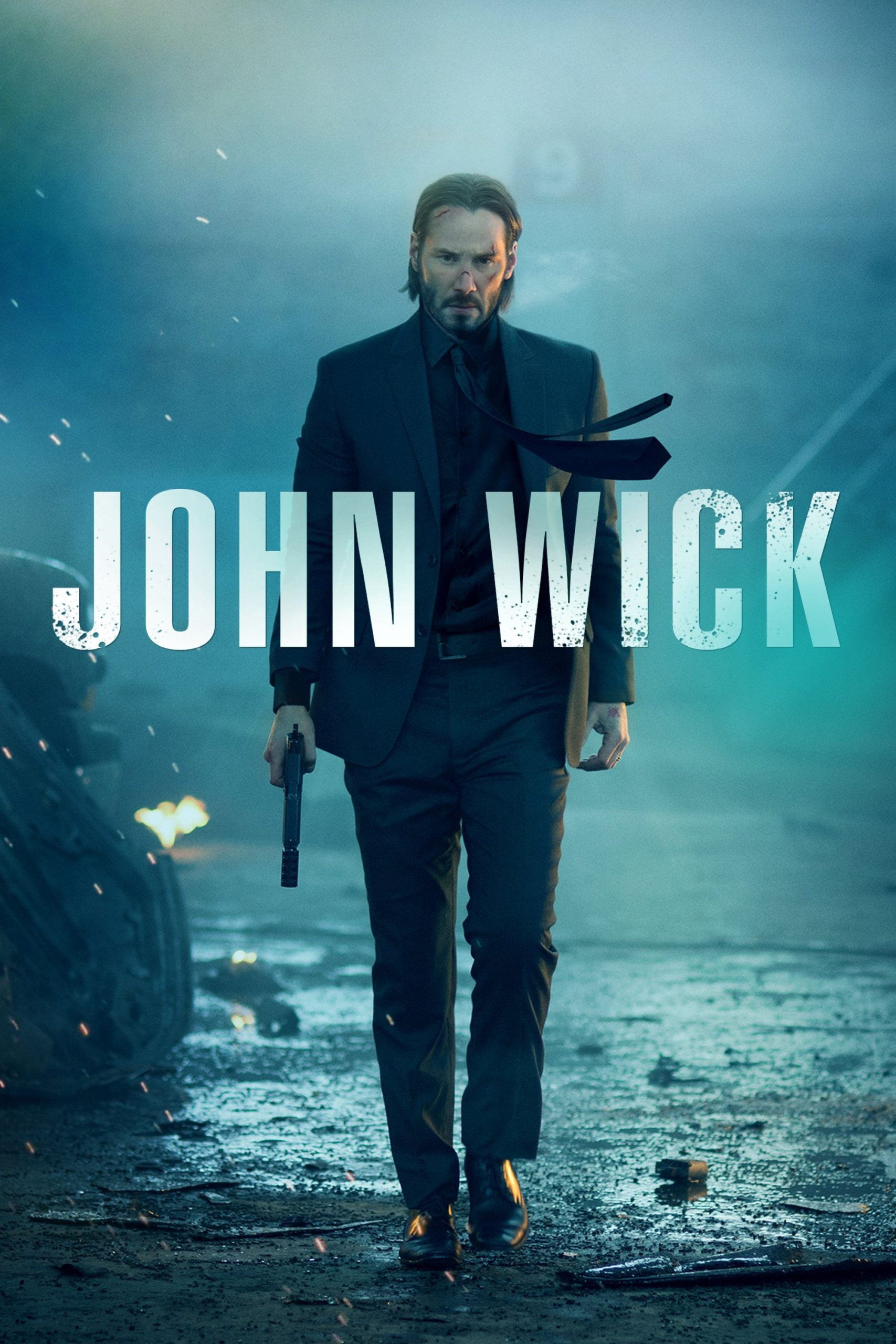
The Question of Truth Behind the Film
When I first watched John Wick, I remember being asked almost immediately afterward if any part of it was based on real events. That question struck me, not because I thought the stylized violence and underground assassin society were lifted from headlines, but because it surfaced a fascinating instinct in viewers. There’s an allure to knowing what in a film is “real.” In my experience, people aren’t simply curious about factual accuracy. They’re searching for emotional entry points—a kind of psychological anchor that lets them believe, even faintly, that such a relentless tale of loss and revenge could exist somewhere in the world. When a film displays “based on a true story,” I notice it changes the entire way I enter its world. I find myself scanning for what might have been documented or misremembered, and I become aware of the divides between what actually happened and how it’s woven for effect. This urge, I think, goes beyond cinema; it’s almost as if we want to see our own world—messy as it is—reflected, but also corrected and heightened on screen.
Whenever I encounter someone debating whether a film like John Wick draws from real events, I see how eager we are to assign meaning and weight to stories by rooting them in documented experience. The very question—“Is it true?”—brings with it a set of assumptions: that truth is valuable, that authenticity in storytelling adds gravitas, and that films can and sometimes should bear witness to reality. Yet as I reflect on my own reactions, I recognize I don’t just want facts. I want resonance. The distinction between fact and fiction, while crucial in some genres, can be more about how I connect with emotion, motivation, and outcome than about objective reality. Still, that hunger for a “true story” label lingers, shaping how I prepare to analyze and absorb what’s on screen.
Historical Facts and Cinematic Interpretation
For a film like John Wick, the boundary between historical fact and creation is fascinatingly porous. As I investigated the film’s origins, I found no evidence of literal historical events being depicted—no international cabals of assassins with gold coin economies, no real-life hitman seeking retribution for a puppy’s death. Yet, the film does not exist in a vacuum. I see how it draws on a tapestry woven from crime fiction, legends, and the collective memory of both cinematic and real-world violence. When I watch John Wick’s tale unfold, I discern echoes of actual underworld lore, filtered and stylized far past direct adaptation. The screenwriters and directors transform urban myths, classic revenge narratives, and even anecdotes from organized crime history into a hyperbolic fable. The process in which elements of reality—say, the notion of criminal codes or the idea of personal retribution—are folded into storytelling strikes me as a kind of narrative alchemy.
Every creative decision in John Wick seems aimed at distilling real human emotions (grief, rage, love) rather than at documenting a case file. For example, the inciting incident—John’s wife’s death from illness and the subsequent killing of his puppy—while not drawn from any news reports, feels emotionally real. In my view, the film takes universal experiences (bereavement, violation, justice-seeking) and exaggerates them to mythic extremes. Sometimes I wonder if this process works less as adaptation and more as an artful reimagining—rescaling the mundane or tragic into operatic spectacle. Each time I trace the line from what could be true to what is, I see a shift from granular fact to archetypal feeling: the specificity dissolves, but a kind of human “truth” remains, albeit sculpted for cinematic impact.
What Changes When Reality Is Shaped for Cinema
The transition from raw event—or in John Wick’s case, from shared cultural stories and emotional truths—to screen legend is charged with trade-offs. I’ve realized that, in adapting or inventing, filmmakers are constantly negotiating between fidelity to plausible detail and the demands of engrossing narrative. When I watch John Wick, I’m not receiving a report. I’m immersing myself in a carefully curated universe where plausibility is sacrificed for velocity, coherence, and atmosphere. The meticulous choreography of the fight scenes and the almost ritualistic presentation of the Continental Hotel trade the naturalistic chaos of real violence for a stylized, almost elegant order. As a viewer, I’m conscious of how deliberate these choices are. The rules of Wick’s world—clear codes, ornate rituals, symbolic tokens—strip away the real messiness that often characterizes actual criminal enterprises, but in doing so, create a kind of storybook logic that is deeply satisfying to follow.
From my perspective, the filmmaker’s approach to time and character is another site of transformation. In reality, emotional healing is rarely linear and vengeance doesn’t unfold with such clarity and precision. John’s motivations are distilled down to singular purpose—a narrative efficiency that allows for catharsis but erases the ambiguity and contradiction I often see in real responses to trauma. There’s an obvious trade-off here: in compressing timeline and emotion, the film amplifies the arc of revenge while filtering out the disorderly, unresolved aspects of real experience. I am reminded that cinematic storytelling often asks me to surrender complexity for the sake of drive and focus.
In these choices, I sense both gain and loss—not in terms of value, but of texture. What we gain is narrative purity, immediacy, and rhythm. What gets lost, or perhaps intentionally set aside, is the granular unpredictability and shades of gray that mark our lives. When I analyze a film like John Wick through this lens, I see the adaptation process less as a quest for accuracy and more as the construction of a symbolic world that resonates on an emotional rather than historical register. This recalibration transforms my experience from investigative (Did this happen?) to interpretive (What is this trying to make me feel or think?).
Audience Expectations and the “True Story” Label
When I consider how the phrase “inspired by real events” colors the viewer’s response, I find myself reflecting on my own shifting expectations. If John Wick opened with a claim to truth—however tangential—I would inevitably watch it through a different lens: searching out what rings authentic and what feels like embellishment. There is a friction here, a tension between wanting a story to speak to universal experience and being distracted by the mechanics of fact-checking. With Wick, though, the film never pretends to be anything but hyperreal. The spelling out of its world-building—the gold coins, the secret codes, the impassive concierge—signals to me that this is not reportage but mythmaking. In the absence of a “based on a true story” tag, I feel liberated to engage with theme, style, and emotion, rather than getting caught in the crossfire between fact and fiction.
I’ve also noticed how, when confronted with films sold as strictly factual, I’m more likely to scrutinize their representations. I begin to ask, consciously or not, what liberties have been taken and why. There’s an implicit contract: I am trusting the filmmakers to relay events accurately, or at least to grapple sincerely with their sources. A film like John Wick, refusing that contract, frees me from these terms. My attention pivots to the symbolic resonance of its imagery and action rather than its documentary worth. At the same time, I recognize how even thoroughly fictional works are often grafted onto real emotions or social anxieties. So, when an audience member wants to know, “Is this true?” I understand it as an attempt to locate themselves within the narrative, but in the Wick universe, I think the question becomes less about historicity and more about emotional plausibility. Do I feel, after watching, that I’ve witnessed something psychologically true, if not factually so?
In my view, genre conventions play a vital role in shaping these audience reactions. Action films like John Wick, with their stylized violence and colorful mythology, almost invite disbelief. The lack of a real-world anchor forecloses certain forms of criticism (no one will lambast them for misrepresenting an assassin’s union) but opens up space for allegorical readings. When I don’t expect historical accuracy, I become receptive to different kinds of “truth”—mythological, emotional, thematic. This repositioning affects not only interpretation but also memory: I remember John Wick not as a record of an event, but as a vibrant, dark fable grappling with loss, code, and catharsis. The absence of a factual hook shifts how I replay the film in my mind; it becomes less a reflection of the world as it is, and more a meditation on the stories we tell to make sense of the inexpressible.
Final Perspective on Fact vs Fiction
After my multiple viewings and many conversations about John Wick, I’m struck by how the film’s palpable fictionality shapes not just my analysis, but my appreciation of what storytelling can achieve. For me, knowing that the events depicted aren’t tied to a real person or incident relieves the film of certain obligations—it is no longer asked to testify, only to stimulate, provoke, or console. My interpretive energy is redirected from the project of validation toward the questions the film raises: What does it mean to have everything stripped away? How does vengeance reshape identity? What happens when grief is expressed, not through words, but through relentless action?
The absence of a factual foundation doesn’t empty the film of meaning—if anything, it distills it. I am less tempted to interrogate accuracy and more eager to listen to subtext and motif. Fiction, in this case, becomes a means of magnifying the pulse beneath ordinary experience: loss made operatic, endurance rendered as ballet, heartbreak transformed into momentum. Each time I reflect on what’s “true” in John Wick, I sense that emotional logic has replaced documentary strictness, inviting me to find truth not in event, but in reaction, symbol, and atmosphere. The film’s refusal to claim historical basis frees it, and me, from the narrowest expectations about what stories are for.
Sometimes, as with this film, I’m reminded that the distinction between fact and fiction is not only a technical or legal one—it’s a question of how a film positions itself in relation to its audience. When confronted with a true story, I feel a responsibility to witness. Faced with a grand fabrication, I experience a different freedom: to interpret, to imagine, to wrestle with the implications of grief and justice as they might feel rather than as they ever were. That awareness, subtle but persistent, reshapes every scene, charging it with a symbolic gravitas that wouldn’t exist if I were simply cross-examining for accuracy. In the boundary John Wick walks—the space between the real world and pure myth—I find a potent argument for the unique interpretive richness that only fiction can provide.
For additional context, you may also explore the film’s overview and how it was received by audiences and critics.
🎬 Check out today's best-selling movies on Amazon!
View Deals on Amazon