
Is This Film Based on a True Story?
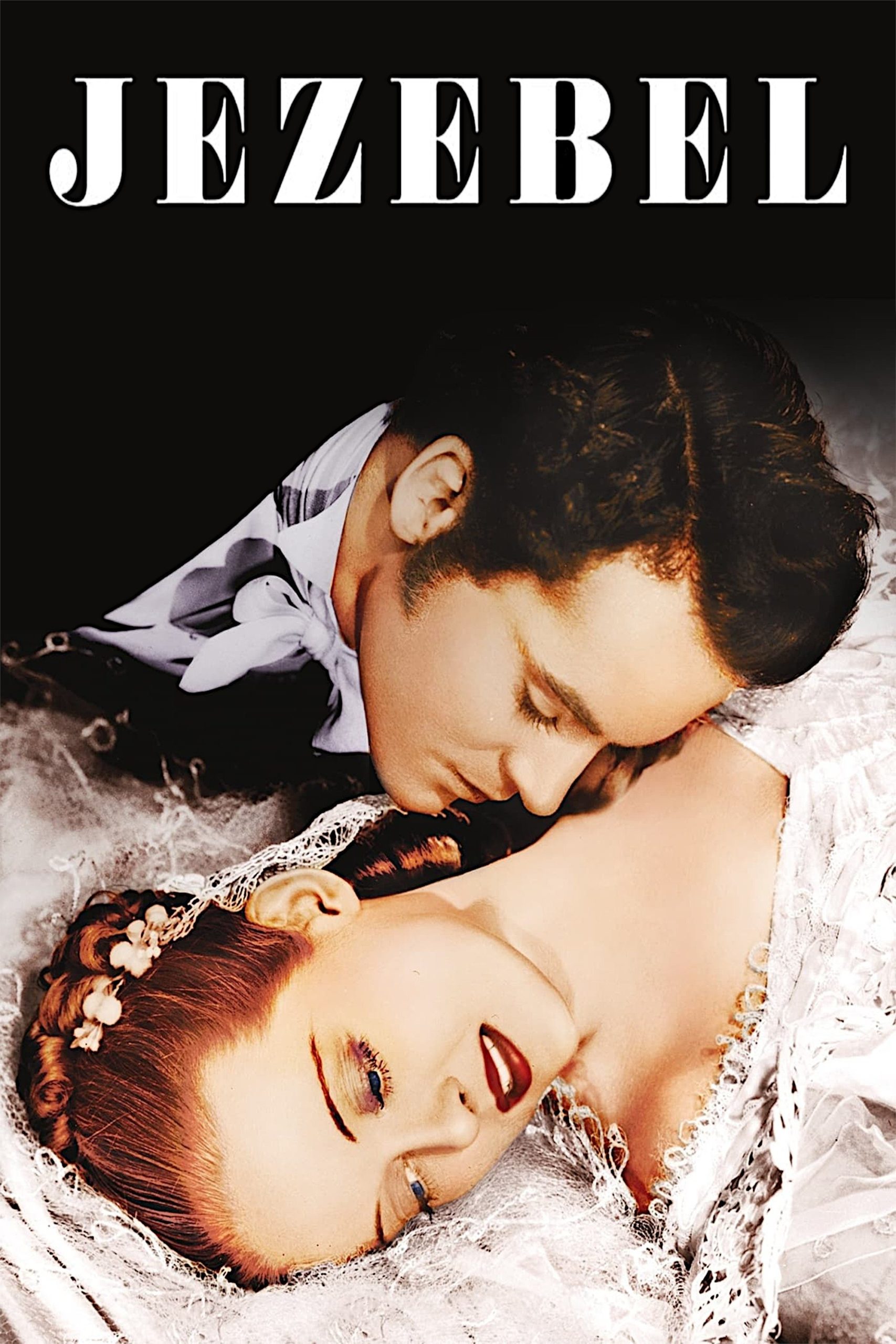
I remember the first time I watched “Jezebel”—the swirling dances, the punctilious codes of Southern honor, and Bette Davis’s magnetic performance, all of it drenched in a kind of tragic grandeur. As I dug into its origins, I quickly had to recalibrate my assumptions: this 1938 film is not a retelling of real events or a biography of an actual historical figure. In fact, from everything I have researched and analyzed, “Jezebel” stands as a work of complete fiction, though it borrows liberally from the social textures and cultural anxieties of antebellum New Orleans. Unlike films that directly dramatize the lives of recognizable people or adapt documented events, “Jezebel” emerges from the imagination of dramatist Owen Davis (whose 1933 stage play inspired the script), with cinematic embellishment from screenwriters and director William Wyler. I find that while the movie harnesses the energy of a recognizably historic time and place—the American South just before the Civil War—it does so in a deliberately mythic and stylized register. There’s no real Julie Marsden, which, for me, turned the experience from a historical study into an exercise in how fiction can use history as an emotional and moral backdrop without directly chronicling actual lives.
The Real Events or Historical Inspirations
As I dove deeper into the context behind “Jezebel,” it became clear that the film’s heart beats in response to a welter of historical influences even though it is not based on any specific individual or event. My investigation gave me a strong sense that the antebellum South depicted here draws its atmosphere from the collective memory of the time rather than the documented specifics of particular families or crises. Owen Davis wrote the original play in 1933, and while the narrative architecture—Southern plantations, stratified society, and the omnipresent threat of yellow fever—mirrors historical realities, these are backdrops, not documentary subjects. In my view, the creators were less interested in recounting a known story than in distilling the spirit, tensions, and drama of an entire era.
To my mind, the Los Angeles and New York theatrical circles of the early 1930s, which witnessed social and cinematic nostalgia for the “Old South,” were clearly hungry for stories set against this kind of sweeping historical canvas. Yet, what struck me most is that “Jezebel” owes far more to its literary and dramatic forerunners—especially the tragic heroines of 19th-century novels—than it does to any memoir or news account. I couldn’t find any references that linked the film to specific diaries, historical figures, or state archives. Instead, it seems the yellow fever epidemic—a gripping real threat in New Orleans and much of the South at the time—offered the filmmakers a potent, atmospheric device. As I see it, the plague functions not as a precise historical event around which the plot revolves, but rather as a convenient narrative engine, heightening emotional stakes and providing both setting and metaphoric resonance.
Another angle I found deeply interesting is how “Jezebel,” much like “Gone with the Wind” (published two years prior), appropriates Southern iconography and rituals—most notably, the legendary Olympus Ball. While these gatherings did exist in various forms, and the social codes depicted in the film certainly reflect antebellum etiquette, I realized these depictions are abstracted, generalized impressions designed to evoke a charged sense of historical place rather than recreate particular moments. These elements give the film its period flavor without pinning its story to the record of any one household, party, or quarrel. My sense is that any resemblance between the film’s sprawling Marsden estate or the fervor of the Creole ballrooms and the real-life equivalents is intentional, but always filtered through the requirements of drama and myth.
What Was Changed or Dramatized
As I compared “Jezebel” to what I know of antebellum Southern history, I was fascinated by how deliberately the film walks the line between authenticity and invention. The most striking dramatization, in my opinion, is the exaggerated central conflict at the heart of the film: Julie Marsden’s rebellion against convention—specifically, her defiant choice to wear a scandalously red dress to a white-themed ball—serves as the narrative’s dramatic pivot. During my research, I looked for a real-life parallel to this infamously transgressive episode but could not locate any account of a comparable incident in New Orleans society. This leads me to see Julie’s rebellion as a composite gesture, cobbled together from a host of 19th-century literary tropes about “ruined” or “fallen” women, rather than an authentic anecdote from Southern lore.
Another aspect I scrutinized closely was the romantic rivalry between Julie and Amy, Preston’s Northern wife. Though there certainly were social tensions between Southerners and “Yankee” arrivals in pre-Civil War Louisiana, the melodramatic escalation of this rivalry—complete with dueling suitors and sweeping sacrifices—strikes me as crafted more for theater than to echo actual social dynamics of the time. The film, in my reading, amplifies latent conflicts to maximize emotional impact, turning the antebellum setting into an arena for archetypal struggles of pride, jealousy, loss, and redemption. This approach is especially clear in how the yellow fever epidemic is depicted: while outbreaks did periodically devastate New Orleans, the film’s narrative uses the epidemic as a plot accelerant, compressing chronology and amplifying danger to give Julie a redemptive arc that feels grand and operatic, not strictly historical.
What resonated most for me, as someone who studies the way films mediate history, is how “Jezebel” bends the texture of the past for expressive purposes. The depiction of the social order is selectively heightened—the codes of honor, gender dynamics, and the stark racial lines (though strangely sanitized and often backgrounded) are all filtered through Hollywood’s lens. I noticed that while the film gestures toward the authentic surface of antebellum society, it sidesteps some of the grittier realities—particularly regarding slavery and economic hardship—in favor of framing Julie’s individual moral and emotional journey. The focus remains squarely on melodramatic excess rather than dogged realism; the creative team adjusted the past to suit the contours of their drama, bringing only as much historical specificity as served the emotional beats of the story.
Historical Accuracy Overview
Breaking down the layers of historical accuracy in “Jezebel,” it’s clear to me that the film embodies a selective relationship with the past—a strategy I see as both deliberate and typical of Golden Age Hollywood depictions of history. On one level, the film credibly reconstructs certain features of 1850s New Orleans: the architecture of plantation homes, the formal rituals of debutante balls, and period-appropriate costumes all reinforce a persuasive illusion of place and time. I was particularly struck by the attention to visual detail—the panoramic shots of oak-lined avenues, candlelit parlors, and the era’s signature fashions, right down to the infamous red dress. To my eyes, these touches lend a surface-level authenticity that offers audiences a satisfying sense of historical immersion.
Yet, when I scratch beneath this surface, I see a portrait that is as much about Hollywood’s fantasies of the South as it is about what life was actually like along the banks of the Mississippi. I find that the film’s timeline is noticeably compressed, especially in the way it represents the yellow fever epidemic—rendered here as a short-lived crisis that conveniently climaxes with the characters’ emotional turning points. Real outbreaks, from my reading of medical history and archival records, were sprawling, chaotic events with effects lingering across decades, not easily contained as the film suggests.
I also find the social codes depicted in “Jezebel” to be broadly accurate—womanly virtue, honor, public spectacle, and the ever-present threat of scandal did play outsized roles in the lives of the 19th-century elite. But the film, in my opinion, sharpens and exaggerates these codes to feed the drama. The famous ball scene, for instance, captures the pressure women faced to conform, but it does so through a fictitious scenario with no direct historical correlate. What the movie omits is as telling as what it includes: the brutal institution of slavery is mostly treated as a visual backdrop, stripped of the economic and human complexity that actually structured Southern society at the time. For me, this elision shapes the film’s tone, making the antebellum setting feel sanitized and almost dreamlike. The relationships between Black and white characters are flattened; major historical forces like abolitionism and the intensifying conflict with the North appear only in the margins, if at all.
I can summarize my perspective by saying that “Jezebel” delivers a carefully stylized version of the past—accurate in selective details, but fictionalized in story, character, and the nature of the crises its characters endure. The emotional truth the film seeks to convey is real, but its connection to real people and documented events remains abstract and indirect. For viewers (like me) who are fascinated by adaptations, this interplay of fact and invention is precisely what makes the film so enduring.
How Knowing the Facts Affects the Viewing Experience
Approaching “Jezebel” with the knowledge that it is, at heart, a work of fiction shaped by the artistic priorities of its era, fundamentally alters the way I interpret the movie’s pleasures and provocations. The discovery that there is no “real” Julie Marsden, and no detailed historical record underpinning the film’s narrative, frees me from the pressure to evaluate its literal truthfulness. Instead, I find myself drawn to the ways the film expresses the anxieties, desires, and values projected onto the antebellum South by those who came after. For me, understanding that the red dress, the ballroom scandal, and the yellow fever crisis are all narrative inventions rooted more in dramatic convention than in historical fact, adds a layer of richness to the experience—it prompts me to look for metaphors and subtexts rather than parallels to real-world biographies.
I’ve come to relish the film’s emotional gestures on their own terms, seeing Julie’s struggles not just as a personal story, but as an emblem for questions about gender, honor, and social conformity that were being debated in both the 1850s and the 1930s. Knowing that “Jezebel” is not a biopic but an imaginative exploration, I’m more sensitive to how the characters are archetypes rather than literal reconstructions. For me, this makes the film feel less like a time capsule and more like a psychological and cultural study—an artifact not of the 19th century, but of an early 20th-century obsession with nostalgia, punishment, and redemption. The fictional status also invites me to treat the stylization and melodrama as invitations to think about which historical narratives get told, which get ignored, and why.
After years of researching cinematic adaptations, I realize that my engagement with “Jezebel” is deepened, not diminished, by understanding its invented origins. I watch for the ways the past is being “performed,” aware that the film is less interested in documentation than in myth-making. The visual spectacle and period detail enrich my understanding of historical perception, even as I remind myself that these surfaces reflect not only what once was, but also the changing fantasies of what America, and Hollywood, wanted the Old South to mean. Every time the film spirals into excess—the music swells, the camera lingers on a forbidden glance—I read these as crafted cues of historical melodrama, not as echoes of primary sources. This consciousness shapes both my analytical and emotional responses, tuning my expectations to the film’s hybrid status as fiction wearing the mask of history.
After learning about the film’s origins, you may want to see how audiences and critics responded.
🎬 Check out today's best-selling movies on Amazon!
View Deals on Amazon