
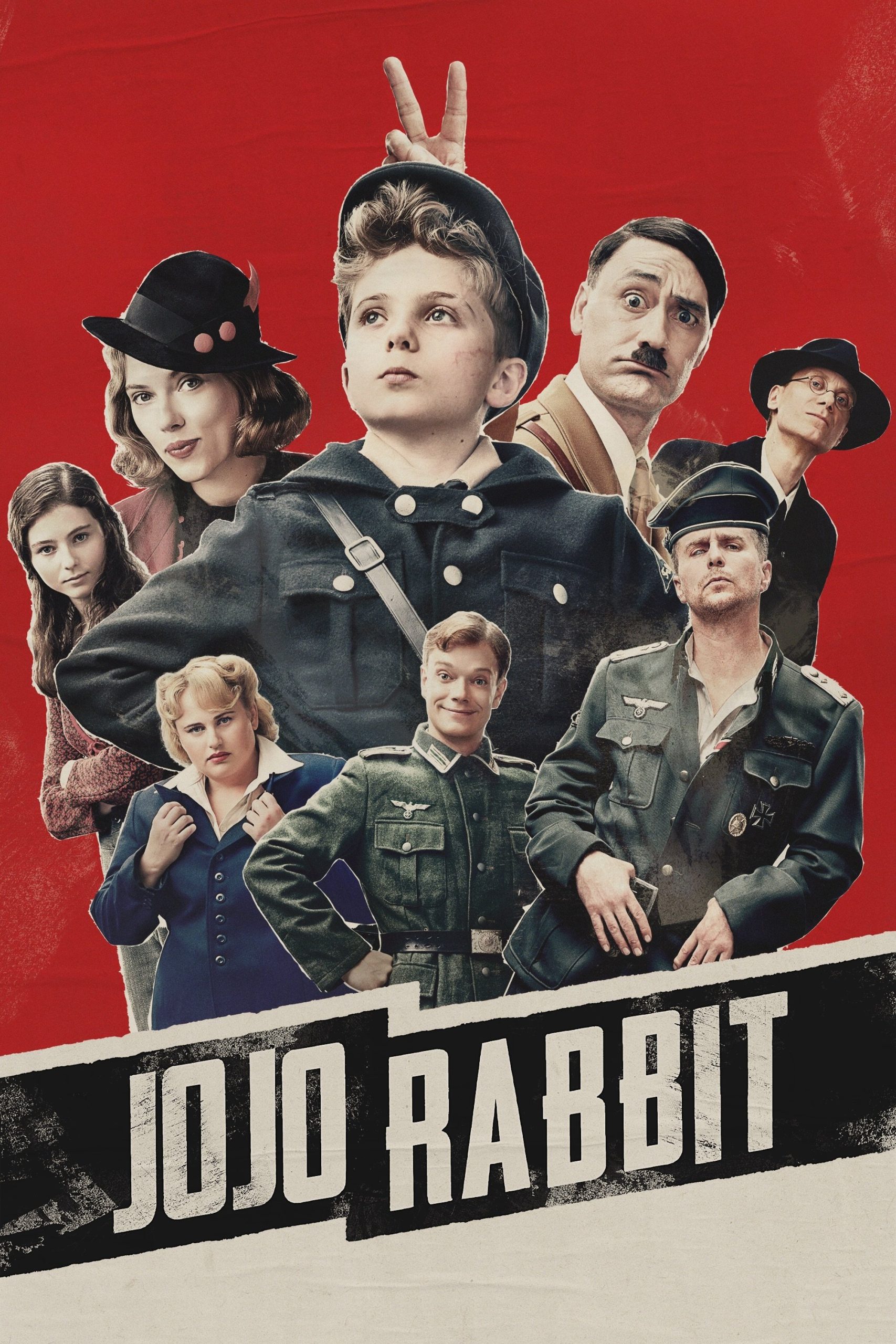
Is This Film Based on a True Story?
The first time I sat down and watched “Jojo Rabbit,” I couldn’t help questioning whether this strange, audacious blend of dark satire and childlike innocence could have any direct connection to real life. After digging deeply into the origins of the film, I can say with certainty that “Jojo Rabbit” is not based on a true story in the literal sense. The film is entirely fictional, at least as far as the specific tale goes—there was no real Johannes “Jojo” Betzler, no actual imaginary friend version of Adolf Hitler skipping through the world of a Hitler Youth. However, I found that its inspiration is layered: it draws most directly from a novel, which is itself a piece of fiction, and more broadly from the horrifying realities of Nazi Germany and World War II. So, while the narrative itself exists in the realm of imagination, it is set against (and shaped by) a historical backdrop that is deeply real. For me, this creates an unusual hybrid—one foot firmly in the domain of invention, the other unsettled by echoes of actual historic suffering and propaganda.
The Real Events or Historical Inspirations
As I explored the film’s background, I learned that “Jojo Rabbit” is adapted from Christine Leunens’s novel “Caging Skies,” published in 2008. That book, too, is a work of fiction, though it uses a realistic setting and plausible characters within World War II Vienna. Leunens invents the scenario of a Hitler Youth boy who discovers his parents are hiding a Jewish girl, and the psychological fallout from this discovery. The source material doesn’t actually feature a whimsical, imaginary “Hitler” character as Jojo’s confidant. Instead, it is a much more psychologically intense and somber story of indoctrination, betrayal, and obsession. Still, as I read about the era and the book, I recognized that both the novel and film root themselves in factual elements—the kinds of organizations, fears, hatreds, and survival strategies that pervaded Nazi-dominated Europe. The settings, uniforms, propaganda, and many of the attitudes displayed are not inventions; they come from a very real and well-documented history. Nazi Germany did, in fact, form children’s organizations such as the Hitlerjugend (Hitler Youth). They did place posters, pamphlets, and banners everywhere. Many families did hide Jewish friends or neighbors, at immense personal risk. For me, it’s fascinating how the movie borrows textures, moods, and fragments of true experiences, but recombines them into an imagined story that never actually happened to any one real person. In a sense, “Jojo Rabbit” is inspired by truth—not as a biopic or docudrama, but as a kind of speculative emotional thought experiment.
What Was Changed or Dramatized
One of the biggest shocks for me, as someone who values historical context, was learning just how different Taika Waititi’s film is from its literary inspiration. The most notable dramatization is the character of Jojo’s imaginary Hitler—an outlandish, comic rendering in the film that doesn’t appear in “Caging Skies” at all. Waititi crafts this figure as a blend of schoolboy fantasy, comedic foil, and nightmarish authority figure. To me, it’s a bold invention, not grounded in the literal behaviors of children during the Third Reich, but rather a device that externalizes the regime’s propaganda in a way that a modern audience can comprehend. The entire tone is shifted as well: “Jojo Rabbit” dances between farcical comedy and wrenching drama, rarely letting either sentiment dominate for too long. I found that the narrative arc is condensed and altered for cinematic effect—the events are streamlined, the relationships more sentimental, and the ending far more hopeful than the source novel’s bleak conclusion.
Specific historical elements are also manipulated for storytelling purposes. For instance, the ranks and structure of the Hitler Youth depicted in the film are simplified and, at times, intentionally exaggerated; the absurdity is cranked up to underscore the senselessness of the ideology. Sam Rockwell’s Captain Klenzendorf, like several other adult characters, is a creation of the screenplay rather than a reflection of precise historical counterparts. I noticed that the depiction of Elsa—the Jewish girl in hiding—leans toward the sympathetic, resourceful archetype rather than exploring the full deprivation and terror faced by many real-life fugitives. The dangers of being discovered, while present, are often undercut by comedic touches or surreal sequences. There’s also a compression of time; events that would have unfolded over months or years during the war are condensed into weeks or even days for the film’s narrative momentum.
Finally, I saw creative license in the portrayal of the war’s end. The liberation scenes, for example, paint a dramatic eruption of chaos and uncertainty with a colorful, almost carnivalesque visual palette. These moments may capture emotional truths, but in terms of precise chronology and logistics, they’re stylized interpretations rather than representations drawn directly from history books. The goal seems less to reconstruct the war year-by-year, and more to convey the sense of confusion and upheaval that would have confronted any child in such circumstances.
Historical Accuracy Overview
When I barrel into the subject of historical accuracy, I’m always looking for where a film lines up with recorded events and where it takes creative leaps. In the case of “Jojo Rabbit,” I see the foundations as solidly grounded in the realities of late-war Germany. The Hitler Youth was a real organization with millions of boys indoctrinated into Nazi ideology. There are documented accounts of children being swept up in fervor, sometimes blindly, sometimes from fear or social pressure. The existence of underground resistance, the risks of hiding Jews, the creeping dread as the war turned against the Nazis—all of these, I found, did actually permeate civilian life at the time.
Yet, when I step back, I also notice that the film is intentionally stylized, and rarely tries to be a meticulous period drama. The balance between accuracy and invention feels like a tightrope walk. I’ve read that uniforms, slogans, and some rituals are rendered with visual authenticity—even the children’s physical drills and singalongs mirror old photographs and newsreels. The nervous surveillance of the Gestapo and the omnipresence of Party authority rings true to the era, although the specific portrayal leans theatrical for cinematic effect. The setting evokes the flavor of the era more than precise geography or daily routine; the houses, costumes, and streets are designed to project an “anytown” within Nazi Germany, rather than a detailed map of Vienna.
Where the film breaks most decisively with fact is in its emotional and narrative approach. I don’t know of any historical record that describes a child’s imaginary version of Hitler guiding decisions with a blend of childish glee and farcical ineptitude. Historian accounts suggest that while Nazi iconography was omnipresent, internalizing Hitler as a personal imaginary companion was not typical. The comedic exaggerations belie the often brutal, conformist, and repressive reality of actual Hitler Youth experience. The tolerance and disguised dissent exhibited by Jojo’s mother, Rosie, for example, are possible but rare; open subversion, especially from a single parent, could have meant immediate peril for the entire household. In practice, most resisters were extremely isolated. The fusion of comedy and tragedy, and the film’s ability to quickly rebound from scenes of fear to moments of slapstick, is a dramatic device, not a reflection of everyday rhythm in wartime Europe. For me, the film’s greatest inaccuracy is also its central conceit: that childlike fantasy could so thoroughly disrupt and ultimately redeem life under totalitarian threat.
How Knowing the Facts Affects the Viewing Experience
I’ve always found that understanding the factual underpinnings of a movie like “Jojo Rabbit” changes not just what I see, but how I process it. Knowing that the story is invented—yet built upon an atmosphere of real terror, conformity, and rebellion—lets me watch with a layer of both detachment and empathy. I don’t expect accuracy in the way one might from a historical biopic, so the moments of irreverence and whimsy feel less like errors and more like deliberate artistic choices. For me, the revelation that the imaginary Hitler is a purely cinematic device underscores just how bold the movie is in deploying satire as a shield and as a probe. It lets me appreciate the absurdity and playfulness as emotional strategies rather than literal ones.
On the other hand, when I keep the genuine risks faced by children and families in Nazi Germany top-of-mind, the lighter scenes—the comic mishaps at Hitler Youth camp, the farcical interrogations—take on a darker shade. I’m continually reminded that while laughter exists in the film as a survival tool, the real stakes were unthinkably high for those who opposed or defied the regime. The richness of the fictional world becomes a point of contrast against the grayness of actual history. I’ve always appreciated how the movie prompts audiences to reflect on indoctrination, belief, and innocence destroyed not by accident but by design. The combination of fantasy and reality sharpens rather than dulls those questions.
Ultimately, my own viewing is colored by an awareness that, despite all the liberties taken, the emotional truths at the heart of “Jojo Rabbit”—fear, hope, loss, and resistance—are anchored in experiences that were heartbreakingly real for countless people. In that sense, the movie becomes not a document of specific lives, but a meditation on survival and transformation in the face of overwhelming hate. For viewers informed about the Holocaust and its countless personal histories, there’s an undercurrent of tension when seeing horror refracted through a lens of laughter. Personally, I find it both unsettling and oddly effective. The blend of humor and heartbreak is less about literal history and more about keeping history’s weight present—even as the film insists on the possibility of joy breaking through, no matter how unlikely. That, for me, is what makes learning about the film’s origins not just an add-on, but an essential backdrop to navigating its complicated emotional landscape.
After learning about the film’s origins, you may want to see how audiences and critics responded.
🎬 Check out today's best-selling movies on Amazon!
View Deals on Amazon