
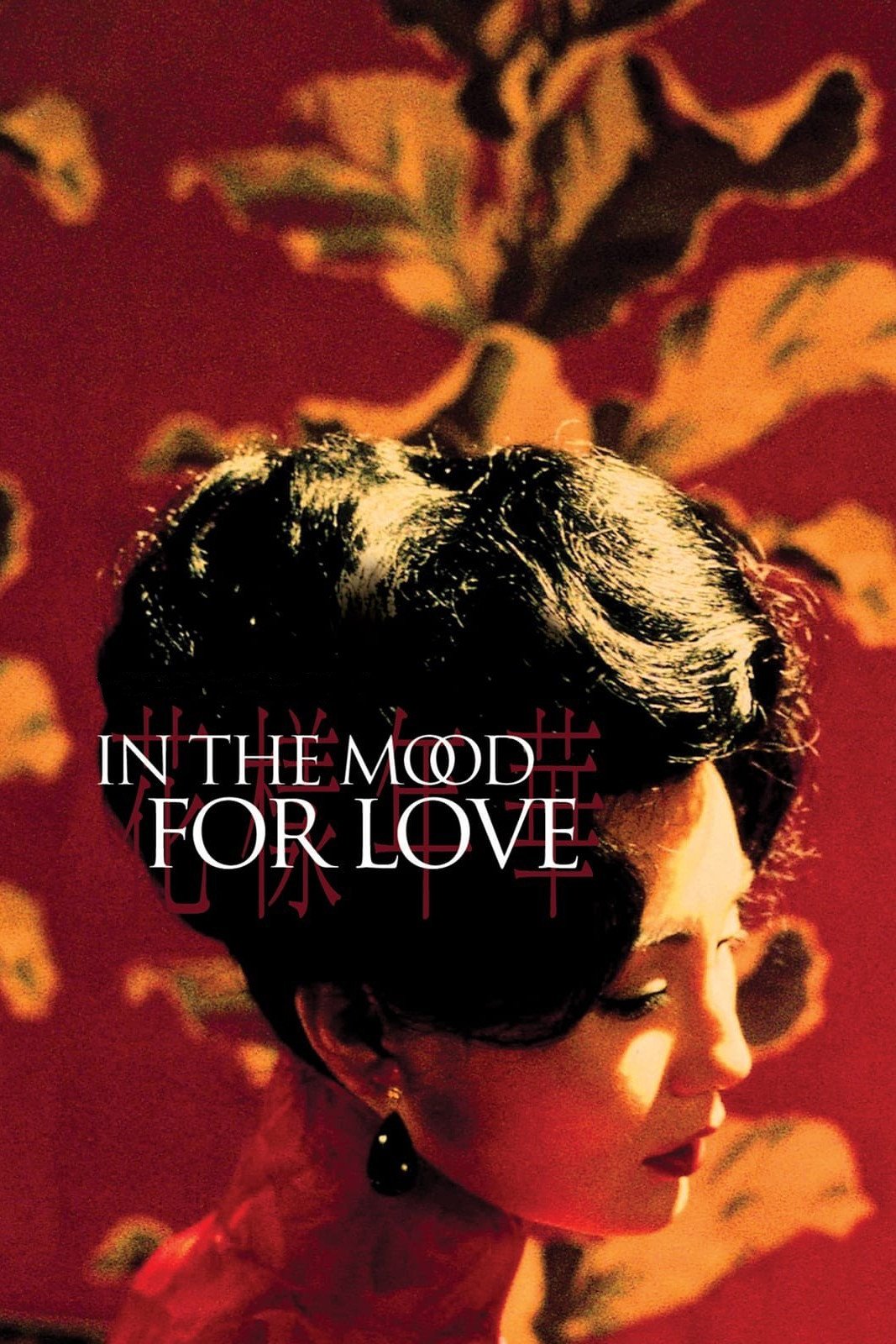
Is This Film Based on a True Story?
Whenever I rewatch “In the Mood for Love,” I can’t help but wonder about the realness lingering below its dreamy surface. As much as the story feels universally relatable and intensely personal, I’ve discovered it is not based on any specific true story or set of real individuals. The narrative stands as a work of fiction, crafted by director Wong Kar-wai and his collaborators, not a direct adaptation of any one account from history or memoir. That said, the atmosphere and feeling of the film spring from a tapestry of lived experiences and emotions that Wong drew from, mostly his own memories and that of those who lived in Hong Kong during the 1960s. I would say the film sits in that fascinating space where fiction is thoroughly shaped by a collective and personal past, but not tied to factual events or particular real people.
The Real Events or Historical Inspirations
While “In the Mood for Love” doesn’t trace its roots to a headline or a well-documented real-life romance, I’ve always found it compelling how Wong Kar-wai harnessed the specificity of a time and place to inspire the film. As I researched deeper into the film’s origins, it became evident that its strongest anchor to reality is the cultural and physical world of 1960s British Hong Kong. Wong grew up in that environment, and he has said in interviews that his sensibilities, notions of longing, and experience of crowded apartment life all seeped into the story. Much of what I watch on screen—the neighbors sharing noodle runs, the close-quarters living, the omnipresent gossip, and the repressed emotional etiquette—draws from actual patterns of social interaction common during that era.
Nothing about Su Li-zhen or Chow Mo-wan, the film’s central characters, can be traced to a specific pair of neighbors or any documented couple. Their circumstances are composite, imagined, and drawn with the universal brush that fiction allows. However, I see that Wong’s own recollections, combined with the nostalgia surrounding the shared tenement culture, inform much of the film’s aesthetics and atmosphere. Wong has discussed in depth how his mother’s generation, their daily routines and quiet sacrifices, provided the emotional color for the story. Even the idea of spouses away from home for work, which enables the protagonists’ tenuous connection, echoes the lived realities for many in mid-20th-century Hong Kong, though I haven’t found any direct source that ties this dynamic to a particular real family or outcome.
The film’s soundtrack, fashion, and even some of its dialogue bear witness to the influence of the writer Liu Yichang’s novella “Intersection” (《对倒》), to which Wong Kar-wai has paid open homage. “Intersection” similarly explores parallel lives and fleeting encounters between neighbors, though it stops short of detailing or inspiring the same plot. For me, it’s more like a spiritual predecessor than a source text. The emotional palette—of unexpressed desire, longing, boundaries, and secrecy—rings true to those who have lived with social proprieties and public scrutiny, something tied strongly to Chinese and Hong Kong culture in that era.
So, while there’s no real Mr. Chow or Mrs. Chan, no lovers whose story is being faithfully retold, the world of “In the Mood for Love” is saturated with echoes of real apartment blocks, hushed hallways, and restrained hopes. I see this film as a world built on evocative fragments rather than notable headlines or biographies. It’s less a true story in the American biopic sense, and more an artifact of memory and collective feeling, drawing on the emotional architecture of everyday lives in postwar Hong Kong.
What Was Changed or Dramatized
As with many films that rely on memory and sense impressions rather than documented legend, I notice that “In the Mood for Love” freely dramatizes the subtleties of its world to amplify mood rather than historical record. The compressed intimacy between Mrs. Chan and Mr. Chow is, as far as I can discern, an invention—no diary entries or firsthand interviews provided this story. Instead, Wong Kar-wai seems to have intentionally amplified the sense of secrecy, guilt, and yearning by paring away anything that might anchor the narrative to a straightforward ‘truth’ or verify it as a direct adaptation.
The details of their relationship—meeting in corridors to exchange noodles, rehearsing confrontational scenes to understand their spouses’ affairs, and ritualistically denying themselves gratification—read more like an extended meditation on longing than a literal chronicle. Wong even altered the script repeatedly during filming. The story evolved significantly as he and the actors filmed, with scenes and dialogue written on the spot. I realized this means that the resulting film is a careful construction rather than a retelling, with artistic choices made to support tension, ambiguity, and emotional distance. The movie lingers over withheld or unexpressed emotions, which intensifies a feeling rather than reproduces an actual event.
Space and architecture, too, are stylized beyond what I would expect in a literal work of nonfiction. As I watch, I feel that the cramped rooms, narrow passageways, and ever-shifting camera angles do more than recreate authentic apartments. They escalate a feeling of both intimacy and entrapment. I would not necessarily find layouts like these in every period home in Hong Kong, as they are partly interpretative stylings chosen for effect. So, although rooted in reality, these visual cues have been heightened to frame—and sometimes distort—the emotional geography.
Even the temporal setting feels more like an impressionist’s painting than a historical record. The specificity of 1962 is less about historical accuracy and more about conjuring a shared mood. Wong evokes that world through costumes, music, and detail, but doesn’t pause to name a single news event, figure, or political milestone. The timeline is elastic; days slip by in montage, years pass in a single cut. For me, the film is defined by what it omits as much as what it dramatizes; messy domestic squabbles or background historical happenings are mostly left out, sharpening focus on the private ache between the leads.
One particularly dramatized element is the absence of the spouses’ faces. They remain disembodied presences, their motivations and affairs never shown or justified. This artistic choice, I think, distances the narrative further from the documentary. By refusing to fill in the other sides of the main characters’ stories, Wong amplifies a feeling of isolation, subjectivity, and ambiguity—each lending the film a poetic texture rather than a factual one.
Historical Accuracy Overview
Whenever I consider the film’s historical authenticity, I keep coming back to its fidelity to the sensory specifics of its setting. In terms of aesthetics, “In the Mood for Love” feels incredibly accurate to the era it depicts. I’ve noticed—and read from Hong Kongers who lived during that time—that the qipao dresses worn by Mrs. Chan, the Western suits of Mr. Chow, and the communal living arrangements all echo the 1960s middle-class culture with remarkable detail. The wallpaper, clocks, soft lighting, and soundtrack choices also transport me into a faithfully recreated period. In this sense, the world feels lived-in and true, dense with cultural signifiers and the weight of a time gone by.
When it comes to the customs and social etiquette, the film is also seen as believable. The strict codes of propriety, the gossip chain among neighbors, the notion that appearances must be vigilantly maintained, all match what I have heard and read about social pressures in midcentury Hong Kong. Even the way the characters speak, their reticence about emotion, rings authentic to Chinese values about loyalty, restraint, and the unspoken sacrifices sustained within a community.
At the same time, I recognize that the things closest to the narrative’s heart—the affair that never was, the ritual miscommunications, the lengths to which both leads go in order to both uncover and avoid knowing the full truth about their spouses—are essentially fictional. There’s no archival evidence or first-person testimony suggesting these events took place between real individuals. The hyper-stylized visual language and deliberate narrative gaps encourage me to experience the film as a meditation, not a record.
Through my research, I’ve learned that several historical details have been softened or excluded. Major social or political shifts in Hong Kong at the time, such as labor unrest, economic transformation, or the influx of émigrés, are all but absent. Instead, Wong channels his focus sharply onto the emotional texture of daily life, not its political machinations. In this sense, the film is less valuable as an explicit history lesson than as a cultural evocation.
So while I would argue the movie demonstrates high historical fidelity in terms of atmosphere, setting, and emotional realism, its core story remains a unique construction. Wong Kar-wai seems less concerned with verifiable events than with conjuring the moods and boundaries that defined a generation’s romantic imagination.
How Knowing the Facts Affects the Viewing Experience
For me, knowing the film’s origins are primarily fictional—yet saturated with cultural and personal memory—invites a very different kind of reading than a standard biopic or “true story” adaptation. I find myself released from the burden of matching the film to a particular life or outcome. Instead, I’m invited to empathize with the characters as universal figures, their experiences untethered from documented fact and open to projection. The heartbreak, yearning, and restraint come to feel more like shared emotional truths than historical re-enactments.
If I had believed the film recounted a specific, real-life affair discovered in a diary or reported by surviving neighbors, perhaps I would have watched for clues—looking for the ways the script altered known personalities or invented conflicts. But with “In the Mood for Love,” the knowledge that these two figures emerged from a collage of Wong’s memories and the texture of communal living of the time subtly shifts my focus. I start to see the story as broader, a kind of dream about an era as much as any single romance.
When I view the film with this context, the aesthetic decisions—the dreamy slow motion, the repetition of everyday rituals, the lush colors—strike me as invitations to engage in memory, not reportage. It’s a film that relies on the weight of the past to evoke emotions rather than dissect it. I can appreciate the meticulousness with which Wong recreates his childhood environment; the feeling of walking through a humid Hong Kong evening, passing neighbors behind half-closed doors, and confronting expectations about marriage and loyalty. But I never feel pressured to match these scenes to dates or to consult historical records for accuracy of events.
That knowledge also heightens my focus on the film’s universal resonance. The longing and repression aren’t just specific to 1962 Hong Kong, but could have been shaped by any number of societies governed by etiquette and secrecy. I don’t watch the film as a reenactment of fact, but as an immersive portrait of a kind of emotional life—one that feels real even if its contours are imagined.
This awareness also allows me to notice the parts that are truer than any document: the delicate choreography of non-verbal communication, the weighty silence on staircases, and the barely contained longing in every half-finished sentence. I can observe how the film’s lack of a factual anchor allows each moment to swell with suggestion and ambiguity, opening up space for a more silent kind of truth, one that doesn’t rely on evidence or testimony.
So, for me, knowing that “In the Mood for Love” is not drawn from a documented true story, but is built upon a web of memory, cultural norms, literature, and pure invention, sharpens my appreciation for its artistry. Every repeated gesture, every glimpse of a noodle stall or cheongsam, becomes both historically plausible and endlessly interpretable—an invitation to inhabit not just a story, but a feeling, a fleeting intersection of worlds.
After learning about the film’s origins, you may want to see how audiences and critics responded.
🎬 Check out today's best-selling movies on Amazon!
View Deals on Amazon