
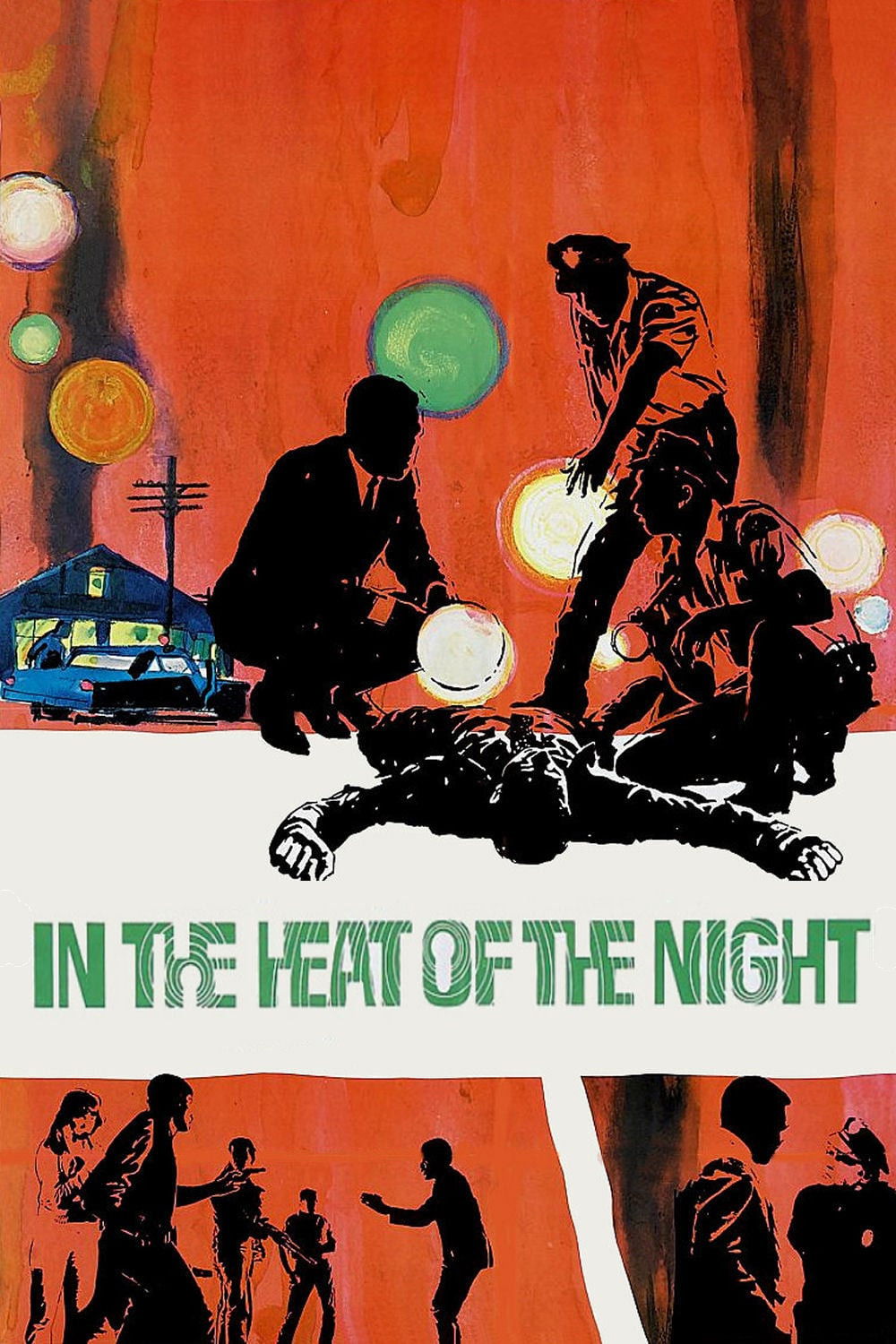
The Question of Truth Behind the Film
When I watch a film like “In the Heat of the Night,” I can’t help but find myself pondering whether any of what I’m seeing is rooted in facts or purely an invention of the filmmakers. This question bubbles up, for me, not out of idle curiosity, but because the label “based on a true story” seems to change the stakes—to recalibrate the lens through which I process the events on screen. I notice that when a film makes that claim, I instinctively lean in, expecting some deeper resonance between reel and real life. The assumption appears simple: if a film is “true,” then perhaps it holds authentic insights into history, society, or the human condition that mere invention cannot offer. Yet I recognize that this desire for authenticity brings along a set of presumptions. I often expect real people, real conflicts, and real outcomes to be mirrored faithfully in the story, and I’m always slightly on guard against embellishments or alterations that might break that illusion. It’s striking how quickly these instincts kick in, influencing how I navigate the narrative, interpret the characters’ actions, or even allow myself to be emotionally moved. In my experience, the craving for the “truth” behind a film is not just about historical fact—it’s about wanting some assurance that what I’m feeling is connected to something that genuinely happened in the world, rather than a screenwriter’s clever construct.
Historical Facts and Cinematic Interpretation
With “In the Heat of the Night,” I’m reminded how powerfully films can blur the lines between reality and invention. While the movie emanates an urgent authenticity—its portrait of racial tension in the American South feels so vivid—I have to confront the fact that it is adapted from the 1965 novel by John Ball, rather than any one specific documented case. As I reflect on this, I realize that the film pulls from truths that are more thematic than strictly factual. The historical context it evokes—systemic racism, civil rights struggles, small-town suspicion of outsiders—mirrors real social climates of the 1960s, yet the actual events unfold from Ball’s imagination. What strikes me is how the filmmakers condense a broad, diffuse historical reality into a compact, narratively manageable conflict: the murder investigation, the cultural clash between a Black detective from the North and white southern police. They shape character dynamics and dialogue that, while not ripped from a particular headline, channel the latent anxieties of the era into something tangible and immediate. I find that the emotional reality, then, is as consequential as the literal kind. Watching Virgil Tibbs navigate suspicion and hostility, I feel the weight of real histories not directly referenced but palpably present. In this sense, the film’s adaptation process is less about re-enacting a specific incident, and more about reorganizing fragments of a collective experience into a focused drama that exposes deeper truths.
For me, the distinction becomes clear in what the film chooses to emphasize. The characters’ gestures and confrontations are sharpened to serve the dramatic arc, while the slow burn of societal change—messier and less predictable in reality—gets telescoped into a few turbulent days. I see that actual histories, where justice is rarely swift and prejudices linger, are compressed for clarity and immediacy. Settings, too, are constructed for effect. The fictional town of Sparta, Mississippi, feels generic enough to stand in for countless real communities wrestling with similar issues, yet specific enough in its atmosphere, language, and habits to convince me of its plausibility. I recognize that the filmmakers are constantly walking a tightrope—using research, observation, and period details to ground the story, while reorienting facts to suit the demands of the film’s structure.
What Changes When Reality Is Shaped for Cinema
As I consider the process of adapting fact or experience into cinema, especially in films such as “In the Heat of the Night,” the practical trade-offs between historical accuracy and storytelling jump out at me. On the one hand, a devotion to exact detail might appeal to my desire for a documentary-like fidelity; on the other, I repeatedly see how the constraints of time, attention span, and emotional clarity drive filmmakers to reshape, omit, or invent moments entirely. In this specific film, I note that entire backstories and layers of complexity are streamlined. The investigation’s twists and detours, for example, are tightened so that the narrative pulses steadily forward rather than getting lost in the thickets of procedural realism. Individual characters, like Tibbs or Gillespie, are shaped not just to reflect possible people but to embody archetypes—outsider versus insider, idealist versus pragmatist—that sharpen the drama and allow ideas to be examined in full relief.
I often reflect on how these adjustments serve the film’s persuasive power. In condensing the timeline, simplifying the plot, or sharpening the conflicts, the film makes its themes legible and urgent—something daily reality rarely accomplishes so efficiently. But even as the story moves away from literal history, it introduces new layers of meaning. For instance, the relationship between the two leads evolves toward mutual respect in a way that, in the historical context of the rural South in the sixties, may have unfolded much more tentatively or even not at all. Yet, cinematically, this arc crystallizes the possibility of progress—making hope visible where real life might only offer incremental change. I notice, too, that dialogue is often much more pointed or eloquent than anything likely uttered in the midst of actual crisis. The effect is that complex issues—racial prejudice, institutional inertia—are distilled into key exchanges that echo off the screen and linger in my mind.
This process of filamenting meaning from the broader fabric of truth can change the flavor of the film, but it also gives it shape and accessibility. Film, by necessity, sculpts from messy reality a version intended to clarify, provoke, or move me, the viewer. The heightened emotions and streamlined events allow me to engage more deeply even as I understand that they are, at least in part, constructed. I find that such choices are neither inherently positive nor negative; they simply reflect the priorities of the medium, and my own expectations as a viewer must adapt accordingly.
Audience Expectations and the “True Story” Label
Whenever I see a film labeled as “based on a true story,” or even when it trades heavily on an air of authenticity, I notice it resets my interpretive compass. I’m more inclined to search for correspondences between cinematic events and documented reality, to scrutinize the film’s portrayal of social issues, and to credit or critique its representation of history. With “In the Heat of the Night,” which occupies a space between fact and fiction—it’s based on a novel, not an isolated real-life event—my experience is different from watching a pure adaptation of a historical incident. My reaction is more reflective, more attuned to mood and symbolism, rather than intent on fact-checking or hunting for inaccuracies.
What’s interesting to me is how the label “true story” draws audience attention toward perceived authenticity. There’s an implicit contract: the film is meant to reveal something about the world beyond its own narrative. This often intensifies my emotional involvement and may even convince me to invest more deeply in the characters’ struggles, thinking that what they endure has roots in actual human experience. But when a film is “inspired by real events,” as opposed to strictly factual, I find myself allowing more creative license—embracing the film not as a mirror but as a canvas painted with the colors of reality, enhanced or altered for maximum expressive effect.
When a film is clearly labeled as fictional, as much of “In the Heat of the Night” essentially is, I approach it accepting that what I’m seeing is a constructed argument or comment on history, rather than a documentary record. In these cases, I shift my attention to how the film shapes my beliefs or feelings about the issues it raises. I find that, absent the pressure to conform to the literal truth, the filmmakers have greater latitude to communicate thematic truths—ideas about justice, prejudice, dignity, and the possibility of reconciliation—that resonate beyond any single event or case. Ultimately, my expectations are governed less by the urge to separate fact from fiction, and more by the desire to be persuaded or challenged by the film’s portrayal of the world.
Final Perspective on Fact vs Fiction
After immersing myself in “In the Heat of the Night,” my understanding of the boundary between fact and fiction becomes more nuanced. Knowing that the story isn’t a direct retelling of any one real event but is inspired by a broader social reality doesn’t make its themes or characters feel any less compelling. Instead, I find that this awareness shapes the way I interpret the film’s ambitions and its relevance. The film’s power, for me, lies in how it distills historical tensions into intimate, character-driven drama, rather than how closely it hews to any factual blueprint.
I notice that my critical faculties sharpen when I know what was adapted and how. For instance, understanding the context of 1960s America—the civil rights movement, the daily realities of segregation, the frictions and hopes swirling around racial progress—enriches my ability to encounter the film as more than an isolated entertainment. I ask not just, “Did this happen?” but “Why did the filmmakers choose this version of reality?” and “What are they suggesting about the possibility of change?” Being aware of the adaptation process prompts me to search for the places where cinematic shorthand has been deployed, where lives and moments have been telescoped for drama. It allows me to appreciate both the care involved in dramatization and the gaps that inevitably accompany artistic choice.
For me, the impact of learning what is true and what is invented isn’t a matter of approving or dismissing the film’s approach; it’s about refining how I process its message. The “truth” of the film becomes not just about correspondence to fact, but about the authenticity of emotion and insight. Recognizing that “In the Heat of the Night” is an interpretation of a time, place, and set of tensions—as filtered through creative adaptation—enriches my appreciation of both its artifice and its engagement with real-world issues. I find myself less hung up on cataloguing departures from fact, and more interested in how those choices illuminate underlying realities that remain relevant long after the credits roll.
For additional context, you may also explore the film’s overview and how it was received by audiences and critics.
🎬 Check out today's best-selling movies on Amazon!
View Deals on Amazon