
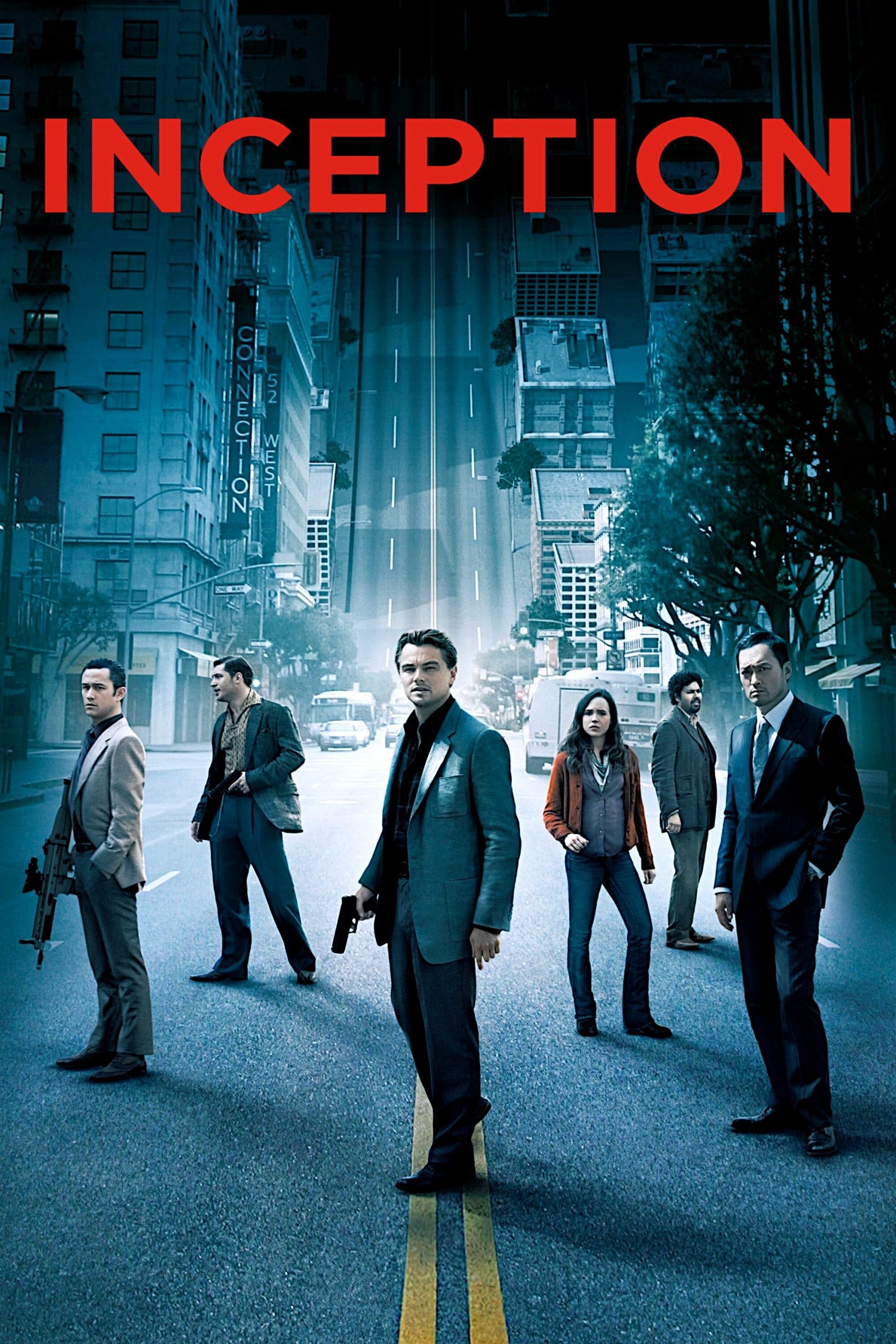
The Question of Truth Behind the Film
Whenever I watch a film like Inception, I notice myself falling into the familiar habit of wondering, “Could any of this really happen?” This isn’t just idle curiosity—there’s a deeper reason why I, like so many others, instinctively seek to pin stories onto real-life events. There’s a certain comfort or perhaps even a thrill in the notion that the worlds I encounter on screen might be more than mere inventions; that somewhere, some aspect of these stories has actually unspooled in history’s messy theater. When a film claims to be ‘inspired by true events,’ it changes my relationship with what unfolds. It makes the extraordinary seem attainable, the fantastical seem possible. I bring assumptions to my viewing: that a “true story” film carries a certain documentary-like authority, an obligation to reality—even when the line between truth and fiction is not always self-evident. I wonder if, subconsciously, I allow myself to become less skeptical, more ready to suspend disbelief, and more likely to invest emotionally when I believe a film is rooted in fact.
This inner dialogue shapes how I approach most movies, but especially those that play with boundaries—between dream and reality, fiction and fact. With Inception, that blend is especially pronounced. The film’s layered narrative structure, its manipulation of perceptions, and its emphasis on the uncertainty of memory all feed into a meta-question: why do I care if a story is “true” or “invented”? Maybe, as an audience member, I seek reassurance that my own dreams and ideas aren’t so far removed from collective experience. There’s a desire to connect, to find echoes of my reality in the fictional worlds I visit. But as I reflect, I realize that the hunger for something “based on a true story” is as much about my eagerness to blur boundaries as it is about a longing for certainty. With a film like Inception, this interplay becomes fascinatingly ambiguous, prompting me to ask not only about the origins of the story, but also about my motivations for wanting those origins to be “real.”
Historical Facts and Cinematic Interpretation
I often notice that much of what captivates me in cinema arises from its interplay with the real world, whether subtle or overt. In the case of Inception, I am immediately struck by its overtly fictional premise—a world where technology allows people to invade and reshape dreams. Yet, as I watch, I cannot help searching for threads of plausibility, ideas pulled from psychology, philosophy, or even ongoing technological innovation. My mind reaches for tiny morsels of connection: lucid dreaming, the study of memory, the ethics of suggestion—these are all real fields with tangible roots in scientific inquiry. For me, Christopher Nolan’s script does not pretend to spring directly from headlines or history books; instead, it borrows the language of contemporary fascination with the unconscious mind, and perhaps even ongoing research into how thoughts may be influenced beneath conscious awareness.
Whenever I encounter films that blur the boundaries between reality and fantasy, I notice how the creative process often draws on fragments of real-world phenomena, only to rearrange and amplify them for effect. Watching Inception, I’m aware that the film condenses and reimagines our collective preoccupations with memory, regret, and the possibility of implanting thoughts or ideas. The story does not recount any specific historical event or adapt any documented experiment; instead, it weaves together concepts that have preoccupied thinkers for decades—Freud’s investigations into dreams, psychological theories of inception and suggestion, even neuroethical debates about cognitive manipulation. In my reading, Nolan adapts these intellectual currents, distilling them into a narrative form that is uniquely cinematic, where abstraction can be made visual and the ineffable rendered concrete through sensory experience.
In reflecting on the adaptation of these real-world ideas, I notice how the film sidesteps the limitations of literal history. Unlike biopics or dramatizations of newspaper stories, Inception takes on an interpretative approach, sparking my imagination around what could be, rather than reenacting what has already been. It’s less about compressing timelines or reshuffling names, and more about taking the building blocks of real-world anxieties and hopes, then reshaping them into a speculative fiction that resonates as plausible within its own thoroughly constructed logic. For me, the line between historical fact and cinematic interpretation in this context becomes less about adaptation of concrete events and more about the thoughtful transformation of pervasive, half-formed cultural fears and hopes into something new on screen.
What Changes When Reality Is Shaped for Cinema
Pondering the nature of adaptation, I see a clear trade-off whenever reality is manipulated for the sake of cinematic clarity or imagery. With Inception, I find it intriguing that the filmmakers were not beholden to fidelity in recounting documented situations; rather, they were free to sculpt and exaggerate for dramatic effect. In shaping a concept as elastic as dream invasion, the film negotiates its own set of internal rules—rules that allow for bending time, folding architecture, and manifesting emotion as physical space. When I watch these visualizations, I understand they depart dramatically from scientific understanding of how dreams function, yet I am drawn to the way these departures crystallize complex psychological themes. Visually distorting a city, for instance, is not about recreating a documented phenomenon; it’s about providing an instantly legible metaphor for malleable consciousness.
What stands out to me most is how this detachment from literal accuracy allows the filmmakers to clarify themes that might otherwise be obscured by the technicalities of real-world research or therapeutic practice. In reality, the concept of implanting ideas in someone’s mind—even under hypnosis or suggestion—operates under far more ambiguous and less spectacular circumstances than what the film suggests. But, in distilling and dramatizing it, the narrative can zero in on the philosophical implications: questions about free will, agency, and the vulnerability of memory. For me, anchoring a story too closely to scientific fact can sometimes limit the scope of these explorations. Fiction can, paradoxically, sharpen the focus on intangible truths that pure documentation can obscure.
At the same time, I sense a kind of contract being formed with the audience—if I recognize that what I am seeing is not literally possible, I am free to engage with the story on metaphorical or psychological terms. The film’s internal logic supersedes the necessity of real-world accuracy, paving the way for a more immersive and reflective experience. This freedom, I find, comes at the price of distancing the narrative from measurable fact, but it also enables the film to communicate with me on a level where symbol and meaning outweigh objective truth. The choices to forego historical precision in favor of exploring what could theoretically happen in an altered reality means that the imaginative impact is often heightened, even as the link to established research grows fainter.
For me, this balance is not about one approach being inherently superior to another; it’s about recognizing the inherent limitations and opportunities within each. Anchoring a narrative in fact might allow for deeper resonance with audiences who crave authenticity, while embracing fiction might allow for greater commentary on universal human concerns. With Inception, I find myself less concerned with practical feasibility and more captivated by how the film conveys complex ideas about memory and reality through images and events that could only ever exist inside a dreamscape.
Audience Expectations and the “True Story” Label
From my perspective, the label “based on a true story” immediately reshapes my expectations before the opening credits have even faded. I find myself scouring details for accuracy, wondering how much of what I’m seeing actually happened, and measuring my emotional investment against the story’s supposed authenticity. When a film is presented as factual, I feel a different sense of responsibility as a viewer—almost as though my belief in the story is being directly invoked by the filmmakers. Every small deviation from what I might know of the real events stands out, inviting questions or even mild skepticism about where fact ends and fiction begins.
Yet, with a film like Inception—whose fictional origins are undisguised—I experience a different kind of engagement. Without the weight of the “true story” label, I am free to surrender to the film’s logic, no longer preoccupied by potential mismatches with known history or science. My critical faculties are redirected; instead of scrutinizing the correspondence between screen and source, I start looking for internal consistency or metaphorical resonance. I begin to appreciate what the story is gesturing towards, rather than holding it to the standards of realism inherent to documentaries or dramatized chronicles. In this context, my expectations become less rigid, more oriented toward interpretation than verification.
For audiences more broadly, I notice that the “true story” designation can act as a kind of shorthand, promising seriousness, credibility, and even moral weight. Conversely, with a purely fictional premise like that of Inception, the invitation is to imagine “what if” rather than “what was.” I sense that this shapes not just my enjoyment but also my critical priorities—I become less likely to fact-check and more likely to engage with the film’s ideas as speculative or allegorical. Sometimes, I even find that a lack of historical grounding gives me space to ponder abstract questions—about perception, memory, and self—without worrying about staying true to external records. In this way, the absence of the “true story” label in Inception is liberating, fostering an environment where audiences like myself are encouraged to speculate, question, and reflect.
However, I recognize that these different modes of watching are not mutually exclusive. At times, a film’s realism operates in tandem with its speculative elements. In the case of Inception, the core conceit—a technology that manipulates dreams—remains fictional, yet the emotional struggles of its characters, particularly around loss, guilt, and reality, are archetypal and deeply relatable. Knowing that the story is not anchored in documented fact does not, for me, dilute its impact; instead, it highlights how cinema leverages both the plausible and the speculative to invite audiences into self-reflection.
Final Perspective on Fact vs Fiction
Stepping back after engaging with Inception, I find myself reflecting on how my awareness of what is factual versus fictional serves as a filter through which the film is interpreted. In my experience, knowing the story’s fictional origins doesn’t require me to disengage; rather, it frees me to focus on themes that transcend literal truth—identity, memory, and the slipperiness of reality. This awareness shifts my attention away from questions of “Did this really happen?” towards “Why does this resonate?” and “What does this say about my understanding of consciousness and reality?” I’ve learned that an absence of historical reference does not limit the ways in which a film may speak to my own experiences or worldview.
Yet, I notice that the distinction remains relevant. If Inception were presented as true, my respect for its internal logic might morph into skepticism about its plausibility. Instead, the overtly fictional framework heightens my willingness to accept the narrative’s “rules,” no matter how unorthodox. I begin to value not just what the film literally depicts, but also the layers of meaning encoded by its dreamlike imagery and recursive structure. I reflect on how films, through blending fact and fiction, offer unique insights that might be inaccessible through direct recreation of real events. This blend allows me—and, I suspect, many viewers—to grapple with questions and emotions not easily addressed through more factual forms of storytelling.
In the end, I have come to see that my interpretation of Inception is shaped not only by what I know of its origins, but also by my willingness to engage with its ideas on their own terms. Whether factual or fictional, the story’s impact emerges from the ways it mirrors and distorts my own questions about reality and imagination. By confronting the boundaries between historical fact and cinematic storytelling, I’m reminded that the boundary itself is often more porous than it seems—an invitation for the audience to participate, create meaning, and perhaps even dream alongside the filmmakers.
For additional context, you may also explore the film’s overview and how it was received by audiences and critics.
🎬 Check out today's best-selling movies on Amazon!
View Deals on Amazon