
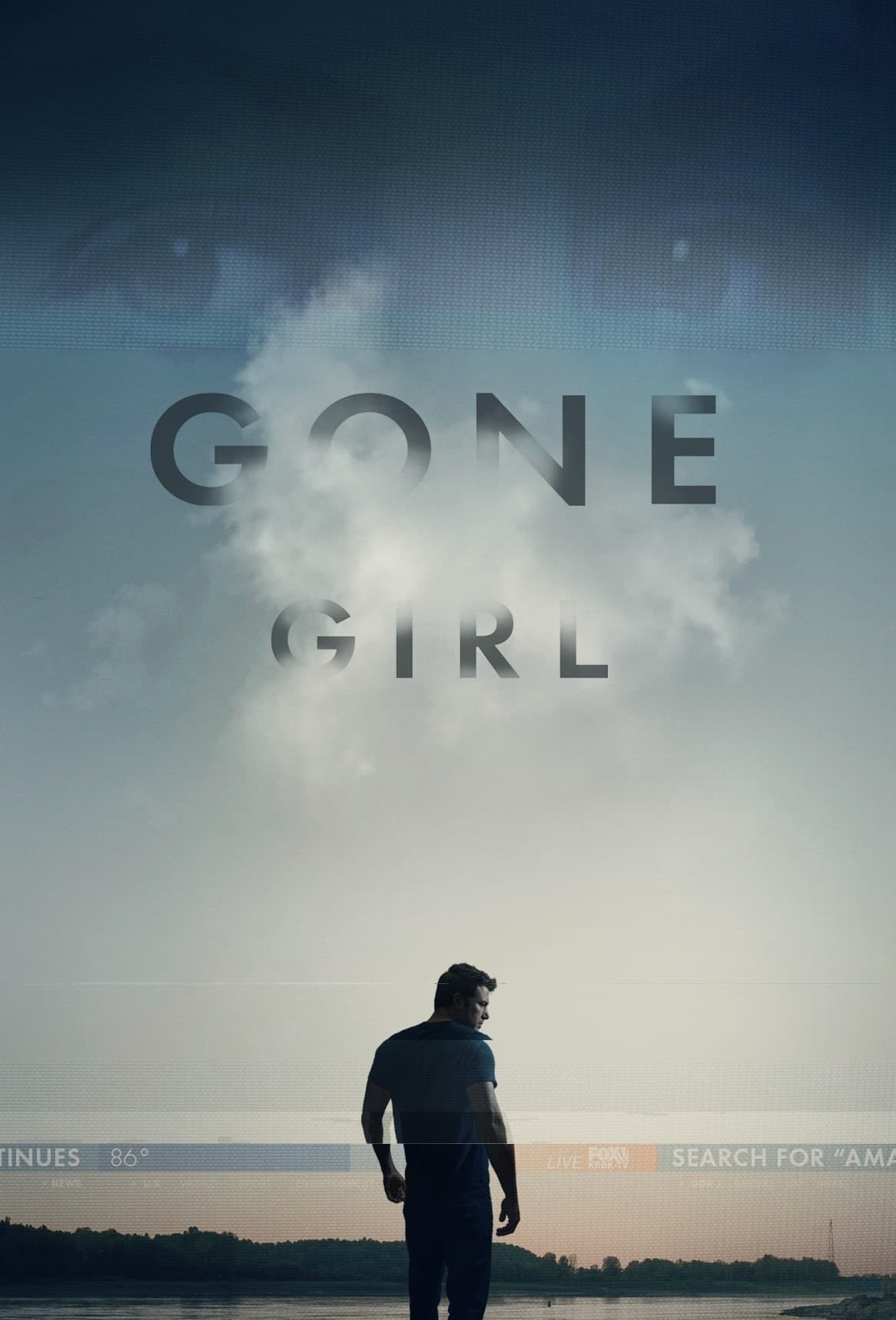
Is This Film Based on a True Story?
The first time I watched “Gone Girl,” I remember feeling as if I were dropping through layers of truth and deception. There’s a chilling plausibility to the story, and I caught myself wondering if something with this much psychological intricacy could possibly be based on real-life events. But having explored the background of “Gone Girl,” I can state with certainty that it is a work of fiction. The film is adapted directly from Gillian Flynn’s 2012 novel of the same name, a book that stands firmly as a piece of invented narrative rather than a dramatization of true events. No real criminal case or missing person investigation serves as the direct template for the plot or characters. For me, the experience of watching and researching “Gone Girl” is a reminder that fiction can sometimes feel disturbingly close to reality, but in this case, it remains entirely imagined.
The Real Events or Historical Inspirations
What intrigues me about “Gone Girl” is not that it draws from a specific case or headline, but rather that it seems to channel a broader cultural undercurrent—the public’s obsession with media-driven narratives around marriage, identity, and crime. Gillian Flynn, who both wrote the original novel and adapted the screenplay, has gone on record discussing her inspiration. I learned she was influenced not by a single infamous disappearance, but by the sensationalism that surrounds real-life missing person cases, particularly those involving attractive or affluent individuals. Flynn observed the phenomena of “missing white woman syndrome,” where media coverage becomes relentless and obsessive, something the film explores with a sly, satirical edge.
While the characters of Amy and Nick Dunne aren’t based on actual people, Flynn has mentioned taking thematic cues from well-publicized disappearances and the way those cases play out in the media. I didn’t find evidence of any interview or official statement tying her specifically to cases such as Scott and Laci Peterson or any other real couple. Still, the structure of “Gone Girl” taps into the familiar script we see in the press: the agonized spouse, the suspicious community, the fraying marriage scrutinized from every angle. I recognize these are narrative archetypes rather than biographical portraits. In developing her novel (and, by extension, the film), Flynn synthesized decades’ worth of societal anxieties and true crime tropes, but she did not transplant an actual crime into her fiction.
I find it fascinating that the closest “Gone Girl” gets to nonfiction territory is its implicit commentary on how real-life investigations, marriages, and media spectacles intersect. In interviews, Flynn’s references are general, pointing to patterns in American culture rather than to any particular individual or headline. For me, there’s a different kind of inspiration at play—not the inspiration of ripped-from-the-headlines fact, but of psychological and cultural observation. “Gone Girl” emerges from the collective consciousness of a society obsessed with appearances, performance, and the threat of exposure through the media, rather than from the archives of criminal history.
What Was Changed or Dramatized
Given that “Gone Girl” is not drawn from a real-life case, what I see as “changes” are less about departing from fact and more about how Flynn, and by extension director David Fincher, amplify certain themes for dramatic impact. The most obvious fabrication is the plot’s central twist: Amy’s detailed, manipulative plan to frame her husband for her murder is a narrative device so intricately constructed and so extraordinarily executed that I have never encountered its equal in real criminal investigations. The seeds of mistrust and the meticulous plotting in the film build on well-established conventions of the thriller and noir genres, but not on any documented event or confession that I could uncover.
Flynn crafts Amy as a character who moves between victim and villain with dizzying skill. I have found no real-world analog for a person who orchestrated such a sprawling deception, complete with planted evidence and staged blood. This, I think, is a deliberate exaggeration for storytelling’s sake. The portrayal of the media also bears a heightened quality. The round-the-clock news cycles, the talk show confessions, and the way public opinion shifts in the film all echo real media behavior, but the intensity and speed at which it unfolds are dramatized to the extreme. It’s storytelling in overdrive, not reportage.
Flynn and Fincher also engage in dramatization when it comes to the details of marriage and domestic life. I felt that the film’s depiction of marital dysfunction is universalized—tapping into everyone’s anxieties about trust, secrecy, and betrayal—rather than recounted from a particular couple’s experience. The dialogue, too, is sharpened for effect, laden with biting wit and loaded silences that serve to heighten the psychological tension. In the realm of true-crime literature, real people speak with a banality and awkwardness rarely captured by meticulously crafted screenplays. I see this as one of the defining markers separating “Gone Girl” from docudrama.
Even the settings—small town Missouri, the upper-middle-class home, the rundown bar—are evocative of places we all recognize from real life and real news. But as I look closer, they are heightened constructions; symbolic, even archetypal, rather than records of specific, local truth. By amplifying the ordinary until it becomes threatening, the story lands in the realm of psychological thriller rather than true-crime case study. That’s not a criticism, but rather an acknowledgment of deliberate creative choices. These are stories “about” our fears, not reproductions of things that have definitively happened.
Historical Accuracy Overview
When I look at the film through the lens of historical accuracy, I have to acknowledge that traditional factual analysis doesn’t quite apply. Since there are no true events or actual people at the root of “Gone Girl,” the usual metric—how faithfully the screenplay adheres to the public record—does not hold. What I do notice, however, is that the film strives for a kind of emotional and atmospheric authenticity. Even though the elaborate events themselves are fictional, the nuances of character interaction and the portrayal of media frenzy ring true to what I observe in actual high-profile criminal investigations and tabloid trials.
I’ve examined how missing person cases and marital crimes are reported and discussed in American culture. The movie—much like its source novel—accurately mirrors the media spectacle that often accompanies such cases. I was struck by how familiar some of the cable news segments and talking head interviews felt; they echo the cadence, bias, and sensationalism present in real-world broadcasts. The shifting tides of public opinion, the compulsive need for narrative closure, and the rapid oscillation between casting Amy as victim or villain all reflect trends I have followed over years of watching similar news stories unfold.
In another sense, though, “Gone Girl” diverges sharply from history. I cannot find verifiable examples of an individual successfully orchestrating a fake disappearance and frame-up on such a complex scale, particularly one involving staged violence and the manipulation of so many different institutions—the police, the media, the general public. Real cases are invariably messier, more chaotic, and less amenable to tidy resolution or clever reversals. The forensic precision of Amy’s scheme in the story is remarkable for its ingenuity, but, as I see it, wholly a product of an author’s imagination.
The accuracy that “Gone Girl” achieves is almost archetypal—it distills and dramatizes the themes and anxieties surrounding crime, marriage, and media, but it doesn’t document any actual person’s reality. Instead of bringing viewers closer to the facts of a particular event, the movie immerses them in the logic of suspicion and spectacle that typifies the cultural moment. So in my analysis, if someone asks whether “Gone Girl” is historically accurate, I can only say that while it nails the emotional climate, it is not a factual account nor a reflection of real history, but rather a stylized psychological portrait.
How Knowing the Facts Affects the Viewing Experience
When I go into a film like “Gone Girl” aware that it’s entirely fictional, it transforms my engagement with the story. I become more attuned to its thematic provocations and less concerned with dissecting its plausibility, as I might with a direct adaptation of true events. I find myself focusing on what the film is communicating about relationships, trust, and the construction of identity, rather than parsing the details for realism. I think that this distinction is liberating—it’s an invitation to appreciate the film as both a mirror and a funhouse reflection of societal fears.
If I had believed that “Gone Girl” was based on a true crime, I suspect my attention would gravitate toward the accuracy of the investigative procedures, the fairness to real people who might be represented, and the ethical implications of dramatizing actual tragedy. Instead, knowing the story is entirely invented, I feel more freedom to see the characters as symbols or commentaries. The uncertainty and twists become less about what actually might have happened and more about how we construct narratives—in marriage, in the news, in our own lives. I see the film’s escalating absurdities and calculated reversals not as flaws in documentation, but as deliberate choices to keep the audience off balance, questioning the nature of performance and authenticity.
In my experience, being aware that “Gone Girl” is not a docudrama means the film’s engagement with the media and public perception becomes all the more resonant. I watch the fictional townspeople, reporters, and legal authorities not for historical veracity, but for insight into how societies process and even exploit ambiguity. I think that freed from the constraints of true-story adaptation, “Gone Girl” serves as a vehicle for exploring the unstable boundary between appearance and reality. On a more personal note, I notice that my emotional investment shifts; I become less guarded, less anxious about the fates of real victims, and more absorbed in the intellectual puzzle that the film presents.
Films rooted in actual events often carry a weight of responsibility and a sense of limitation—whether around dramatization, privacy, or the potential to shape public memory. Watching “Gone Girl” with clear knowledge of its fictional status, I feel the stakes are different. The film’s success or failure is not measured against a factual ledger, but against its ability to evoke and interrogate the anxieties of our time. If anything, the detachment from true crime allows it to burrow more deeply into psychological territory, daring me (and other viewers) to ask not, “Did this really happen?” but, “Why does it feel like it could?” That, for me, is the ultimate impact of knowing the facts behind “Gone Girl”—it sharpens the film’s edge as a tool for examining not just who we are, but how we imagine and fear what we might become.
After learning about the film’s origins, you may want to see how audiences and critics responded.
🎬 Check out today's best-selling movies on Amazon!
View Deals on Amazon