
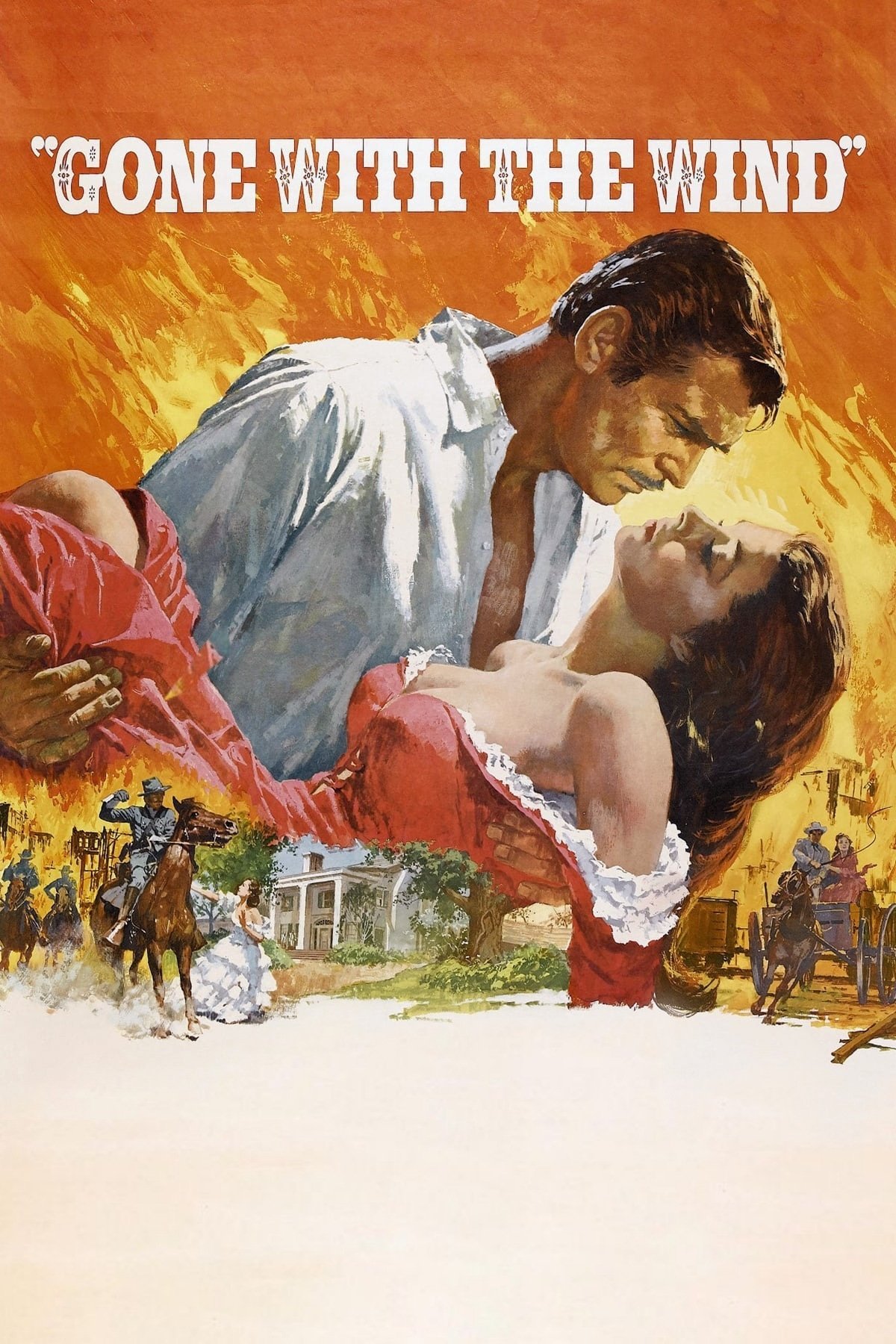
The Question of Truth Behind the Film
Whenever I watch a work like Gone with the Wind, I find myself tangled in the endless debate over where reality ends and storytelling begins. I notice that there’s often a collective urge for viewers—including myself—to know: did this really happen? When a story is framed as “based on a true story,” I recognize that it alters my assumptions about every detail, be it a single line of dialogue or a sweeping historical event. “Real” can mean so many things; sometimes it points to documented events, other times just to a general milieu or spirit of an age. For me, the label of historical veracity creates a promise of insight, a hope that by watching, I will connect to the past in a more immediate, almost tactile way. Yet I also understand that most historical films—especially ones with the scope and ambition of Gone with the Wind—occupy a space where memory, records, and narrative invention become inseparable. As I reflect, I see that my own expectations of truth in cinema often emerge from a longing for certainty amid the uncertainties that history, filtered through creative lenses, always brings. It fascinates me how a film’s “true story” credentials can guide my attention and shape my emotional investment, nudging me to treat its characters almost as if I’m meeting historical figures face-to-face.
Historical Facts and Cinematic Interpretation
As I consider Gone with the Wind, I’m struck by how the line between factual foundation and cinematic embellishment blurs at almost every turn. The film adapts Margaret Mitchell’s Pulitzer Prize-winning novel, which itself was shaped by her own perspective on the South during and after the Civil War. Still, as I explore each scene, I can’t help but notice that much of what the film presents is not a literal retelling of specific historical figures’ lives, but rather a tapestry woven from the broader historical landscape of the American South. The events of the Civil War and Reconstruction are real enough—marked by the burning of Atlanta and the struggles of plantation society—but the dramatis personae, from Scarlett O’Hara to Rhett Butler, are fictitious composites. I see that the film compresses sprawling historical narratives into a single family’s saga, threading together key moments—battles, societal upheavals, the transition from an agrarian to postwar reality—under the umbrella of melodrama and romance. Oftentimes, I find the historical timeline deliberately rearranged; events are combined or re-sequenced to heighten their dramatic impact, to sustain momentum, or to spotlight crucial turning points that serve narrative purposes.
For example, when I watch the depiction of Atlanta’s burning, it’s impossible to ignore the element of spectacle—flames towering above characters’ heads—which becomes less about reconstructing a precise historical moment and more about generating an emotional experience. Dialogue, too, is polished for effect rather than accuracy, giving historical dialogue a pace and wit rarely present in archival accounts. Even the film’s visual palette—its Technicolor lushness—feels like a romanticization of what was, in reality, a time of deprivation and hardship. When it comes to specific portrayals of antebellum life, I notice that historical complexities are simplified into broad archetypes: the noble Southern belle, the dashing rogue, the loyal servant. The friction between what history records—the chaos and devastation of war, the crisis of emancipation—and what cinema chooses to show becomes an ongoing negotiation. The more I dig into primary sources or contemporary scholarship, the more apparent it is that the film’s version of events is carefully curated, pruning away intricacies for the sake of streamlined storytelling. Yet this selective process is what makes me reflect on how much effort goes into shaping not just what happened, but how people are encouraged to feel about what happened.
What Changes When Reality Is Shaped for Cinema
As someone attuned to both the pleasures and perils of adaptation, I often weigh the inevitable trade-offs that arise when historical truth enters the realm of cinema. Watching Gone with the Wind, I realize that what gets sacrificed or preserved is less a matter of fidelity than necessity. Lengthy, unresolved conflicts in real life are distilled into decisive action; months and years might be compacted into a single, charged interaction. In this film, the compression of change—from Southern grandeur to postwar uncertainty—unfolds in a matter of minutes instead of years. I understand that cinematic time presses upon every decision: audiences expect momentum, characters require definition, and themes seek coherence. To meet these demands, realities are often shaped to fit the contours of plot and theme rather than the messiness of lived experience.
Adaptation, as I see it, is not just about what is left out but what is emphasized. The grandeur of Tara, the plantation, comes to symbolize not just a single estate but an entire world in transition. I realize that by elevating certain images and characters to near-mythic status, the film turns history into a kind of legend—a Southern arcadia under siege. Practicality also becomes important; the requirements of continuity, casting, production design, and even censorship (given the context of 1939 Hollywood) guide choices about what can be depicted, what remains implied, and what is entirely omitted. I’ve noticed that elements too complex or sensitive for contemporary audiences can be softened or sidestepped; questions of race, class, and social reorganization are refracted through the vantage point of Scarlett and her circle, rendering the story both more approachable for its audience and less representative of the full historical panorama.
For me, the process of turning history into cinema is less about creating a neutral reflection and more about constructing a usable past—something relatable, stirring, even inspiring. This means that ambiguity and contradiction, which prevail in the historical record, are often ironed out. Characters are rendered more consistent, motives more transparent, and the outcomes more narratively satisfying. I find that what emerges is not a schematic record but a vivid experience of history’s possibilities—a “what might have felt like” rather than “what actually was.” While this transformation can occasionally risk simplifying or mythologizing the past, I also feel it is the mechanism by which mass audiences are invited into stories that might otherwise remain remote or inaccessible.
Audience Expectations and the “True Story” Label
As I watch and re-watch films like Gone with the Wind, I become increasingly aware of how my own reactions shift depending on whether a movie presents itself as historical fact, as mere fiction, or as something in between. When a film explicitly claims authenticity—whether it’s “based on a true story” or “inspired by real events”—I find myself unconsciously granting it a certain authority. I want to believe, to feel that I am learning about the past, as much as engaging with crafted drama. However, I’ve learned to approach such assertions with skepticism, recognizing that the label itself is part of the film’s storytelling apparatus. In Gone with the Wind, which adapts a fictional narrative set within an actual historical period, I notice a subtler dynamic. The film does not overtly market itself as a documentary or direct adaptation of real episodes, but it relies on the trappings of authenticity—costume, dialect, setting—to foster immersion.
With this movie in particular, I sometimes forget that I’m not watching a literal history. The gravity of the Civil War, the transformation of the South, and the sweeping changes in individual fortunes all anchor the film in an historical reality that feels tangible. Yet, my awareness that the central characters never existed in the historical record adds a layer of detachment, reminding me that what I see is fundamentally interpretive. For viewers more invested in authenticity, the difference between “this happened” and “this could have happened” profoundly alters reception. Some, like me, may enter the cinematic space ready to suspend disbelief, while others are more likely to probe for inconsistencies, omissions, or romanticizations. This divergence in expectation leads to a spectrum of engagement, from those who view the film as a portal to understanding the era, to those who treat it as a stylized artifact, revealing more about the period in which it was made than the period it depicts.
The film’s reception, I find, often depends on how willing viewers are to accept history as drama. When I discuss Gone with the Wind with others, responses range from reverence for its epic scope to frustration at its sanitized depiction of complex social realities. For all the apparent trappings of realism—the period costumes, the use of contemporary Southern speech, the re-creation of recognizable events—the film’s choices emphasize thematic clarity over documentary evidence. This informed ambiguity, where fiction and reality entwine, encourages me to approach each scene as both commentary and construction. It’s a reminder that historical films inevitably reveal as much about the anxieties and preoccupations of their makers (and viewers) as about the eras they depict.
Final Perspective on Fact vs Fiction
Reflecting on my own experience with Gone with the Wind, I see that the tension between fact and fiction is not a problem to be solved, but an essential axis around which historical cinema rotates. For me, knowing what is real and what is fabricated shifts my perspective in nuanced ways. When I’m aware that Scarlett O’Hara existed only within the pages of a novel and not in the footnotes of history, I adjust my expectations: I become less concerned with what actually transpired and more attentive to how the past has been remembered, re-imagined, and repurposed. This awareness allows me to appreciate the film as a reflection, not a record—one that distills broad historical forces into the experiences of a few emblematic characters.
At the same time, I’m conscious that the blurring of lines between fact and fiction can obscure as much as it reveals. When I recognize that key aspects of Southern life are romanticized, and that the lived experiences of many historical actors—enslaved people, in particular—are selectively depicted, my interpretation becomes more critical and layered. Rather than treating the film as a straightforward guide to the era, I read it as a curated vision, one shaped by its creators’ context and constraints as much as by their imagination. Understanding what is factual and what is fabricated invites me to ask how history is used in service of story, and how stories, in turn, shape the way I access, process, and emotionally inhabit the historical past.
Above all, the interplay between reality and invention in Gone with the Wind leaves me with a set of enduring questions: what does cinema owe to history, and what does it owe to its audience’s need for coherence and meaning? My appreciation for the film does not depend on its factual accuracy, but rather on its ability to open a dialogue between the world that was and the world imagined. In this sense, knowing the distinctions between what’s real and what’s constructed enriches—not diminishes—my engagement. It prompts me to treat the film as a starting point for further inquiry, as well as a meditation on how memory and myth are spun together in the loom of popular storytelling.
For additional context, you may also explore the film’s overview and how it was received by audiences and critics.
🎬 Check out today's best-selling movies on Amazon!
View Deals on Amazon