
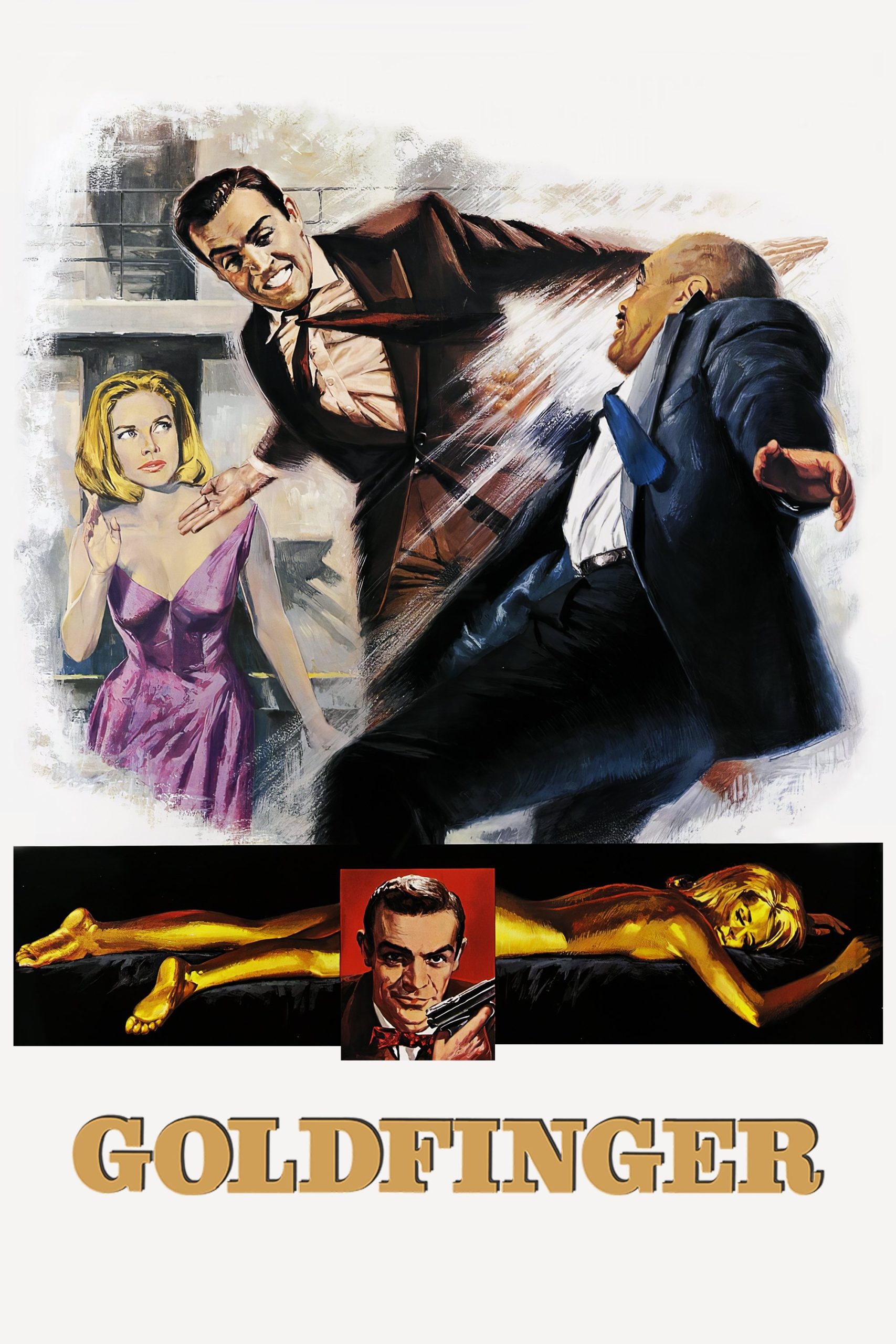
The Question of Truth Behind the Film
Goldfinger, as I first encountered it, struck me less as a straightforward thriller and more as a gleaming artifact of its era – a film whose allure hinges on the thin boundary between possible and impossible. I find it fascinating that people, myself included, so often approach movies with the pressing question: did any of this really happen? This compulsion to peel back the layers and search for “the true story” underneath our cinematic experiences isn’t just idle curiosity. I think it speaks to our hunger for authenticity, a desire to anchor fantastical stories to the solid ground of real history. Whenever I see a film like Goldfinger, the label “based on a true story” (even when absent) seems to hover in the background, challenging me to parse the gap between spectacle and substance. I notice that this question shapes expectations; it gives weight, legitimacy, or even urgency to the narrative. If I believe something onscreen could have happened – or actually did – all the outlandish gadgetry and plotting suddenly feel more relevant, their meaning deeper. On the other hand, if I know nothing depicted is “real,” my enjoyment takes on a different texture: one of escapism rather than engagement with history. For me, unearthing whether Goldfinger draws from any authentic events or whether its elements are purely fictional isn’t about policing truth. It’s about understanding how that awareness colors my reading of the film as both an artifact and entertainment.
Historical Facts and Cinematic Interpretation
When I watch Goldfinger today, I’m constantly reminded of how films manipulate the raw material of fact—whether geopolitical tension, technological drama, or personality cults—transforming them into something palatable and coherent for a global audience. Although the world of Goldfinger is constructed from the feverish imagination of Ian Fleming and his screenwriters, I recognize hints of the broader historical anxieties of the early 1960s simmering just beneath the surface. The Cold War’s looming shadow, the relentless focus on precious metals, and the aura of international intrigue all anchor the story in a framework that feels ripped from the headlines of its time, even though the narrative details are largely speculative. I sense how the filmmakers cherry-picked real-world elements – for instance, the gold reserves at Fort Knox or the fascination with technological espionage – and then reassembled them, amplifying drama and compressing events to fit a two-hour runtime. For the sake of narrative economy, personal stakes are heightened, timelines are hastened, and technical details become larger than life. Instead of a by-the-book heist or a sober account of monetary policy, I get laser beams, poisoned hats, and a showdown inside an improbably cinematic vault. It’s in these creative reinterpretations, I think, that the boundary between historical possibility and narrative invention becomes most pronounced. The film doesn’t claim to retell a single true event, but it does exploit real anxieties and cultural phenomena, building a world that feels vivid because of – rather than despite – its selective borrowing from reality.
What Changes When Reality Is Shaped for Cinema
As I reflect on Goldfinger, I can’t help but notice how the process of translating a loosely inspired reality into cinematic language necessarily introduces a set of practical compromises. For starters, I’ve realized that historical nuance often has to give way to storytelling clarity. If the actual logistics of gold smuggling or international espionage were rendered with true-to-life precision, the film would likely become less engaging for a wide audience. I see that cinema, especially in the Bond tradition, operates on the logic of emphasis: spectacle, character beats, and streamlined causality ultimately take precedence over granular factual accuracy. This isn’t, for me, a flaw so much as an architectural choice. The genre conventions demand heightened danger, outsized personalities, and narrative closure that real life rarely provides. As a result, the film’s tension between James Bond and Goldfinger becomes a distillation of thousands of real-world antagonisms during the Cold War, shaped into a more palatable and marketable package. I find this process fascinating because it reveals the working priorities of film as a medium. Time is compressed; motivations are sharpened; the improbable becomes not only possible but necessary for the sake of momentum. Every gadget, twist, and betrayal is engineered not for strict plausibility, but for maximum audience engagement. In my view, this means that what cinema gains in accessibility and emotional impact, it sometimes loses in factual fidelity. Yet, even in this trade-off, the echoes of truth—those undercurrents of real fear about economic sabotage or technological threat—remain discernible just beneath the film’s glittering artifice.
Audience Expectations and the “True Story” Label
Every time I revisit Goldfinger, I’m struck by how profoundly the simple suggestion of real-world inspiration affects my own, and perhaps others’, reception of the film. Whenever a movie signals its connection to actual events, I tend to approach it with a different mindset; there’s an extra layer of scrutiny that slips into my viewing, as if I’m not just watching fiction unfold but witnessing a kind of history lesson dressed in dramatic clothes. In the case of Goldfinger, though, the implicit contract is different. The film never outright claims to be rooted in true events, yet its meticulous invocation of Fort Knox, Occident travel, and the economic perils surrounding gold blur the line enough that I can’t help but interrogate which aspects might have kernels of truth. For some viewers, I think the thrill lies in the fantasy—the sheer theatricality of Bond’s world. But for others, like me, there’s always a little itch to parse out whether anyone ever plotted to irradiate the American gold supply, or if such a scheme could have plausibly existed against the geopolitical backdrop of the 1960s. It’s not just curiosity; it’s a kind of negotiation between personal belief and cinematic illusion. The absence of a “true story” label allows me to experience the film as hyperbolic entertainment, yet the inclusion of plausible institutions and technologies keeps a door open for semi-credible speculation. This interplay informs how invested I become in the world onscreen. Knowing that Ian Fleming was himself a former intelligence officer only deepens this effect, at least for me: I view his inventions as speculative extensions, rather than instances, of real-world spycraft. This blend of reference and exaggeration feeds a uniquely Bond-ian brand of anticipation, in which historical possibility and sheer movie magic coexist in a productive tension.
Final Perspective on Fact vs Fiction
After years of engaging with Goldfinger from various angles—historical, analytical, and simply as a fan—I’ve found that my appreciation of the film is fundamentally altered when I consider its factual underpinnings, or lack thereof. When I know (or strongly suspect) that a film’s events are invented, I tend to assess the story’s internal coherence and the persuasive power of its world-building. My enjoyment is shaped by the extent to which the narrative feels self-consistent and emotionally resonant, regardless of real-world accuracy. At the same time, a deeper awareness of how the film draws on contemporaneous anxieties—the dread of economic instability, the future shock of emerging technology, and the intrigue of global espionage—gives me a richer interpretive context. With Goldfinger, this means that while I don’t expect documentary-level veracity, I do appreciate the ways in which the film echoes genuine fears and aspirations of its cultural moment. My interpretation, then, becomes a balancing act: I recognize the deliberate manipulations and omissions inherent in adapting reality for cinema, while also valuing the insight these choices offer into the collective imagination of a turbulent era. The knowledge that much of Goldfinger is the product of speculative fiction, rather than documented fact, doesn’t diminish its impact for me. Instead, it transforms my viewing into an exercise in tracing the historical shadows that stretch across the film’s more extravagant set pieces. Ultimately, understanding where fact ends and invention begins allows me to engage with the film on its own terms—situating it as a reflection of real anxieties, refracted through the lens of popular storytelling, and appreciating the unique dialogue that this synthesis creates in my own mind.
For additional context, you may also explore the film’s overview and how it was received by audiences and critics.
🎬 Check out today's best-selling movies on Amazon!
View Deals on Amazon