
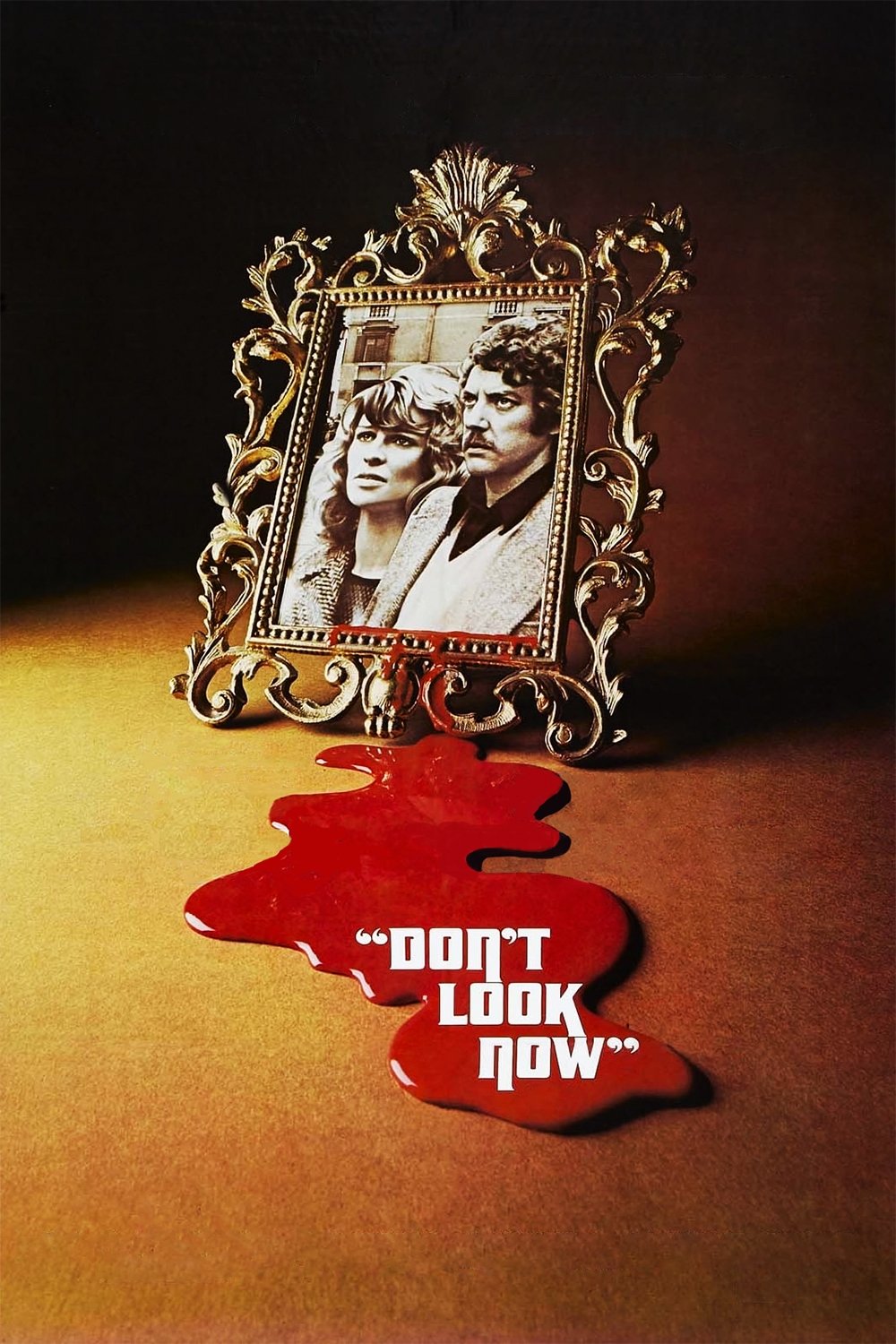
The Question of Truth Behind the Film
I have found myself haunted by the brittle beauty and creeping sense of dread that saturates Nicolas Roeg’s “Don’t Look Now.” Each time I return to its winding canals and shadow-soaked mystery, I am inevitably confronted with that familiar, nagging question: Did any of this actually happen? I’ve noticed that audiences—including myself—almost instinctively ask whether a film of this emotional magnitude draws from real life. There’s a deep-seated belief that truth lends weight, a belief that stories rooted in fact carry a particular gravity or seriousness. I think viewers assume that if a film unfolds from true events, the emotions it stirs or the anxieties it releases become more legitimate, more urgent to our shared experience. I often see “true story” labels treated as a kind of passport stamp for meaning—a validation. Yet with “Don’t Look Now,” which is openly adapted from Daphne du Maurier’s short story and not from a headline or news archive, the boundary between invention and actuality still seems porous. I’ve come to realize that this pursuit of realism isn’t about verifying facts so much as about anchoring emotions. When I watch a film like this, the question isn’t only “Did it happen?” but “Could it happen—to me?” That’s why, for me, films hovering on the threshold between fact and fiction create a peculiar itch. I want to know not only what is possible, but what is plausible. Understanding that urge shapes the way I perceive every eerie glance, every unexplainable twist, and every fragment of grief that colors Roeg’s vision.
Historical Facts and Cinematic Interpretation
I remember the first time I discovered that “Don’t Look Now” was not derived from a documented case or a notorious tragedy, but rather from the mind of du Maurier—an author with a talent for transforming everyday anxieties into something uncanny. That realization changed my orientation to the story. I noticed that even though the film doesn’t rest on historical scaffolding, it wears a mask of realism with an uncanny confidence. Roeg’s Venice feels lived in, the grieving couple’s pain is hyper-specific, yet none of these textures are historical records. Instead, I realized the film crafts its own history from shared human experience: parental grief, cultural dislocation, marital strain. What fascinates me is how the film blurs its fictive roots by leaning on genuine atmospherics. For example, the footage of Venice was shot during the city’s wet, off-season months. This wasn’t a case of re-creating an imagined environment in a studio. Venice is itself on display, unpolished and vulnerable, which frames the unfolding narrative in what looks—and feels—like the authentic world. Though no tragic tourist tale led to this script, the canal city’s documented mysteries and legends seep into the visual design. To me, this is where fact and invention intermingle: real architectural decay and timeless anxieties are organized into a mosaic that evokes the lived experience of loss, rather than documenting any one incident. I’ve seen how other films, built from true events, might compress a chronology or reassign dialogue to clarify stakes or motivations, but here the adaptation works in reverse. I sense Roeg distilling a universal emotional fact—a parent’s grief—into an imagined thriller that often feels truer than the news.
What Changes When Reality Is Shaped for Cinema
As I’ve spent time considering “Don’t Look Now,” it’s become clear to me that shaping real life for the screen always involves letting go of something. I see filmmakers constantly balancing the value of sticking to literal truth against the need to create a coherent, affecting journey for an audience. While the film itself does not adapt a concrete event from history, it does warm its hands by the proverbial fire of realism—reorganizing interior states into visual, almost architectural, forms. That means, in my view, factual fidelity is less about point-for-point recreation and more about capturing the sensation of the actual. If Roeg and his collaborators quote the skyline of Venice, or the hollow echoes in a cathedral, they are not documenting; they’re evoking. In this process, chronology can be fractured—just as memory and trauma rarely flow in straight lines. I’ve always felt that the nonlinear editing, abrupt flashbacks, and premonitory glimpses throughout the film are a kind of admission: real grieving is never linear, nor easily cataloged. This allows the film to distrust the procedural timeline of news reports and adopt a mosaic form. I understand this as a trade between certainty and affect: shrink-wrap a story to fit the dimensions of “fact,” and you risk suffocating what feels emotionally honest. Let the facts loosen, and the result can be a collage that resonates in ways strict realism never could. So, my experience watching “Don’t Look Now” is not hampered by its distance from journalistic history; rather, the movie gains a dreamlike charge through adaptation’s liberties—the choices to abstract, rearrange, and condense lived experience into something at once uncanny and strangely familiar.
Audience Expectations and the “True Story” Label
Every time I hear someone at the theater ask, “Is this based on a true story?” I’m reminded of how labels program our responses. For me, being told that a film is factual primes a different set of reactions. I approach films labeled “true” with a forensic eye, looking for clues to the real behind the reel. There’s an almost invisible contract between storyteller and viewer: if this is said to be true, then what it shows must be actionable in the world, must be answerable in some way. But with “Don’t Look Now,” stripped of that expectation, I find myself drifting further into the world of subjective experience. When a film positions itself as inspired by actual events, I detect skepticism, curiosity, or reluctant empathy in audiences. Some people seem more willing to forgive narrative improvisation, while others scrutinize for embellishment. In my own viewing, a factual claim reduces my tolerance for creative leaps; on the flip side, films that plainly announce their fictional status allow me to become more pliable, to surrender to metaphor, symbol, and abstraction.
Thinking about “Don’t Look Now” in this context, I’m conscious that its primary declaration is not “this happened,” but “this could happen, on some emotional plane.” This unlocks a different kind of expectation in me. Rather than asking for adherence to real-world logic, I seek resonance—moments that echo what I know to be true about grief, loss, or longing. When a film is taken as true, the smallest factual inconsistency can become a distraction, even a disillusionment. If we know we’re envisioning fiction, such inconsistencies are irrelevant—sometimes even necessary for poetic effect. On the opposite end, if a film is marketed as a “true story,” every creative interpolation becomes a kind of suspect frame, a reminder that the line between narrative and document is never as clear as we’d like to believe. In the case of “Don’t Look Now,” my own knowledge that it flows from a work of literary imagination rather than a real-life occurrence grants me the freedom to interpret its symbols—the red coat, the mirrors of water and glass, the ghostly twins—without feeling the need to link every image to a footnote in reality. I watch less for what it says happened, and more for what it suggests could be felt.
Final Perspective on Fact vs Fiction
Stepping back from the canals and dark corners of “Don’t Look Now,” I find my understanding of the film shaped—sometimes gently, sometimes sharply—by what I know to be real or invented. Factual awareness acts as a set of reading glasses, bringing certain details into sharper focus while blurring others in the periphery. For me, learning that Roeg’s film was not prompted by a headline or documented tragedy but was instead an adaptation of du Maurier’s haunting fiction, deflates the “true story” expectation but heightens my appreciation of the film as an emotional artifact. The events on screen need not have literal precedent to provoke something raw and recognizably human in me.
I’ve realized, too, that my engagement with the film’s symbols and narrative arcs becomes more flexible when I’m not constrained by the search for documentation or verification. I understand its shifting points of view, fragmented timeline, and hallucinatory quality as purposeful choices—ways of embodying a psychological truth rather than a historical record. This frees me to connect on a different wavelength, one tuned to the interior weather of the characters rather than to the pageantry of “Did this really take place?” Without the requirement of matching fact to frame, I’m less quick to dismiss improbabilities, more open to the ways in which the movie bends reality in service of something deeper.
In my experience, knowing a film’s factual or fictional foundation changes less the emotions it elicits and more the channels through which I interpret those emotions. A true story invites analysis along axes of accuracy and responsibility; fiction, especially fiction enchanted with the look and feel of realism, asks me to locate myself within its possibilities, to test its plausible anxieties against my own. When I approach “Don’t Look Now” as an adaptation—shaped by dream logic and the physics of mourning rather than archives—I am less preoccupied with whether the story could be plotted on a timeline and more drawn into the textures of fear, desire, and mourning that it conjures.
This creates a space where meaning is ultimately more negotiable, where my interpretation can coexist with metaphoric resonance. I’m reminded that films, especially those not bound by a specific “true story” claim, offer a kind of emotional genealogy: I trace their influences as much through personal or societal experience as through historical record. For “Don’t Look Now,” that means I weigh its strangeness by comparing it to what I know of loss, rather than what I know of fact. That makes it no less potent—just different in the way it moves and lingers in memory. Whether fact or fiction, the power remains undiminished, only recalibrated to my understanding of what cinema can accomplish when unshackled from the demands of the literal world. Every time I revisit the film knowing its origins are not reportage but literary invention, I find myself less confined and more receptive to the strange, startling truths only fiction seems willing to risk.
For additional context, you may also explore the film’s overview and how it was received by audiences and critics.
🎬 Check out today's best-selling movies on Amazon!
View Deals on Amazon