
Is This Film Based on a True Story?
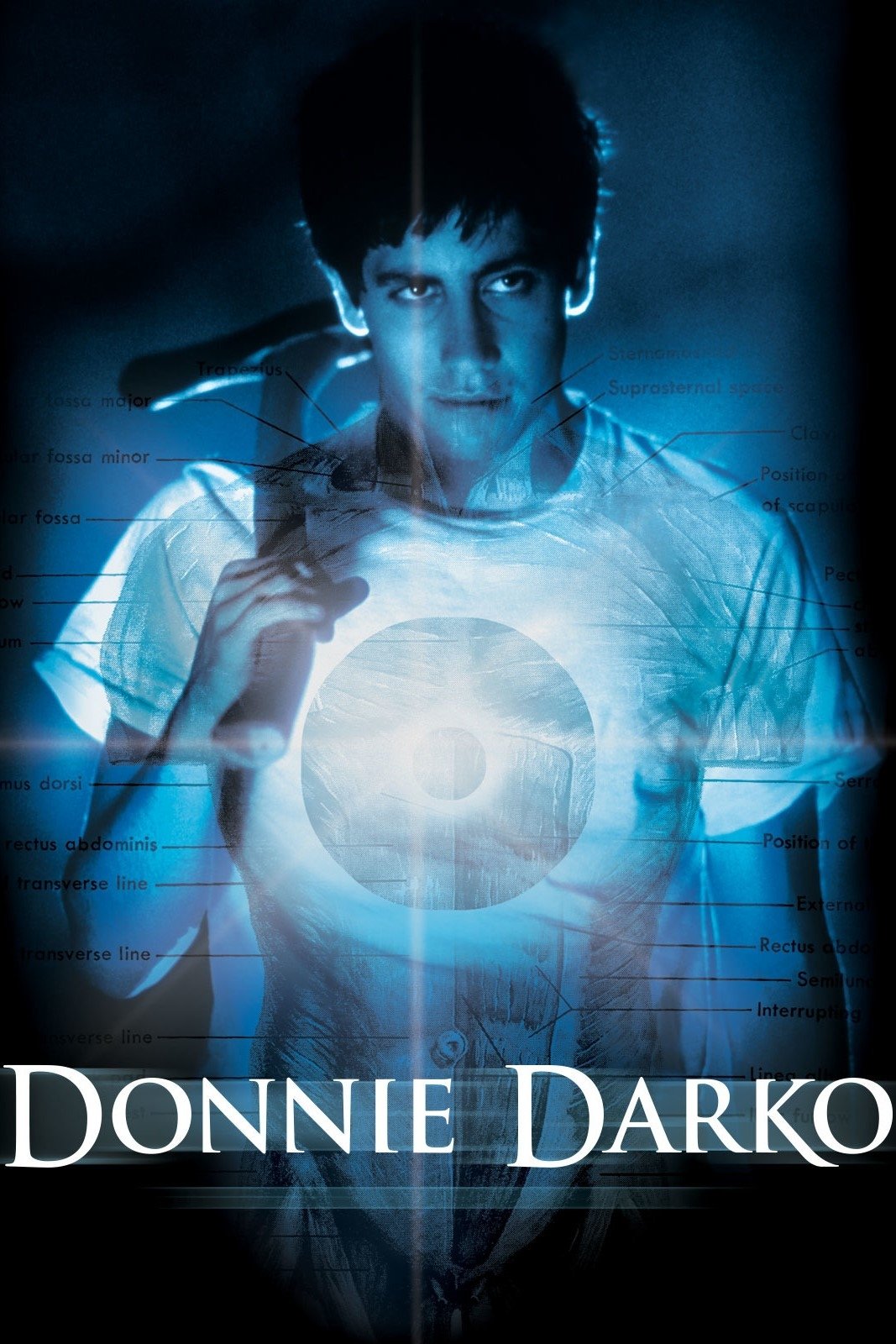
The first time I watched “Donnie Darko,” I was absolutely captivated by its surreal blend of suburban angst and haunting, almost prophetic imagery. As I wandered through its labyrinthine plot, I couldn’t help but wonder if some true story sat at the heart of its swirling mysteries, or if it was born entirely from the imagination of its creators. After digging deeply into its origins, I can say with certainty: “Donnie Darko” is a work of complete fiction. It does not claim roots in any true story, biographical account, or historical event. There is no documented case, news article, or urban legend directly mirroring the convoluted narrative that unfolds on-screen. The film exists as an original screenplay, penned by Richard Kelly, that draws on cultural, literary, and psychological influences—yet at its core, the events, characters, and overarching mythology are the products of imaginative invention, not historical recounting or eyewitness record.
The Real Events or Historical Inspirations
From my research, I’ve come to understand that while the events of “Donnie Darko” are undeniably surreal and fictional, the film does reflect certain social and psychological undercurrents present in late-1980s American suburbia. I noticed echoes of the Cold War era’s ever-present anxiety, the way the threat of disaster hung in the air of families and schools. This environmental anxiety—the ongoing fear of nuclear annihilation, social conformity, and the search for meaning—is very much a reflection of cultural realities in the period the film depicts (1988), but not of any singular documented true event. While the plot itself is wholly invented, I see how the backdrop draws on a real atmosphere. Kelly has cited his experiences growing up in Virginia and elsewhere in American suburban culture as a kind of abstract inspiration, but he has never suggested that Donnie himself or his supernatural encounters were based on any real person or family.
From a broader perspective, I recognize that “Donnie Darko” borrows liberally from existing mythologies, philosophies, and even pop culture. During my analysis, I’ve identified philosophical references (like Stephen Hawking’s work on time travel), allusions to existential thinkers, and motifs that evoke classic cult films and literature. While these intellectual touchstones ground the film in a recognizable reality, they serve more as atmospheric flavor than documentary source material. There is no existing archived case of a teenager who, under the influence of a spectral rabbit, predicted the end of the world or experienced a clash of tangent universes. Kelly’s screenplay constructs an original story, layered with ideas drawn from canonical science fiction and philosophy but not inspired by any confirmed real incident.
What Was Changed or Dramatized
When I untangle the surreal tapestry of “Donnie Darko,” it becomes clear that the film’s most central story components—premonitions, time travel, and the iconic presence of Frank the rabbit—are products of dramatic invention rather than modifications of real-life circumstances. I see that, rather than altering historical events, Kelly and the creative team chose to heighten and bend the normal boundaries of suburban life, infusing everyday settings with supernatural and psychological drama. If there is any “change” at all, it is through a process of intense stylization and symbolic exaggeration. I’ve pored over interviews and behind-the-scenes content, and nowhere does Kelly or the creative team discuss changing real-life facts for the sake of storytelling. Instead, their starting point was always an allegorical, speculative fiction approach.
In particular, the film’s use of time loops, alternate realities, and predestination clearly signals that it isn’t attempting to dramatize a real case study or incident. The psychological struggles Donnie faces—such as alienation, searching for purpose, or questioning the nature of reality—are universal, but here they are transmuted into overtly fantastical forms. Even the school settings, cultural references, and suburban details ring as authentic to the era, but the dramatization lies not in factual change, but in the superimposition of dream logic and intense philosophical narrative. In other words, the drama is not an embellished or reimagined version of something ‘actual,’ but a deliberate creation of what could never really happen. This embrace of impossible scenarios is, for me, the signature mark of the film’s inventiveness.
As I continued to reflect, I also realized how the film’s depiction of mental illness is not intended as a case history or a literal rendering. Instead, Donnie’s psychological journey—complete with his visions, erratic behavior, and crisis of meaning—is dramatized and stylized, blended with speculative elements that move beyond clinical or historical reality. In this way, every “change” is an act of creative license rather than an attempt to modify or reshape a documented story.
Historical Accuracy Overview
From my vantage point as a film researcher, the matter of historical accuracy in “Donnie Darko” feels almost ironic, given the overt unreality at the center of its story. Still, when I break the movie down, I see that its representation of suburban life in America during the late 1980s has a measure of authenticity. The costumes, slang, cars, music, and even the patterns of family and school life mirror my own understanding of the period, down to the pop culture references and the everyday texture of middle-class existence. When Donnie and his classmates discuss classroom material, or when adults minister to students with well-meaning platitudes, these scenarios ring true to lived experience, even if the overarching narrative is pure fiction.
Where the film diverges most sharply from any kind of historical or factual accuracy is in its central premise and plot progression. There are no known cases—either documented in news accounts or recounted in memoirs—of communities encountering time vortexes, prophetic rabbit apparitions, or the literal manipulation of time. The physics concepts cited in the film are loosely inspired by works of established scientists like Stephen Hawking and theoretical discussions about time travel, but my research shows the screenplay takes these notions in highly speculative and, sometimes, outright impossible directions. The “Philosophy of Time Travel” book, so important within the narrative, is a fictional construct by Kelly. It borrows the tone and style of actual theoretical texts but does not correspond to any academic or popular science writing from the era.
Emotionally and culturally, the malaise and existential crises faced by the characters do echo common experiences in late 20th-century suburbia. In my reading, the family tensions, the sense of alienation among teenagers, and even the subtle anxieties of the nuclear era are historically plausible—but always filtered through the film’s distinctive, heightened lens. The real accuracy lies more in evoking the anxieties and confusion of adolescence, rather than depicting years, people, or timelines as they truly unfolded. There is no fidelity to actual people or occurrences, but rather an emotional resonance that connects the film’s fictional world with the psychological landscape of its time.
How Knowing the Facts Affects the Viewing Experience
For me, uncovering the film’s wholly invented origins actually liberated my experience of “Donnie Darko.” Without the pressure to draw direct parallels to a real-world event or biography, I found myself far more open to the allegorical and psychological layers woven through the story. When I realized there was no “true story” to uncover, I was able to engage with Donnie’s crisis on its own terms—as a meditation on fear, agency, time, and the profound uncertainty that shadows coming-of-age. The film’s more fantastical elements, rather than feeling like distortions of reality, became invitations for me to reflect on the deeper meanings behind everyday anxieties and philosophical what-ifs.
This separation from factual source material also shifted my expectations. Some movies—especially those “inspired by true events”—ask me to judge how well they stick to, or stray from, the documentary record. Here, though, my focus never drifted toward comparison with historical fact. Instead, I found myself drawn into the logic of the film’s universe, accepting its supernatural rules and speculative physics because they operated symbolically more than literally. With no need to check the record for accuracy, I could more freely absorb Donnie’s emotional turmoil, his struggles with fate, and the uncanny ways he grapples with reality and delusion.
As someone fascinated by the interplay between fiction and history, I also recognized how the lack of a factual anchor gave Kelly’s story a rare sense of creative freedom. “Donnie Darko” doesn’t try to educate me about a piece of forgotten history or reimagine a well-known scandal. Instead, it aims to immerse me in the atmosphere—an American suburb at the close of the Cold War, soaked in anxiety and adolescence, where the boundaries between real and imagined crises dissolve. Knowing this, I adjusted my interpretation: I stopped looking for analogues and started focusing on the thoughts and questions the film raised for me, from the nature of time and predestination to the isolating effects of mental illness.
At the same time, I couldn’t ignore how the film’s cultural and emotional resonances—the fears of nuclear disaster, feelings of alienation, even specific 1980s aesthetics—grounded the experience in something recognizably real, even if the actual events were not. This gave me a sense of being caught between worlds: on one side, remembering the very real cultural anxieties of the era, and on the other, accepting the movie’s dreamlike, metaphysical premise as a kind of philosophical thought experiment rather than a dramatized documentary.
I often find viewers approach movies with an expectation: if a story feels this detailed and emotionally urgent, it must have some root in lived experience. But my journey through the background of “Donnie Darko” reaffirmed that fiction can sometimes create scenarios so resonant—so tuned to our collective worry or longing—that we sense “truth” in them, even when they are inventions. For me, knowing the film’s origin as pure fiction did not diminish its impact; instead, it clarified the intent and artistry, revealing a space where history, memory, popular culture, and speculative fiction could blend into something uniquely unsettling and enduring.
After learning about the film’s origins, you may want to see how audiences and critics responded.
🎬 Check out today's best-selling movies on Amazon!
View Deals on Amazon