
The Question of Truth Behind the Film
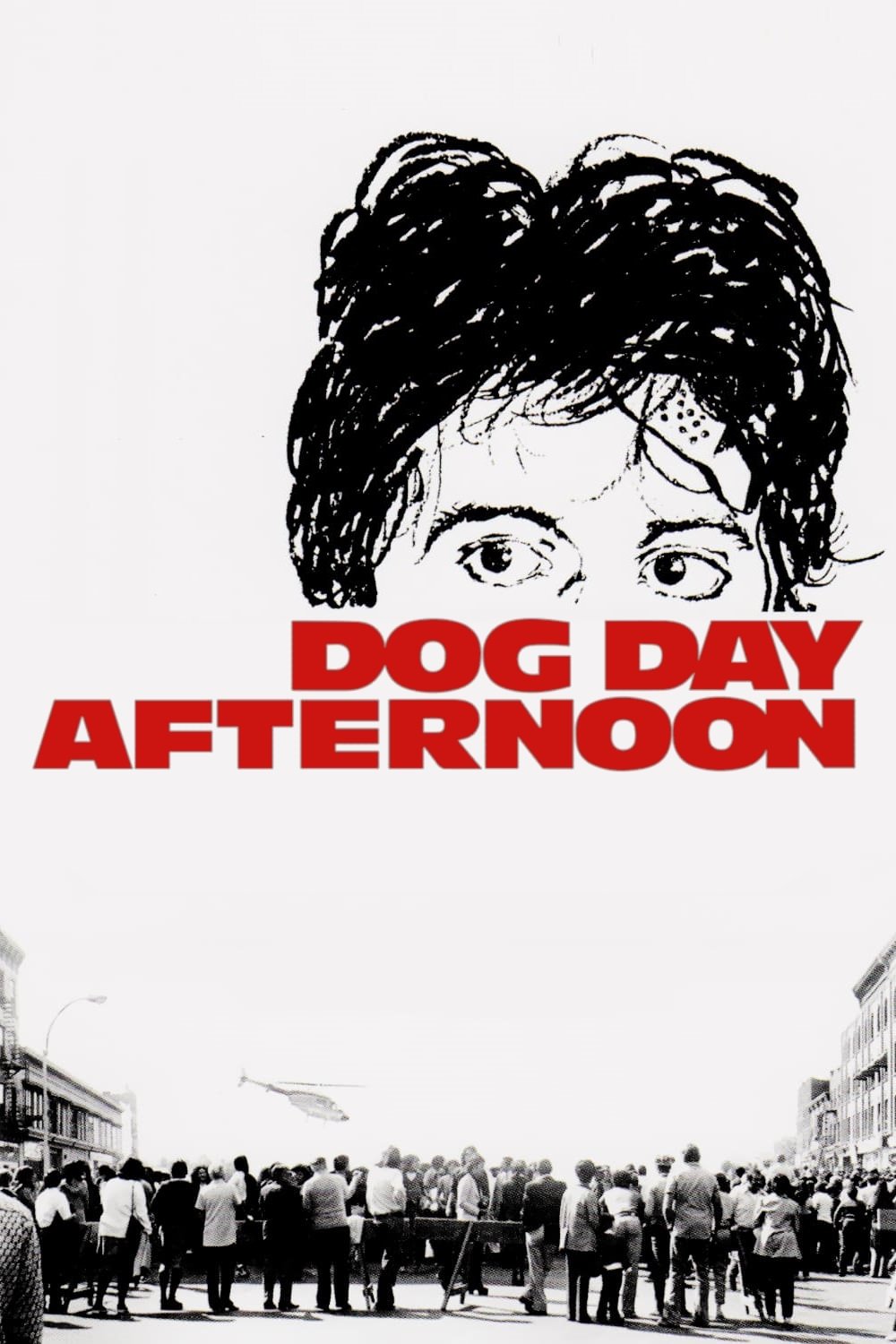
Dog Day Afternoon struck me differently the first time I watched it, precisely because I knew it was tethered to reality. Before I saw a single frame, I’d already internalized the story as “something that happened,” which colored everything that followed. Like so many viewers, there’s a part of me that gravitates towards films advertising themselves as grounded in fact—not because I expect a documentary, but because the “based on a true story” label promises something extra. It’s almost as if it’s granting me special access; I’m being let in on a secret, a glimpse behind the curtain, a collision of fact and fiction where the stakes feel heightened. I often wonder why this connection to reality enhances my engagement. For me, it’s about the thrill of seeing the ordinary collide with the extraordinary—normal people pushed to extremes, an everyday world suddenly unmoored. When a film like Dog Day Afternoon says it adapts a real event, I approach it differently than I would a wholly invented tale; it becomes a prism for examining broader truths about society, institutions, and the unpredictability of human nature.
Still, I realize I’m making a leap—the phrase “based on a true story” is loaded with assumptions. I’m implicitly trusting filmmakers not just to entertain, but to inform, even if only with emotional truths. Yet, I also know reality is slippery, and the “true” label can oversimplify or obscure as much as it reveals. For me, the question isn’t whether every detail happened exactly as shown, but why filmmakers choose to highlight some aspects and downplay or omit others. My impulse to parse out what’s “real” and what’s “cinematic” isn’t just academic; it’s personal. I’m searching for meaning, not just facts. I notice that in films like Dog Day Afternoon, the “truth” is less about a list of verifiable happenings and more about the choices made in retelling. This creates an ongoing tension for me: am I responding to the facts of history, or to the creativity and interpretation layered atop those facts?
Historical Facts and Cinematic Interpretation
My understanding of Dog Day Afternoon changed dramatically when I started tracking down the real events behind the story. Learning that the film draws from an actual 1972 Brooklyn bank robbery not only intensified my curiosity but also made me more aware of how history is trimmed and shaped for narrative. I see this process as a kind of translation: what the world offers is never quite enough for cinema, and so filmmakers distill, rearrange, and sometimes conflate moments for the sake of rhythm, clarity, or focus. In the case of Dog Day Afternoon, I noticed that the real-life crime was complicated, chaotic, and, at times, ambiguously motivated. The cinematic version, in contrast, crafts a potently distilled scenario with clearly articulated tensions, personalities popping off the screen, and an urgency that feels almost claustrophobic from start to finish.
I’ve often reflected on the process by which real-life events become cinematic narrative. Dog Day Afternoon, for me, exemplifies just how porous the boundary can be. I learned that the film’s protagonist—called Sonny in the movie, mirroring John Wojtowicz in real life—was only one of several individuals involved. The film largely confines the action to the bank and the immediate events of the standoff, compressing what in reality unfolded over many hours into a tight, propulsive narrative. Some characters, such as the tellers or police negotiators, become composites or are embellished for dramatic effect. Even the dialogue—so spontaneous, so full of nervous energy—stems from improvisational roots and script refinement, rather than from any transcript of actual conversations. I see this as a deliberate choice to give the audience something concentrated, potent, and immediately graspable.
What fascinates me is how the film creates the feeling of “truth” through details that may not be strictly factual but feel emotionally or psychologically authentic. In transforming the real events, filmmakers introduce elements—clashes with police, the pressure cooker environment of the bank, the shifting loyalties of bystanders and hostages—that seem entirely plausible, if not strictly accurate. For example, the real-life motivations of Wojtowicz were complex, encompassing both personal crisis and wider cultural issues. The film pushes some of these into clearer view, such as Sonny’s relationships and desperate pleas, while leaving other aspects, like the interior dynamics between the criminals, streamlined and sometimes sanitized. My takeaway is that historical events, once filtered through cinema, become stories with beginnings, middles, and ends; life rarely unfolds so cleanly.
What Changes When Reality Is Shaped for Cinema
As I look closer at Dog Day Afternoon, I see the process of adapting fact to fiction as a series of calculated compromises. I notice how the film navigates the tension between strict accuracy and the need to tell a compelling story. The urge to create a dramatic arc—one that carries viewers from confusion to climax—means that certain realities are necessarily altered or discarded. For me, the practical trade-offs become evident in choices about pacing: crises that may have taken hours or days in real life are condensed into a few breathless minutes onscreen. Relationships that were perhaps fraught or ambiguous in real life become bolder and more easily read in the film. The necessity of cinematic economy means that certain characters are collapsed into one, or are invented altogether, creating an internally consistent world even as the details diverge from the historical record.
I’m intrigued by what is highlighted and what is left in shadow. For example, the real robbery’s social and political context is difficult to encapsulate fully, so the film centers on elements that can be dramatized—the love story, the spectacle of media attention, the fraught dance with law enforcement. In doing so, the filmmakers condense wider social issues into scenes and lines of dialogue that must already function as character development or tension-building. I see how this can leave some aspects richer—lived-in, specific, tangible—while relegating others to the background. In watching, I catch myself wondering about the things that were omitted: the granular psychological detail, the slow accretion of tension, the many small interactions that a two-hour film can’t hope to reproduce. The reality behind the film becomes, in my mind, a kind of ghostly presence—shaping what I see, but forever just out of frame.
These trade-offs aren’t simply decisions about trimming or embellishing; they’re about constructing meaning. I witness how historical imprecision can actually foster deeper audience engagement, inviting me to read between the lines or fill in gaps with my own inferences. Conversely, some details—like the famous “Attica!” chant—are heightened almost to the point of mythology, compressing broader social unrest into a moment uniquely cinematic and unforgettable. To my mind, the selection and presentation of material reveal not just how history is retold, but how it is continually renegotiated in the popular imagination. The version of the story I receive is conditioned by countless decisions about what to omit and what to amplify, and my own view of “reality” is shaped by this process of storytelling adaptation.
Audience Expectations and the “True Story” Label
My sense of a film is inevitably shaped by how it is marketed—particularly when it claims to be a “true story” or “inspired by actual events.” When a work like Dog Day Afternoon presents itself as grounded in real experience, I enter the screening with expectations: that I’ll learn something about an actual event, or that the human drama on display will be more “authentic” than if it were wholly invented. I notice this changes the way I process each scene; I wonder which moments have documentary roots and which are inventions. There is also a heightened sense of empathy or suspense. After all, knowing real people once stood in similar circumstances makes the stakes feel pressing, even painful, rather than abstract.
For me, the distinction between “this actually happened” and “we imagined this” is never clear-cut, yet it influences my response. Films that are strictly fictional invite a different approach from me: I look for metaphor, fantasy, or allegory. In contrast, when I know I’m dealing with adapted fact, I start interrogating the material differently, perhaps even questioning how faithfully the filmmakers have preserved the core dilemmas and personalities. The “true story” label renders the film porous to outside knowledge—historical context, assertions made by those involved, or accounts by journalists. My critical faculties sharpen; I become more attuned to issues of accuracy, context, and plausibility.
Still, I’m aware of how easily these expectations can be subverted. When filmmakers overtly state or even gently imply their story is “true,” they wield a particular power over my imagination. I find myself asking: how much latitude is there in retelling real lives? How much responsibility do I, as an audience member, have to seek out the facts myself? I notice how sensitive I am to significant departures from history—sometimes feeling jarred if the film diverges into territory that seems misleading, other times accepting changes as part of the artistic project. Often, these reactions aren’t about dispassionate accuracy but about how effectively the film communicates something emotionally or culturally resonant.
The audience’s relationship with reality becomes a kind of ongoing negotiation. When films are openly fictional, I enjoy a freedom from these concerns; narrative rules take precedence, and believability is a product of internal logic, not verifiability. Yet with Dog Day Afternoon, the presence of the “true” label acts as an anchor and sometimes a burden. It compels me to consider the duty of care owed to real participants and events while also marveling at the imaginative leaps cinema is capable of taking. My appreciation for the film is layered: I relish the tension between documentary fidelity and creative storytelling, even as I am constantly aware that the “truth” has many faces and levels.
Final Perspective on Fact vs Fiction
Reflecting on Dog Day Afternoon, I come away with a deeper sense of how factual knowledge reshapes my interpretation of a film. When I know which elements are drawn from reality and which are imaginative elaborations, my experience grows richer, layered with complexity. I find myself reading scenes doubly: on one level, simply as drama; on another, as an interpretation of real, lived experience. This doubling creates a strange but fascinating effect—both anchoring and destabilizing my emotional response. The more I learn about the facts, the more questions I have about the process of adaptation: why emphasize this detail, why omit that context, how does shaping narrative around truth alter its resonance?
My experience is not about grading the film’s adherence to reality, but about savoring the interplay between source and adaptation. Awareness of fact prompts me to watch more carefully—to consider historical echoes, cultural implications, and the emotional weight carried by actors portraying real people. At the same time, I’m aware that all storytelling, even when committed to fact, is an act of transformation. The borders between what happened and what is told are porous, constantly shifting under the pressure of narrative necessity, performance, and audience expectation. For me, this is not a weakness but a source of energy; knowing what’s real doesn’t diminish the power of the film, but expands my appreciation for the choices behind the final product.
In the end, the knowledge of what is real and what is invention in Dog Day Afternoon profoundly influences not just my understanding of the story, but the way I relate to it emotionally and intellectually. I find myself drawn into a process of ongoing interpretation—a dialogue between history, imagination, and audience response. The boundaries between fact and fiction remain important, not as lines never to be crossed, but as fields of meaning for both filmmakers and viewers to explore. The lasting value, for me, is not in simple accuracy, but in the thoughtful way the film mediates reality through the lens of storytelling.
For additional context, you may also explore the film’s overview and how it was received by audiences and critics.
🎬 Check out today's best-selling movies on Amazon!
View Deals on Amazon