
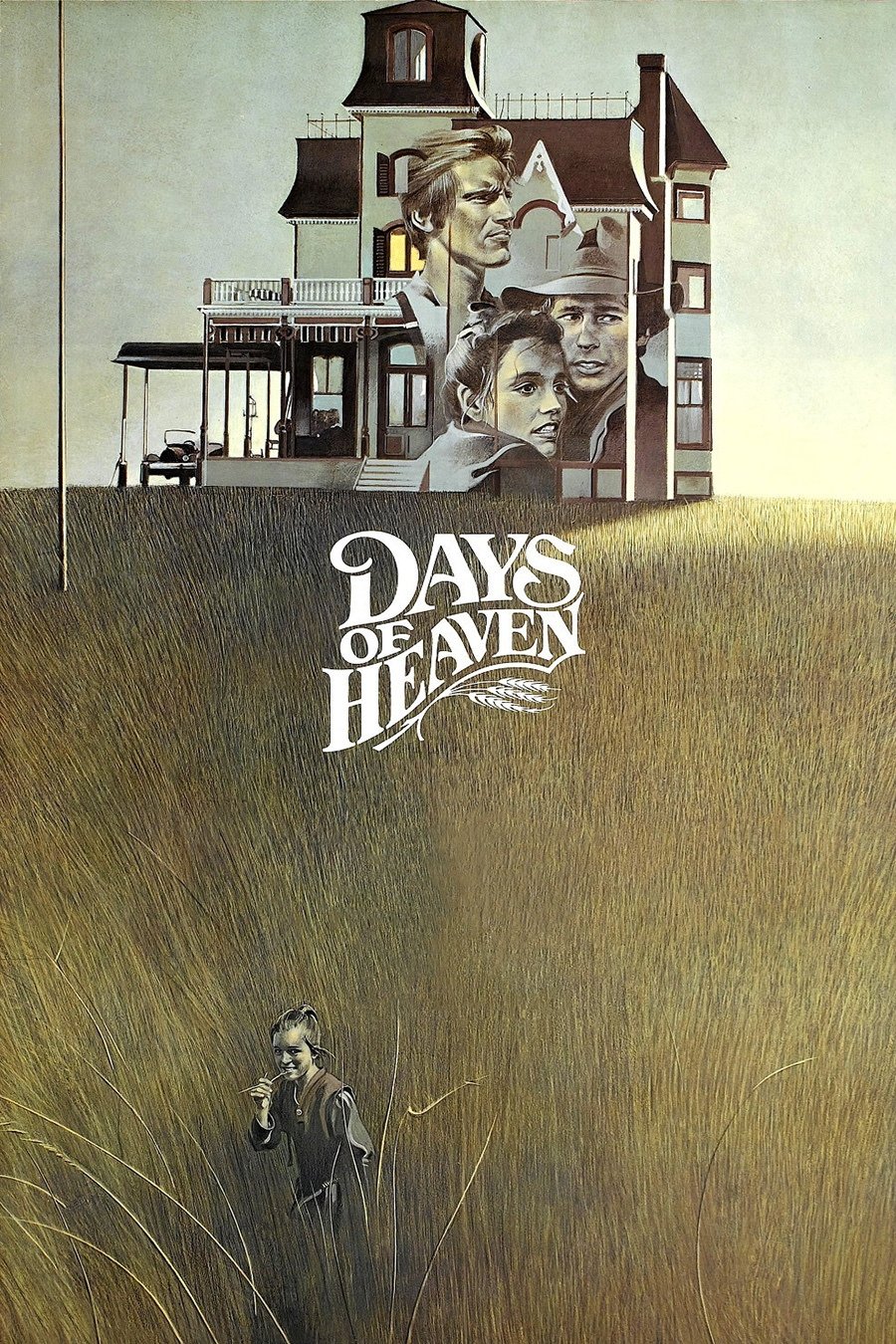
Is This Film Based on a True Story?
When I first saw “Days of Heaven,” I couldn’t shake the feeling that it lived somewhere between dream and memory—a story echoing with so much authenticity that I wondered if it must be tethered to an actual event or real people. After delving deep into its origins, I realized the film is not based on a true story, nor directly inspired by specific real-life events. Its narrative emerges largely from the imagination of writer-director Terrence Malick, rather than from documented history, personal memoirs, or the chronicles of any single individual. Despite its remarkable period detail and evocative recreation of early 20th-century rural America, I discovered that “Days of Heaven” is, in its plot and characters, an entirely fictional work.
The Real Events or Historical Inspirations
Although I found no direct link between “Days of Heaven” and any particular documented event or real person, I did notice how deeply Malick draws from the fabric of the American experience during the early 1900s—especially as it played out in the wheat fields of Texas and the American Midwest. While I searched for actual ranchers, farmhands, or love triangles from that period that might have served as templates, I found none. Instead, what anchored the film in reality for me was its foundation in a meticulously researched and vividly rendered historical context—a world where itinerant laborers roamed from job to job, where class divides were both pronounced and sometimes fluid, and where wealth and poverty often collided under the open sky.
Malick’s background in philosophy and literature surfaces here, shaping the story not from specific headlines but rather from a broader tapestry of social history, oral traditions, and even period photography. I recognized elements that felt lifted from the collected memories of the Great Plains—stories told through photos by the likes of Lewis Hine, whose images of rural laborers spoke to me through the film’s visuals. The harsh work, the hope for a better life, the transient nature of employment, and the perils of love and survival: all were common themes in stories my own family told about their ancestors’ migrations across rural America. But as far as specifics go—names, incidents, direct quotes—“Days of Heaven” is a work of original fiction, albeit one saturated with the echoes of lived experience from a broader historical moment. I saw it less as a chronicle of any one life and more as a poetic condensation of a thousand anonymous stories.
What Was Changed or Dramatized
Because the film isn’t based on a true story per se, the idea of “changes” and “dramatization” lands a bit differently for me. What’s interesting to note, from my research, is how Malick and his team made deliberate choices to craft a narrative that feels both mythic and intimate, even though it isn’t derived from the specific blueprint of a historical case. For example, the central love triangle—between a drifting worker, his lover, and a wealthy, terminally ill farmer—serves as a dramatic construction rather than a documentary transcription.
What intrigued me was how Malick imbued the film with the textures of real life, even while spinning a tale built to evoke classic literature and folklore. The plot device of two characters pretending to be siblings to gain employment isn’t plucked from any real newspaper clipping I could find, but it resonates with the types of improvisations and secrets that were sometimes part of survival among the rural poor. Meanwhile, the depiction of massive, almost surreal locust swarms may seem like exaggeration, yet these were known to be historically accurate to the plains, though their timing and symbolism are enhanced here for narrative effect.
Malick’s use of time is notable too. The film compresses experiences that likely would have unfolded over many years into a tight, cinematic season of change. Emotional dynamics are heightened, and chance events—chaotic violence, sudden death, and devastating fire—become pivots for fate. For me, these are all classic hallmarks of artistic dramatization. The film intentionally blurs lines between the real and the imagined, the everyday and the extraordinary, pushing the emotional possibilities of a specific historical milieu into the universal territory of parable and legend. What I see in “Days of Heaven” is not a factual recounting, but a creative transformation—life experience distilled and intensified, rather than replicated verbatim.
Historical Accuracy Overview
I approached “Days of Heaven” curious about whether it stood up to scrutiny in terms of historical accuracy, at least concerning period setting and daily life. I learned that Malick’s approach to the physical and social world of the film is rooted in an extraordinary commitment to the aesthetic and material reality of 1916 Texas Panhandle and the surrounding agricultural landscapes. The farm equipment, costume design, and even the rhythms of field labor presented in the movie are the result of extensive research. I remember reading accounts that the production team relied heavily on period photography, written accounts, and surviving artifacts to ensure that every prop, costume, and even the architecture of the farmer’s house would convey the world of turn-of-the-century American agriculture as authentically as possible.
For me, watching the film with some background knowledge of rural American history deepened my appreciation for these details. The socioeconomic divide between landowners and migrant laborers, the epic scale of industrial farming, and the reliance on seasonal itinerant workforces are all consistent with what I’ve read from historians recounting the early 20th century. The prevalence of illness—particularly among those overworked or facing poor living conditions—tracks with realities of the time. And, perhaps most poetically, the climactic fire that engulfs the wheat fields is not only visually striking but also historically feasible: such disasters were a real and persistent threat during the harvest season.
Yet, for all these historically accurate textures, I realized the true departure from reality is in the contrived personal drama of the main trio. I could find no evidence of a specific event that so closely mirrored the cinematic narrative, especially in the romantic and tragic details. The characters’ backstories, their alliances and betrayals, and the story’s resolution are pure invention. I saw Malick shaping an emotional reality that uses the facts of the era as a kind of living canvas, but without attempting to document any one life or circumstance. Historical accuracy, then, is preserved in the surface and spirit of the world depicted, while the heart of the story beats thanks to invention and stylization.
I found myself most struck by how the film blurs lines—not by rewriting historical incidents, but by suffusing invented events with the ring of true lived experience. If I was hoping for a “based on a true story” caption I could confirm with genealogies or local archives, I came away empty-handed. But if I was searching for a movie that makes the everyday struggles and quiet dramas of the past feel both grand and personal, “Days of Heaven” delivered a kind of accuracy no mere biography could provide.
How Knowing the Facts Affects the Viewing Experience
For me, knowing the factual background—or, more precisely, understanding what isn’t “true” in the traditional sense—allowed me to watch “Days of Heaven” in a different way. I no longer spent time second-guessing whether individual characters had real-life counterparts or scouring historical sources for mention of a tragic love triangle on a Texas ranch. Instead, I could focus on how the film evokes the feeling of a lost world, and how it translates the collective American experience into a deeply poetic narrative.
Understanding that the story is fictional, but set against a well-documented social and physical environment, made me more attentive to the details Malick and his team crafted for authenticity. The farm machinery, the techniques of harvesting, the rhythm of seasonal labor, and the arrival and departure of workers meant something more: they became symbols of a vanished past, rather than clues to a specific historical puzzle. I felt free to appreciate the film’s artistry in conjuring the mood and sights of early 20th-century rural life without the distraction of matching plot points to reality.
Paradoxically, I found that the absence of a direct, real-life origin for the character arcs made the emotional truth of the film resonate more deeply. The universality of longing, desperation, hope, and regret was clearer to me than if I were tracing a single person’s biography. If I had entered the film looking for historical fidelity in its storytelling, I left with something different: a sense of immersion in a world both imagined and true, observant of real conditions even as it tells a story born from creative freedom. The dramatic license taken with events and characters didn’t diminish the film’s authenticity for me; instead, it sharpened my awareness of how stories about the past can be both inventions and honest reflections at the same time.
This understanding also shaped my expectations. I stopped anticipating the plot twists and outcomes found in classic Hollywood treatments of “true stories,” and instead embraced the contemplative pacing and emotional ambiguity present in “Days of Heaven.” The knowledge that this was fiction inspired by real social situations, rather than fact-based narrative, let me appreciate Malick’s choices as interpretations of collective memory, translated through dreamlike imagery and spare dialogue. It’s a different kind of truth—not the verifiable fact of newspapers or diaries, but the evocative truth of impression and mood, captured on film.
Ultimately, watching “Days of Heaven” as a work of historical fiction informed by real-world details, rather than as docudrama or biopic, enriched my interpretation. I became more alert to the power of storytelling to reach into the past—not to recover every detail exactly as it occurred, but to illuminate enduring struggles and fleeting joys in ways both intimate and epic. For me, the film’s commitment to evoking the era’s atmosphere, rather than reconstructing an exact event, invites viewers to participate in the process of imagining the past, recognizing that so much history lives on not as recorded fact, but as feeling and memory.
After learning about the film’s origins, you may want to see how audiences and critics responded.
🎬 Check out today's best-selling movies on Amazon!
View Deals on Amazon