
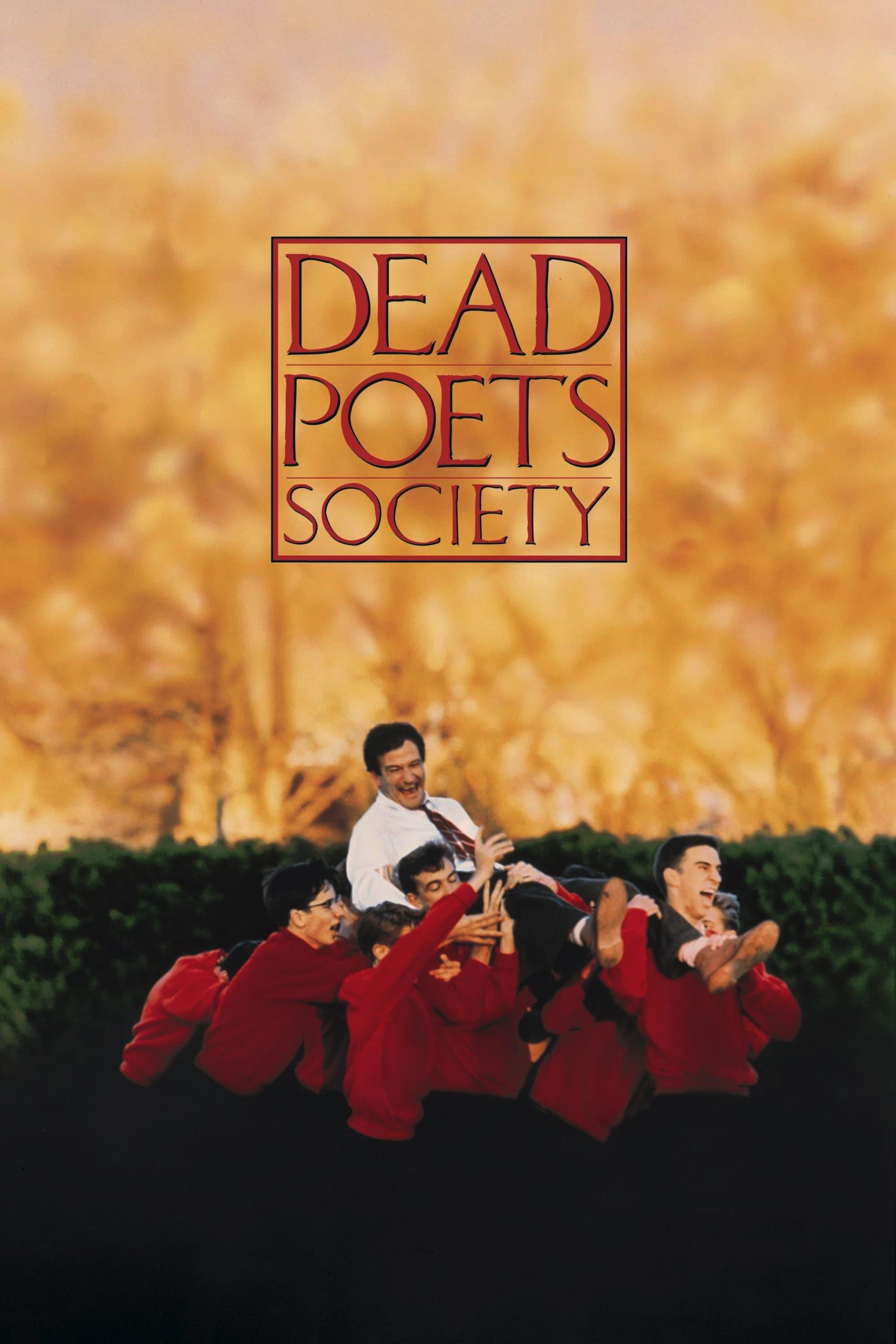
The Question of Truth Behind the Film
The first time I watched “Dead Poets Society,” I found myself drawn into its world not just by the evocative poetry and the intense classroom dynamics, but by a palpable sense that this story could have unfolded, somewhere, somehow, in the annals of real American prep school history. I recall wondering, as I always do with films set in seemingly authentic milieus, whether the characters who captured my attention might have walked those autumnal corridors in actuality. So often, I notice audiences like myself gravitate to that central question: “Is it based on a true story?” The answer can fundamentally color how we engage with the work.
When I approach any film framed with a question of authenticity, I’m reminded of the human tendency to seek meaning in what “really happened.” For some reason, “fact” appears to confer legitimacy on a narrative, as though a tale’s value increases if it had breathing, historical participants. The phrase “based on a true story” seems to suggest a kind of verification, almost documentary in flavor, as though the film offers us privileged access to something beyond story—it becomes an act of preservation or exposure. I see that audiences, including myself, often come primed to believe and absorb more deeply, knowing—or believing—what we’re about to witness has some historical precedent. Sometimes, this can even override our critical faculties, pushing us to accept dramatized actions as echoes of the real. In the case of “Dead Poets Society,” it’s this oscillation between expectation and dramatic illusion that makes the question of authenticity so intriguing for me.
What fascinates me most is how quickly assumptions about the film’s truth level take root in discussions. After a screening, I’ve overheard debates fueled by remarks like, “That would never have happened,” or “I bet the teacher was inspired by a real person.” Such comments reveal how, for many viewers, the boundaries between historical record and creative invention aren’t sharply drawn, but rather fluid and responsive to the mood set by the filmmakers. I find myself caught in this same tension—as if knowing the “actuality” of events determines the legitimacy of my response. That’s why, examining the factual grounding of this film becomes so vital to my understanding of its purpose and impact.
Historical Facts and Cinematic Interpretation
In approaching “Dead Poets Society,” I found myself instinctively searching for the outlines of its historical roots. The film’s depiction of Welton Academy, with its rigor and tradition, might lead me to imagine a direct parallel to a real preparatory school or a specific scandal in a New England boarding school. Yet, in researching its origins, I discovered that the story is ultimately an original creation, even if it draws from the broad atmosphere and culture that permeated mid-century private education.
I quickly realized that screenwriter Tom Schulman based his script loosely on his own experiences at Montgomery Bell Academy in Nashville, Tennessee. That detail situates the film in a liminal space between strict historical record and personalized reflection. Knowing that some elements—like the inspirational teacher archetype or the push-and-pull between authority and passion—reflect true dynamics he perceived, made me pay extra attention to the specificity of the classroom scenes. However, the storyline, the characters’ names, and their precise arcs do not draw from documented events. Instead, I see a creative process at work: real, emotional truths and cultural tensions are abstracted and recombined to construct a narrative designed for maximum resonance.
In these reinterpretations, real moments are often condensed for effect. Movies like this distill years of academic and adolescent experiences into the span of a school year, grafting real concerns—student conformism, generational conflict, fear of failure—onto fictional events that create catharsis. I notice that the brooding melancholy of Neil Perry’s trajectory, the subversive energy of John Keating’s teaching, and the formation of the eponymous society function less as attempts at historical veracity and more as vehicles for emotional truth. By reshaping pieces of the past—whether actual or collectively remembered—into cinematic events, Schulman and the filmmakers construct what I consider a mosaic that owes as much to memory and cultural critique as to reportage.
It’s important for me to recognize how the film reorganizes space and time for clarity. Sometimes, one teacher’s anecdote can inspire an entire composite character, and singular moments of rebellion or camaraderie are amplified to provide a cumulative impact. This selective shaping, while not a literal retelling of events, achieves something tangible: it creates the impression of historical authenticity, a feeling that I’m glimpsing a reimagined but truthful world. Yet, every choice of condensation and reordering serves narrative needs over exhaustive documentation, making the film a storytelling act first and a record second.
What Changes When Reality Is Shaped for Cinema
Reflecting on the way “Dead Poets Society” transforms lived experience into dramatic form, I encounter a host of practical compromises that come with adapting reality to the cinema screen. I often grapple with the fact that no film—even those that purport to be documentaries—can avoid the demands of narrative structure, pacing, and emotional engagement. From my perspective, each alteration is a negotiation: historical precision must sometimes yield to clarity, emotional momentum, or thematic coherence.
For instance, I recognize that a real teacher might inspire students over years, influencing dozens in subtle, incalculable ways. But for the purposes of this film, Keating’s influence is telescoped into a handful of carefully crafted classroom encounters. This is a deliberate compression; what might take semesters, if not years, to unfold in a real educational environment blossoms in a single autumn or spring. I am aware that by distilling these moments, the film trades in lengthy, intricate development for dramatic sharpness—a choice that leaves some of the messiness and ambiguity of real life on the cutting-room floor.
I am also struck by how the film’s approach to authority and rebellion achieves an archetypal clearness that rarely exists so starkly in reality. It streamlines the conflicts between tradition and innovation into emblematic confrontations—headmaster versus teacher, parent versus child, conformity versus selfhood. In my experience, real institutional struggles emerge over bureaucratic maneuvers, subtle pressure, and ongoing negotiation, but the film must prioritize the most impactful and resonant scenes. This distillation creates the kind of clarity that aids immediate understanding and emotional reaction, even if it obscures certain complexities that documented history might retain.
One of the greatest effects of shaping reality for the screen, as I see it, is the amplification of symbolism. In my viewing, almost every prop and poem, every classroom conversation, is charged with metaphorical value—carpe diem is not merely a lesson, but a recurring melody that unites disparate episodes. In lived experience, I know that such neat thematic unity is rare, and yet, it makes the film accessible and interpretable. I often find myself willing to overlook factual imprecision as long as the symbolic language remains coherent. At the same time, I become more attuned to the costs: composite characters and arranged outcomes may unintentionally flatten the richness of real individuals and events, reducing them to functions within a neat arc.
For me, recognizing these trade-offs allows me to enter a film with a healthy skepticism and an appreciation for the very artifice at play. The tension between capturing the unpredictability of genuine events and the controlled progression of screenplay remains a defining aspect of my viewing experience. I see how the story’s emotional truth—its portrayal of longing, repression, and exuberant rebellion—often outpaces its literal connection to any one set of people. The line between fact and interpretation blurs, transforming the film not into a record of an era but a meditation on the challenges and awakenings that define youth and mentorship.
Audience Expectations and the “True Story” Label
Through my years spent watching and analyzing films, I’ve grown increasingly aware of the unspoken contract that springs up when a film is labeled as a “true story,” “inspired by real events,” or wholly “fictional.” These distinctions fundamentally shape how I—and those around me—perceive both the events depicted and the characters’ emotional journeys. The act of labeling is rarely neutral; rather, it primes me with values, skepticism, or heightened emotional investment, depending on which phrase precedes the narrative.
If a film describes itself as factually accurate, my approach invariably shifts. I become almost forensic in my engagement, searching for signs of authenticity—costume details, period language, and the plausibility of relationships. In “Dead Poets Society,” which never overtly claims to be a historical record but is set in a hyper-specific period, I sense an unspoken challenge to identify with, and perhaps locate, these characters in an actual past. The verisimilitude of the setting and the rawness of the classroom dynamics evoke for me a sincerity that “feels real,” thus subtly affecting how much I trust, question, or critique each beat in the story.
In contrast, when a film is described as “inspired by true events”—as I sometimes hear in discussions about this film, given Schulman’s educational background—I grant the creators a greater degree of artistic license. The phrase tells me to look for emotional or thematic truths rather than factual precision. I am less troubled by narrative inventions or altered chronologies, provided the film maintains resonance. This allows me to relax my forensic instincts and open myself to allegory, interpretation, and heightened symbolism, as I understand that the purpose is not mimicry but evocation. I notice that other viewers respond similarly: some embrace the latitude, while others feel a sense of loss, as if the material has slipped too far from its foundation.
When I understand a film to be pure fiction, framed by artificiality or exaggerated style, I become more willing to forgive improbabilities and unlikely coincidences. In this mode, I look for what the film makes me feel, rather than what it claims to faithfully represent. With “Dead Poets Society,” even though its roots are traceable to a real institution and cultural memory, its refusal to label itself as memoir grants me license to appreciate its characters as types, its moments of transcendence and tragedy as theatrical devices rather than prescriptions for real life.
What surprises me, year after year, is how the label forces me to confront my own biases about value and responsibility. When I assume a story is “true,” I may give its emotional arguments more weight; when I know it is “fiction,” I may treat its lessons as suggestions, not evidence. In both cases, my investment in the material shifts—sometimes subtly, sometimes fundamentally. I become aware of the filmmakers’ choices, how they ask me to trust them, and the degrees of creative freedom I’m willing to allow. This is why the question of what is real versus what is invented remains such a live wire for me as a viewer.
Final Perspective on Fact vs Fiction
As I return to “Dead Poets Society” and reflect on its enduring impact, I am increasingly convinced that factual awareness reshapes—not necessarily enhances or diminishes—how I interpret the film’s message, characters, and social critique. Recognizing the film’s grounding in Tom Schulman’s personal recollections, and its deliberate move away from documentary realism, shades the meaning I draw from each scene. Instead of seeking corroborating evidence for every emotional high or narrative shift, I focus on how the film distills and refracts broad cultural anxieties about adolescence, authority, and self-expression within a framework assembled from lived experience, heightened for effect.
Knowing the boundaries of what is real and what is invented helps me calibrate my responses: I am less likely to mistake the film’s dramatic conclusion for a factual accusation against institutions, and more inclined to appreciate it as an articulation of perennial tensions. I become sensitive to the film’s technique—its use of time, its symbolic motifs, its orchestrated pacing—and recognize that these are tools of the storyteller, not a historian’s ledger. This clarity allows me to distinguish between history and allegory, all the while engaging with both on their own terms.
Ultimately, my awareness of a film’s factual basis acts as a lens, reframing my experience without dictating how much I care about the outcome. In watching “Dead Poets Society,” I am reminded that the power of cinema lies not just in its ability to replicate the past, but in its invitation to reinterpret, reimagine, and reinvest in the lives it brings to the screen. Sometimes, the value of a narrative emerges from its resonance with lived experience, rather than its verifiability. And yet, being able to distinguish inspiration from history, and dramatic flourish from record, equips me with a richer, more nuanced appreciation of both the story told and the craft that shapes it.
For additional context, you may also explore the film’s overview and how it was received by audiences and critics.
🎬 Check out today's best-selling movies on Amazon!
View Deals on Amazon