
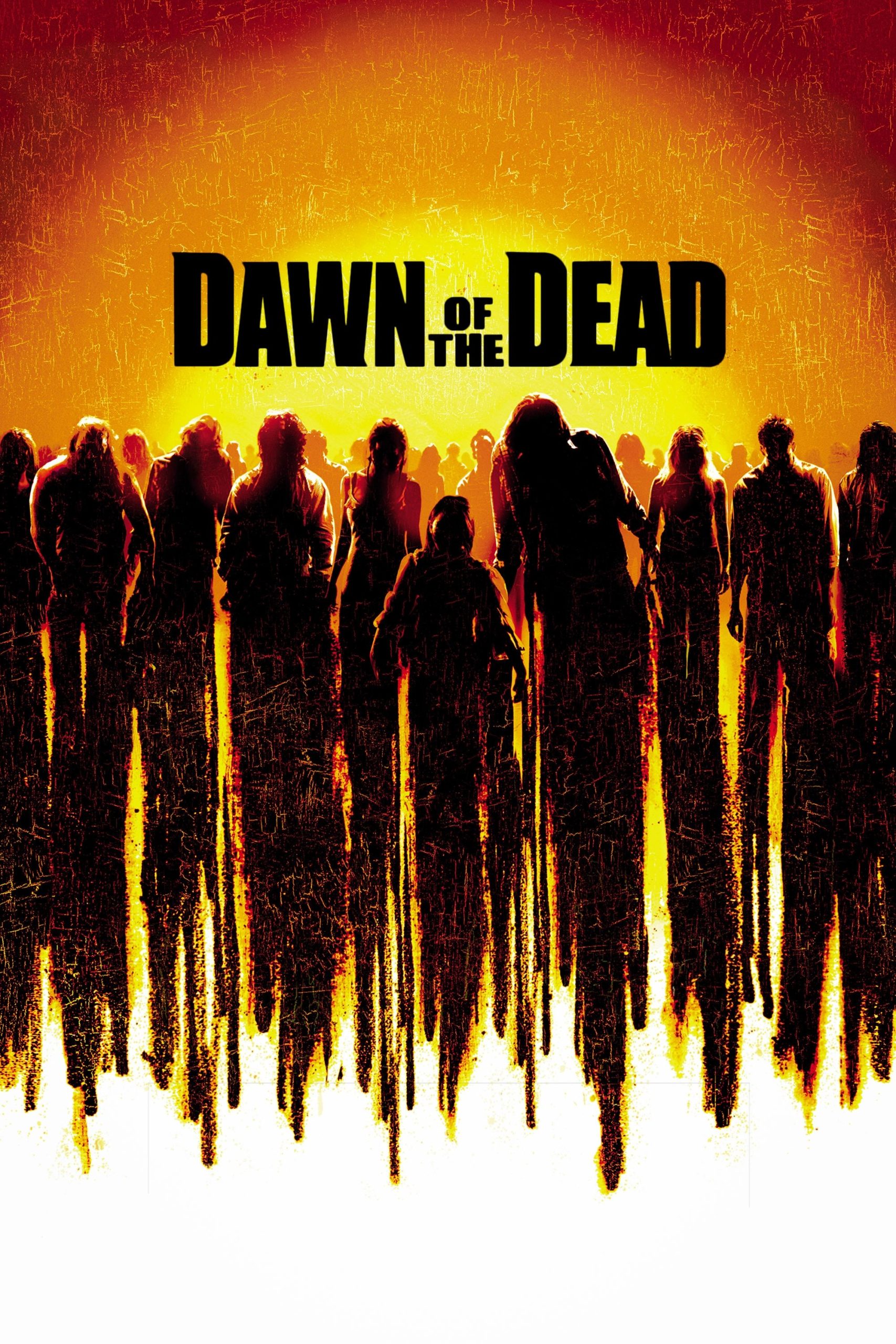
The Question of Truth Behind the Film
Whenever I sit down to watch a genre film like George A. Romero’s “Dawn of the Dead,” I find myself grasping with the perennial question of reality versus fiction, even when zombies roam the screen. There’s an interesting tension that emerges as I ask myself: does it matter whether the events on display are rooted in truth? I’ve noticed that audiences, myself included, instinctively look for a thread connecting what we witness in a film to concrete reality—a quest for something “based on a true story.” Even in works as fantastical as “Dawn of the Dead,” I catch myself wanting to know if the inspiration is drawn from actual events or societal fears that once existed. This way of approaching cinema seems almost automatic, as if the “truth label” carries with it a certain promise: the film won’t just entertain, but might also teach, warn, or illuminate something essential about the human experience. I think this expectation arises from our cultural trust in cinema’s power to represent, reconstruct, or even rewrite reality. Labeling a film as “true” alters the viewing lens; it convinces me—and perhaps others—that I am not just consuming fiction, but rather participating in a reflection of our world, filtered through the filmmaker’s vision.
Historical Facts and Cinematic Interpretation
Turning my attention to the historical underpinnings of “Dawn of the Dead,” I don’t find it grounded in any one singular event. Instead, what strikes me is how the movie is a composite response to the cultural anxieties of its era. Romero’s creation doesn’t set out to re-enact a documented disaster or real-life outbreak. It draws its life not from historical headlines but from the period’s pulse—consumer society, fear of societal collapse, the relentless march of “progress.” Yet, this absence of direct historical events doesn’t diminish the force of the film’s commentary for me. In my experience, even a wholly fictional premise like a zombie apocalypse can be suffused with traces of reality: footage reminiscent of TV news, the siege mentality echoing actual disasters, or the unease of being trapped within a recognizable yet apocalyptic mall. Rather than reshaping specific events, Romero reshapes cultural sentiments—translating headline fears, economic uncertainty, and the architecture of everyday American life into an allegorical battlefield between living and undead.
What especially strikes me is how “Dawn of the Dead” reorganizes collective memory rather than any singular, documented fact. The familiar faces of newscasters, the recognizable layout of the shopping mall, and the ordinary bickering among survivors all seem borrowed from the textures of actual, lived experience. I end up seeing these choices as purposeful condensations—almost like taking the ambiguity of a decade and distilling its essence into one monumental crisis. Scenes depicting panic shopping, the siege on public locations, and the breakdown of communication all feel like reinterpretations of phenomena that were, or could have been, reported in the nightly news. Here, the cinematic world is neither mere escape nor exact re-creation, but a reshaped reality that echoes with the urgency of the era’s cultural imagination.
What Changes When Reality Is Shaped for Cinema
I often find myself weighing the pragmatic shifts a story undergoes once it moves from the messiness of real life to the clarity of cinematic storytelling. In the case of “Dawn of the Dead,” the trade-offs are particularly apparent to me: authenticity is exchanged for universality, the minute details of any actual event are streamlined into archetypes, and the randomness of life is bent into the arcs and crescendos that films demand. I notice that the depiction of the shopping mall, for example, isn’t just a random backdrop. Romero’s reimagining of this space transforms it from an everyday consumer hub into a fortress, a microcosm of human society under siege—not because this ever happened so literally, but because it crystallizes the threats and anxieties pulsing through the zeitgeist. I see how unnamed fears are shaped into recognizable danger, making the abstract concrete, so that viewers like myself can immediately engage with what’s at stake.
This approach inevitably results in simplification and condensation. I observe that characters are often amalgamated realizations of societal archetypes—the family, law enforcement, media commentators—presented without the full complication of real-life contradictory behaviors. Plot points that would seem implausible or meandering in a documentary or historical account become compacted for narrative drive. But in doing this, filmmakers create a shared grammar—easily accessible and emotionally resonant—meant to evoke, rather than recreate, messy reality. Yet, for me, this process raises questions: what is lost when improvisation in the face of chaos is confined to a neat narrative arc? What nuance is gained when the undramatic repetition or uncertainty of daily survival is distilled into set pieces and climaxes?
I’m struck by the way Romero’s vision seems unconcerned with literal accuracy, focusing instead on amplifying themes—consumerism, alienation, survival—by strategically bending reality. I imagine this is not about misleading the audience, but about choosing which truths to highlight and which details to leave in the background. As I see it, the mall’s surreal emptiness punctuated by carnage stands in for dozens of real locations of banality transformed by crisis in history. There’s a trade, then: specificity for symbolism, and unpredictable chaos for allegorical clarity. It’s a negotiation I suspect every filmmaker faces, even if the genre and the subject matter make the boundaries between fact and fiction so pronounced.
Audience Expectations and the “True Story” Label
Whenever a film is presented with the explicit or implied stamp of “based on a true story,” the viewing experience shifts for me—and, I believe, for many others. I find myself approaching the film’s images, characters, and even color palettes with a heightened sense of scrutiny or empathy. I start asking: What actually happened? Where does embellishment start and reality end? “Dawn of the Dead” never formally invites this interrogation; its subject matter is unmistakably speculative. Yet, because its themes are so deeply rooted in recognizable culture and recognizable fears, I can’t help but overlay parts of my own world experience onto the story, blurring the line between monstrous fantasy and social commentary.
I think the context of the times influences these expectations substantially. If, hypothetically, a film about zombies claimed a basis in real-life events, I would likely attend to the details in search of coded warnings or lessons linked to our world. In contrast, when a work embraces its status as pure fiction or “inspired by” rather than “based on,” I allow myself more freedom to focus on mood, allegory, or spectacle. “Dawn of the Dead” is unambiguous about its invented premise, which grants me the license to interpret its choices symbolically rather than test them for factual accuracy.
I have noticed other movies toggle between labels to achieve various effects. When a film lingers in the ambiguous realm—saying it is “inspired by true events”—it seems to gain an aura of credibility while keeping a safe distance from overt documentary demands. I notice myself, and audiences at large, tend to afford such movies a seriousness or urgency we may not confer upon works that unreservedly announce their fictional status. Even the choice of how to market a film can prime us to search for meaning differently. With “Dawn of the Dead,” the marketing and presentation let me know from the outset that I am stepping into a world of metaphor, not a mirror held up to a particular news event.
Despite its lack of direct factual claims, the verisimilitude in “Dawn of the Dead”—the recognizable mall, the grimly familiar breakdown of order—invites the same kind of reflection I might bring to a dramatization of actual history. I end up asking not what really happened, but what these invented events reveal about the world that produced them. The narrative’s fictional framework allows me to project fears and interpretations onto it, rather than being hemmed in by a checklist of actual events. The “true story” label, when present, frames my analysis through a prism of documentary expectation; its absence reshapes my engagement into something more speculative, yet no less serious.
Final Perspective on Fact vs Fiction
As I think back on my engagement with “Dawn of the Dead,” it’s clear to me that knowing what is factual and what is invented fundamentally reshapes how I approach the film’s meaning. I find that factual awareness functions not as a mere trivia point, but as a compass influencing my interpretive lens. When I’m watching a film rooted in real events, I approach its representation as a kind of argument; every distortion or invention becomes a point of analysis, a choice that must be weighed against an invisible baseline of reality. With a film like “Dawn of the Dead,” positioned firmly in the realm of fiction yet unmistakably steeped in recognizable realities, I experience both liberation and uncertainty: I’m free to interpret themes as metaphors untethered from documentary rigor, yet I’m also compelled to search for echoes of truth in the fantastical elements on screen.
I realize that the very absence of a clear “true story” foundation gives “Dawn of the Dead” its power as a text open to multiple readings. Without the guardrails of historical precision, I’m encouraged to probe what the film reveals about the anxieties, hopes, and contradictions of late 20th-century America—or any era facing change and upheaval. The zombie apocalypse, to me, becomes less about hypothetical monsters and more about cultural crisis, with the facts lying not in the plot but in the feeling it evokes about the world I inhabit.
This interplay between fact and fiction doesn’t diminish my experience as a viewer—instead, it deepens it. I find myself re-examining what I expect from films that trade on historical fact versus those that declare their imagination. Each category brings its own kind of truth, its own demands, and its own opportunities for reflection. While I may approach a fact-based drama with a historian’s skepticism, I approach “Dawn of the Dead” like a dream interpreter, seeking meaning in invention rather than accuracy. The knowledge of what is “real” and what is not simply shifts the sort of conversation I have with the film—one not about fidelity to the past, but about resonance with the present and speculation about the future.
For additional context, you may also explore the film’s overview and how it was received by audiences and critics.
🎬 Check out today's best-selling movies on Amazon!
View Deals on Amazon