
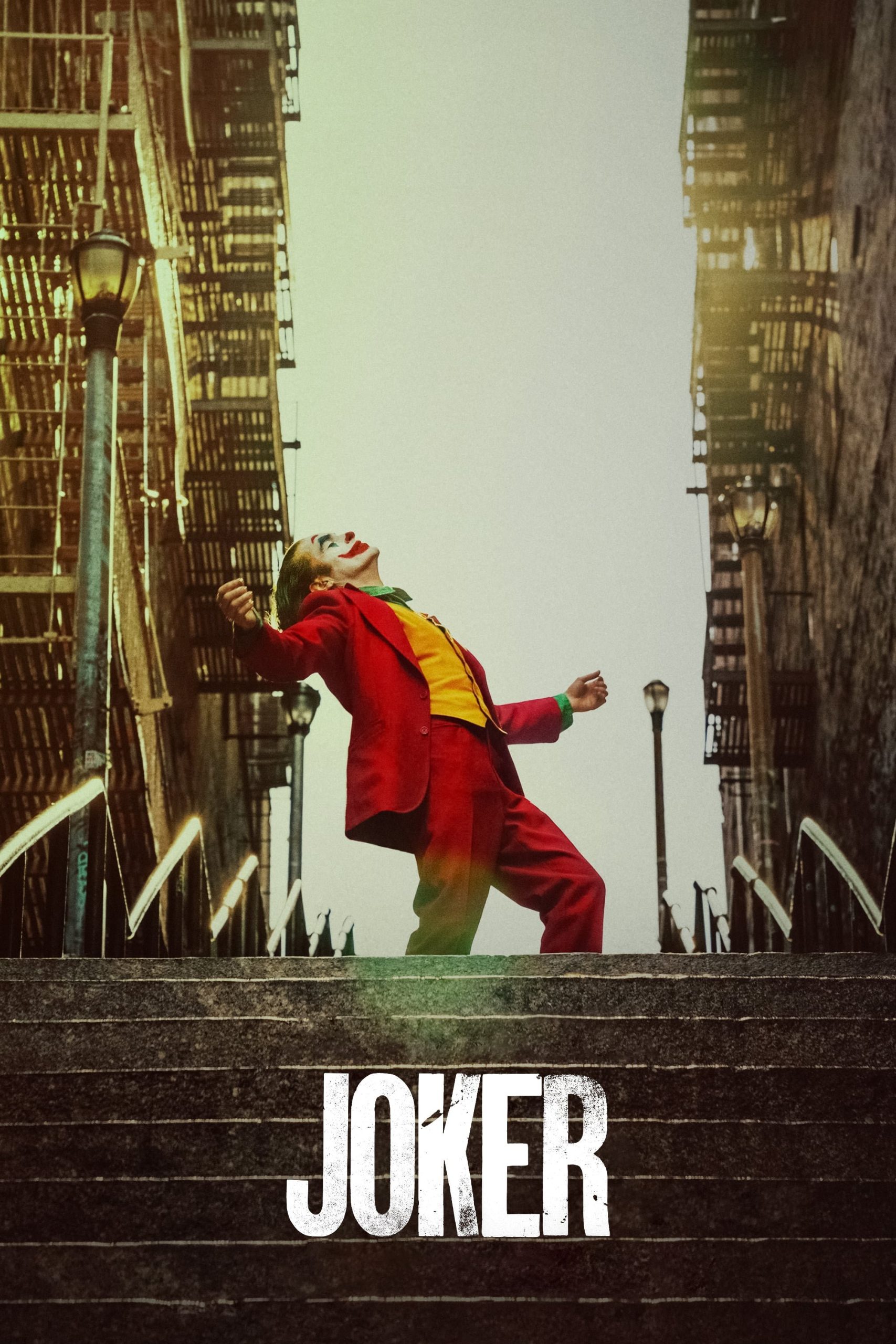
The Question of Truth Behind the Film
Joker unsettled me from the very first viewing, not only in atmosphere but because it left me grappling with the nature of its reality. Even before delving into specifics, I found myself reflecting on how audiences—myself included—are compelled to ask if a film like this draws from real life, and to what extent. There’s an almost instinctive curiosity in wanting to know whether what I’m witnessing on screen is the product of history or pure invention. For me, films that claim to be “based on a true story” trigger a particular kind of attention: I search for authenticity, for echoes of events I might recognize, for the validation that comes with knowing that such things could—or did—really happen. I think many viewers, not just myself, approach films this way because a “true story” label carries implicit promises. It suggests that a narrative, no matter how dramatic or stylized, has roots beneath the surface. There’s a certain respect or seriousness that slides into place when I believe the film confronts real-world events or conditions. With Joker, the anxiety lies in its ambiguity: it never lays claim to being factual, yet it is crafted so closely to the bone of reality, so plausible in its details, that I found myself oscillating between feeling like an observer of a social document and an audience member enveloped in a fictional fever dream.
Those assumptions, I’ve noticed, aren’t trivial. When I think a film is rooted in fact, I catch myself parsing the details differently—was the city really this bleak, did such unrest actually occur? If a director tells me outright that it’s fictional, my posture relaxes; I allow for fantasy, for exaggeration, and my expectations for emotional resonance shift. Joker inhabits a precarious space, one that invites audiences like me to question where truth ends and artistic vision begins. I wonder what it says about us that we demand this kind of certainty. Is it a craving for moral clarity, a need to understand the world, or simply a habit carried over from the nonfiction narratives saturating contemporary media? Every time I see the debate over whether a film “really happened,” I’m reminded of how much narrative authority we place in that label—and how the label itself can cloud or illuminate what a film means to us.
Historical Facts and Cinematic Interpretation
As I examine Joker’s construction, I’m struck by its dance around real world scaffolding without stepping directly into historical fact. Although the film is not explicitly based on any singular event or person, it borrows heavily from the simmering tensions and underlying dynamics that have characterized various urban crises throughout the twentieth century. Watching it, I felt persistent deja vu—an echo of images I’d absorbed from documentaries about New York in the late 1970s and early 1980s, when inequality, public sector cutbacks, and decaying infrastructure seemed to breed social unease. While there aren’t literal retellings of named riots or headline-grabbing incidents, I recognized fragments of the collective anxieties that suffused those times. The images of trash piling up, protests spilling into violence, the pervasive sense of alienation—they are less a documentation of one real event and more a synthesis of many.
For me, this selective weaving is crucial to the way the narrative operates. Rather than offering a faithful reconstruction, the film assembles an emotional truth, reshaping social and political realities to serve its internal logic. I see how the creative team compressed the slow boil of societal decline into cinematic shorthand: newscasters reporting budget cuts, background graffiti, flashes of police tension—all arranged to provide immediate context without the burden of a full historical timeline. This is storytelling in which reality is bent into something recognizable but, crucially, not replicable as a concrete event. The characters and their world are inventions, yet they carry the weight of their references: Arthur Fleck’s psychiatric woes bear the imprint of real debates over mental health funding; the media’s sensationalism mirrors concerns about violence and public discourse. In this sense, Joker is not a documentary, but to me, it wears the costume of one, adorned with details snatched from the fringes of real urban dystopias.
One adaptation that I find most compelling is how the film handles the mythology of Gotham City. The setting is a stand-in for New York, but it has always operated in a liminal space—not quite reality, not quite fantasy. Joker capitalizes on this, importing the tangibles of late 20th century America while carefully detaching them from any one time or place. Through this, the film exerts creative control: it can refer to collective traumas without being beholden to specific truth-claims. In many ways, I see this as a hallmark of cinematic interpretation—one that sidesteps the burdensome obligation to historical accuracy in favor of suggestion, condensation, and emotional resonance. Every choice is a recalibration, a decision to prioritize narrative impact over strict fidelity, and watching Joker, I am acutely aware of the ways it blurs these lines, sometimes deliberately inviting me to mistake its fiction for memory.
What Changes When Reality Is Shaped for Cinema
Whenever I reflect on the collision between fact and fiction in movies, I keep coming back to the idea of trade-offs. The more a film tries to anchor itself to the specifics of what actually happened, the more it risks feeling constrained by the limits of history—a challenge I’ve noticed in biopics and period dramas alike. In Joker, I see a different strategy: the filmmakers select which elements of reality to emphasize, which to set aside, and where to allow invention to guide the narrative. This approach opens up all sorts of practical implications for the way audiences engage with the story. By divorcing itself from the necessity of literal accuracy, the film can take thematic risks—it can amplify atmosphere, compress timelines, and sharpen character arcs in ways that pure reportage never allows.
For me, the absence of a rigid timeline frees up the storytelling. Events blend together in a dreamlike sequence, permitting subtext to take precedence over chronology. The protagonist’s descent becomes a parable rather than a sequence of verifiable events—a myth about how circumstances, psychology, and society conspire to create alienation. This means I don’t have to measure each beat against the yardstick of what really happened; I am encouraged to interpret, to project, and to participate in meaning-making. On the other hand, I recognize a subtle risk in this freedom: the self-referential loop where cinematic reality starts to feel more “true” than actual events. There’s a power in that—film can create impressions stronger than fact, generating emotional truths that linger longer and resonate more deeply than the dry recitation of history.
Another consequence of this reshaping comes in the simplification of complexity. Real life is messy, outcomes ambiguous, and motives often opaque. In adapting reality for cinematic form, there’s almost always a simplification—a reduction of all the unknowable variables into a set of symbols, gestures, and narrative devices. In Joker, I see this in the way broader social problems are distilled into the fate of a single, deeply flawed protagonist. Structural issues like poverty, mental illness, and institutional breakdown are funneled through Arthur Fleck’s perspective, making them immediate, personal, and viscerally understandable. As a viewer, I appreciate this compression, even as I remain aware of the costs. Nuance is inevitably polished away, replaced by the coherence and closure that effective storytelling demands. This is not a defect, but a property of narrative itself—the practical artistry of shaping, curating, and sometimes omitting for the sake of cinematic impact.
Audience Expectations and the “True Story” Label
I’ve noticed throughout my experience as a filmgoer and analyst that how a story is framed fundamentally alters my relationship to it. When a film makes a direct claim to truth—slapping on an opening card that it’s “based on real events”—something in me changes. I become invested in both the story and its veracity, watching not just for entertainment but for evidence. It’s almost as if part of my brain starts cross-referencing the movie with the world outside the theater, looking for places where the narratives meet or diverge. Paradoxically, when a film remains ambiguous or asserts its fictionality, my expectations recalibrate. I surrender myself to allegory, to mood, to the interior textures of the story, less concerned with accuracy than with emotional or psychological plausibility.
Joker, to me, is especially intriguing in how it navigates these categories. No declarations appear that root the story in real events, but its realism seduces me into treating it as a kind of informal history lesson—an unacknowledged parallel to real urban crises. This has a fascinating effect on my viewing. On one hand, I am drawn into the specifics, noticing details of urban neglect and political unrest that feel lifted from actual news archives. On the other, I’m forced to remind myself that everything I see is a version, not a documentation: inspired by mood and milieu, not by exact dates and people. For audiences, I think this dynamic can be both liberating and destabilizing. When truth is asserted, reactions are more polarized—there’s often heated debate about what was left out, what was changed, how faithfully the real story was rendered. In the largely fictional Joker, that tension is more diffuse, but never absent. I find myself debating with others about what the city “means,” or whether the social collapse it depicts is a mirror or a distortion of our world.
Another part of my reflection centers on how the “true story” label can either amplify or undercut emotional engagement. When I think something really happened, I’m more likely to feel a deeper moral response—a call to outrage, sorrow, or empathy. If a film is clear about its fictional status, my engagement can become more aesthetic, more contemplative: I explore themes and implications, seeking resonance rather than correspondence. Joker’s refusal to clarify its relationship to reality provokes in me a curious sense of ambiguity. Am I meant to take away a lesson about real social problems, or am I witnessing an operatic example of collective anxiety, shaped entirely through artistic license? I keep returning to this tension, recognizing that part of the film’s power with audiences may come from this carefully manipulated uncertainty.
Final Perspective on Fact vs Fiction
Looking back on my own interpretive process with Joker, I realize that knowing what is real and what is invented serves as an evolving filter for understanding the film. The more I learn about the sources referenced in the set design, costumes, or even minor details, the more the movie opens up in new directions for me—sometimes reinforcing my initial reactions, other times complicating them. There’s no single way that factual awareness shapes my response: it can anchor a film, giving it social urgency, or it can act as a reminder of gaps and omissions, encouraging me to keep my distance from easy conclusions.
For me, Joker exemplifies the fluidity that marks the best cinematic interpretations of history and reality. Its refusal to declare allegiance to either strict fact or total invention leaves space for me—and for other viewers—to bring our own knowledge, biases, and emotional experiences to bear. Rather than prescribing a single reading, the film accommodates multiple interpretations, each filtered through the question of how closely it hugs the contours of lived experience. One outcome of this, I find, is that discussions about the movie are rarely reducible to arguments about accuracy. Instead, I’m drawn into broader conversations: what does it mean for a fictional world to feel “true,” what purpose does emotional reality serve, and how do I situate myself as a viewer within these shifting boundaries?
I’ve concluded, at least for myself, that the value of wrestling with fact and fiction in Joker isn’t about policing the precise boundary between them. Rather, the act of questioning—of comparing, doubting, and reflecting—deepens my engagement, making the film a site not of answers, but of ongoing inquiry. In the end, my understanding of Joker is inseparable from my awareness of how history is reshaped, how narrative priorities dictate what’s shown and what remains in the realm of the unspoken. What is real, and what is fiction? For me, the question is not just academic; it’s a persistent companion to every act of watching and thinking about cinema itself.
For additional context, you may also explore the film’s overview and how it was received by audiences and critics.
🎬 Check out today's best-selling movies on Amazon!
View Deals on Amazon