
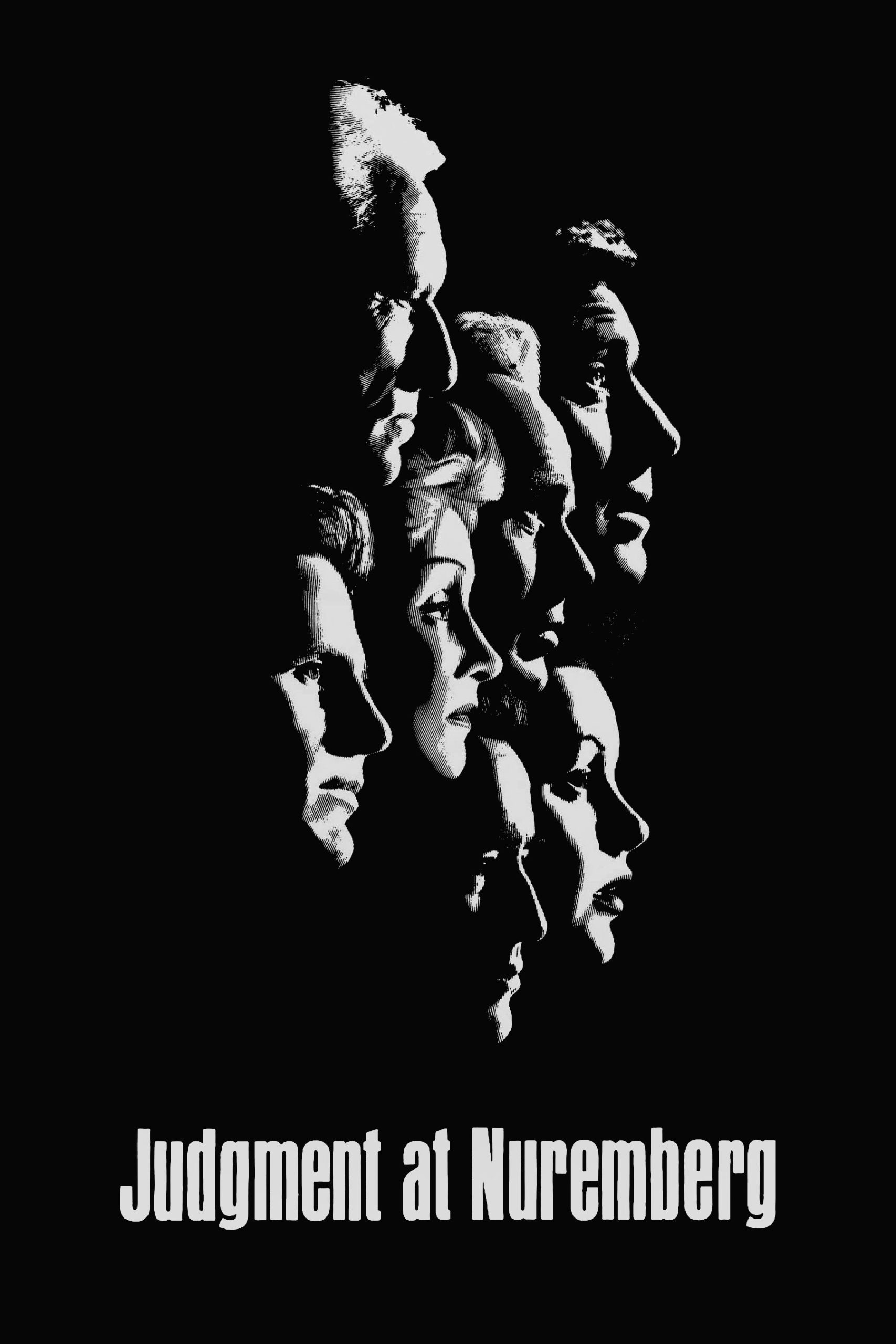
Is This Film Based on a True Story?
Whenever I sit down to watch “Judgment at Nuremberg,” I’m immediately struck by a sense of proximity to history, not just the aura of a dramatized event but something tangibly rooted in fact. The film isn’t an outright recreation of a single, specific trial with real-named defendants, but it’s more than vaguely inspired—it’s firmly grounded in actual events. I think about it as a drama deeply inspired by real judicial proceedings: it weaves together incidents and arguments directly drawn from the Nuremberg Military Tribunals that occurred after World War II. In that way, “Judgment at Nuremberg” can’t be described as entirely fictional—it lives in the territory of dramatized truth. The characters are fictionalized, their precise names and life stories imagined for the sake of narrative coherence, but their circumstances and the legal, moral questions they face echo the real judges’ trial, part of the 12 Nuremberg follow-up trials conducted by the United States. So, to me, the film is best described as “inspired by true events,” existing somewhere between faithful reenactment and interpretive dramatization.
The Real Events or Historical Inspirations
When I look into the origins of “Judgment at Nuremberg,” I find it pays respect to one of the most consequential moments in modern legal and moral history. The film dramatizes the so-called “Judges’ Trial,” the third of the twelve Nuremberg follow-up trials conducted by the U.S. military in the late 1940s. I find this trial remarkable because it put German judges and legal officials—those entrusted with upholding justice—on trial for crimes against humanity for their roles in enforcing and legitimizing Nazi policies. While the film invents its chief prosecutor, defendants, and certain particulars, the circumstances mirror the 1947 United States of America v. Josef Altstötter, et al. case. This was the moment when the notion of “just following the law” was interrogated at an unprecedented international forum.
For me, it’s fascinating how the film draws not only from the specific content of these legal proceedings but also from authentic documentation: trial transcripts, testimonies, and international reports. Various lines of dialogue and legal arguments within the movie are remarkably close to those found in the historical record. I notice that complex moral questions—what it means to be complicit, how systems can pervert justice, the banality or quiet ordinariness of evil—are not just creative speculation but real debates that played out in the courtroom. There are also visual references: the black-and-white cinematography and stark staging are effective echoes of the austere reality of the original Nuremberg Courthouse and its somber proceedings.
For example, when Spencer Tracy’s character, Judge Dan Haywood, asks pointed questions about the responsibility of the judiciary in perpetuating state-sponsored atrocities, I can’t help but think these are reframed versions of questions genuinely posed by American prosecutors and tribunal judges in 1947. The entire structure of the film’s trial—a panel of judges, the charges, the evidence of forced sterilization, and the use of propaganda—is nearly a direct reflection of the actual Judges’ Trial. So, while the film is not biographical, its DNA is clearly spliced with historic transcripts and moral quandaries lifted straight from recorded history.
What Was Changed or Dramatized
What stands out to me upon multiple viewings and research is how the film both honors history and reshapes it for emotional and intellectual impact. “Judgment at Nuremberg” does not include real names from the tribunal; the judges on trial bear invented identities, and the American judge played by Spencer Tracy is not based on an individual. Instead, he is constructed as a kind of everyman, a composite perhaps intended to give viewers a relatable, outsider’s perspective.
I notice that some of the most significant changes are those designed to distill the chaos and sprawl of the real proceedings into something dramatically tight and thematically coherent. The real Judges’ Trial had sixteen defendants, and the charges ranged across years and hundreds of pages of documents, with each defendant’s actions complicated by unique backstories. The film narrows this down—giving us a handful of lead figures, whose particular arcs (from Emil Janning’s grappling with his own complicity to the tragic story of Irene Hoffmann) serve as anchors for larger currents of guilt, denial, and responsibility.
In terms of dramatization, the film invents the character of Ernst Janning (played by Burt Lancaster) as the most prominent defendant, whose journey from stony silence to remorse gives a personal face to the otherwise institutionally faceless bureaucrats who presided over the Nazi era’s legal system. I find it intriguing that in the actual trials, there was no single defendant whose confession and moral crisis was so centrally dramatic. Additionally, Montgomery Clift’s character, Rudolph Petersen, and Judy Garland’s Irene Hoffmann are characters based on various testimonies but are ultimately fictional composites. Their suffering and interrogation dramatize very real horrors—forced sterilization, perjury, and state terror—but their individual lives are not documentable events from the trial.
The politics swirling outside the courtroom are handled with a degree of creative condensation, too. The real postwar world was wrestling with the rise of the Cold War, American interest in utilizing German expertise, and pressure to move past the Nazi era; the film embodies these tensions, especially in Maximilian Schell’s portrayal of defense attorney Hans Rolfe. His legal maneuvers and rhetorical flourishes synthesize hundreds of hours of real trial lawyer strategies into accessible, quotable confrontations for moviegoers. But if I look more closely, the actual legal arguments were broader, often more technical, and less morally direct—here, the script sharpens everything for maximum impact.
Even the verdict at the end of the film is a simplification. In reality, sentences in the Judges’ Trial ranged from acquittals to life imprisonment, and some convicted judges were released early due to changing political winds in the 1950s. The film, by design, offers clear statements and climactic reckonings that may not echo the more muddled or contingent realities of the original event.
Historical Accuracy Overview
My assessment of historical accuracy in “Judgment at Nuremberg” leaves me impressed on some fronts and aware of dramatic liberties on others. From what I can tell, the trial’s general framework—the setting, the legal context, the types of charges, and the basic arguments made—is strikingly authentic. The film works from the actual template of the Judges’ Trial: the courtroom setup, the language of international law, even the ways in which witnesses are cross-examined. Sometimes, I even pick up on phrases and verbatim lines that closely match the original court transcripts and official reports from Nuremberg.
One thing I appreciate is the film’s use of actual newsreel footage of concentration camps as evidence within its story. This historical footage creates an immediacy and gravity that aligns absolutely with the way evidence was used in the real tribunals—it’s not just a storytelling device but a reminder that the crimes under discussion were documented, horrifying realities. The emotional reactions in the courtroom, as characters are forced to confront this evidence, are consistent with accounts from those who attended the original trials—many observers, lawyers, and even defendants were visibly shaken when confronted with proof of Nazi atrocities.
But there are clear points where dramatization carries the day. The film omits many technicalities of law; the real Judges’ Trial involved enormous debates about the reach of “crimes against humanity,” the issue of ex post facto law (trying people for things that weren’t illegal when done), and the extent to which individuals should bear responsibility for following orders in a totalitarian state. “Judgment at Nuremberg” addresses these topics, but always in heightened, distilled conversations rather than the sprawling and technical reality recorded in legal documents. The events are compacted into a single courtroom narrative, with emotional peaks and symbolic turning points. The real trial stretched over months, with hundreds of witnesses and reams of documentation; here, years of legal argument are compressed into a few central days and poignant encounters.
Also, while the film highlights tensions between American authorities and the political desire to stabilize West Germany (given the Cold War context), the actual geopolitics were even more entangled. Real-life pressures on the tribunal judges were persistent and often not as openly debated in public as the film suggests. The timeline of the film is modeled for clarity and emotional pace, while historical outcomes were more stuttered and, at times, inconclusive. Some convicted judges in reality were later released as American strategy toward Germany shifted; the film streamlines these ambiguities for dramatic closure.
Major characters—including Dan Haywood, Ernst Janning, and Hans Rolfe—are not historical figures, though their dilemmas and personalities are inspired by real types of people present at Nuremberg. For me, this blend of authenticity and creative invention means that while the major beats and moral stakes are accurate, the details and individuals are dramatized for storytelling. It’s a case where fidelity to the emotional and philosophical truths of the events outweighs strict biographical or legal precision.
How Knowing the Facts Affects the Viewing Experience
Learning about the real-life context behind “Judgment at Nuremberg” has always made the film strike deeper chords for me. When I first watched it without a detailed background, I saw it simply as a powerful depiction of postwar moral reckoning—a vivid philosophical debate about guilt and complicity. But as I delved into its factual roots, I began to perceive its meaning and ambition in a different light. Knowing that the film draws so thoroughly from documented tribunal proceedings, I understand that its most hotly contested questions about law, justice, and accountability aren’t just screenwriting abstractions. For me, this enriches each scene with a sense of gravitas and responsibility, as if I’m witnessing on screen a distilled homage to real debates that shaped the world’s understanding of international justice.
Moments like the presentation of concentration camp footage or the insistence that “justice is what we make it” are transformed in my mind—they’re not just dramatic highlights, but echoes of actual historical attempts to grapple with the unthinkable. The invention of certain characters doesn’t feel like a betrayal of truth; instead, it feels like a lens intentionally focused for empathy and comprehension, allowing me to access what would otherwise be an overwhelming avalanche of names, documents, and dry legal argument. I find it helpful, as an audience member, to remember that even as the film compresses and rearranges history, its dramatization invites a real engagement with questions that remain alive today. The dilemmas faced by judges, the rationalizations of defendants, the anguish of victims and witnesses—these are all grounded in factual precedent, which gives the film legitimacy and urgency beyond the confines of entertainment.
Understanding the film’s sources also anchors my expectations: I don’t look for precise recreations of legal minutiae, but for faithful representation of philosophical stakes and emotional realities. I accept the fictional names and composite characters as necessary for telling a complicated story accessibly, while recognizing that, behind each speech or moral crisis, there’s a historical echo. Even the film’s moments of dramatic license—like a unilateral, conscience-driven confession on the stand—serve, in my view, to personify and clarify the challenges faced by real people operating within systems of law and power. The knowledge that the real Judges’ Trial involved immense complexity and political pressure (including later release of some convicted judges) also deepens my appreciation of the ambiguity woven through the film’s conclusion—there are no entirely satisfying answers, only perpetually evolving understandings.
For me, knowing the factual origins of “Judgment at Nuremberg” heightens rather than lessens its resonance. The reality that so many of its arguments, dilemmas, and evidence are firmly rooted in documented events allows the film to function as both a dramatization and an interpretation, carrying forward unresolved questions about how societies judge those who have served unjust regimes. Watching the film through a lens of historical understanding becomes not just an exercise in appreciating storytelling craft, but an act of witnessing an ongoing conversation about justice, morality, and memory that began in Nuremberg and continues to this day.
After learning about the film’s origins, you may want to see how audiences and critics responded.
🎬 Check out today's best-selling movies on Amazon!
View Deals on Amazon