
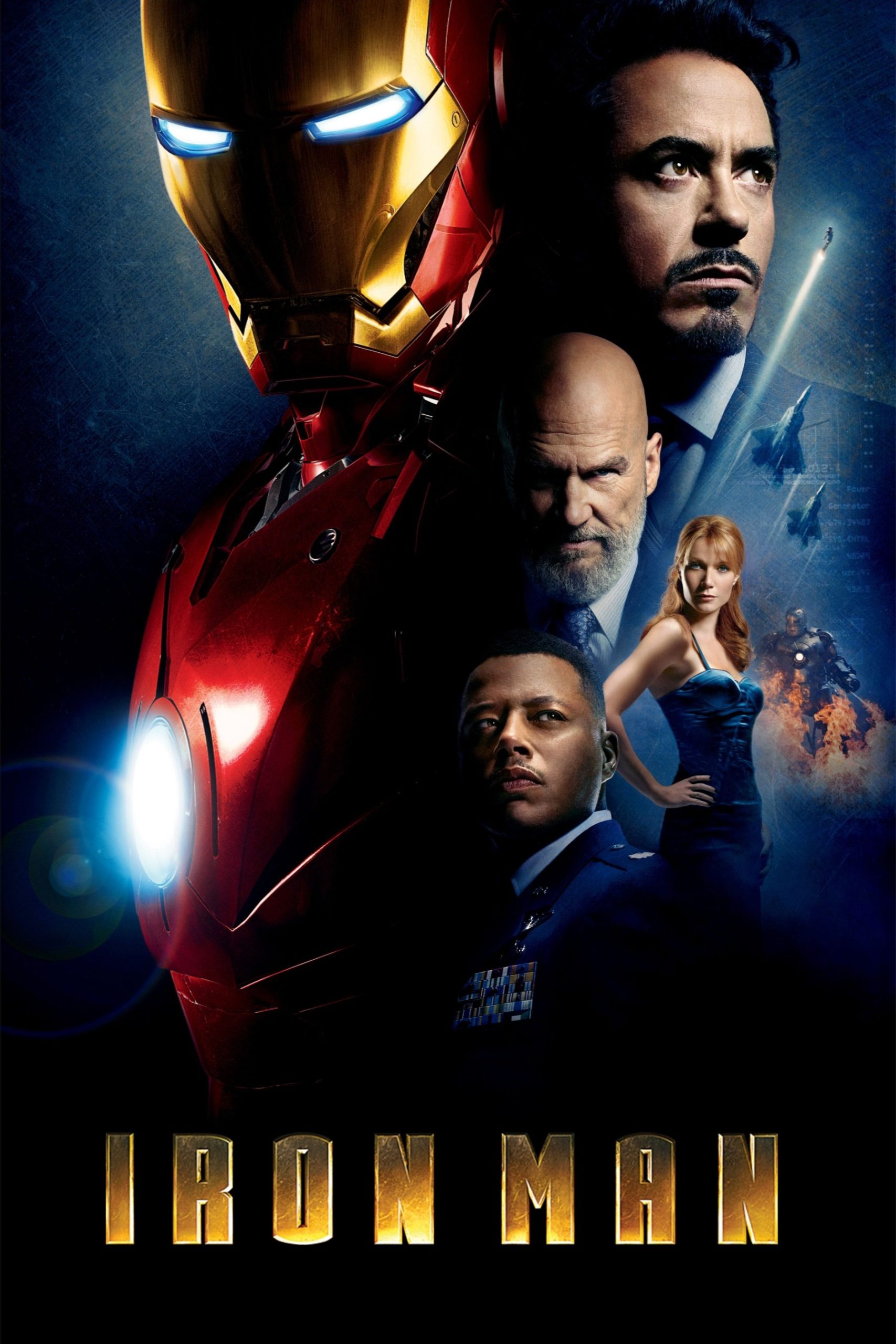
The Question of Truth Behind the Film
Every time I sit down to watch a blockbuster like Iron Man, I’m struck by the subtle tension present in audiences’ curiosity about what’s “real.” For me, this question carries an intriguing weight—a sort of background hum shaped by both popular culture and personal experience. When a film catches my eye, I often find myself digging beneath the glossy surface, wondering if there are any factual roots tangled within its fictional framework. This isn’t just idle curiosity; I think audiences—including myself—almost instinctively want to anchor a story to something tangible, something that grounds the spectacle and gives it a foothold in our collective reality.
I’ve noticed that, when a movie boasts the label “based on a true story,” people approach it differently. There’s almost an unspoken contract that the story on screen is not only entertainment but, in some sense, an event that has shaped the world outside the theater. It’s as if knowing a film is rooted in truth gives it extra dramatic heft—stakes that extend beyond the boundaries of the crafted world. With Iron Man, I found myself considering how, even without any overt claim of being a factual recounting, its connection to larger themes—from technological innovation to war and industrial ethics—pulls from real-world headlines. I believe this is why so many viewers, myself included, tend to ask: “Was Tony Stark inspired by a real person? Did events like these happen?” These aren’t trivial questions; they reveal a deep-seated desire for stories to reflect—or at least refract—the realities we share or imagine possible.
As I thought about this impulse, I realized it’s about more than just curiosity. There’s an expectation that a connection to real life will imbue the story with added significance. Audiences like me hope for something instructive, or even cathartic, from knowing a film draws meaning from real-life struggles or breakthroughs. But when it comes to superhero narratives, especially the likes of Iron Man, the line between fact and invention is tantalizingly blurred. Sometimes, the mere suggestion of historical context shapes the way viewers—including myself—decode the drama, seeing in the fictional arcs echoes of our own shared history.
Historical Facts and Cinematic Interpretation
Personally, I’m always compelled to look for the seams between history and cinematic invention, especially with films that fold elements of existing reality into their narratives—intentionally or not. With Iron Man, I quickly realized that most of its core is undeniably fictional, birthed from the imaginations of comic book creators rather than historical record. Still, what fascinates me is how the film cannily borrows from and reinterprets real-world backdrops. For instance, Tony Stark—the billionaire inventor at the heart of the story—does not have a direct real-world counterpart, yet he feels familiar. As I watched his arc, I couldn’t help but see shades of well-known figures whose innovations reshaped society: the brashness of Howard Hughes, the Silicon Valley confidence of entrepreneurs like Elon Musk, the defense-industry complexities reminiscent of real arms manufacturers.
Rather than recounting any documented episode from contemporary history, Iron Man reshapes, condenses, and distills real anxieties and aspirations around technology, military intervention, and the ethics of profiteering. When Stark is captured by militants in Afghanistan—a nation enmeshed in actual contemporary conflict—the fictional scenario inevitably echoes headlines that I remember scrolling through during the late 2000s. I see a parallel, not as a documentary record, but as a mirror reflecting the anxieties about the U.S. military presence overseas and the complicated role of weapon manufacturers. The film is not offering a straightforward historic retelling; instead, it orchestrates a blend of fictional narrative with recognizable fragments of actual events, using them as narrative shortcuts to trigger an emotional response or contextual understanding in viewers like me.
Marvel’s adaptation choices, in my eyes, also involve compressing timelines and global threats to fit the tempo and expectations of a Hollywood blockbuster. Conflicts that unravel over years, or sometimes decades, are reimagined as urgent, personal quests that can be resolved within a cinematic two-hour arc. Lessons from history, such as the double-edged sword of invention or the perils of unchecked industrial power, are woven—sometimes thinly, sometimes thickly—through scenes of technological wonder and spectacle. What I find most striking is how the film nods to issues that feel real enough to be debated in the news, even as it unfolds in a world of futurist armor and hyper-advanced robotics.
There are layers here: the source material itself, the Marvel comics, emerged during the Cold War, embedding the original Iron Man in that geopolitical context. The 2008 film transposes those tensions into the post-9/11 landscape, updating not just the setting but the anxieties that ripple through the plot. In doing so, I see a deliberate reshaping of events—a translation, not a transcription. Real wars, industries, and personalities are not duplicated, but their echoes lend the narrative a patina of plausibility, guiding me toward an emotional understanding that doesn’t require literal accuracy.
What Changes When Reality Is Shaped for Cinema
Every time I witness a larger-than-life adaptation of reality, as I did with Iron Man, I’m conscious of the trade-offs at play. I think the process of transforming facts—or at least, fact-adjacent contexts—into cinematic spectacle involves careful choices about what to emphasize, what to alter, and what to invent outright. On one hand, sticking closely to factual detail could root the story more securely in the world I recognize; on the other, it might sacrifice the pace, clarity, and emotional drive demanded by immersive storytelling.
In Iron Man, I see an almost perfect case study of this tension. The film’s hypothetical technologies—the arc reactor, intelligent powered armor, artificial intelligence that borders on sentient—are all imaginative leaps rather than extrapolations of contemporary research. These elements are not designed to accurately reflect scientific reality; instead, they symbolize humanity’s desire to transcend physical and ethical limits. The narrative arc is similarly crafted: rather than subjecting the hero to the slow grind of real recovery and invention, events happen at a breakneck pace, allowing for sweeping transformation within a handful of scenes. The origin story encapsulates a lifetime’s worth of scientific struggle and moral reflection into a brief and emotionally high-stakes captivity. I see this as a practical trade-off; the film exchanges granular authenticity for a kinetic, character-driven narrative where each moment is in service to the larger arcs of growth and redemption.
Military themes in the film are also interesting to me—not only as storytelling choices, but as signals about the audience’s appetite for a “real” world experience. The depiction of the Afghanistan conflict is, in my view, intentionally non-specific. The antagonists are constructed as composites, drawing on recognizable traits of various real-world groups but not aligning with any one organization, likely to avoid wading into the complexities—and potential controversies—of actual geopolitics. In this way, the gritty realism of certain settings is balanced against a need for clear emotional signposting. I understand this as a pragmatic way to borrow gravitas from real events while still permitting enough creative license for spectacular heroics. These choices shape my viewing experience: I can feel genuine peril and moral ambiguity, but I’m never entirely anchored to a real-world narrative that might be distracting or alienating.
I realize now that these cinematic inventions are not merely escapist. The process of condensing and fictionalizing history enables the audience—myself included—to grapple with real questions in an emotionally immediate, less overwhelming frame. By shaping reality, the film creates clarifying moments, archetypes, and conflicts that may not be precise, but feel urgent and relevant. With Iron Man, I’m drawn not to a history lesson, but to an alternate lens on the familiar dilemmas that have long engaged public debate: responsibility, patriotism, and the unintended consequences of innovation.
Audience Expectations and the “True Story” Label
When I first encounter a film that boldly announces itself as “based on a true story,” I am immediately put in a different frame of mind than when watching something openly fantastical. There’s an added layer of interpretation—I become more attentive to the ways fact is translated, sometimes scrutinizing the story for accuracy or omissions. In my experience, knowing that a narrative claims some factual basis changes the stakes, both for my engagement and the emotional truths I extract from the film. However, with movies like Iron Man, where there is no such claim, my focus shifts almost entirely to the allegorical, the speculative, and the aspirational.
I often reflect on how audience expectations are shaped by these distinctions. When a film is presented as pure fiction, as Iron Man is, there’s permission to suspend disbelief and to lean into the metaphorical underpinnings of the narrative. For me, the armored suit becomes less about feasibility and more about the psychological armor we all construct; Tony Stark’s transformation is less a template for actual redemption and more a meditation on the possibilities of taking responsibility for one’s past. In this sense, I find that the explicit absence of a “true story” label liberates both the filmmaker and viewer from the burden of literal truth, allowing for emotional or symbolic explorations that resonate even if they are not historicized.
On the opposite side, if a film presents itself as directly inspired by true events, I tend to interrogate its choices with different questions. I acknowledge a heightened sensitivity to representation: whose story is being told, how are real individuals or historical groups portrayed, and what meanings are attached to these depictions? In these moments, I become more aware of the boundary between creative license and responsibility, even if I am not judging the choices. The “true story” label, for me, imbues a film with an almost documentary expectation, regardless of artistic embellishment. It changes my approach to interpretation; I’m more likely to think critically about what is omitted, what is emphasized, and how these choices reshape my perception of the actual history in question.
With Iron Man, despite its grounding in certain recognizable truths, most viewers—myself included—approach the film with expectations of fiction. This creates a space where entertainment, wish fulfillment, and philosophical pondering can intermingle without the limitations or obligations of reporting. There’s a shared understanding that what unfolds is not an act of historical witness, but rather an invitation to imagine different futures and ethical frameworks, informed by the world but not beholden to its facts.
Final Perspective on Fact vs Fiction
Looking back on my experience with Iron Man, I am continually reminded that my awareness—or lack thereof—regarding what is real or invented shapes how I interact with the story. I don’t demand that a film like this teach me history or provide me with facts; rather, I find that its relationship to reality sparks a different kind of critical engagement. The more aware I am of the ways in which the narrative borrows from or diverges from historical fact, the more nuanced my interpretation becomes. There’s a pleasure in disentangling the imaginative flourish from the documentary thread, even when the film leans heavily toward the fantastic.
My understanding of the film evolves as I consider its sources. Knowing that Tony Stark is an invention, but one whose persona fuses elements of real-world innovators, alters the weight I give to his choices and consequences. The Afghanistan setting, though not mapped directly onto actual conflict, encourages me to reflect on real social and ethical dilemmas—how technology changes the landscape of war and what responsibilities attach to power. I find myself appreciating these resonances not for their factual accuracy, but for the depth they lend to the film’s fictional arcs.
Ultimately, I’m left with a sense that the boundary between fact and fiction doesn’t diminish the impact of a film like Iron Man; rather, it reframes my engagement. It nudges me toward different questions—sometimes about meaning, sometimes about history, sometimes about the world I inhabit outside the theater. I’m more aware that the pleasures and provocations of the film arise not just from what is literally true, but from the inventive ways the story interacts with the histories, hopes, and anxieties that surround me. For me, the interplay between the real and the imagined becomes another layer in the viewing experience, deepening my connection to the film without necessitating that I see it as either a reliable source of fact or a pure flight of fancy.
For additional context, you may also explore the film’s overview and how it was received by audiences and critics.
🎬 Check out today's best-selling movies on Amazon!
View Deals on Amazon