
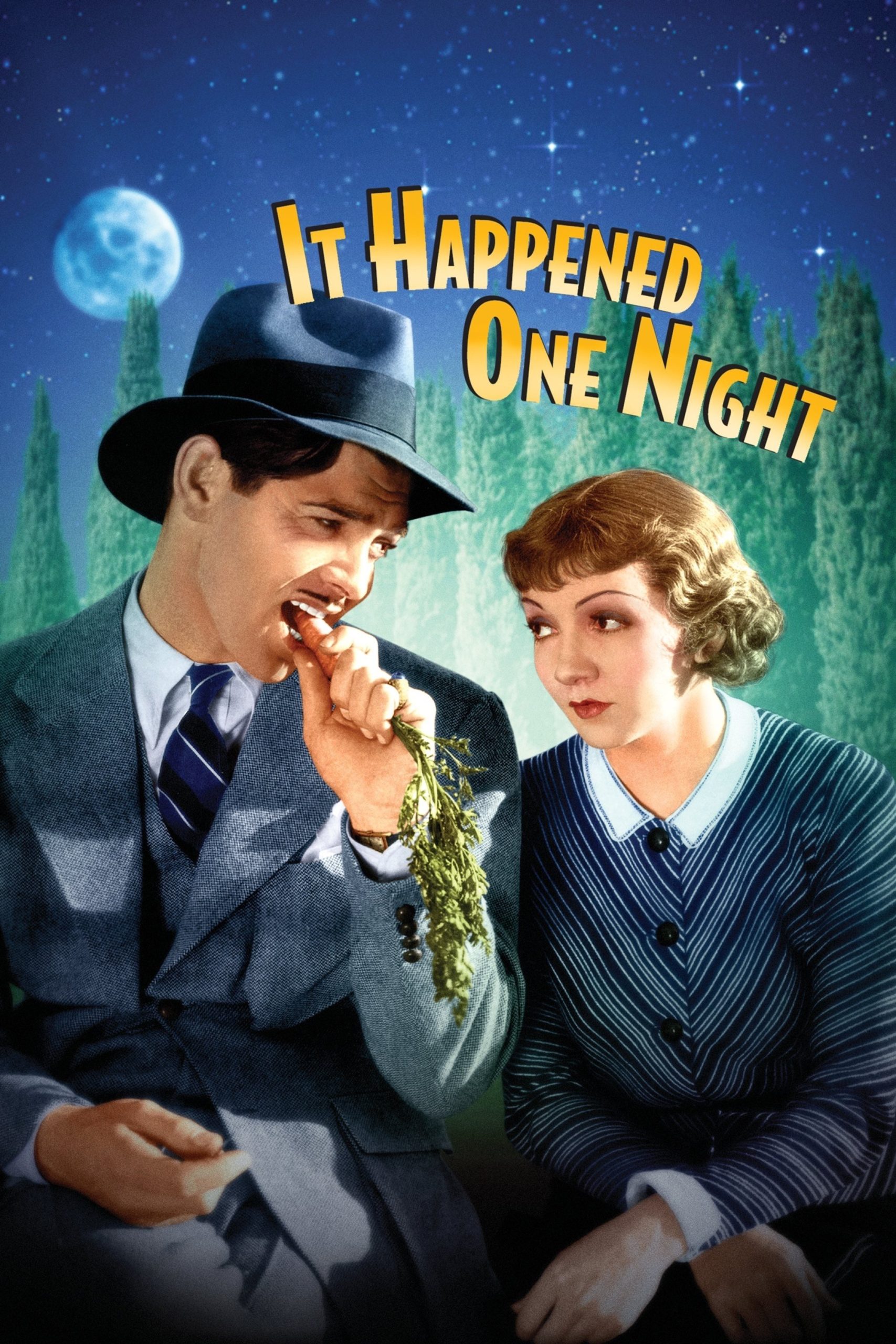
Is This Film Based on a True Story?
When I first watched “It Happened One Night,” I was swept up by its fast-talking banter and improbable romantic misadventures. Naturally, I had to know: did any of this actually happen? I can say with certainty that the story told in “It Happened One Night” is a product of invention rather than lived reality. The film is not based on a documented true story, nor does it claim to directly portray real people or specific historical events. At most, I’d say it loosely channels the social atmosphere of its era—elements of the Great Depression and changing social mores—but nothing in its plot is rooted in recorded fact. The events I watched unfold are imagined scenarios, crafted for cinematic purposes, rather than a retelling of a genuine incident or autobiography.
The Real Events or Historical Inspirations
Digging into the film’s origins, I uncovered that “It Happened One Night” was actually inspired by a short story titled “Night Bus,” written by Samuel Hopkins Adams in 1933. For me, this is where any tangible connection to real life stops. Adams’ “Night Bus” was itself a fiction published in Cosmopolitan magazine, so there’s no direct tie to real people involved in the events the film depicts. Personally, I find it intriguing that the story concept emerged at a time when American society was grappling with enormous economic changes and cultural shifts—things like increased travel across states, the widening gap between social classes, and the era’s fascination with individuality versus traditional authority.
There’s no evidence from my research into interviews or production histories that Frank Capra, the film’s director, or screenwriter Robert Riskin were consciously fictionalizing any particular real-life incident. Instead, the film appears to draw on a blend of broad contemporary trends, particular motifs fashionable in both newspapers and pulp fiction of the 1930s, and the ever-present lure of the American road trip as a metaphor for freedom and reinvention. When I think about it, these inspirations felt like the atmospheric backdrop for the story, not a factual origin.
I’ve also come across occasional speculation from critics and historians that certain behaviors or plot beats resonate with notorious headlines of heiresses rebelling against their controlling families. For instance, the runaway heiress trope popped up in other stories of the period, reflecting widely discussed themes of money, independence, and public fascination with the lives of the wealthy. But when I sift through these claims, I realize they’re more about the cultural imagination of that era than any specific biography.
That said, I’m struck by how little of “It Happened One Night” seems to owe to documentary reportage or any documentarian impulse. The setting—a bus trip traversing the eastern United States—mirrors a real phenomenon at the time, as large numbers of Americans began to make use of intercity buses for affordable travel. The characters, however, don’t point to real individuals so much as types: the sheltered socialite, the wily reporter, and the series of colorful strangers encountered along the way.
What Was Changed or Dramatized
With “It Happened One Night” not drawing from real events, I ended up focusing on how the movie dramatized the concept of two mismatched people forced together by circumstance. The comedic and romantic events are, to me, textbook Hollywood embellishment. The short story by Adams featured certain plot gestures—the bus ride, the runaway, the push-and-pull dialogue between main characters—but almost every detail was amped up for the screen. For example, I noticed that the movie builds up the heiress’s escape from her father’s control into a larger-than-life act of rebellion, exaggerating her naivete and the obstacles placed in her path. The addition of a fast-talking, down-on-his-luck reporter who “needs” her for a story (and ultimately love) feels dramatically heightened in the screenplay, putting the central romance front and center.
The movie leans into comic scenarios and physical humor that don’t appear in the short story, such as the now-famous scene with the characters using a blanket (the “Walls of Jericho”) to maintain a boundary between their sleeping spaces. None of this, from my perspective, comes across as a retelling of real moments, but as deliberate invention for the purposes of entertainment and emotional engagement. Even certain supporting characters—or the caricatured bus passengers with their broad personalities—seem like creations born more of vaudeville than of lived experience.
Then there’s the way the script reshapes the story elements to fit the romantic comedy mold. I’ve read the original story, and the film’s conclusion—where the reluctant lovers finally reunite and choose each other after a series of misunderstandings—represents a traditional resolution engineered for maximal audience satisfaction. The story, by comparison, is somewhat less interested in the mechanics of union and more on the journey itself. The film’s “happy ending,” while now a staple of the genre, was much flashier and less ambiguous than anything I found in the source material.
For me, one of the most striking changes introduced by the adaptation process is how the film crystallizes social archetypes rather than portraying flesh-and-blood figures. The wealthy daughter, the hard-luck journalist, and the parade of quirky passengers all function as vehicles for humor, tension, and transformation—not as attempts to mirror real lives. Even the depiction of travel, while accurate in its broad outlines of bus transportation, exaggerates the slapstick potential of every mishap along the way. I see “It Happened One Night” as deliberately heightened, blending plausible settings with an unapologetically fictive narrative style.
Historical Accuracy Overview
Every time I revisit “It Happened One Night,” I’m reminded of how skillfully it captures aspects of 1930s American life in atmosphere, even if it doesn’t adhere to the specifics of reality. The depiction of bus travel as an accessible mode of transportation during the Depression is, by and large, accurate. Intercity buses did become a lifeline for people moving between towns and states looking for work, reconnecting with family, or seeking opportunity. The general setting—buses full of disparate, often struggling individuals—reflects the diversity and desperation of the time.
Yet, as I see it, this is where the film’s brush with authenticity ends. The actual characters are not based on real people, nor are their exploits modeled on documented life events. The film’s situations—the runaway socialite, the resourceful journalist, the endless comic obstacles—are dramatic constructions rather than factual depictions. When it comes to clothing, speech patterns, and travel infrastructure, the movie shows a keen eye for detail that feels appropriate for its setting. Costuming, bus interiors, and roadside diners are rendered with an attention to period accuracy, drawing me deeper into the world the filmmakers imagine.
Despite this sense of period atmosphere, the events that unfold are not ones I could trace back to any biographical, legal, or historical record. I can’t point to an “Ellie Andrews” or a “Peter Warne” in any newspaper archive. The social attitudes presented—the tension between rich and poor, the slightly subversive sense of gender relations, the class-based obstacles—are broadly accurate reflections of the decade’s mood, yet they’re woven into a tale that doesn’t claim veracity. In some ways, I think of the film as a period piece that borrows the textures of its time but invents everything else.
When I look at the accuracy of the “Wall of Jericho” motif—the sheet strung between beds—it stands out as a comic device rather than an ethnographic note. Even the signature strategy of hitchhiking by raising a skirt, though echoed in various tall tales and jokes of the day, was not a matter of popular record but a product of screenwriting imagination exaggerated for effect. The rivalry between reporter and his quarry, the convoluted series of misunderstandings, and the ultimate reconciliation are just as constructed as so many screwball comedies that followed.
All told, my experience tells me that “It Happened One Night” sits in an interesting place: it is a contemporary fantasy colored by real-world details but unconnected to real-world events. It uses accurate backdrops to lend plausibility to a deeply fictional story about romance, class, and personal transformation.
How Knowing the Facts Affects the Viewing Experience
For me, learning that “It Happened One Night” is not a true story but a carefully crafted piece of fiction shifts how I approach its comedy and romance. Without expecting it to conform to real-life narratives, I’m free to enjoy the stylized dialogue, outlandish coincidences, and larger-than-life performances on their own terms. I’m not searching for fidelity to anyone’s biography or pondering what liberties the filmmakers took with actual events—because there aren’t any. Knowing this lets the film exist as a playful fantasy with roots in its era’s anxieties and dreams rather than a direct reflection of truth.
At the same time, I can’t help but notice how the loosely accurate depiction of Depression-era travel adds an extra layer of meaning to the escapades. When I see characters climbing aboard Greyhound buses, it grounds the film in a world recognizable to those who lived through the economic and social dislocations of the 1930s. Even the affordable hotels, open road, and makeshift meals ring true to stories I’ve heard about that time. This accuracy in context—rather than plot—creates a sense of history as lived backdrop, even though the actual events are fantasy.
I find that understanding the film’s origins as pure invention makes its romantic resolution even more pointed: it invites me to think about what people longed for at the time. The fantasy of breaking away from rigid family expectations, of finding genuine connection across class lines, and of remaking oneself while “on the road” feels aspirational. It’s not about belief in the literal truth of the story, but belief in what the story represents about its viewers’ wishes and fears.
The more I reflect on its fictionality, the more I appreciate the film as a cultural artifact—revealing what Americans hoped for in an age of economic hardship as much as what actually happened. No part of me is waiting for a newspaper clipping to corroborate the escapades of Ellie and Peter; instead, I find myself marveling at how the film elevated popular hopes and imaginings into a crisp, witty, and influential narrative shape that would define screwball comedy for decades.
Overall, being aware that “It Happened One Night” has no documentary foundation enables me to watch with relaxed curiosity rather than critical skepticism. Each time I return to its playful arguments, dramatic misunderstandings, and ultimate declarations of love, I can appreciate the artistry and period accuracy in details—without expecting historical fact at its heart. For anyone who, like me, values transparency in storytelling, knowing the break between reality and invention only enhances the enjoyment and understanding of what the film achieves. The story stands apart from fact, but resonates all the more for the fantasies and desires it managed to capture and project to a nation still hungry for a little magic in their everyday.
After learning about the film’s origins, you may want to see how audiences and critics responded.
🎬 Check out today's best-selling movies on Amazon!
View Deals on Amazon