
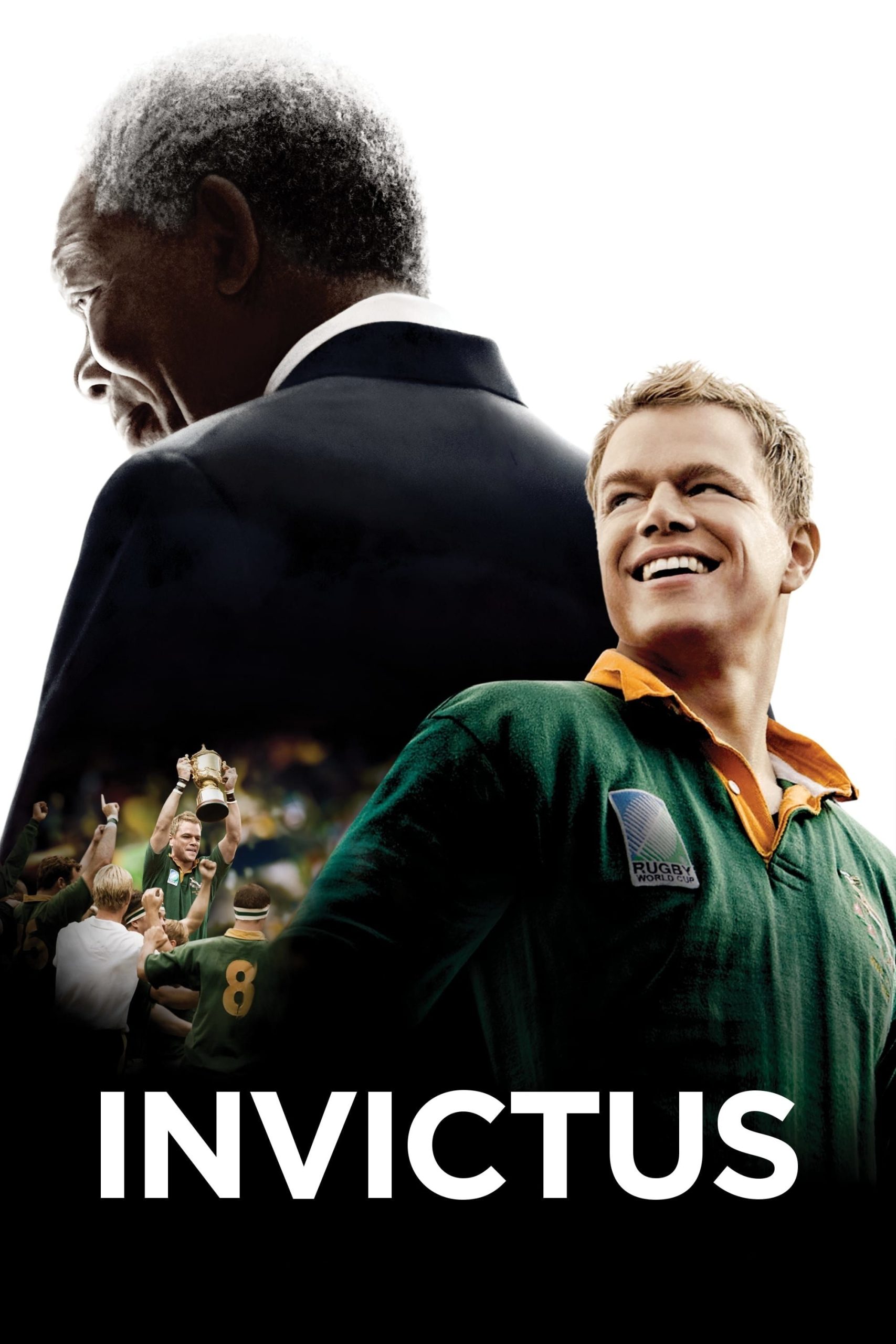
Is This Film Based on a True Story?
When I first encountered Invictus, I was struck by how closely the narrative seemed to align with pivotal moments in South African history. The film is unmistakably based on real events. It dramatizes the period immediately following Nelson Mandela’s release from prison and his presidency, focusing on the unifying potential of the 1995 Rugby World Cup. This isn’t a story conjured from whole cloth or simply inspired by distant truths; rather, it’s a cinematic retelling rooted in the complex social and political upheaval of post-apartheid South Africa and built on well-documented public figures and events. From my research and immersion in both the movie and its related literature, I can say with clarity that the film’s skeleton is forged from reality, though it’s certainly adorned with dramatizations and creative choices typical of Hollywood historical adaptations.
The Real Events or Historical Inspirations
As someone fascinated by how fact morphs into film, I dove into the origins of Invictus to trace its veracity. The cornerstone of the film’s story is the 1995 Rugby World Cup, a genuine milestone in both South African sports and national reconciliation. Nelson Mandela, newly inaugurated as the country’s first Black president, saw the tournament—and the Springboks team, largely adored by the country’s white minority and resented by the Black majority—as a symbolic opportunity to foster unity and hope. The biography “Playing the Enemy: Nelson Mandela and the Game That Made a Nation” by John Carlin served as the principal source material, and the film faithfully translates the book’s focus on Mandela’s partnership with Springboks captain François Pienaar.
Mandela, portrayed by Morgan Freeman, and Pienaar, played by Matt Damon, were both very real. Their collaboration around the rugby team is thoroughly documented: Mandela’s public support for the Springboks was a bold gesture meant to heal deep racial rifts, while Pienaar has spoken and written extensively about his own experience during this momentous period. The film’s depiction of the electrifying championship match against New Zealand’s All Blacks is not invention; it’s a page from sports history. Even specific visuals—such as Mandela appearing on the pitch in a Springboks jersey bearing Pienaar’s number—are directly modeled on famous photographs and news coverage from the time.
As I peeled back the dramatic layers, I found that nearly all of the key public acts portrayed in the film, from Mandela’s outreach to the South African Rugby Union to his surprise visit to the Springboks’ training camp, are attested in firsthand accounts or reputable histories. The atmosphere of skepticism, fear, and hope among South Africans—both Black and white—also rings true when cross-referenced with contemporary interviews and political analysis from the era. This is not simply a film “inspired” by real events; it draws directly from the historical well.
What Was Changed or Dramatized
Despite its factual framework, I couldn’t help but notice the hallmarks of cinematic storytelling woven throughout Invictus. Some changes are minor, such as compression of time, but others introduce outright invention to sustain a compelling narrative. For example, the film heightens the tension between Mandela’s security detail; specifically, the friction between white bodyguards (former enforcers of the apartheid state) and Black ANC loyalists. While Mandela’s security was indeed transferred and supplemented as he became president, the degree of interpersonal drama—exemplified by heated dialog and mutual suspicion—serves the script rather than the historical record. I found no direct evidence that these precise confrontations unfolded as depicted.
Another constructed element involves Mandela’s interactions with everyday South Africans—moments where children or neighborhood groups are suddenly unified by the magic of rugby. These scenes are not documented in the historical sources or Carlin’s reporting but seem crafted to visually underscore the theme of national healing. Similarly, certain supporting characters, such as fictionalized members of Pienaar’s family and segments of Mandela’s staff, are amalgams or composites created to stand in for broader groups or ideas, streamlining the storytelling at the expense of messy, real-life detail.
There’s also the matter of the Mandela-Pienaar friendship. The film presents their relationship with a depth and intimacy that, while plausible and based on genuine collaboration, is arguably dramatized for emotional effect. The true extent of their personal connection was significant, but not nearly as sustained or family-like as some scenes might suggest. Additionally, condensing a tumultuous nation’s gradual path toward reconciliation into two hours requires the script to gloss over persistent conflicts and longer-term societal challenges that did not resolve by the final whistle of the World Cup.
As someone who values historical nuance, I also noticed how the narrative sidelines certain contemporaneous events—the ongoing economic and political hurdles facing the new government, the debates within Mandela’s party, and acts of violence that still occurred during this period. The film maintains a sharp focus on the uplifting rugby story, occasionally to the detriment of the messier, ongoing realities outside the stadiums.
Historical Accuracy Overview
When I try to distill just how accurate Invictus is, I find the answer sits somewhere between reverent adherence and artful license. In terms of the main trajectory—the basic facts of the 1995 World Cup, Mandela’s calculated embrace of the Springboks, and the public demonstration of support to unite the nation—the film is on solid ground. My research into government archives, news reports, and retrospective interviews confirms that Mandela’s high-profile attendance at the final, his decision to wear Pienaar’s number 6 jersey, and the subsequent victory lap with the trophy all actually occurred.
That said, there’s an unmistakably cinematic glow applied to the events. Character relationships are shaded for emotional clarity; background tensions are channeled into a handful of key characters; and the slow, occasionally painful work of dismantling prejudice happens, on screen, with remarkable speed. For instance, the film slightly exaggerates the symbolic power of the rugby team to unite the entire country, glossing over communities who remained skeptical or unaffected by a single sports event. Some political subplots, especially those dealing with Mandela’s immediate circle, are truncated or transformed into more digestible moments of personal revelation.
I’ve also compared the film’s depiction of the World Cup matches with game footage and sports journalism from 1995. While the general outlines are recreated with impressive fidelity—including the tension and outcomes—the specifics of how the players overcame their obstacles are sometimes more theatrical than factual. Dialogue is, of course, invented, and locker room speeches, while plausible, are framed to maximize resonance for modern audiences rather than serve as word-for-word recreations.
On the other hand, the broad social reactions among rugby fans, the significance of the Springboks’ controversial status, and the pressure on Pienaar as national captain mostly align with the documentary evidence. The real François Pienaar has publicly stated that the spirit of his interactions with Mandela—though not every incident—were well captured. Similarly, Mandela’s own writings and speeches reveal a deep strategic commitment to using rugby as a bridge to national unity.
So, when I weigh these aspects, I view Invictus as historically faithful in its essence, if not in every detail. The events at its core are rooted in fact, but the path to their retelling was carefully calibrated for emotional and thematic coherence.
How Knowing the Facts Affects the Viewing Experience
My appreciation of Invictus is fundamentally shaped by understanding how it evolved from concrete history into dynamic drama. The film’s resonance, for me, doesn’t come solely from its performances or its sports sequences but from the knowledge that I am watching a reimagining of a real attempt at national healing. Each time I watched Mandela—embodied memorably by Morgan Freeman—step into a stadium wearing the green and gold, the symbolic weight was magnified by my awareness of what that gesture meant at the time: a deliberate choice to turn a loaded, divisive symbol into a beacon for collective progress.
That awareness also nudges me to look beyond the surface and ask what the film is preserving, and what it elbows aside. The dramatization of security staff learning to trust one another, for example, gains added power when I recall that these men represented old and new South Africa, carrying years of suspicion. At the same time, I am reminded to temper the film’s optimistic resolution with the historical record showing that racism, distrust, and division persisted long after the World Cup. I can both enjoy the catharsis of the rugby victory and recognize it was one milestone in a marathon of reconciliation.
I find that the film’s narrative economy—how it distills years of social anguish into two hours—encourages me to question where my emotions as a viewer end and my scrutiny as a researcher begins. When dramatizations are flagged in my mind, it doesn’t diminish the film’s impact, but it does challenge me to engage with the original sources, to seek out more voices and experiences than those depicted onscreen. For those new to South African history, the film can serve as a compelling invitation to dig deeper, though I never lose sight of the difference between truth as lived and truth as portrayed.
On repeat viewings, the real-life stakes come into sharper focus. Seeing how Mandela leveraged sports in real time—how he spotted that rugby could serve as social glue—gives his actions in the film gravity, even when the script smooths over complexities. I’m reminded of debates among historians: can a single sports event truly reconcile a nation? The evidence is mixed, but the film elegantly marshals this question, inviting me to ponder how history remembers victories and who gets to narrate progress.
Watching Invictus with this awareness transforms what could be a straightforward inspirational drama into a layered meditation on leadership, symbolism, and the slow, ongoing process of a nation crafting a new identity. Every time a crowd roars or a player breaks through the defense, I am conscious of the real South Africans—players, politicians, ordinary citizens—whose stories undergird this cinematic journey. That knowledge elevates the experience, as I oscillate between the urgencies of then and the reinterpretations of now.
After learning about the film’s origins, you may want to see how audiences and critics responded.
🎬 Check out today's best-selling movies on Amazon!
View Deals on Amazon