
Is This Film Based on a True Story?
When I first watched Howl’s Moving Castle, I remember being completely swept away by its imaginative world: castles that walk, witches casting curses, and landscapes that seemed plucked from both fairy tales and dreams. It felt so emotionally resonant that I had to remind myself—this is not a story rooted in real historical events, nor a tale pulled from memoirs or headlines. For me, Howl’s Moving Castle is firmly set in the realm of pure fiction. While the film is based on the 1986 fantasy novel of the same name by British author Diana Wynne Jones, neither the book nor the movie is drawn from actual events or real historical records. Instead, they represent a rich tapestry woven from creative influences, folklore traditions, and the vivid imaginations of both Jones and the film’s director, Hayao Miyazaki.
The Real Events or Historical Inspirations
Diving into Howl’s Moving Castle from my perspective as a research writer, I see an intriguing blend of sources and inspirations—most notably, the original novel by Diana Wynne Jones forms the narrative bedrock. Jones drew on elements common in European fairy tales, such as magic, curses, and the classic motif of the young woman transformed by an external spell. While these tropes have folkloric precedents, they aren’t tethered to specific historical events or actual people. Instead, they echo the sort of enduring archetypes that have populated Western storytelling for generations.
What fascinates me about the Miyazaki adaptation is how it melds Jones’s fantastic elements with new layers of symbolic meaning, many of which seem to be inspired less by any factual event and more by cultural and societal observations. For example, Miyazaki has noted in interviews that the backdrop of war in his version of Howl’s Moving Castle draws obliquely from his personal response to global military conflicts, particularly the Iraq War which was unfolding during the film’s production period. Still, I have to clarify that this is thematic inspiration, not a direct reenactment or depiction of a real-world war or battle.
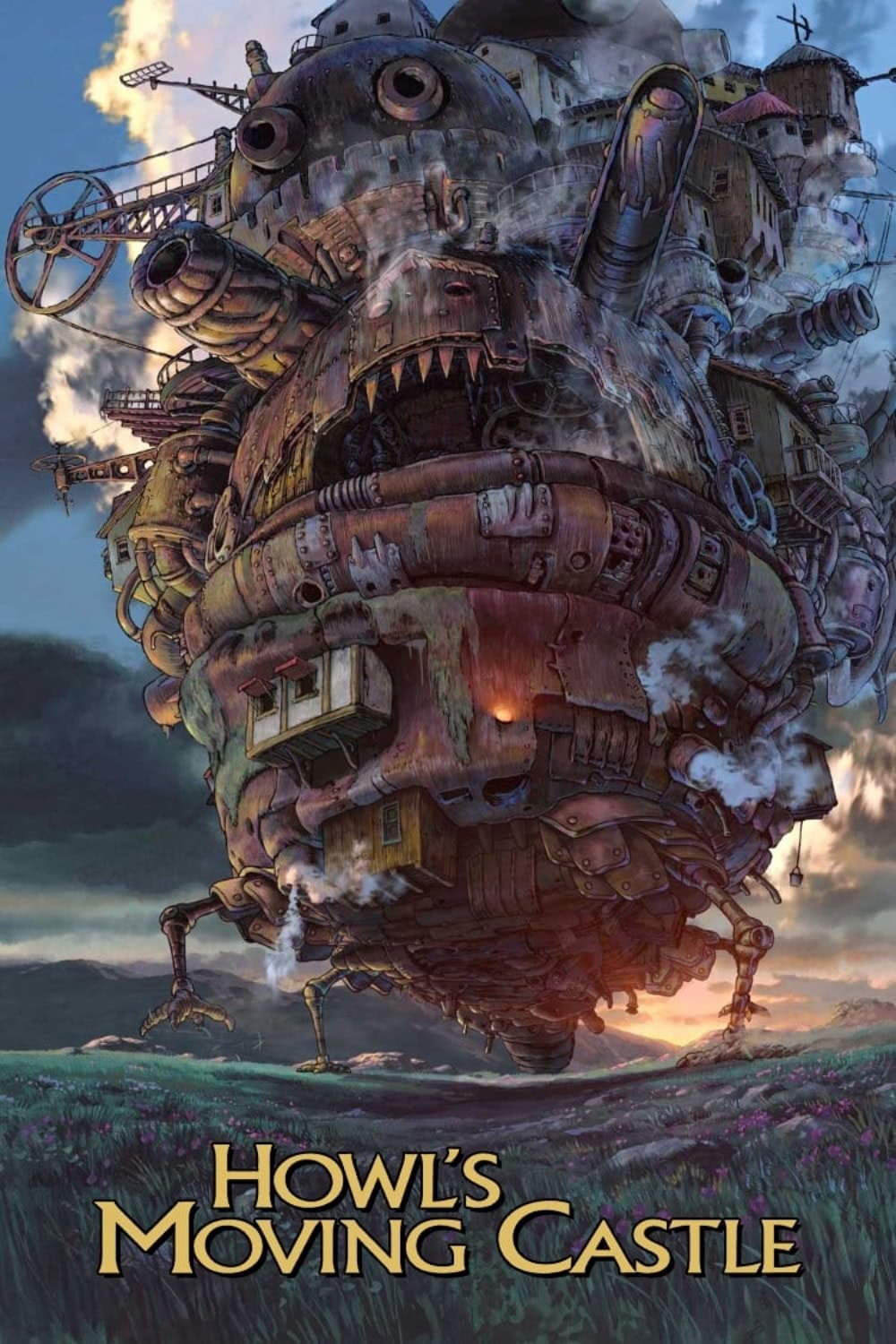
As for the castle itself, although it’s a marvel of magical engineering, it has no real-life architectural equivalent. Yet, I sense threads of late nineteenth and early twentieth-century European aesthetics in the film’s backgrounds—Miyazaki and his team traveled to places such as the Alsace region of France for visual inspiration, soaking in cobblestone streets and turreted buildings. These settings give the world a tangibility and texture that, while rooted in imagination, gain some grounding from genuine places and styles. But it remains fantasy—no walking castles ever traversed the countryside of France or anywhere else in Europe.
On a more subtle level, I do see echoes of historical anxieties and cultural currents in the fabric of the story: the escalating threat of war, uncertainty over technology, and the yearning for peace, all of which feel relevant to various periods in history. However, these are broad themes rather than references to specific, documented events. In other words, I view Howl’s Moving Castle as drawing from the shared well of human experience, rather than from concrete history or direct source material with a factual basis.
What Was Changed or Dramatized
Every time I revisit Howl’s Moving Castle, I’m struck by how much Miyazaki chose to alter or reimagine compared to the original novel by Diana Wynne Jones. From my deep readings and research, I’ve observed that the most significant changes involve the film’s central themes, character arcs, and the entire political landscape in which the story unfolds.
In Jones’s book, for instance, the story is primarily a character-driven fantasy with magical mishaps and familial entanglements. While there are hints of unrest in the wider world, the specter of war does not pervade Jones’s narrative in the same manner it permeates Miyazaki’s film. Miyazaki brings the issue of war to the forefront, turning what was originally a more personal adventure into an allegory for the destructive effects of conflict. This injection of an anti-war theme was a conscious decision, aligning with Miyazaki’s own lifelong interest in pacifism and his responses to contemporary events, though not linked to one particular historical war. For me, this shift transforms Howl’s Moving Castle from a whimsical fairy tale into something with a clear socio-political resonance.
The mechanics of magic also change. In the film, magic becomes a spectacle—an extension of the characters’ psychology and the shifting political climate. While Jones’s novel explored magical rules with a kind of scholarly cleverness, Miyazaki opts for a more dreamlike logic. This allows for transformations and surreal episodes that, while emotionally truthful, depart from the more consistent internal logic seen in the book. I see this as a dramatization tailored to animation’s potential for expressing the fantastic in visually arresting ways.
Another adjustment appears in the characters themselves. Howl, in the book, comes across as vain, charming, but ultimately a bit ridiculous—a point of humor and affection. Miyazaki adds darker shadings to Howl’s behavior, making him more conflicted and at times even tragic. Sophie, too, gets a nuanced treatment: in the film, she transitions fluidly between forms and ages, which seems to symbolize her confidence and sense of self, much more explicit than the text-based internal monologues in Jones’s novel. These dramatizations shift the source material’s tone, accentuating emotional beats that may not have been as pronounced originally.
Some characters and plotlines are omitted or streamlined for the film—Wales, Howl’s place of origin in the book, is absent; certain magical creatures and narrative subplots are left behind. Miyazaki’s team distills the story into its most resonant elements, opting for visual storytelling over the intricate subplots and secondary characters that form the tapestry of the novel. In my view, these omissions aren’t intended to erase the original’s complexity, but rather to reshape the narrative for a different medium and a new audience.
Historical Accuracy Overview
From my research and personal analysis, I would describe Howl’s Moving Castle as a film that opts for emotional and thematic truth rather than literal historical accuracy. Because the story is neither a direct retelling of actual events nor a thinly veiled depiction of reality, there aren’t specific factual benchmarks that the movie can be measured against for accuracy. Instead, I look at how the film incorporates aesthetic and philosophical elements from the real world, transmuted by fantasy.
Architectural details, costume design, and the layout of towns in the film are all inspired by real European locations and historical periods—early twentieth-century fashion trends, steam-powered contraptions reminiscent of the Industrial Revolution, and European village life before the First World War. Yet, none of these elements are presented in a way that is strictly faithful to any one place or time. They function more as an emotional shorthand, evoking a sense of nostalgia and familiarity in me as a viewer without ever adhering to rigid realism. Characters like Sophie, Howl, and the Witch of the Waste are purely imaginative creations, not based on real people or composites of historical figures.
The portrayal of war in the film also exists in a liminal space between metaphor and allegory. While Miyazaki incorporates imagery reminiscent of early twentieth-century military conflicts (dirigibles, uniforms, and the threat of aerial bombardment), these are generalized and not attached to a concrete war or battle. I read this as a deliberate choice: to distill the anxiety and tragedy of war into a form that is universally recognizable, rather than attempt forensic historical recreation. The result is something evocative, but not historically specific.
With all of that said, I find no evidence that the characters, events, or magical systems of Howl’s Moving Castle correspond directly to anything in the historical record. Instead, the film draws on cultural memory, collective fears, and artistic traditions—themes that resonate with audiences who may themselves be familiar with periods of conflict, transformation, or uncertainty. If there’s accuracy at play here, in my mind it’s on the level of representing psychological or societal truths rather than the details of documented history.
How Knowing the Facts Affects the Viewing Experience
Understanding the state of play between fiction and reality in Howl’s Moving Castle has always deepened my appreciation of what the film achieves. For someone looking for literal history or real-life inspiration, realizing that the story is a fantasy—from its source material to its screen adaptation—might recalibrate expectations. I find that this knowledge opens up a space for less literal, more symbolic engagement with the film. Knowing that the characters never existed, and that the war is a broad stand-in for real conflicts rather than a specific historical event, frees me to focus on the film’s emotional landscape and broader messages about selfhood, courage, and the costs of conflict.
For example, the anti-war undercurrents take on a universal quality once I grasp that they aren’t about a particular war, but about the general devastation senseless conflict can inflict upon ordinary lives and the world of imagination. It’s a commentary that is flexible enough to apply to any moment in history where war affects the fabric of society. As a result, I find myself approaching the film as a fable—a tale rich with metaphors about maturity, identity, and change—rather than as a pseudo-documentary or even a thinly disguised historical allegory.
For me, knowing that Howl’s Moving Castle draws from European aesthetic references, yet is not grounded in actual events, also enhances my appreciation for the artistry behind the film. Every time I spot a village square or a train station that feels “familiar,” it’s a gentle reminder that Miyazaki and his team are world-builders—creating environments that feel lived-in and real, without being beholden to exact reproduction. It’s a kind of magic that animation is especially suited for, where authenticity comes through emotional plausibility rather than literal truth.
If I were to recommend Howl’s Moving Castle to someone unfamiliar with its origins, I’d say that understanding its relationship to history—and to its literary forebear—can actually make the viewing experience richer, not poorer. By recognizing the film as a creative adaptation of existing fiction, peppered with allusions to real aesthetic movements and cultural anxieties, I can allow myself to be carried along by the story’s imagination. Rather than searching for hidden messages about actual wars or forgotten historical figures, I’m free to encounter the film on its own terms: as a bold, beautiful invention that plays with the lines between reality and fantasy because, fundamentally, it is devoted to neither. It is in the space between, where emotion, memory, and possibility collide, that Howl’s Moving Castle leaves its most lasting impression on me.
After learning about the film’s origins, you may want to see how audiences and critics responded.
🎬 Check out today's best-selling movies on Amazon!
View Deals on Amazon