
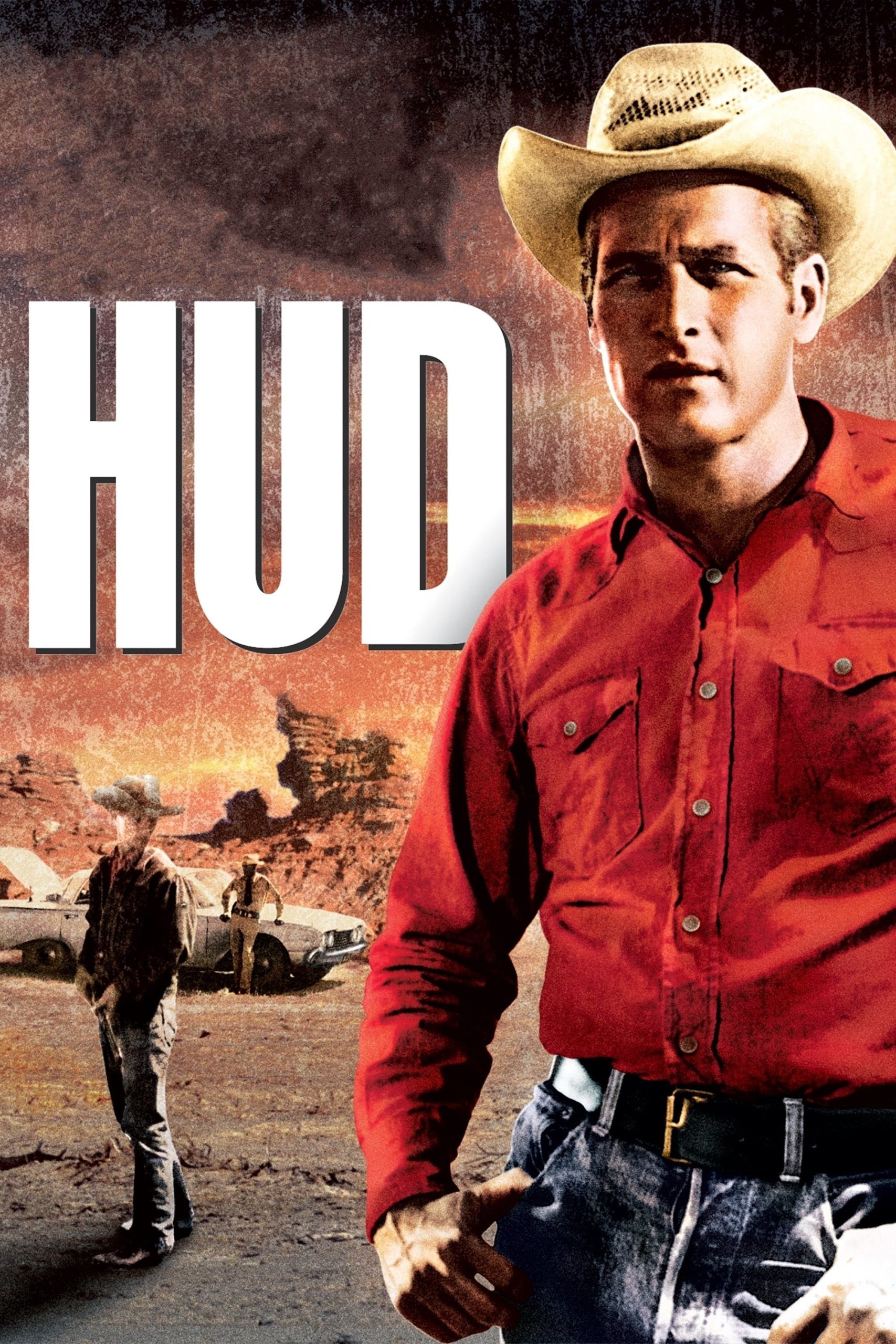
The Question of Truth Behind the Film
The first time I watched “Hud,” I found myself wrestling with a familiar urge: I wanted to parse which parts of this bleak family saga were rooted in actual history and which were shaped entirely for dramatic effect. This impulse has always struck me as more than simple curiosity—it’s a kind of negotiation between the screen and my own sense of what matters. When a film resonates as deeply as “Hud” does with its morally ambiguous characters and harsh West Texas landscape, the question of “Did this actually happen?” underpins every moment of tension. For me, asking whether a film is based on a true story isn’t just about fact-checking; it’s about anchoring my emotional response in something solid. I often approach a film expecting that the “true story” label will lend credibility or a certain gravity. This expectation carries its own set of assumptions—that what I’m seeing is a close translation from life to film, that events unfolded as depicted, that behavior I see is inherited from living men and women, not invented in a script meeting. Ironically, I’ve noticed that clinging to “truth” can limit my openness as a viewer, even as it deepens my engagement. If a film isn’t based on real events, I sometimes catch myself reacting with less urgency—as if the stakes are somehow lower without that implicit contract of authenticity. That tendency is hard to suppress, especially with a film as rugged and unadorned in style as “Hud.” For me, knowing the boundaries between documentary fact and artistic invention shapes my willingness to interrogate a film’s moral questions, and, often, it determines how long the story lingers with me after the credits roll.
Historical Facts and Cinematic Interpretation
Sifting through the origins of “Hud,” I can’t help but reflect on how its screenplay, adapted by Irving Ravetch and Harriet Frank Jr., begins not with historical record, but with a novel: Larry McMurtry’s “Horseman, Pass By.” As much as the film’s dusty realism and raw dialogue often blur into the texture of American myth, I have to remind myself that its foundation is fictional, even if inspired by realities of ranch life in postwar Texas. While “Hud” never explicitly claims to chronicle a specific real family or scandal, its setting and conflicts unmistakably draw from the broader social fabric of the period—a time when the push and pull between generations, the intrusion of modernity, and the question of inherited responsibility preoccupied the American psyche. In watching the film’s events unfold—the outbreak of cattle disease on the Bannon ranch, Hud’s clashes with his principled father Homer, Lonnie’s uncertain place between them—I am aware that these plot points are meticulously organized for narrative impact, not documentary accuracy.
I find the film’s structure reveals its priorities as a work of adaptation. The disease which devastates the Bannon herd may echo real agricultural crises and the economic precariousness that haunted rural communities, but its depiction in “Hud” is heightened and contained within the story’s tightly woven arc, stripped of bureaucratic red tape or the slower, quieter devastations typical of reality. Similarly, character motivations and turning points arrive with a clarity that feels crafted rather than lived—a condensation of the kind of tensions that might simmer for years in real families. My sense is that “Hud” reshapes life into a more pointed morality play, trimming ambiguity and coincidence in favor of setup and payoff. Yet, this very abstraction doesn’t diminish the authenticity of emotion for me; if anything, it intensifies my focus on what the film is actually asking: Can integrity survive in a world driven by self-interest? Does cynicism guarantee survival or only a stunted kind of victory? The way real world elements are adapted for the screen, in this case, feels less about direct transcription and more about distillation—making me question how much of “realism” in such stories is actually a carefully chosen arrangement of facts and feelings.
What Changes When Reality Is Shaped for Cinema
As I think about the gulf between the messiness of actual events and the focused energy of a film like “Hud,” I’m always struck by the sheer amount of selection involved. Turning a sprawling, multi-generational novel into a two-hour movie—especially one tasked with holding an audience’s attention—necessitates streamlining. In “Hud,” the filmmakers had to make practical choices: fragmenting years of slow-building disillusionment into pivotal confrontations, or compressing legal, ethical, and familial quandaries into a few potent exchanges. These decisions inevitably highlight certain themes at the expense of others, and I find that process fascinating as an act of narrative translation. For instance, in real life, the dilemma of killing infected cattle might unfold over weeks, tangled in state regulations and personal doubts. On film, it emerges as a crucible, a single crisis that exposes—and indeed, forces—character.
I’m aware, watching “Hud,” that the dialogue between Homer and Hud isn’t just a reflection of plausible father-son relationships. It’s more a channel through which the scriptwriters filter the anxieties of a particular historical moment. What changes, for me, is my understanding that the film’s world is as much about thematic resonance as about literal truth. “Hud” transforms the American West not into a documentary landscape, but into a symbolic one—a place where ideas about decency, legacy, and law collide, abstracted from specific historical incidents. The trade-off is clear: cinematically, the story becomes more teachable, more forceful in interpretation, but also more fixed in perspective. The nuances of everyday compromise—the small acts of kindness, the unremarkable failures—tend to vanish or become blunted when streamlined. As a viewer, I sometimes resist this loss of lived complexity, but I also recognize how it allows the film to craft images and scenes that stick, precisely because they’re exaggerated or emblematic.
What also strikes me is the way visual storytelling collapses context. The subtleties of rural Texan life, or the complicated legacies of agrarian decline, get telescoped into cinematic images—the dust on a boot, the crumple of a face in defeat. “Hud” shows me that every act of filming is a negotiation with reality: the slow pace of change, the private negotiations that fill a day, become set pieces, staged for clarity and impact. What is lost in patience and ambiguity may be offset by emotional immediacy; what is gained in coherence is sometimes weakened by the thinning of possible interpretations. These are not faults, as I see it, but signs of the unique demands of storytelling for the screen, where fact is often pressed into the service of feeling rather than memory.
Audience Expectations and the “True Story” Label
Every time I discuss “Hud” with friends or students, I notice how quickly the conversation turns to whether these people could have existed, or if the plot is “real.” That fascination with authenticity, I think, is more than a passing concern—it colors every expectation we bring to the theater. When a film like “Hud” is not marketed as a true story, I find myself approaching it as a work of creative speculation, even if its details feel possible. There’s a rhythm to my engagement: I’m more open to symbolism, more willing to see a character as a type or an archetype rather than a transcript of someone’s biography. If “Hud” carried the explicit “based on a true story” declaration, my posture as a viewer would inevitably change. I would watch with an eye for “evidence”—did the era’s ranchers really behave like this? Would a son stand up to his father in such a manner? I might take certain cruelties or failures more personally, weighing them as indictments of real behavior, rather than as dramatic illustrations.
I’ve also found that the label of “inspired by real events” prompts a different kind of curiosity: I become a detective, reading into the film’s choices and comparing them (at least in my mind) to what I imagine actually happened. With a purely fictional film, such impulses ease; instead of fact-checking, I focus on internal coherence. My sense is that many audience members treat the “true story” label as a kind of emotional contract: what is depicted will tell us something fundamental (or at least accurate) about actual life. Without that implicit guarantee, interpretation can be freer and, sometimes, more playful. I don’t search for hidden lessons, so much as patterns and possibilities. In the case of “Hud,” the film straddles this line—its realism is so convincing that I can forget how invented it is, yet the lack of historical markers liberates me to read Hud Bannon as both a person and a metaphor, not tied exclusively to a specific precedent.
It’s this fluidity that, to me, gives “Hud” much of its resonance. The absence of documentary grounding frees the filmmakers to sculpt their characters and situations to embody questions that are perennial rather than situational. Yet I recognize that, for many viewers, the lack of a “true story” claim can drain the film’s urgency, especially when compared with works explicitly tethered to historical episodes. There’s a delicate balance; too much insistence on “truth” can confine audience reactions, while too little can leave them untethered, searching for a firm ground that the film isn’t designed to provide. For myself, watching “Hud” demands a conscious suspension of the search for literal precedent, and an embrace of the film’s hybrid nature—fact in flavor, fiction in structure.
Final Perspective on Fact vs Fiction
As I reflect on how knowledge of real versus invented events shapes my view of “Hud,” I find my relationship to the film shifting each time I revisit it. If I approach it strictly as a work of fiction—an adaptation of a novel that draws from, but doesn’t replicate, the realities of rural Texas—I tend to let the story wash over me, absorbing its harsh lessons about family, corruption, and disillusionment as broader statements about the American experience. However, when I remind myself of the social circumstances coloring the film’s landscape—postwar anxieties, the erosion of tradition, the creeping sense of moral decline—the film becomes more than a closed system. It takes on a porous quality; I see in Hud Bannon not just a stylized antihero, but a reflection of larger shifts in American identity. The space between fact and fiction is not a chasm here, but a spectrum, one that lets me oscillate between empathy for the individual characters and contemplation of their symbolic roles.
For me, the true value of understanding what is “real” or “fictional” in “Hud” isn’t a matter of picking sides, but of sharpening my interpretive focus. Fact, when present, tethers a film to the world outside the theater, inviting me to judge not only the actions on screen but the forces that produced them. Fiction, on the other hand, invites a subtler dialogue with possibility: Are these dilemmas universal? Do they resonate because they repeat, not just because they once happened? In engaging with “Hud,” I’ve found that foregrounding the distinction between historical accuracy and cinematic invention doesn’t constrain my experience, but rather enriches it, encouraging me to interrogate my own assumptions about truth, storytelling, and the nature of empathy. Each viewing becomes less a search for authenticity and more an exploration of meaning—how much of what I see is shaped by what I know, and how much is shaped by how I choose to watch.
Ultimately, then, the knowledge of what is “real” or “made up” changes little about my appreciation for the film’s artistry, yet it transforms the angle from which I approach its questions. I have learned to acknowledge both the constructedness of cinematic worlds and the capacity of those worlds to gesture toward realities that exist beyond the frame. “Hud,” with its complex portrait of a changing America, loses none of its force when I recognize the creative liberties taken; instead, it gains a second life as a meditation on how fiction and history inform each other, blurring boundaries in the service of greater resonance. That, I think, is where its staying power truly lies.
For additional context, you may also explore the film’s overview and how it was received by audiences and critics.
🎬 Check out today's best-selling movies on Amazon!
View Deals on Amazon