
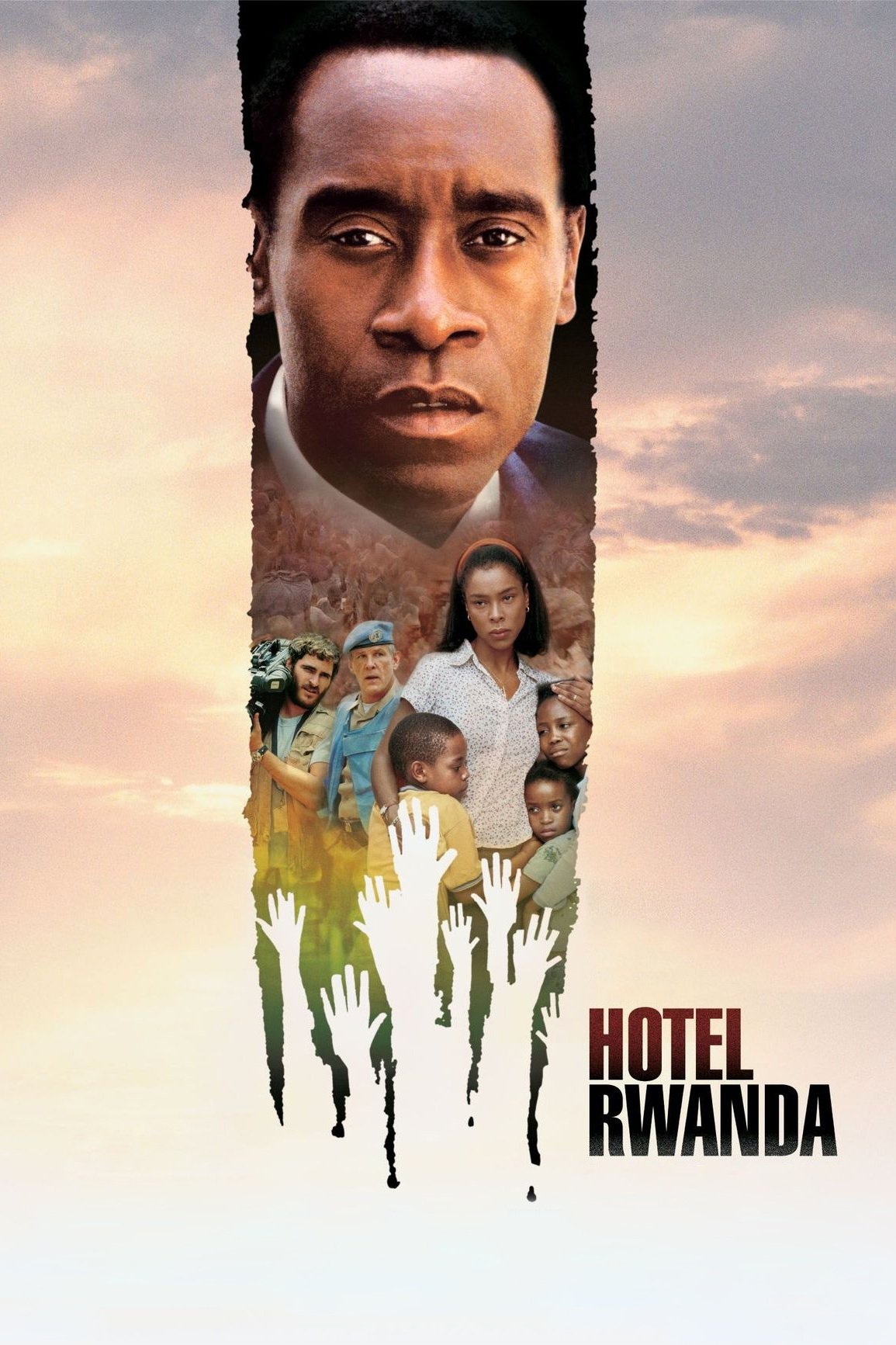
The Question of Truth Behind the Film
Stepping out of the cinema after watching Hotel Rwanda, I couldn’t shake the persistent need to know which details in the story were grounded in fact and which were dramatized for the screen. I noticed this isn’t just my own curiosity; I see it reflected in conversations with friends and students who have watched the film as well. When a story claims roots in actual events, I find myself interrogating every narrative beat for authenticity. It seems the question, “Did this really happen?” hovers above each scene, driving me to look beyond the credits towards the historical record. There’s a tacit expectation I bring—that films labeled as “based on a true story” will unlock a privileged window into reality, or at the very least, reveal a version of events that feels trustworthy. I think audiences, myself included, crave reassurance that by investing emotionally in these portrayals, we’re connecting to something meaningful beyond mere fiction.
For me, the “true story” label shapes my anticipation and heightens my scrutiny. It’s as if authenticity is a contract signed with the first on-screen text or trailer tagline, and I catch myself holding filmmakers accountable to invisible terms. There’s an assumption—perhaps naïve—that cinema can double as a vessel for historical record, carrying with it both information and empathy. I reflect on how this expectation colors my perception—not just of the main character’s heroism, but also of the specifics: the dates, the outcomes, the faces. The desire to separate fact from fiction becomes almost compulsive, and I sense that this impulse is woven into the experience of historical films in general, but it felt particularly acute with Hotel Rwanda, where the real stakes and recent trauma are impossible to ignore.
Historical Facts and Cinematic Interpretation
When I research the events that inspired Hotel Rwanda, I’m struck by how the facts of the Rwandan genocide and the story of Paul Rusesabagina intersect but do not always align seamlessly. The genocide itself—a staggering tragedy unfolding over one hundred days, with an estimated 800,000 lives lost—offers a harrowing historical backdrop. In my view, the enormity of these events defies neat narrative packaging, and yet, in adapting them for the screen, filmmakers face the task of shaping chaos into coherence. The real-life Mille Collines hotel did serve as a sanctuary for refugees, and Paul Rusesabagina’s role as a manager sheltering over a thousand people is well-documented. But as I examine the details, I see how certain characters are amalgamated, timelines compressed, and specific incidents chosen or omitted to create a story that an audience can process in two hours.
It becomes clear to me how chronology often bows to narrative drive. I notice that events which took place over disparate moments are re-ordered or presented side by side to deepen urgency or illustrate escalating tension. In my experience, films like Hotel Rwanda frequently distill complex realities by emphasizing a handful of interactions or negotiations, and as a result, secondary voices or less visible actors in the actual history are sometimes sidelined. I find myself reflecting on the balance between fidelity to real-life experience and the need to communicate a theme or emotional truth. The film foregrounds certain ethical dilemmas, in part, by choosing which facts to spotlight; this inevitably shifts the lens through which I view the period depicted. I see how, when presented with a narrative shaped for cinema, my perception of the event’s scope or the contours of individual heroism can become simplified—even when I’m aware that the historical record tells a more layered or ambiguous story.
If I focus on how supporting characters are rendered, I often notice that their stories are bundled—compositing real individuals into fictionalized counterparts to sharpen the dramatic arc or streamline the cast. These creative decisions don’t always diminish authenticity, but they do transform my sense of who was responsible for certain acts of courage or suffering. The challenge, as I interpret it, lies in how screenplays must resolve plotlines within the film’s runtime, inevitably condensing years of trauma and strategy into a digestible form. This necessity presses against any attempt to match historical detail to cinematic expression point for point.
What Changes When Reality Is Shaped for Cinema
Sitting with the film, I realize that the act of transforming documentary fact into cinematic narrative is never a neutral process. The very structure of storytelling—requiring a beginning, middle, and end—shapes what gets included, excluded, and emphasized. I find it fascinating that, while accuracy may anchor a film’s world, what resonates most strongly with me usually arises from how the story is told, not just what is told. In Hotel Rwanda, the compression of events, the addition of fictionalized dialogue, and the staging of negotiations all seem aimed at making overwhelming statistics emotionally available to me as a viewer. There’s a trade-off: gaining accessibility but sometimes at the expense of broader context or nuanced detail.
This raises, for me, a fundamental question about the responsibilities of the filmmaker. Though I try to avoid making quality judgments, I can’t help but recognize that, from my perspective, distilling a sprawling crisis into a handful of representative moments is unavoidable. When I notice that the perspectives of international leaders, UN officials, or even victims themselves are compressed into a few representative characters, I see both gain and loss. I am granted an intimate window into the experiences of a central protagonist, but other, potentially illuminating perspectives are naturally lost or abbreviated. Every time the filmmakers choose to show an event from one vantage rather than another, I realize it subtly nudges my emotional alignment—and even the inferences I make about historical causality or responsibility.
My own experience leads me to appreciate how visual choices and dialogue supplement the record. A striking image, a gesture of defiance, or a moment of quiet desperation—these may not be strictly factual, but they become emotionally convincing. This emotional architecture often guides me to meanings that stand alongside, not always overlap with, the archival truth. Decisions to highlight particular episodes—say, the negotiation over bribes or the misleading sense of international rescue—guide my focus more forcefully than any newsreel could. These adjustments, while necessary for narrative propulsion, recalibrate my understanding of the relationships and power dynamics at play. The practicalities of cinema thus force historical truth through a filter: one that privileges momentum, structure, and dramatic logic.
I also reflect on how the ethical dilemmas depicted—such as the protagonist’s attempts to bargain for safety using his skills as a hotelier—are often rendered with a clarity that reality rarely affords. I am aware that real-life decisions unfolded amidst chaos and uncertainty, but on film, these moments are often depicted with a sharpness and sense of narrative purpose that clarifies the stakes for me as a viewer. This clarity helps me process the enormity of the tragedy but may also lead me away from the messiness and ambivalence inherent in true historical events. Each scene, then, is both a window and a frame, presenting reality through the shaped glass of dramatization.
Audience Expectations and the “True Story” Label
My encounters with “based on actual events” films have taught me how powerful that label can be in steering my emotional responses. Watching Hotel Rwanda while conscious of its roots in recent history, each image gains additional weight; scenes of danger and relief are freighted with the knowledge that real lives stood in the balance. When I know a film claims factual grounding, I instinctively become more invested, but I also become more critical, attentive to potential divergences or slick narrative resolutions that seem tidy against the untidiness of real tragedy. I find myself oscillating between immersion and skepticism: I want to believe, but I also want to be sure.
It’s notable to me how the genre signals—“based on a true story,” “inspired by actual events,” or “a work of fiction”—shift my willingness to accept or question what unfolds onscreen. With Hotel Rwanda, the promotional framing primes me to receive the film as partly testimonial. I take in the plot not merely as entertainment but as commemoration, and I challenge myself to parse the boundaries between homage and invention. If this film had presented itself as a purely fictional story, my relationship to its stakes and characters would likely be more distanced, more open to symbolic interpretation than literal identification. The “true story” assertion, by contrast, asks me to see the events depicted as not just possible, but as emblematic of a particular reality, bordering on documentary promise.
I’ve noticed that, for many viewers, the degree of adherence to fact becomes inseparable from emotional impact. The knowledge that a hotel manager did shelter hundreds intensifies each moment of risk; the possibility that details were invented or altered may unsettle the catharsis or identification I feel. If I later discover discrepancies—say, criticisms from survivors or alternative versions of events—I often revisit my initial reactions, reconsidering whether I was moved by history and empathy, or simply persuaded by compelling filmmaking. This reflexive process doesn’t necessarily diminish my engagement, but it does make me more self-aware as a viewer, more attuned to the constructedness of every narrative, no matter how factual its base.
I also think about the collective impact: when a large audience is told that what they’re seeing unfolded recognizably in the world, this shapes conversation and memory. Film, for many, becomes the shorthand for historical understanding. My own references to what happened in Rwanda are often colored by what I’ve seen in the film, not just by what I’ve read in articles or books. This phenomenon demonstrates how cinema wields singular influence over popular memory, and why the “true story” label provokes such strong reactions—of admiration, skepticism, or debate—among audiences who grapple with the same questions I do.
Final Perspective on Fact vs Fiction
After tracing my own process through and beyond Hotel Rwanda, I appreciate how factual awareness fundamentally shapes my interpretation, even as it complicates the simple consumption of the film as art. I don’t find myself measuring the film only by a ruler of accuracy; rather, I adjust my expectations regarding what it’s ultimately offering. When I view the film primarily as an attempt to bear witness, knowing where fact ends and fiction begins doesn’t diminish the story’s resonance for me, but it does demand a more active and critical engagement. My emotional and intellectual responses become more layered—I am moved, but I’m also prompted to investigate, to learn, to question, and occasionally to doubt.
Realizing which aspects of Hotel Rwanda are shaped by cinematic convention and which arise from lived history helps me resist the urge to outsource my understanding of events to one narrative. I feel encouraged to explore further, to listen to differing accounts, and to situate the story within a larger frame. This awareness informs my viewing with humility: I recognize each film on a spectrum between fact and invention, and I see my role not only as a recipient of information, but as an interpreter, always translating mediation into meaning. This doesn’t imply detachment; in fact, for me, the complexity enriches the experience, turning the film into a starting point rather than a final answer.
Ultimately, when I watch a film like Hotel Rwanda aware of the lines between the dramatic and the documentary, my understanding acquires a certain productive tension. I hold two thoughts simultaneously: what I’m seeing is real in its intentions and invented in its methods. This dual awareness both deepens my empathy and sharpens my critical faculties. My sense of the film’s message and significance remains influenced, but not determined, by how closely it hews to historical fact. The experience, for me, becomes less about verification and more about exploration—of memory, narrative, and the space between.
For additional context, you may also explore the film’s overview and how it was received by audiences and critics.
🎬 Check out today's best-selling movies on Amazon!
View Deals on Amazon