
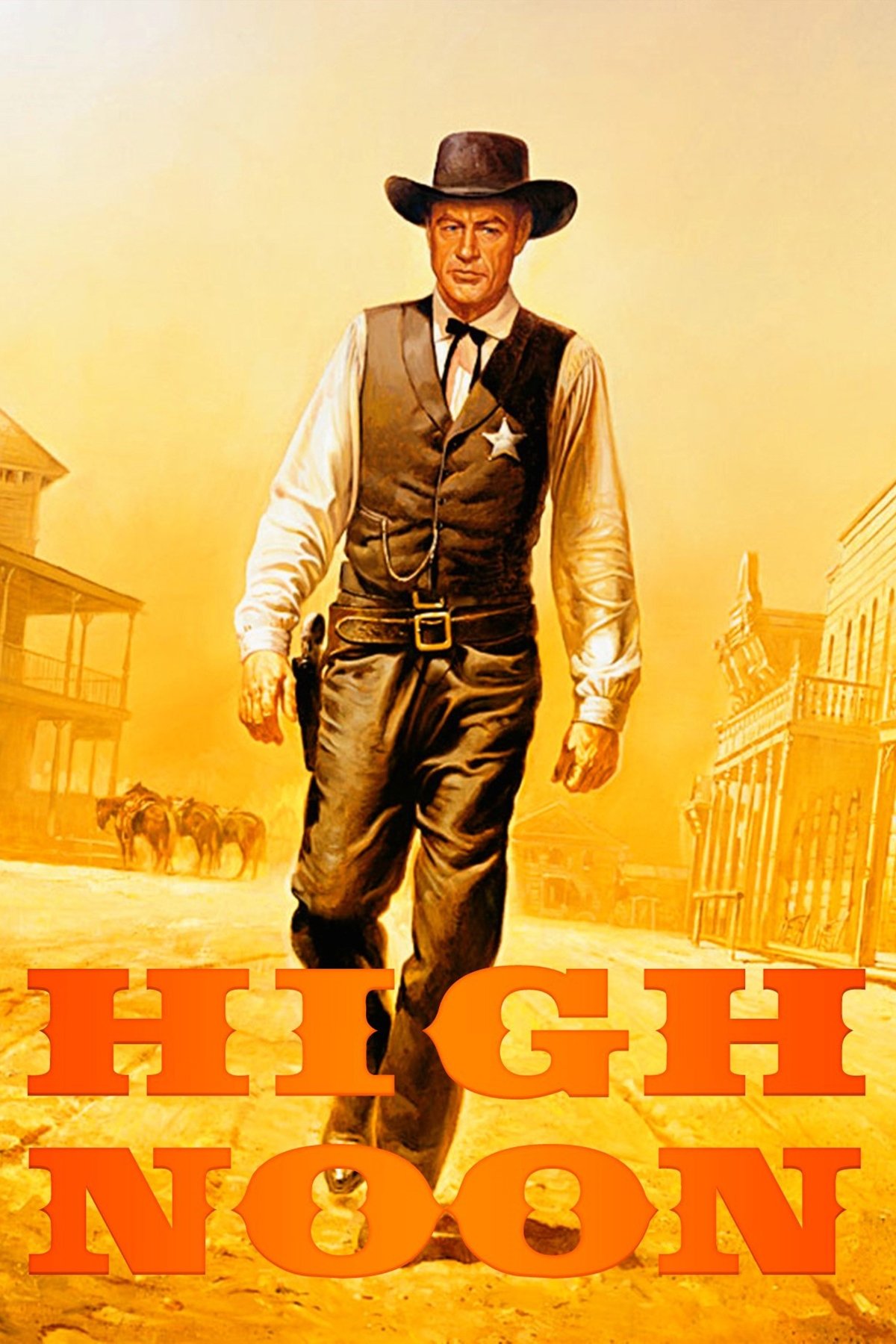
Is This Film Based on a True Story?
Watching “High Noon” for the first time, I vividly remember scanning every tense moment for some hint of hidden history. Was this showdown in the middle of a dusty Western town a slice of real frontier life, or did it emerge from the creative wilds of Hollywood? After much research and reflection, I can say without hesitation that “High Noon” is not based on a specific true story or individual. The film’s events, characters, and central conflicts were crafted as original fiction. However, my exploration uncovered that the film draws notable inspiration from broader historical themes and even contemporary political anxieties, making its storytelling deeply resonant with real-world truths, yet not anchored in a documented event or verifiable biography. For me, that mix makes it fascinating: fictional in plot, but reflective of the larger American psyche.
The Real Events or Historical Inspirations
In tracing the roots of “High Noon,” I found myself pulled toward the period in which the film was conceived—early 1950s America, rife with political turbulence and social fears. The script, written by Carl Foreman, was influenced not by a single historical gunfight or a famous lawman. Instead, my research shows the film was built on the backbone of classic American Western tropes and the atmosphere of McCarthyism that permeated Hollywood at the time. Foreman himself was subpoenaed by the House Un-American Activities Committee as a suspected communist, and this personal ordeal gave the project an undeniable urgency. While the story does not depict actual events, I noticed how the themes of community, individual conscience, and isolation echo the pressures many citizens—and especially artists—felt during the Red Scare. For me, discovering this context illuminated how “High Noon” became an allegory, reflecting the tensions of its era instead of retelling a factual event.
Digging deeper, I learned that there’s no record of a lawman in the Old West standing alone to face an outlaw with the whole town abandoning him. The main character, Will Kane, is an archetype, drawing from the folk mythology of figures like Wyatt Earp, Bat Masterson, or Wild Bill Hickok, but he is not meant to represent any one of them directly. Several historians and writers I’ve read point out that the movie captures the idea of frontier justice rather than any literal showdown. Some connections have been drawn by critics between the film’s central standoff and the often-dramatized events of the Earp-Clanton shootout in Tombstone, but, in my assessment, those parallels are thematic, not factual. For all my digging, I’ve yet to find a primary source that links “High Noon” to a documented historical event.
I also found that Foreman and director Fred Zinnemann borrowed from literary sources. The story was loosely inspired by the 1947 short story “The Tin Star” by John W. Cunningham. Reading the original, I noticed that while certain motifs—such as a returning outlaw and a reluctant community—carry over into “High Noon,” the specifics are very different. There is no true-life chronicle behind “The Tin Star” itself either, which means that “High Noon” stands as a fictional canvas shaped by myth, literature, and present-day anxieties, rather than documentary history. For me, this realization underscores just how filmmakers use both real and imagined influences to construct something new and emotionally charged.
What Was Changed or Dramatized
One of the first things that struck me during my research was how “High Noon” amplifies its central conflicts for dramatic effect. The ticking clock structure, which tracks the tumultuous hour as Marshal Kane awaits the arrival of his nemesis, is a storytelling device rather than a reflection of real gunfights, which were rarely so meticulously staged or timed in frontier history. I couldn’t find any record of such a precise countdown to violence in historical accounts of the West. The crescendo of suspense—the deserted streets, the closed doors, the solitary lawman walking under the harsh midday sun—are constructed for maximum emotional impact.
The portrayal of the townspeople, in particular, seems stylized from my perspective. In the film, each resident turns away from Kane with increasing self-interest or fear. While this works beautifully as a dramatic device, my review of Old West towns suggests that responses to threats were much more varied. At times citizens formed vigilante groups, or, in other cases, stood behind their lawmen. Some research points to periods of communal action as well as apathy, depending on the circumstances, which means the utter abandonment depicted in “High Noon” is a strong dramatization.
The character of Will Kane himself is, for me, the archetype of the principled Westerner pushed to the brink. His journey in “High Noon” echoes the mythos of the lone cowboy but exaggerates the solitary nature of heroism to borderline existential levels. Real sheriffs often worked closely with deputies, and rarely would a lawman go unassisted facing an infamous villain. By contrast, the film strips Kane of almost all support, creating a powerful, if unlikely, scenario designed to test the limits of individual agency.
Another clear dramatization, in my eyes, is the condensed timeline. The entire film unfolds almost in real time, heightening its suspense, but real confrontations in frontier towns could stretch across days or weeks as lawmen might strategize, seek reinforcements, or negotiate with troublemakers. Additionally, the character of Amy, Kane’s Quaker wife, and her ultimate involvement in the final standoff, dramatize the inner conflict between pacifism and violence—a philosophical debate that, while authentic for the era, is rendered here within ninety minutes for heightened moral contrast.
I also found subtle changes introduced at the script stage that further accentuated the allegorical nature of the film. Dialogue is sharpened to confront themes of loyalty, community failure, and the burdens of leadership. These lines, while emblematic, are not born of historical transcripts but instead crafted to make the film’s argument sharper and more immediate. For me, this deliberate choice shows how the film sought to universalize its message, rather than adhere to the messier nuances of real history.
Historical Accuracy Overview
From my perspective, “High Noon” achieves a remarkable sense of authenticity in its atmosphere, yet it diverges sharply from the actual record in its particulars. When I watch the film, its detailed period costumes, set design, and the evocation of a sun-baked Western street convince me I’m stepping into the late 19th-century frontier. The weariness and grit feel real, even as I remind myself that the town of Hadleyville is purely fictional. I’ve read interviews with production designers and looked through photographs from the era, and while the overall mise-en-scène reflects period sensibilities, the narrative foundation stands firmly outside documented history.
On the topic of weapons, law enforcement protocols, and the sociology of small Western towns, I found that “High Noon” both aligns with and strays from historical records. The film’s depiction of a town harboring underlying tensions and divisions echoes what is known about many frontier communities, particularly as the West grew less lawless and more structured. However, lawmen like Kane were rarely as isolated as depicted, and the sense of total civic abandonment wasn’t an everyday reality.
In terms of period accuracy, the costuming, props, and even the architecture match reasonably well with photographic evidence from the 1870s and 1880s, which impresses me as a researcher. Yet, when it comes to the emotional and political currents of the story—the community’s inaction, Kane’s unwavering resolve, and Amy’s eventual violent intervention—I realize that these are heightened for drama rather than strict historicity. The film’s insistence on almost complete solitude for Kane seems crafted to highlight the burdens of responsibility—and perhaps to underscore the political climate of its own era, which I see reflected in subtext rather than fact.
To summarize my sense of the film’s historical authenticity: “High Noon” is not a recreation of any real event or person, but it does accurately communicate the anxieties of its release period—McCarthy-era Hollywood—and employs the iconography and social dynamics of the Old West as a backdrop. The film’s universal themes, allegorical undertones, and period fidelity in appearance all contribute to an immersive viewing experience, but I never lose sight of its status as fiction, inspired by but not beholden to history.
How Knowing the Facts Affects the Viewing Experience
For me, learning the real story behind “High Noon” opened up an entirely new way of watching the film. Understanding that the movie isn’t drawn from specific frontier records or a legendary lawman gives me the freedom to focus on its broader philosophical concerns. Instead of searching for hidden biographical references, I find myself drawn to its exploration of conscience, loneliness, and the demands of integrity—qualities that feel timeless rather than tied to a single historical moment.
Knowing that the film was shaped by the pressures of McCarthyism, with its climate of suspicion and blacklisting, sharpens every character interaction for me. I no longer see the townsfolk’s failure to stand with Kane as just a narrative device, but as a reflection of what many Hollywood artists and regular American citizens were experiencing in their own lives in the early 1950s. The layers of social pressure, fear of reprisal, and calculation of risk become especially poignant when viewed through the lens of contemporary events. For me, “High Noon” becomes not just a Western, but an allegory for moral choices made under duress—a lesson both personal and political.
At the same time, knowing the limits of the film’s historical basis allows me to appreciate its creative license. Rather than being a documentary of frontier law enforcement, it is a meditation on larger human dilemmas. When I see Will Kane, ringed by shadow and sunlight, bracing for his final encounter, it feels less like a real-life gunfight and more like a stand-in for anyone at a crossroads, abandoned by their community, yet compelled to act. For viewers who seek strict historical realism in their films, this understanding might recalibrate expectations. There is truth in the ethos and atmosphere, but not in the particulars of plot or character.
In my experience, this richer awareness of the film’s origins helps deepen my respect for what “High Noon” accomplishes. I look beyond the trappings of genre and see the personal battles—mirrored in the choices of artists and citizens during the 1950s, and still relevant today. For me, the absence of a literal true story is no limitation; the film’s resonance comes from the fusion of fictional story with real emotional and political stakes. Armed with the facts, I find my engagement with “High Noon” only intensifies, as I notice every gesture, every silence, and every hard-won decision as part of a larger conversation—one that stretches from the Old West to the mid-century, and right up to now.
After learning about the film’s origins, you may want to see how audiences and critics responded.
🎬 Check out today's best-selling movies on Amazon!
View Deals on Amazon