
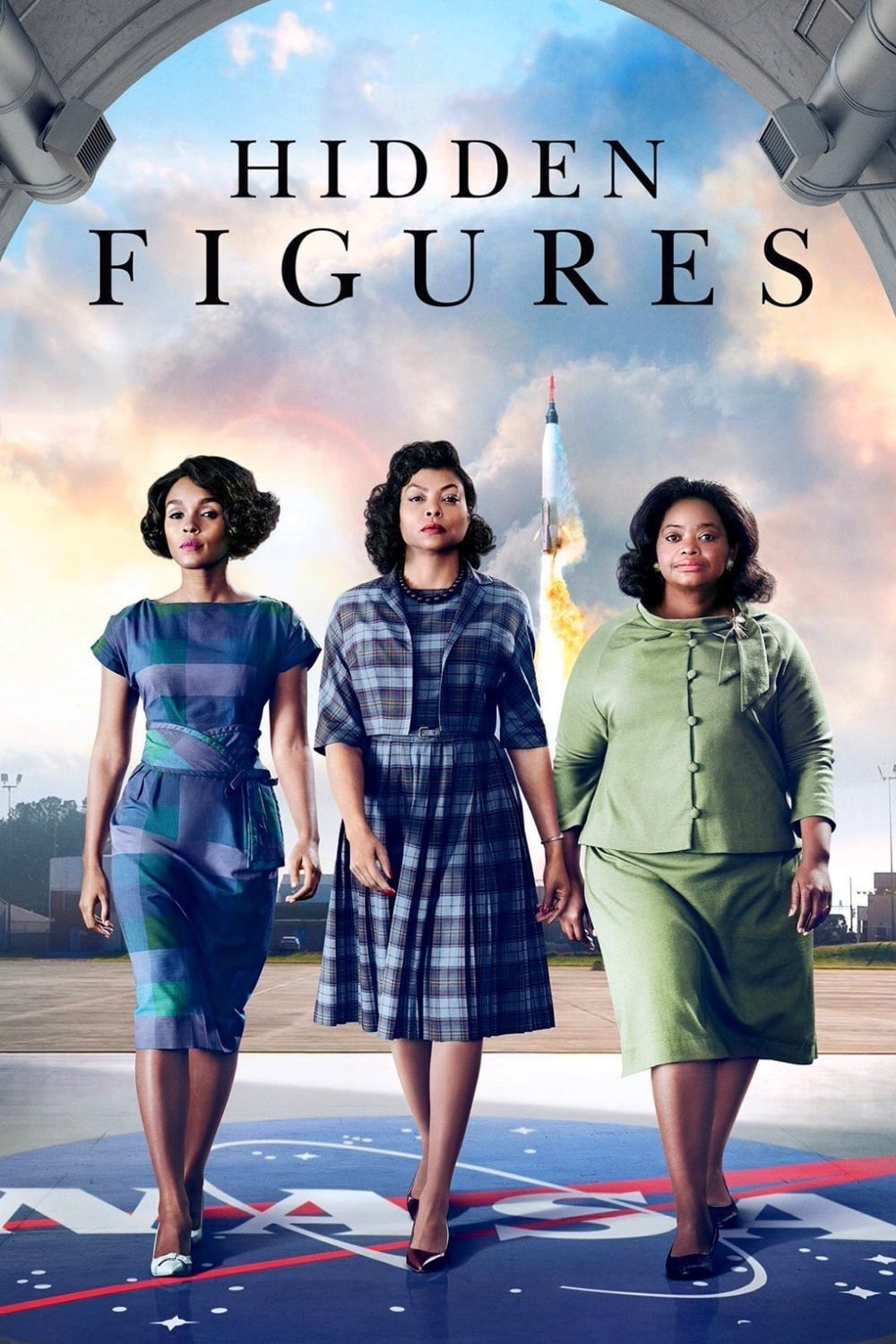
The Question of Truth Behind the Film
I remember the first time I heard about Hidden Figures—the story of three Black women mathematicians rising above the prejudices of their era to play critical roles at NASA. My immediate instinct was to ask, “Did this really happen?” That impulse, I think, is familiar for many viewers. When a film’s marketing or its very language leans on being “based on a true story,” I find myself bracing for a lesson, expecting facts as much as emotions. This curiosity about historical veracity doesn’t spring just from a desire to catalog facts, but from a deeper search for meaning: I want to believe that the world has produced such unlikely, courageous triumphs. The label “true story” raises my expectations not only for accuracy, but also for a kind of moral and emotional resonance—a chance for cinema to reveal hidden chapters that textbooks left out. Yet, I recognize that my hunger for “the real story” can sometimes set me up for frustration or surprise, especially once I uncover which elements are dramatic inventions or composites.
Historical Facts and Cinematic Interpretation
With Hidden Figures, I found myself navigating the tricky terrain between historical record and narrative cohesion. The nucleus of the story is certainly factual—Katherine Johnson, Dorothy Vaughan, and Mary Jackson did work at NASA, and each contributed in significant ways. However, as I dug deeper into the backdrop, I became acutely aware of just how much the past is shaped and streamlined for the demands of storytelling. In my view, historical films often play with temporal order, combining years of incremental change or scattered incidents into a single event or conversation for emotional punch. Hidden Figures does this by narrowing its time frame and heightening dramatic conflict—such as the extended sequence showing Katherine Johnson’s long trek to a distant restroom, which condenses broader, persistent institutional racism into a single accessible metaphor. When I reflect on adaption choices like these, I realize that events separated by years—be they policy changes, technological breakthroughs, or shifts in social climate—are condensed into moments that can be grasped in a two-hour runtime. The real Dorothy Vaughan’s timeline as a Supervisor, for example, is adjusted to better align with the film’s arc, while Mary Jackson’s journey to become NASA’s first Black female engineer collapses multiple bureaucratic battles into a striking courtroom scene. These compressions are not random, but seem designed to unspool a thread that viewers can follow, inviting us to feel each victory.
What Changes When Reality Is Shaped for Cinema
Whenever I watch a film like Hidden Figures, I become aware of the pragmatic decisions that shape its structure. The act of translation—from raw historical detail to engaging screenplay—means that not every character will represent an individual from real life; some are composites or invented to embody obstacles or change. The character of Al Harrison, for instance, does not have a direct real-life counterpart at NASA but stands as an amalgam of leaders who simultaneously challenged and enabled progress. For me, the choice to create such composite characters or symbolic moments is not about deception but about delivering clarity and keeping the emotional stakes legible to the audience. The real Katherine Johnson might not have been called so abruptly to the Space Task Group, or faced precisely the interactions portrayed, but these scenes make otherwise diffuse professional hurdles palpable. Examining these choices, I see that cinema must navigate between evoking the feeling of a time and place and committing to exhaustive detail. Dialogue is sharpened, obstacles crystallized, timelines trimmed—all in service of keeping the viewer engaged, without losing sight of the themes the film wants to elevate. Yet, the more knowledge I have about the historical Katherine, Dorothy, and Mary, the more I recognize that their achievements unfolded over longer, more complex arcs. The trade-off, then, isn’t about authenticity, but about accessibility—balancing intricate social realities with clarity and momentum.
Audience Expectations and the “True Story” Label
I’ve often sensed an unspoken contract between viewer and filmmaker when I see the words “based on true events” flash on the screen. For me, that contract feels heavier in films like Hidden Figures because of both the underrepresentation of the subjects in history and the audience’s hope that real heroism is being honored. When a story is announced as factual, I find myself anticipating not only an emotional journey, but a kind of documentary insight into the past. This expectation heightens my scrutiny—I am more likely to notice discrepancies if I later learn that a critical showdown or conversation did not actually happen as depicted. If that same film were labeled “inspired by real events” or presented as pure fiction, my relationship to it would shift: I might focus more on universal truths and less on historical ones. The “true story” label acts as a powerful amplifier for emotional resonance, but it can also risk disappointment if I discover narrative liberties have been taken. Yet, there’s a converse effect—knowing certain moments or conflicts are invented can free me to appreciate their metaphorical significance, rather than demand literal translation. It’s an ongoing negotiation, as my emotional investment mingles with the analytical impulse to fact-check, leaving me in a liminal space between immersion and inquiry.
Final Perspective on Fact vs Fiction
When I look back at my experience with Hidden Figures, I realize that my awareness of what is fact and what is adaptation doesn’t detract from my engagement, but fundamentally colors the way I interpret the film. Knowing, for instance, that the “for colored girls restroom” scene is an amplified symbol—rather than a literal episode from Katherine Johnson’s memoirs—doesn’t diminish its potency for me. If anything, it points to the filmmakers’ attempt to crystallize the daily indignities these women endured into a resonant image. My understanding shifts from a simple tally of “did this happen?” to a broader reflection on what it means to represent historical struggle onscreen. Rather than treating each dramatic flourish as a possible breach of trust, I view these creative choices as invitations to think through how memory, myth, and representation work in tandem. For me, the distinction between fact and fiction is not a boundary but a spectrum along which meaning is negotiated. As I continue to learn more about the real lives of Katherine Johnson, Mary Jackson, and Dorothy Vaughan, my appreciation evolves: I am able to hold both the film’s narrative power and the textured specifics of history in mind, accepting that cinema often speaks most loudly in the spaces between what happened and what could have been imagined.
For additional context, you may also explore the film’s overview and how it was received by audiences and critics.
🎬 Check out today's best-selling movies on Amazon!
View Deals on Amazon