
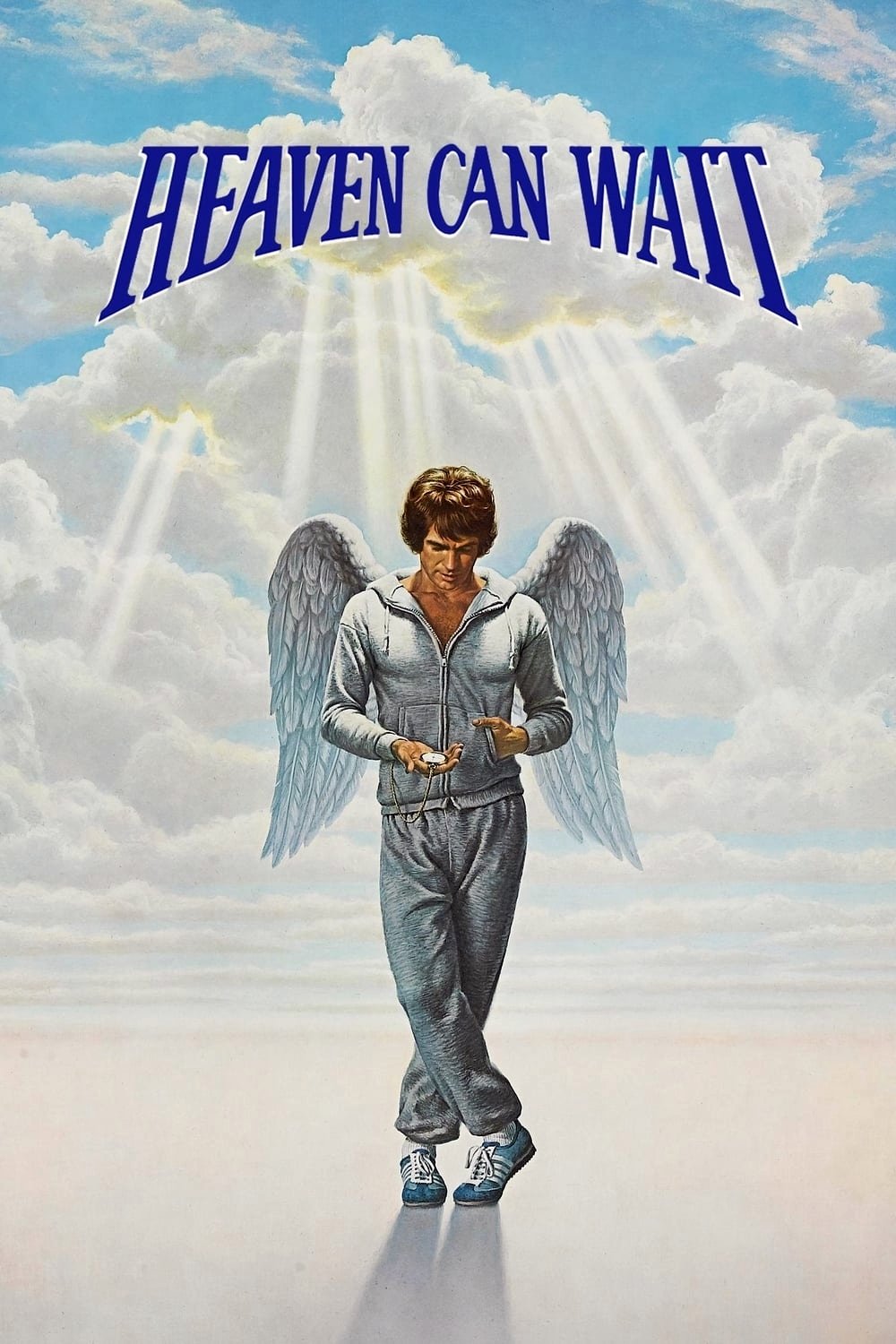
The Question of Truth Behind the Film
Whenever I watch a movie like “Heaven Can Wait,” I can’t help but ask myself—did any of this really happen? It’s not that I expect lush Technicolor comedies from the 1940s to mirror real-life events; rather, I see a deep fascination in myself, and I believe in many viewers, with the boundary between the invented and the historically rooted. The phrase “based on a true story” acts as a kind of narrative passport, transporting the events from the private world of imagination into a shared, seemingly verifiable realm. This designation doesn’t just signal accuracy; it alters how I interpret the characters’ motivations, the societal contexts, and even the themes that unfold across the running time. There’s an assumption, almost subconscious, that a so-called true story is not just possible but representative—that it stands in for events genuinely endured or enjoyed by actual people. Because of this, I tend to approach any film that hints at historical ties with a sort of double vision, seeing both the surface narrative and the imagined truth quietly underpinning it. The effect can be a deepening of emotional engagement, as if authenticity amplifies significance. Films that openly admit their fictionality, like “Heaven Can Wait,” encourage me instead to look for universal feelings or ideas, rather than specifics, to anchor my experience. Regardless, I find it impossible not to interrogate what’s real and what’s creatively rearranged whenever credits roll.
Historical Facts and Cinematic Interpretation
When I consider “Heaven Can Wait,” it’s immediately clear that there’s no explicit pretense of biographical accuracy—no disclaimer declaring it’s adapted from history, no overt attempt to root the fictional Van Cleve family in documented lineage. Still, I feel the pull to ask: what if it were based on an actual figure or family? My curiosity shifts then from what is presented to how it is arranged. I notice how, in other films that borrow directly from real events, history must often play a supporting role: condensed, streamlined, and tidied up to fit the requirements of narrative form. Real lives seldom offer the neat drama of a well-structured movie; they’re messy, full of false starts and unresolved arcs. I’ve noticed, for instance, how in films with historical grounding, years or even decades can be compressed into a few carefully chosen scenes. Sometimes multiple historical personalities are merged into a single composite character—ostensibly for clarity or flow. Even with “Heaven Can Wait,” whose story springs from the stage rather than the archive, I still see echoing traces of historical eras and attitudes. Ernst Lubitsch’s adaptation of Leslie Bush-Fekete’s play doesn’t seek to recount an actual life, but I detect the ways it uses turn-of-the-century settings and period details to ground its fantasy in a context that feels possible. Thus, even in pure fiction, there’s a recurring impulse to borrow the trappings of history—not to document, but to evoke recognition and plausibility. I’m always comparing: what is shown, what might have been, and what the film simply imagines without pretending otherwise.
What Changes When Reality Is Shaped for Cinema
As I reflect on films that draw upon real events—or, in the case of “Heaven Can Wait,” that simulate the architecture of real histories—I become acutely aware of the selective process at play. Cinema thrives on structure and rhythm, favoring arcs and resolutions that real life rarely grants. When filmmakers import reality into cinema, they confront a series of pragmatic crossroads. I see this whenever I think about the creative liberties taken in adaptation: dialogue made more sparkling or succinct than any transcript could ever bear, relationships painted in broad yet revealing strokes, episodes threaded together for narrative economy instead of documentary completeness. The film’s depiction of Henry Van Cleve’s long, reflective encounter with the powers of the afterlife isn’t, for me, a portrait plucked from the historical record—it’s a device, an organizing principle that shapes scattered reminiscence into a coherent theatrical experience. If genuine diaries or court records lay behind such a story, I suspect those facts would be only faintly perceptible in the finished film: names, dates, social contexts, might survive, but their emotional and symbolic meanings would become transformed by the demands of storytelling. For me, this is less about sacrificing truth and more about translation—recasting the mundane or chaotic details of actual experience into patterns that an audience can quickly grasp. The trade-off is clear: by reconstructing the chaos of real events into a narrative, filmmakers surrender documentary precision in exchange for focused themes, memorable characters, and cathartic conclusions. Every time I see a period piece, I remind myself that no matter how intricately designed or historically sourced, there’s always a degree of artistic license shaping what is ultimately a work of dramatic art, not a deposition of the past.
Audience Expectations and the “True Story” Label
My response to the “true story” claim is both intellectual and emotional, and I see the pattern repeated in public discussions all the time. When a film openly declares itself inspired by realism, I naturally become more attuned to the details—mannerisms, speech, settings—that might betray its authenticity or lack thereof. I admit to feeling a different kind of investment toward narratives that promise “it really happened,” even when I know, from experience, that the line between factual account and creative reimagining will inevitably blur. The promise of truthfulness can heighten my sympathy for the protagonists or intensify my reaction to their dilemmas; it can turn a charming love story or a tragic loss from something merely entertaining into something instructive or profound. With fictional works like “Heaven Can Wait,” where no such claim is advanced, I notice my interpretive energy shifting. Instead of trying to align filmic events with real precedents, I search for archetypes, allegories, and signals of cultural mood. I find myself sifting for the essence of an era, rather than its sequence of incidents. The viewer’s contract with fiction feels different—there’s more latitude for whimsy, less pressure on veracity, and a kind of implicit permission to interpret freely, without the obligation of respect toward lived experience. The “true story” label isn’t just informational; it modifies my entire relationship with the material. I don’t lose interest in pure invention; rather, I become more playful in my engagement, appreciating narrative twists and character revelations for their symbolic resonance instead of their evidentiary weight. What stands out to me is the way these signals—declarations of factuality, gestures toward historicity, or open confessions of fantasy—directly shape the imaginative horizon within which I approach and ultimately judge a film’s impact on me.
Final Perspective on Fact vs Fiction
Looking back on my own experiences with “Heaven Can Wait” and countless other films, I see how awareness of the factual or fictional status of a story completely alters my interpretive method. Knowing that the events and characters are inventions does not diminish their meaning for me; rather, it frees up my attention to interrogate what the film wants to communicate about human nature, memory, and the search for significance. Were I to discover the plot was inspired by a real historical figure, my focus would inevitably shift: I’d scrutinize the depiction for authenticity, perhaps compare it against what’s documented, and weigh the emotional beats of the film against reported realities. In fiction, as with Lubitsch’s intricate tapestry of manners and afterlife musings, I find myself more attuned to the film’s aesthetic coherence, its ideas about redemption and love, and to its sly dialogue with the conventions of its own era. Fact and fiction operate as different sets of expectations for me, not as hierarchies but as frameworks. One invites fact-checking and empathy with the actual; the other grants permission for symbolic exploration and imaginative expansion. The difference is not small, and it’s not abstract; it’s deeply personal, shaping how I relate to what I see, which themes I prioritize, and how the experience of watching lingers afterward. For me, the awareness of what is real or fictional does not close off interpretative possibility—but rather expands the ways in which I can engage with a film like “Heaven Can Wait,” assessing its resonance not on the grounds of literal truth, but in its capacity to speak to broader truths that transcend any specific moment in history.
For additional context, you may also explore the film’s overview and how it was received by audiences and critics.
🎬 Check out today's best-selling movies on Amazon!
View Deals on Amazon