
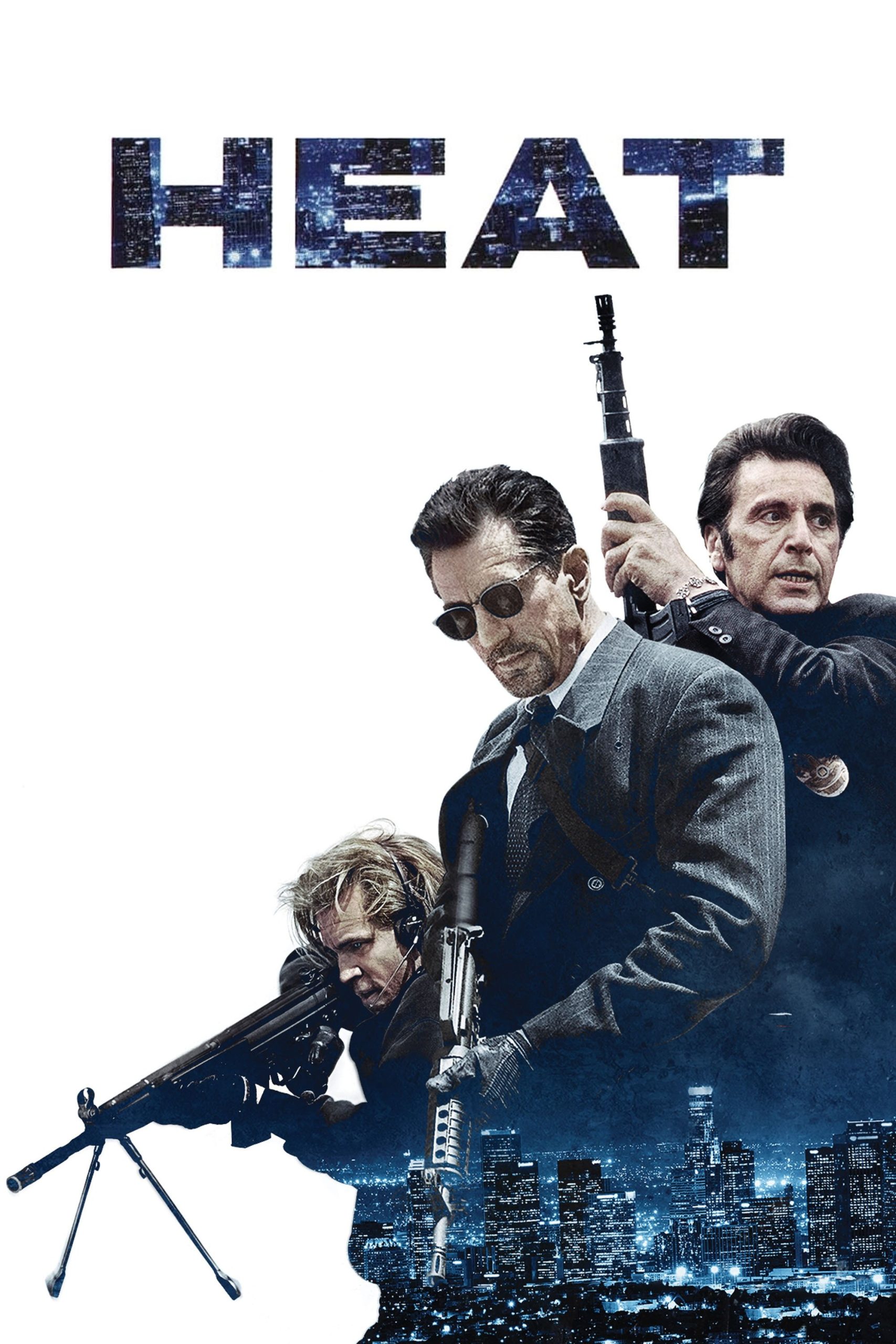
Is This Film Based on a True Story?
The first time I watched “Heat,” I remember being struck by the authenticity running through every frame—the sense that these characters existed somewhere beyond the screen, that their crimes and obsessions had once bled into the real world. It’s no surprise, then, that I soon learned “Heat” is not strictly a product of fiction. While the movie isn’t a direct retelling of documented events, I discovered that it’s inspired by a remarkable real-life dynamic—the cat-and-mouse pursuit between an L.A. detective and a career criminal. So, from my perspective, “Heat” sits somewhere between fact and fiction: it’s a cinematic work rooted in actual events, but reshaped by imagination and dramatic craft for the screen.
The Real Events or Historical Inspirations
Diving into the story behind “Heat,” I found the most fascinating detail lies in the personal history of the film’s writer and director, Michael Mann. Years before “Heat” was released, Mann encountered the legend of Detective Chuck Adamson and master thief Neil McCauley, whose lives intersected in the gritty milieu of 1960s Chicago. While Neil McCauley isn’t a household name, tracing his path reveals a web of high-stakes robberies and police surveillance that inspired parts of the film’s plot and the tone of its world. I’ve read accounts in which Adamson described his pursuit of McCauley with astonishing parallels to Vincent Hanna’s dogged chase of Robert De Niro’s character: long hours, tense confrontations, and a deep sense of almost philosophical respect for his quarry.
For me, the most vivid historical trace spills out in the oft-cited story of Adamson and McCauley sitting down for a cup of coffee — a moment that not only actually occurred, but which is immortalized in the film through the iconic scene where Pacino and De Niro’s characters confront one another with mutual candor. Adamson once recounted inviting McCauley for a conversation, during which both men acknowledged that their lives might eventually lead to one killing the other. This detail, while simple, brings a level of gravity to the film that would have been hard to invent. In my research, I learned Adamson later described how, after a failed heist, he was forced to shoot and kill McCauley.
Beyond this, I recognize “Heat” as a mosaic built from smaller truths. Mann’s background in crime reporting and interviews with both police and criminals enriched the narrative foundation. The intricate planning of the heists, the tense street confrontations, and the personal struggles of both cop and criminal—all echo real stories from the annals of American policing. When I look at the characters’ methods and codes of conduct, I see detailed patterns I’ve found in FBI case files and investigative journalism from the ’60s and ’70s. “Heat” may not trace a singular source, but it draws a clear lineage from Chicago’s criminal history and those who policed it.
What Was Changed or Dramatized
Despite these connections to reality, I can’t help but notice how much of “Heat” is intentionally dramatized. In transforming Adamson’s real investigation into a sweeping crime saga, Mann invents entire subplots, creates new characters, and amplifies the scale and stakes. For example, when I think about the secondary characters—Chris Shiherlis, Michael Cheritto, and Waingro—I realize there’s little evidence for their direct real-world counterparts, at least in the particulars presented onscreen. These characters serve the film’s thematic ambitions, embodying archetypes of loyalty, betrayal, and obsession rather than mirroring named individuals from historical record.
I also noticed that the scope and sophistication of the heists depicted in the film—the armored truck robbery and the downtown bank shootout—are heightened for tension and spectacle. While Neil McCauley’s crew in real life did conduct bold robberies, the infamous televised shootout that unfolds on screen is, in my view, a stylized hybridization, drawing inspiration from broader historical firefights but turbocharged for the needs of cinema. The meticulous professionalism and almost militaristic discipline of the thieves appear to be an amalgam of various career criminals Mann studied, fused into a singularly formidable group.
Personal lives and motivations are another key area where dramatization occurs. As I watched Vincent Hanna’s strained marriage and the emotional undercurrents pushing both cop and criminal ever-closer to crisis, I recognized the marks of screenplay embellishment. While Adamson was, by many accounts, driven and dedicated, the precise details of his family life as rendered by Al Pacino are largely imaginative. These narrative choices bring psychological complexity to the characters—a complexity that, to my knowledge, isn’t explicitly drawn from crime records or interviews but generated to deepen audience immersion.
Another creative decision stands out to me: the blending of L.A. geography and atmosphere. Although the real events that inspired “Heat” took place in Chicago, Mann relocates the narrative to a meticulously rendered Los Angeles. I interpret this not just as a logistical change but as an intentional effort to evoke certain urban anxieties associated with L.A.’s vast, impersonal cityscape—a setting that resonates with the film’s themes of alienation and transience. I’ve read that Mann pulled from his experiences researching the city’s criminal underworld to flesh out its streets and attitudes, but this is, in the end, a transformation shaped by the director’s vision.
Historical Accuracy Overview
As someone always probing the line between fact and fiction, I have spent years examining where “Heat” hews close to reality and where it parts ways. The core pursuit—an obsessed lawman and a quiet, calculating thief—strikes me as authentic in spirit, faithful to Adamson’s own recollections. This central relationship, and especially their honest, fateful conversation, is a point where the screenplay does not exaggerate but distills the emotional truth of the original encounter. That said, most of the film’s specifics—the names, the detailed robberies, the police procedures—stray into the territory of plausible invention.
The technical accuracy of the crime sequences impresses me. Mann’s commitment to realism, from the weapon handling to the sound design in the shootout, echoes the protocols described in law enforcement manuals and declassified reports I’ve reviewed. That bank robbery scene, in particular, employs tactics and responses closely paralleling LAPD operational standards, even though the shootout itself is an artistic compression of several historical incidents.
However, “Heat” is layered with artistic choices that prioritize narrative coherence over documentary accuracy. Characters like Chris Shiherlis and Waingro are fictional, their psychologies the result of careful dramatic construction rather than biography. The intricate web of personal stories running throughout both Hanna’s and McCauley’s lives—romantic turmoil, personal demons, compromised loyalties—all depart from strict history. Here, I see Mann crafting a mythic version of urban crime, guided by archetype and allegory as much as by reality. The result is a film that feels true—often achingly so—but departs from the archival record whenever story demands it.
I also find it essential to note that, while the film draws on a singular case, it’s informed by broader patterns observed in mid-20th-century American law enforcement. The characters’ professionalism, their codes of silence, their moral ambiguity—all are rooted in interviews and psychological profiles that Mann assimilated but did not strictly adapt. In my view, “Heat” is best understood as a synthesis: a film born from truth, but unbound from its particular details.
How Knowing the Facts Affects the Viewing Experience
When I revisit “Heat” with the knowledge of its origins, my experience is deepened in ways both subtle and profound. There’s a heightened tension knowing that the classic diner scene between Hanna and McCauley echoes a real, pivotal conversation decades earlier—a reminder that the push and pull between adversaries can carry an almost existential weight, even outside the bounds of fiction. This awareness colors my perception of the entire film, imbuing it with a sense of verisimilitude that persists even as the plot sprints into the territory of imagination.
For me, understanding the blend of fact and invention pushes me to see the film not merely as a heist thriller but as an exploration of professional dedication, loneliness, and the complexities of moral choice. I find myself squinting at each interaction, each professional detail on display, seeking out echoes of the real McCauley and Adamson—wondering which glances and gestures belong to history and which are the work of an actor’s or director’s intuition. The factual foundation of the story gives every dramatic flourish a second, deeper resonance. It’s as if a shadow play is unfolding beneath the narrative, where each cinematic invention is anchored by something that actually happened in a different form, at another moment in time.
I also notice that my understanding of the historical context shapes my empathy for the characters. Knowing that Adamson and McCauley mutually respected one another, even as their lives inevitably diverged toward lethal conflict, serves to amplify the emotional contradictions living at the heart of “Heat.” I see the film less as an outright fantasy and more as a meditation on the thin, sometimes porous boundaries between hunter and hunted—boundaries I know, from my research, can blur in the real world.
This background also tempers my expectations for total historical fidelity. When I watch the climactic shootout or the tense preparations for each heist, I can appreciate them as composite creations—woven not just from one criminal career, but from a wider tapestry of stories and techniques passed down through decades of law enforcement and organized crime. It’s fascinating, to me, the way these heightened moments borrow credibility from their antecedents in real events, even as they’re supercharged for dramatic effect.
Ultimately, becoming aware of the film’s true inspirations shapes how I approach its artistic choices. The fictional subplots, the invented characters, and the stylized violence all feel not like departures from truth, but like a reframing of it—ways to universalize the particular, to craft a drama that resonates beyond its origins. I find myself less interested in the distinctions between truth and fiction than in the emotional realities conjured from this blend. Knowing what’s real and what’s invented becomes less about fact-checking and more about understanding the deeper truths the film tries to communicate.
After learning about the film’s origins, you may want to see how audiences and critics responded.
🎬 Check out today's best-selling movies on Amazon!
View Deals on Amazon