
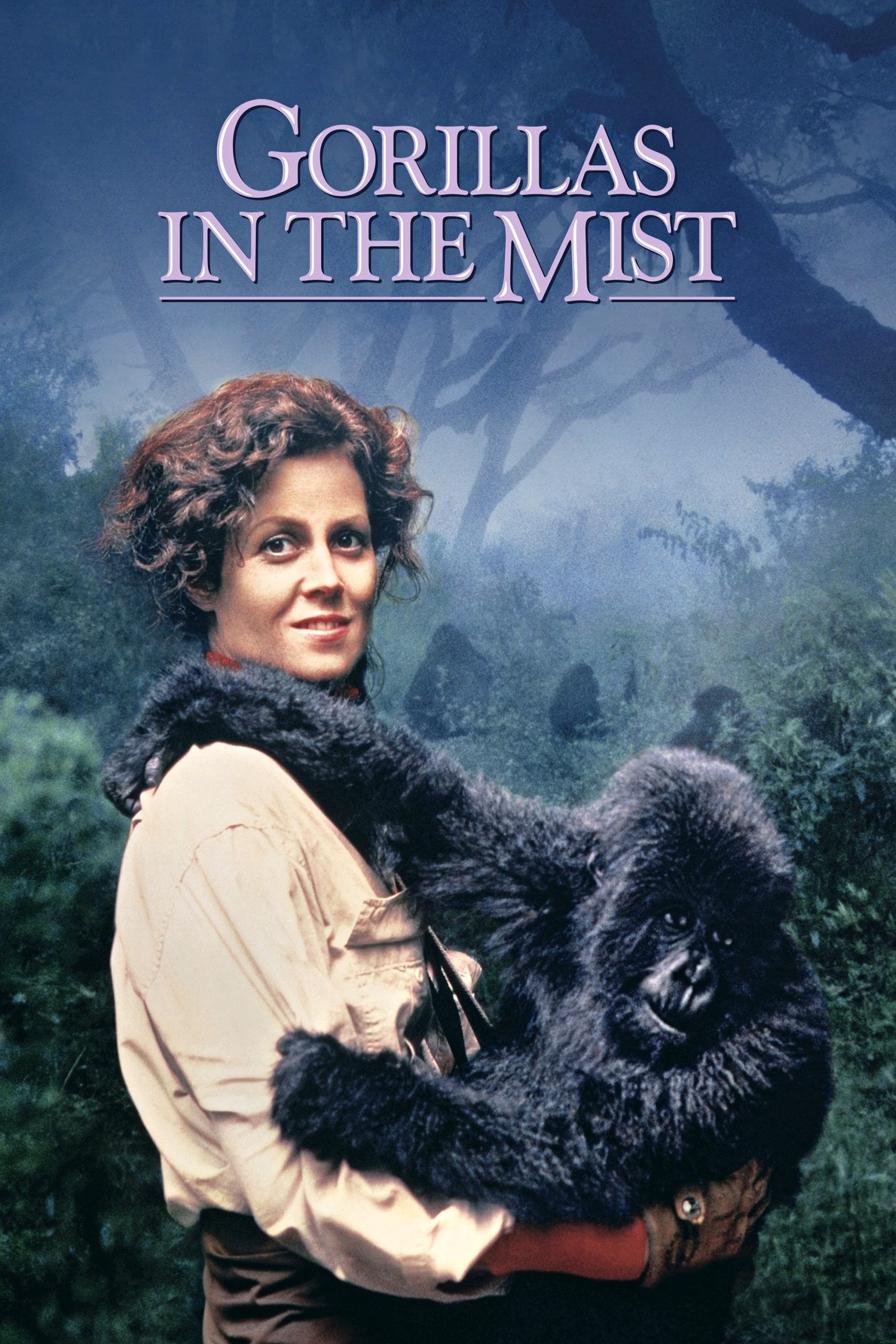
The Question of Truth Behind the Film
Every time I sit down to watch a film that claims to be based on actual events, I find myself questioning not just what is portrayed, but precisely how much of what I am seeing can be traced back to lived experience. When I encountered “Gorillas in the Mist,” for instance, my curiosity was immediately piqued by the knowledge that it draws from the life of Dian Fossey, a figure whose real-world impact on conservation has left an undeniable mark. I think that for many, the explicit invocation of “true story” carries an invisible contract; we come prepared to absorb something akin to history, wrapped in the vehicle of narrative. There’s a tacit assumption that what unfolds will offer a window into the actual past, albeit filtered through the lens of dramatization. This expectation shapes the psychological groundwork for my engagement: I am no longer watching merely for entertainment, but also seeking understanding, insight, and perhaps a form of emotional education about the real persons involved. Knowing this film sits at the intersection of fact and artistic license, I am drawn to question where that boundary lies—what am I learning about the world, and what am I absorbing through the unique prism of cinematic interpretation?
I’ve often wondered why it is that the “true story” label exerts such a magnetic pull. Part of it, I suspect, is that I am wired—as so many viewers are—to crave authenticity. Stories rooted in reality seem to promise a layer of meaning that pure fiction cannot, at least not in the same direct way. When a movie frames its narrative with the implication of truthfulness, I enter into a kind of investigative viewing, parsing details for their supposed factual underpinnings. The stakes feel heightened. An encounter with something “real” brings drama into sharper relief, blurring the boundary between screen and history. For me, this expectation is both exhilarating and fraught, since I am always aware that cinema must, of necessity, embellish, trim, or otherwise distort lived experience to fit the demands of visual storytelling.
Historical Facts and Cinematic Interpretation
As I reflect on my experience with “Gorillas in the Mist,” I am continually aware of the delicate dance between source material and its filmic version. What intrigues me is not just what is shown, but how the process of adaptation sculpts the life of Dian Fossey into a narrative arc suited for cinema. Drawing from real-life journals, media accounts, and broader historical context, the film offers an interpretation that is driven by the need to communicate complexity with both immediacy and clarity. This inevitably leads to a process of condensation: years of experience, relationship-building, and scientific work are distilled into scenes that must convey both factual content and a coherent emotional journey. I find myself tracing the outlines of events and people—wondering which aspects are documentary, which are inference, and which have been invented or adjusted for the sake of storytelling logic.
For example, the real Dian Fossey’s years in Rwanda were marked by extensive research, intricate connections with local communities, and profound personal transformation, all of which are impossible to document shot-for-shot within the finite runtime of a feature film. The filmmakers, in my view, must compress these long spans into moments of heightened drama: a single confrontation may represent a pattern of many; a composite character might stand in for numerous individuals whose stories crisscrossed with Fossey’s. As I observe these creative decisions, I am reminded how adaptation prioritizes thematic resonance over strict chronicle. The narrative is constructed to move the viewer efficiently through major milestones—often eliminating asides, ambiguities, or inconsistencies that are intrinsic to real life.
What I find especially noteworthy is the role of reorganization—not just condensing events, but also shifting their order or context. Scenes may be rearranged to maximize clarity and emotional escalation, all in the service of producing a cohesive, satisfying story arc. In “Gorillas in the Mist,” timelines are sometimes compressed, and pivotal relationships are given extra weight, presumably for greater dramatic effect. When I am aware of the historical baseline, these changes become more legible; I see how the film’s version of events reveals priorities that are aligned with narrative necessity rather than empirical accuracy. That realization invites me to read both between the lines and behind the camera, picking apart the pieces of truth and invention that coexist in every scene.
What Changes When Reality Is Shaped for Cinema
Whenever I watch a historically-based film, I find myself attuned to the inevitable compromises that underlie the translation from fact to fiction. “Gorillas in the Mist,” for me, serves as a case study in how the pursuit of cinematic impact often competes with the demands of meticulous historicity. The very elements that make a film gripping—tight pacing, unambiguous character motivation, and neatly structured conflict—frequently require the streamlining of complex realities. This does not, in my mind, imply a failing; rather, it’s the fundamental calculus of any work that seeks to bridge lived experience with the expectations of an audience. Choices must be made about what to include, what to omit, and how to express inner states that the historical record either cannot capture or has left ambiguous.
One practical trade-off that leaps out at me involves the condensation of time. Years are often collapsed into mere minutes, with dramatic crescendos crafted out of what might, in truth, have been gradual adjustments or slow-burn developments. I see this especially in “Gorillas in the Mist,” where relationships and research breakthroughs that spanned long stretches are rendered as transformative moments. There is, from my perspective, an almost necessary distortion at work—a reshaping not to mislead, but to engage. When looking at the portrayal of local dynamics or the depiction of wildlife poaching, I sense that dramatic license is invoked to produce visceral understanding, even if this comes at the cost of a broader context or slower, less decisive evolution.
Another area where I notice the influence of cinema over reality is in the construction of character. Real people, as I experience daily life, are inconsistent, contradictory, and occasionally unknowable even to themselves. Yet, in the film, characters—including Fossey herself—are rendered through the simplifying lens of archetype and motivation. Timelines of personal change are condensed; supporting figures may serve to reflect central themes rather than inhabiting their own fullness. I find this both inevitable and instructive. The medium rewards focus and clarity, sometimes by sacrificing multiplicity and ambiguity. The risk, as I see it, is that the most “cinematic” version of a person or event can become mistaken for the only possible truth. But I also understand that this is the price of placing complicated reality within the structured confines of narrative art.
Faces and names, relationships, even the pacing and outcome of events—all these might shift or blend in service of what a film can accommodate. I am always aware that the camera, like any narrator, selects and shapes just as much by what it leaves out as by what it includes. As much as I might seek “the real story,” I realize that any translation, by its nature, is a product of its context and constraints. What emerges is always, in one sense or another, an alternate reality designed to produce coherence and meaning within the frame—sometimes at the expense of the messier, slower rhythms of actual events. I see these choices as unavoidable, given the ambitions of cinema to both capture and communicate human experience.
Audience Expectations and the “True Story” Label
I have felt, both as a viewer and an analyst, that being told a film is a “true story” changes everything about how I approach it. My mind is primed to treat the narrative not just as a constructed artifact, but as a kind of testimony. This expectation sets up a double movement: on the one hand, I look for emotional authenticity and resonance; on the other, I am constantly alert to divergences from what I believe to be factual truth. “Gorillas in the Mist” is an apt example of how these expectations can shift the terms of engagement. As I watched, my awareness of Dian Fossey as a historical figure brought an added gravity to each scene, coloring my interpretation of character motivations and conflicts. I found myself drawing connections between the depicted events and my knowledge of conservation history, assessing not only what is visible, but also what might have been elided or reframed.
I have noticed that when a film claims to be “inspired by real events” rather than strictly accurate, I experience a distinct loosening of my expectations. There is room for artistic flourish, for invention where the historical record is silent or ambiguous. This flexibility frees me to focus on broader themes or emotional truths rather than insisting on empirical correspondence. By contrast, a purely fictional story—one that merely resembles reality—elicits a different type of engagement. My interpretative lens is less forensic, less anxious about extracting historical value, and more attuned to internal logic or allegorical readings. In the case of a biopic such as “Gorillas in the Mist,” I am drawn to parse every detail, always hovering between the hope of learning something concrete and the suspicion that I am, in a way, being gently misled toward a more coherent story than history often permits.
What stands out to me is how the “true story” label can both elevate and constrain a film’s reception. Viewers like myself are often emotionally invested not only in the plot, but in the idea that we are being given privileged access to the past. When confronted with discrepancies or confirmed fabrications, that sense of access can be shaken, producing a kind of narrative dissonance. Yet, in many cases, the blending of truth and invention is accepted—sometimes even welcomed—if the result feels authentic in a deeper, perhaps more mythic sense. I have come to think that these expectations are a testament to the enduring power of storytelling, even as they complicate the straightforward consumption of fact.
In my own viewing, there is always a negotiation between what I know of history and what I see onscreen. I approach a film like “Gorillas in the Mist” not in search of a documentary account, but as an invitation to grapple with the tensions between record and representation. Each deviation from the known record becomes a point of interest, a chance to consider what the filmmakers sought to express—and what I, as a viewer, am being asked to feel or believe. Whether I ultimately find this process satisfying depends less on the “accuracy” of the film than on my willingness to occupy a space where fact and interpretation overlap, sometimes uneasily.
Final Perspective on Fact vs Fiction
After reflecting at length on “Gorillas in the Mist,” I am struck by the persistent question of how knowing what is real, and what is not, affects my understanding of the film. I find that factual awareness—far from simply informing my judgment—activates a more complex relationship to the story being told. My knowledge that certain events are based in fact does not merely anchor my interest; it propels me toward a more layered reading, one that is attentive to both the pulse of real history and the choices made in translating that history for the screen. I come to the film not as a passive recipient, but as an active participant in the interplay between documentation and imagination.
For me, the awareness of fact and fiction is less a binary than a spectrum, one that inflects every interpretative decision. The moments that ring most powerfully are often those that blend verifiable detail with a heightened dramatic structure, allowing me to glimpse both the contours of reality and the necessary artifice of storytelling. When I recognize elements that have clearly been constructed or reordered, I don’t feel deceived so much as invited to consider why those choices have been made. What is gained and what is lost in the translation from event to narrative? The answer, I find, is always provisional, shaped by my own expectations and desires as much as by the filmmakers’ decisions.
“Gorillas in the Mist” is, for me, not just a recounting of a life, but an exploration of how lives become stories—how memory, reportage, and dramatization converge to produce meaning. In traversing the landscape between fact and fiction, my understanding of both Dian Fossey and the world she inhabited is deepened and complicated. The knowledge that some aspects are drawn straight from history, while others are inventions or embellishments, does not diminish my engagement. Instead, it invites a richer, more skeptical, and ultimately more rewarding relationship with the film. I am left not only with questions about what happened, but about how stories are told, and why those stories matter. This, for me, is the lasting legacy of any film that navigates the boundary between historical fact and cinematic storytelling.
For additional context, you may also explore the film’s overview and how it was received by audiences and critics.
🎬 Check out today's best-selling movies on Amazon!
View Deals on Amazon