
Is This Film Based on a True Story?
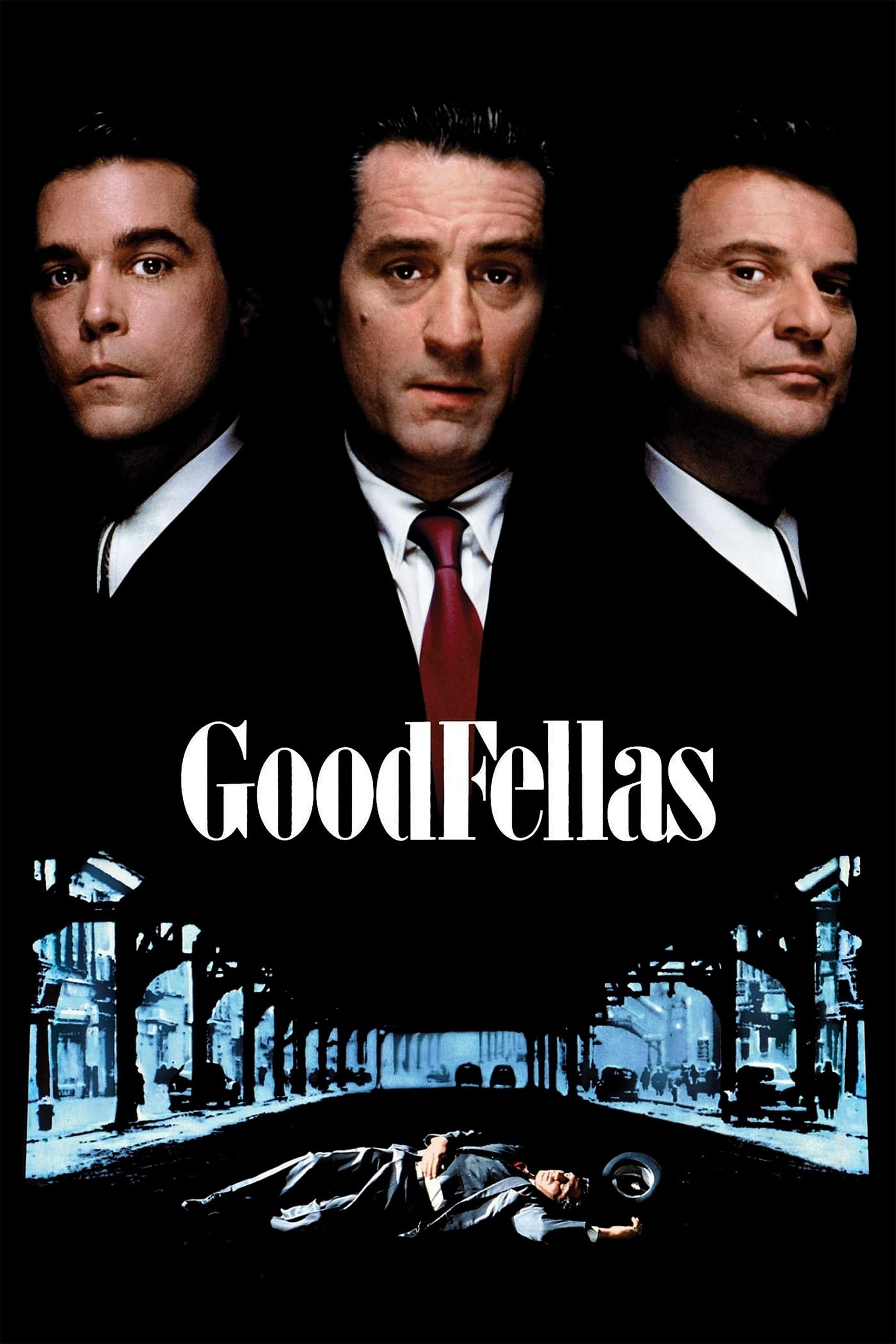
I’ve always felt that watching Goodfellas is like peering through a peephole into a world I would never dare to enter myself. From the first frenetic scenes, I remember thinking: “Could anyone’s real life actually be this intense, this brutal, this alluring?” Eventually, I needed to know if what I saw was just masterful invention or actual history. After digging into the film’s origins, it became clear to me that Goodfellas is rooted firmly in real-life events. It is based on true stories—grounded in the lives of actual individuals and specific criminal episodes spanning decades. The events and people may be dramatized at certain moments or streamlined for storytelling, but my research showed that the heart of this film beats with the pulse of documented reality. This is not a purely fictional creation. It’s a vivid dramatization of a true story, rich with detail from the real world of the New York mafia.
The Real Events or Historical Inspirations
What fascinates me most about Goodfellas is how directly it draws from actual criminal history. The screenplay follows the life of Henry Hill, and my first source for unraveling how fact informed fiction was Nicholas Pileggi’s non-fiction book, Wiseguy: Life in a Mafia Family. Almost every major beat in the narrative traces back to Hill’s real experiences. Hill was a soldier (middle-rank member) in the Lucchese crime family, officially starting his life of organized crime in the 1950s. His world was populated by real people, some of whom had their names changed in the film, while others—like Paul “Paulie” Vario (becoming Paul Cicero) or Jimmy “The Gent” Burke (transformed into Jimmy Conway)—were only lightly fictionalized. While I was investigating the background, I learned that Henry Hill was an FBI informant whose testimony led to dozens of indictments, and his recollections formed the backbone of Pileggi’s extensive interviews.
Delving into court records and news articles from the era, I realized that the Lufthansa Heist of 1978, a major plot centerpiece in the film, was a real and still somewhat legendary criminal event. Investigations at the time treated it as one of the largest cash robberies on American soil. The film’s narrative hews closely to how this event was organized and the subsequent paranoia and violence among those involved. Several grisly murders depicted in the film echo actual events, many of which were documented in police files and media reports. As I poured through original sources, it struck me that Goodfellas is an adaptation not only of a book but of a documented series of lives: Henry Hill, Tommy DeSimone (as Tommy DeVito), and others. Their stories were preserved not just in interviews but in legal records and FBI dossiers.
If I narrow in on the texture and vernacular that suffuses the movie, it’s clear this detail was gathered directly from Pileggi’s immersed reporting. Many iconic lines originated in direct quotations from Hill and his associates. In fact, when I listened to archived interviews with Henry Hill, the cadence and inflection mirrored what I saw portrayed by Ray Liotta. Even small but unforgettable anecdotes—like the “funny how?” scene—stem from accounts of real life banter among the mobsters, albeit sometimes rearranged or heightened for cinematic effect. For me, this direct line between life and art is rare, and it means Goodfellas stands apart from more loosely inspired gangster tales.
What Was Changed or Dramatized
My readings and interviews led me to appreciate that while Goodfellas is solidly based on fact, it is not a minute-by-minute retelling. Almost every real-life saga reshaped for cinema loses, gains, or alters elements along the way, and this film is no exception. For instance, while Henry Hill’s story remains mostly intact in its essential beats, timelines are condensed, personalities are heightened, and some characters are composites or renamed for privacy or legal reasons.
Symbolic of this dramatization is the portrayal of Tommy DeVito, who in real life was Tommy DeSimone. The film amps up Tommy’s volatility and violence—based on reality but perhaps exaggerated in frequency and theatricality for impact. I discovered that, historically, Tommy DeSimone truly was a volatile figure, known for sudden violence, but the specifics surrounding his fate are still debated. The film offers a dramatic conclusion to his story: a mob execution as retribution for the killing of Billy Batts. The real Tommy disappeared under mysterious circumstances, presumed murdered, but no body was ever found, and several theories exist as to precisely why and how his demise unfolded.
As for Karen Hill, the film presents her marriage to Henry and gradual immersion in the mob world with gripping immediacy. Yet, some nuances of her perspective were inevitably compressed or omitted. Karen’s voice, as portrayed by Lorraine Bracco, is built on real testimony and emotion, but she herself has spoken about areas where her experience diverged—partly due to the need to streamline the film’s pace and focus on Henry.
One particularly famous departure comes in the “funny how?” scene with Joe Pesci—a moment which, according to sources including Scorsese himself, was inspired by Pesci’s own memories from New York. It’s an authentic behavioral vignette, but not one that happened exactly as dramatized within Hill’s life. Similar creative liberties pepper the film’s dialogue and pacing. Scenes are arranged for narrative effect, events are sometimes telescoped into single nights or conversations, and certain less-cinematic aspects of mob life are minimized to preserve the film’s relentless momentum.
Some crimes that appear in the movie reference known cases but merge details from different incidents to enhance the drama. The cast of supporting mobsters shifts between aliases or amalgamated characters—sometimes out of continued concern for living individuals, other times simply to maintain storytelling clarity. For example, the real “Paulie” Vario’s criminal enterprise was even broader and more complex than depicted, and his downfall involved numerous operations omitted by necessity. The dialogue and sequences around the Lufthansa Heist, although based closely on Hill’s account, smooth over conflicting timelines and off-screen participants who never appear on camera.
In my opinion, these changes reflect the tension between absolute fidelity to historical record and the demands of cinematic storytelling. They are neither egregious inventions nor slavish recreations, but measured adjustments that capture the essence while sacrificing minutiae.
Historical Accuracy Overview
Piecing together what’s real and what’s adapted in Goodfellas is like untangling a complex web. When I compared the film to court transcripts, investigative journalism, and the Wiseguy book, many elements stood out as remarkably faithful. The depiction of the Lufthansa Heist sticks close to what is publicly known: the timing, planning, and paranoia are all supported by testimony and police investigations. Hill’s relationships with his associates—Jimmy, Paulie, Tommy—accurately reflect dynamics documented by law enforcement surveillance records and Hill’s recollections.
But for all its authenticity, the film doesn’t claim to be a forensic documentary. Some aspects—the exact dialogues, the visual and emotional intensities of murder scenes, and the step-by-step mechanics of specific crimes—are based more on Hill’s memory and Pileggi’s synthesis than unassailable proof. Where there are verifiable details, such as the identities and fates of certain associates, the film follows history up to a point. The circumstances of Tommy’s death, for example, are consistent with mob tradition and contemporary rumor, though the factual specifics remain partly shrouded in mystery. I came to realize that the broader strokes—such as the rise and fall of Hill, his eventual cooperation with authorities, and the sense of mob loyalty and betrayal—are well supported, even if every moment is not directly documented by court records.
One thing that impressed me during my research is the film’s acute attention to setting and period detail. The design of bars, the interiors of homes, the rolling cadence of mob dialogue, all evoke the era and subculture with remarkable precision. These flourishes are based on first-hand recollections and photographic references supplied by both Hill and Pileggi. The factual overlap extends even into the soundtrack, which was carefully curated to evoke the real experience of living in that era.
Where Goodfellas takes historical license, it is noticeably in the realm of pacing and narrative efficiency. Real life, even within organized crime, rarely unfolds with the propulsive momentum of a film. The tighter structure and heightened confrontations are decisions made for clarity as much as drama. Nevertheless, it meant a great deal to me to recognize how much was lifted directly from the historical record—and how these factual foundations raise the film well above most Hollywood mob fantasies.
How Knowing the Facts Affects the Viewing Experience
I have to admit, the first time I watched Goodfellas without any knowledge of its provenance, I focused mostly on the performances, the breakneck editing, and the glamour and horror of the mob world. But when I started tracing the arc of Henry Hill’s real biography, absorbing the parallel lives described in Wiseguy and the accounts of New York’s investigative reporters, my engagement with the film fundamentally changed. The stakes felt higher; the consequences grimmer. Every act of violence, every moment of betrayal, every burst of laughter in a smoky backroom resonated with new energy because it wasn’t just an invention—it had roots in documented history.
Knowing the facts reoriented how I read each character. Jimmy Conway wasn’t just a movie villain; he was a creative representation of an actual mobster with a well-documented criminal career, and the gravity of his actions carried extra weight. The terror in Karen Hill’s eyes became more than an actress’s performance; it was infused with the knowledge that real people lived lives balanced on a knife’s edge, that choices sometimes had lethal consequences, and that the government’s witness protection program wasn’t merely a dramatic twist, but a life-saving reality for surviving insiders. I found myself pausing at specific scenes—was this really said, did this really happen? In many cases, the answer surprised me by landing closer to yes than no.
At the same time, being aware of the artistic changes let me maintain perspective on what is storytelling and what is testimony. The sheer artistry of the film—creative choices in pacing, dialogue, composite characters—became its own source of fascination. I ended up analyzing the intersections where truth met fiction, comparing each narrative turn to the available record, and appreciating just how intricately the two are interwoven throughout the film. The emotional impact, for me, is deeper knowing the film is not imagining a world but translating a lived experience of fear, loyalty, excess, and survival. “Is this real?” is a question that burrows under the surface of every scene once I’ve read Hill’s interviews or Pileggi’s journalistic notes. Sometimes the answer is yes, sometimes no, but rarely is it irrelevant. Ultimately, understanding the film’s factual origins amplifies—rather than blunts—the movie’s tension and impact. I see not just a story but a stylized, sometimes harrowing chronicle of what actually happened on the shadowy side of New York’s history.
After learning about the film’s origins, you may want to see how audiences and critics responded.
🎬 Check out today's best-selling movies on Amazon!
View Deals on Amazon