
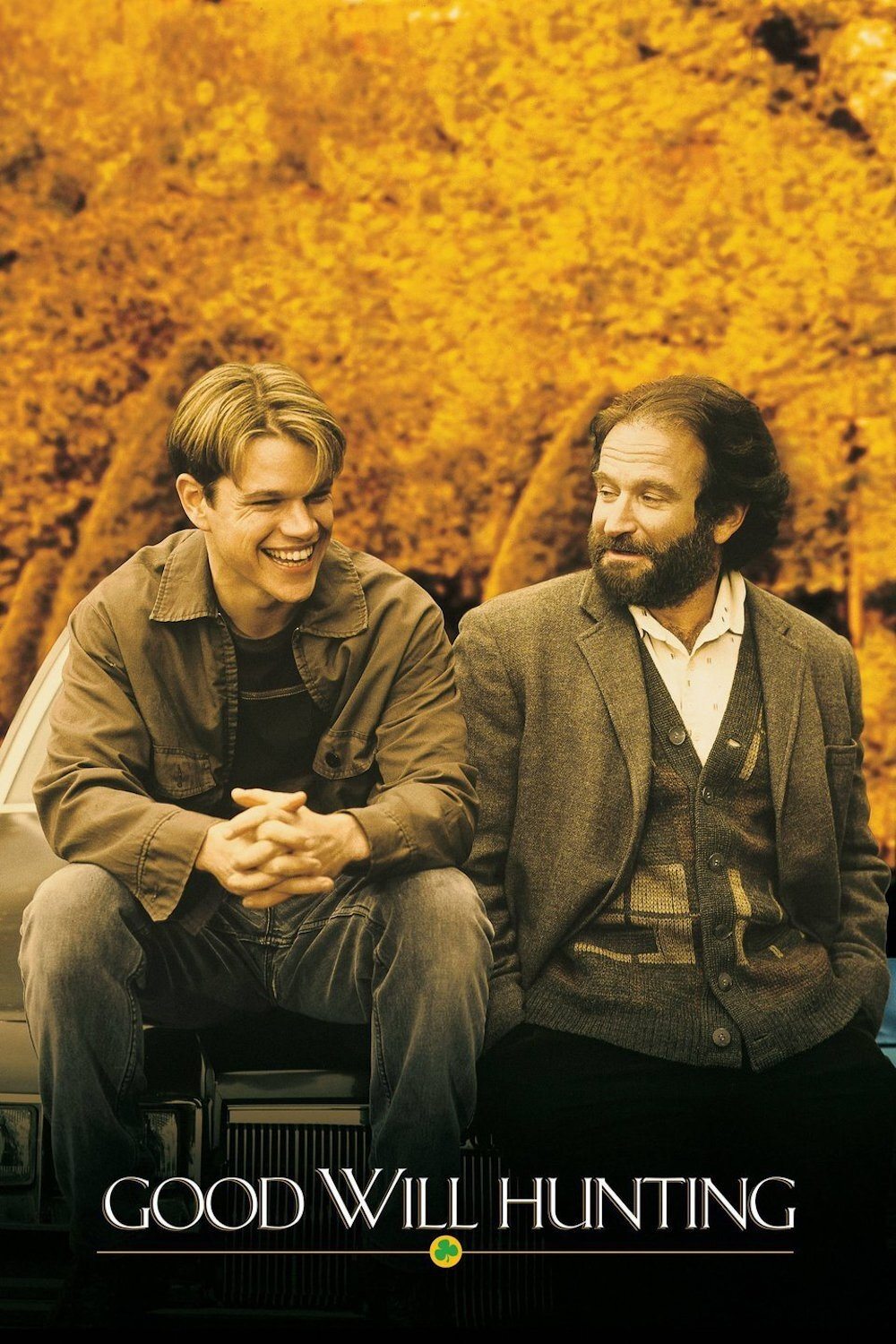
The Question of Truth Behind the Film
Walking into Good Will Hunting for the first time, I remember feeling a subtle tension that often accompanies films grounded in a recognizable world. The faculty hallways, the South Boston neighborhoods, and the lived-in faces gave me a strange intimacy—as though I might stumble upon these characters in real life. This effect made me wonder, as I know many others do, whether there is a biographical spark beneath the story. I notice that audiences, myself included, often approach films like this with a hunger to anchor fiction in real experience, as if that authenticity will make the emotions on screen more valid or the personal transformations more profound. The question, “Did this really happen?” doesn’t just scratch at curiosity for facts; it also reveals our desire to connect with cinema on a level beyond entertainment. I find that, for me, the possibility that a story is “true” grants it a kind of gravity—an extra layer that is equal parts fascination and responsibility. If I detect that label, whether explicit or implied, I can’t help but sift each moment through an additional filter: Am I glimpsing someone’s actual struggles, or just a novelist’s dream?
So often, I notice, the term “based on a true story” comes bundled with assumptions. I see people treat these films differently, almost as if we are being invited not only to observe but to bear witness. Sometimes I even catch myself assigning a kind of credibility or importance to films marked as ‘true’, thinking their lessons or depictions must matter more. In the case of Good Will Hunting, that search for reality crept in almost immediately for me—was there really a mathematical prodigy quietly hidden among janitors at MIT? Did Matt Damon and Ben Affleck pull from someone they knew, or from their own biographies? It’s not just idle curiosity; it shapes how I interpret the themes of genius, trauma, and second chances that the movie lays out. That persistent, almost urgent, questioning reflects something deep in how I—how most of us—approach cinema. We want to know where the boundaries of truth and invention lie, because where they blur, our emotional engagement transforms.
Historical Facts and Cinematic Interpretation
For my part, the investigation into the factual background of Good Will Hunting became almost as absorbing as the film itself. I learned that while the screenplay was an original creation by Matt Damon and Ben Affleck, rather than a dramatization of a famous case or newspaper headline, the movie’s world draws heavily on the authors’ experiences in Boston and their familiarity with academic environments. This isn’t history in the strict sense; I cannot point to a single real-life Will Hunting. Yet, as I see it, the film borrows liberally from the palette of its creators’ surroundings, embedding details that feel true—grimy bars, intellectual longing, and the gravity of humble working-class roots.
When I trace how cinematic interpretation works here, I’m fascinated by the deliberate reshaping of life’s slower rhythms for narrative effect. The character of Will emerges from composites rather than a documented biography: elements of prodigy stories, tales of trauma, and the archetype of the reluctant genius all meld together into someone unique. Scenes between Will and his therapist, Sean, become crystallized moments, boiled down to their emotionally essential ingredients—a kind of precision that real life rarely affords. As I reflect on the film’s structure, I notice how years of psychological struggle and gradual relationship shifts are compacted into a few intense sessions. Friendship arcs that would, in reality, sprawl over decades instead unfold within two hours. I interpret this as an inevitable transformation; storytelling needs shape and cohesion, so real-life messiness is trimmed, even when it remains emotionally honest.
What stands out to me is how the film intertwines broad truths—about class tension, unrealized potential, and the ache for connection—with imagined specifics. I don’t read the film as an attempt to chronicle any one person’s journey. Rather, it is an artistic interpretation that speaks to lived realities indirectly. Pulling from the textures of actual Boston, snippets of Damon and Affleck’s youth, and legends of savant-like brilliance, the writers build an atmosphere of authenticity, without ever offering a straightforward account of historical events. For me, the result is an emotional ‘truth’—one that compresses and refines experience to fit the shape of story, while leaving the “hard facts” to the side.
What Changes When Reality Is Shaped for Cinema
When I reflect on the decisions behind shaping reality for cinematic purposes, I’m reminded that adaptation is as much about what gets left out as what is depicted. I find it useful to think of the process as one of translation, not just of events, but of feeling and experience. In Good Will Hunting, I see the filmmakers making deliberate choices—condensing years into weeks, rendering psychological healing as a series of breakthroughs rather than an uneven, lifelong process. The consequences of these choices, as far as I can tell, are not strictly about accuracy; instead, they’re about reach. The film becomes legible to more viewers, its emotional peaks and valleys sharpened for maximum resonance.
I recognize this dynamic again and again: when historical detail butts up against the constraints of runtime and pacing, the demands of plot almost always win out. The world of the movie sometimes smooths over the meandering, frequently anticlimactic course of reality. Relationships change quickly, revelations arrive on time, and grand gestures tie up the narrative arc. There are trade-offs here—details that might otherwise confound or slow down the experience often disappear. For example, in real situations with troubled prodigies, healing rarely comes with neat closure or epiphanies that fit within an act structure. Yet I see how, for the sake of clarity, the film presents Will’s transformation in digestible, striking scenes rather than the ambiguity-laden reality of incremental change.
Another consideration for me is the way cultural settings and social milieus get streamlined. The intricacies of class, academia, and therapy in Boston are distilled down to a handful of visually and verbally persuasive moments—the mocking banter of friends in the bar, a tense academic corridor, a transformative speech in a therapist’s office. For every vivid scene, there are countless actual experiences compressed or omitted. I sometimes wonder about the less cinematic, less narratively convenient realities that simply wouldn’t play onscreen, and what is sacrificed in their omission. Yet, I appreciate that these are conscious adjustments, driven by the demands of cinematic storytelling. What I value most (without making a judgment call about better or worse) is how these choices affect my engagement; I find myself alternating between immersion in the film’s world and awareness of all that remains unsaid.
Audience Expectations and the “True Story” Label
The moment a film like Good Will Hunting is seen as possibly rooted in fact, I’ve observed that my expectations as a viewer shift. I look for evidence—small, verifiable details—that might link characters to real people. I often approach the film with a dual awareness: one part of me wants the orderly resolution and dramatic structure of fiction, while another part expects the complexity and occasional messiness I associate with real life. The “true story” label, whether stated outright or suggested, creates a lens that inevitably colors my interpretation.
When the film is received as a product of pure invention, as I eventually gathered was the case here, I tend to relax those investigative impulses a bit. I shift from searching for biographical exactitude to concentrating on the emotional thrust of the narrative. I become more willing to accept heightened situations and improbable turning points, seeing them as tools for expressing internal states rather than attempts at documentary truth. By contrast, if I had been told that Will Hunting was a dramatization of an actual person, I think I would scrutinize the film differently, perhaps even questioning each unlikely event or psychological development for plausibility.
I’ve noticed too that the “inspired by” designation sits somewhere between these poles. In those cases, I find myself parsing scenes more carefully, attributing layers of meaning to even incidental details. With Good Will Hunting, there’s a tantalizing ambiguity—I know the creators drew from their own lives and the ambiance of Boston, but there’s no historical template for Will, Sean, or Skylar. This knowledge changes how I watch: I’m freed to focus less on reconciling events with “what happened,” and instead attune to what the film suggests about possibility, about the way ordinary people might carry untapped reserves of brilliance and pain. The stakes, for me, become more about universality than specificity; I take lessons and feelings from the story without assuming they’re supposed to stand as a statement of fact.
Audience reaction is just as varied: some people, I’ve noticed, find more meaning when they know a narrative is true, while others seem to prefer the liberating uncertainty of pure fiction. I personally find myself straddling both impulses. The expectation of fidelity to fact can heighten my sense of awe or intensify my skepticism—depending on how plausible the movie’s events appear. The clear understanding that I’m not watching a biography, though, gives permission to interpret the film as a kind of collective daydream rather than a lesson in history. This awareness, I think, shapes how much I dwell on plausibility, and how open I am to embracing symbolism and archetype over literal truth.
Final Perspective on Fact vs Fiction
The process of toggling between fact and fiction in a film like Good Will Hunting leaves a lasting imprint on how I remember and mentally reenter its world. When I know—or learn—that the narrative is a work of invention rather than historical record, my engagement with its themes shifts. I no longer try to map its events onto a reality check; instead, I give myself over to what the film is communicating about its imagined protagonists and the larger questions of human change, resilience, and connection. If I thought I was watching a strict retelling of something that happened, my attention would, inevitably, settle on the veracity of its details—the timeline of recovery, the precise nature of the protagonist’s genius, the plausibility of his relationship with his therapist. Relief from that scrutiny allows me to focus on what the film evokes, not just what it records.
I’ve come to understand that knowing the divide between fact and fiction in cinema doesn’t, for me, diminish the feelings a story can provoke; instead, it reorients them. It’s a change in perspective, not a verdict on value. In some ways, I find a kind of clarity in the knowledge that the events on-screen were crafted to communicate something essential about growth and redemption, without the burden of documenting someone’s lived experience. There’s a freedom in allowing a film to operate as metaphor rather than as report, and that freedom can make its emotional arc all the more resonant. Simultaneously, I’m always aware that audiences—including myself—bring their own filters and assumptions to the process. The boundary between historical fact and narrative invention is never fixed; as I watch and rewatch, my relationship to those boundaries shifts, coloring the impact of the film anew each time.
If there’s one lasting insight I take away, it’s that the interplay between truth and fiction adds dimension, not confusion. It asks me to engage with the film on two levels at once. Sometimes I’m moved by what feels real, even when I know it isn’t; sometimes, learning a film is pure invention makes its insights feel more like aspirations than records of triumph. In all cases, my awareness of where the film sits along the spectrum of fact and fiction doesn’t define how deeply it moves me or how long I ponder its meanings. Instead, it acts as a prism, refracting the movie’s ambitions and achievements through the layered expectations I, as a viewer, bring to my seat.
For additional context, you may also explore the film’s overview and how it was received by audiences and critics.
🎬 Check out today's best-selling movies on Amazon!
View Deals on Amazon