
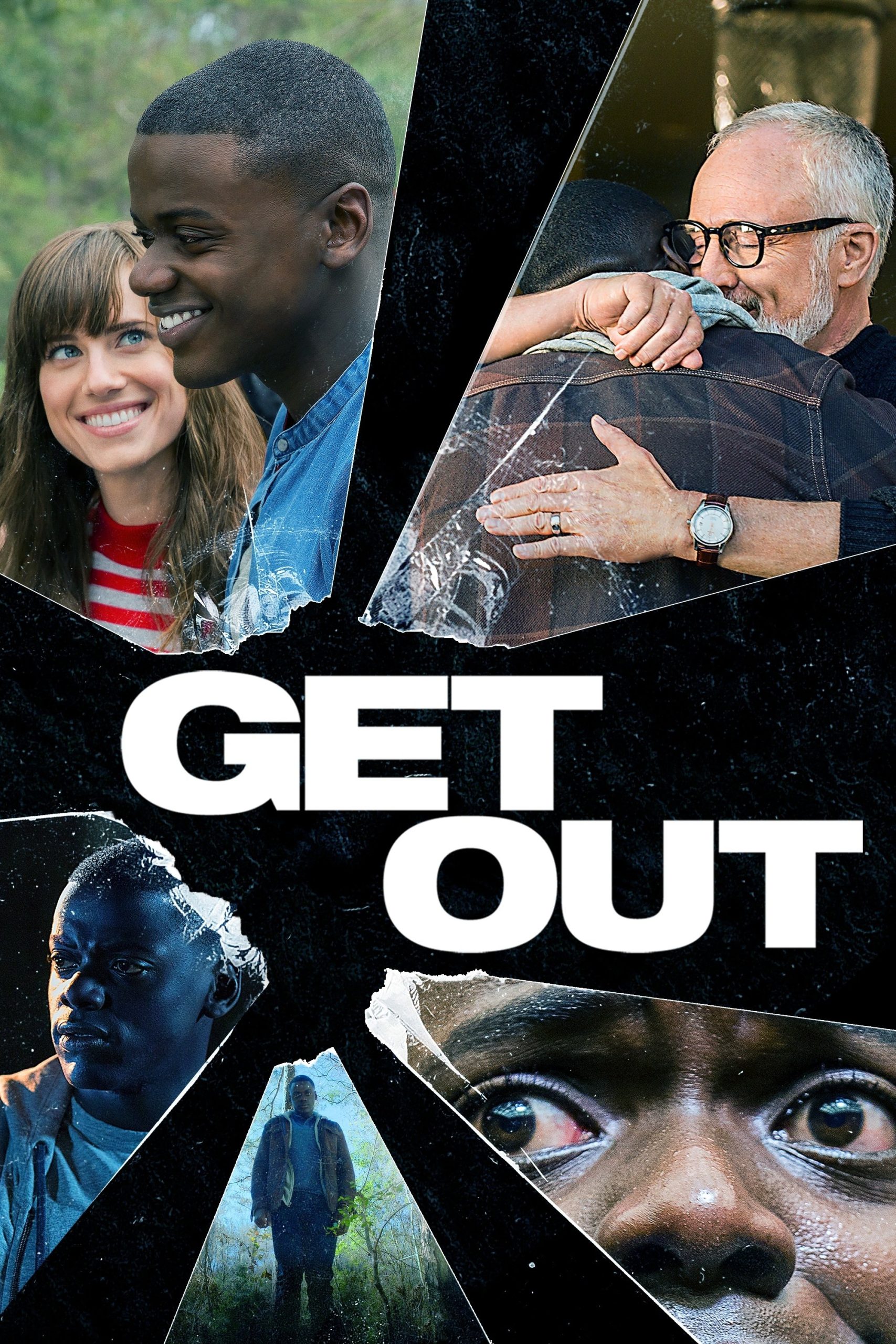
The Question of Truth Behind the Film
When I first watched “Get Out,” I remember immediately wondering if the portrait it painted was rooted in documented events or if it was pure invention. There’s something magnetic about the question: “Is this real?”—I notice this urge surfacing almost every time a film grapples with profoundly unsettling issues. For me, the notion that a story is “based on fact” carries an invisible authority. It suggests that what unfolds onscreen is more than fantasy; it is a window into the hidden engines of the world I inhabit. I often ask about historical veracity not simply out of curiosity, but because I’m searching for a deeper connection, a way to bridge my experience with the film’s reality. The label of truth brings a certain weight, making moments feel urgent, as if cinema has grown teeth.
I’ve often observed that films explicitly labeled as factual come with a set of expectations—almost like an unspoken pact with the audience. I find myself more attuned, more ready to be challenged or disturbed, because the story’s implication is: “This could really happen” or “This did happen.” With “Get Out,” the experience was more ambiguous. There was no “based on true events” claim, but the social dynamics, the discomfort, and the quietly explosive microaggressions felt uncomfortably real to me. I’ve noticed a pattern in my own responses: even if a film doesn’t assert its reality, I reach for resonances with actual events or attitudes, searching for echoes of truth amid the fiction. That search, I find, is less about fact-checking than about registering the story’s relevance or plausibility in the world I know.
Historical Facts and Cinematic Interpretation
Diving deeper into “Get Out,” I didn’t expect to find a tidy stack of headlines or police reports that lined up with the movie’s plot. Yet, as I let the film’s ideas percolate, I could not ignore how forcefully it drew from the lived realities of code-switching, racial gaze, and systematized exploitation. Since there are no documented cases of affluent families literally transplanting consciousnesses through sinister neurosurgery as depicted in the film, the narrative clearly steps into the realm of inventive allegory.
However, as I unravel the layers, I’m struck by how “Get Out” reorganizes tangible, everyday racial experiences into a heightened, satirical horror structure. Specific injustices—such as the way some white individuals appropriate Black culture, or how social settings can turn hostile without warning—get distilled into sharply focused narrative beats. Sometimes, the mundane discomforts of microaggressions are stacked, intensified, and transformed into scenes that are suspenseful or surreal, but still traceable to real social experiences.
Within my own interpretation, I see this adaptation process as a creative exercise in condensation. Rather than walking through a laundry list of real scenarios, the film compresses disparate and subtle realities into key moments, merging them for clarity and emotional force. I notice that certain conversations or behaviors in “Get Out” are exaggerated for effect but, in doing so, they capture a cumulative social truth. The procedure echoes what I’ve seen elsewhere in cinema: films often select emblematic details, reshape timelines, or blend composite characters for the sake of narrative efficiency. In “Get Out,” the process feels less like a distortion and more like a rhetorical gesture—using the fantastic to comment on the factual.
What Changes When Reality Is Shaped for Cinema
When I reflect on how the boundaries between documented reality and film narrative are stretched and shaped, I notice a recurring set of trade-offs. Embedding meticulously sourced detail has its own rewards: a sense of immersion, authenticity, and educational value. But I’ve found that strict adherence to historical minutiae can sometimes cloud a film’s communicative power. In “Get Out,” the decision to transform everyday anxieties and social tensions into horror stylization allows the film to hone its message with extreme precision, even if, strictly speaking, no such criminal enterprise exists.
I often see films sacrificing factual density for thematic clarity. If the screenwriters and directors of “Get Out” had anchored every narrative turn in a documented incident, the result may have been a less coherent, more diffuse story. Instead, the plot distills dozens of social and psychological phenomena into a singular, gripping framework. Personally, I notice how such condensation sharpens the emotional stakes; fears that might be dispersed through countless routine interactions are galvanized into a palpable threat.
One of the most intriguing aspects for me is the role metaphor plays. This is especially true in “Get Out”: the body-swapping conspiracy, while entirely fictional as a literal plot device, becomes a mechanism to physically incarnate cultural anxieties about appropriation and objectification. By choosing this kind of narrative vector, the film abandons surface-level accuracy in favor of a symbolic structure. That isn’t to say documented realities disappear; they are rendered more vivid, in my view, through symbolic exaggeration, making the underlying dynamics impossible to dismiss or overlook.
In my own analysis, I recognize that these practical choices—discarding granular realism in favor of concentrated, expressionist motifs—can create a kind of accelerated understanding for audiences. Rather than asking, “Did this happen?” the form shifts the question to, “What is this saying about what does happen every day?” For me, this pivot from individual facts to conglomerated truths allows “Get Out” to punch through the complacency that sometimes accompanies films closely wedded to minute accuracy. The cost is precision, but the gain can be universality.
Audience Expectations and the “True Story” Label
Whenever I settle in to watch a film promoted as “inspired by true events,” my mindset shifts, almost as if I am a detective or a historian, alert to clues of authenticity. I find myself comparing the onscreen retelling with what I already know or what I can research afterward. There is a gravity to the “true story” claim that colors every frame; each revelation seems to bear social consequence beyond entertainment. When the line between fact and fiction blurs, I sometimes experience an ambivalent detachment—questioning not just the characters’ motivations, but the ethical dimension of the film’s storytelling choices.
With “Get Out,” though, the terrain feels fundamentally different. The film never markets itself as a documentarian endeavor nor does it claim to depict a specific real crime or sequence of events. For me, the absence of the “based on a true story” tagline offers a paradoxical kind of liberty. I approach the film more as an allegorical text, tuning my attention not to literal events but to the subtext: patterns of behavior, unspoken codes of exclusion, the rituals of discomfort experienced by Black individuals in predominantly white settings. Without the pressure to verify incidents, I’m freer to engage emotionally and analytically with the film’s metaphorical content.
What fascinates me is how different audience members, myself included, recalibrate our interpretive apparatus in response to a film’s factual pretense. For several viewers, the lack of overt historical anchoring in “Get Out” magnifies its efficacy as a cautionary tale or as a lens for cultural critique instead of a chronicle of specific individuals. I have heard others say that the film’s resonance emerges from dramatised reality, stylized to the point that it clarifies rather than misrepresents.
As I reflect on my own experience, I find that my engagement with “Get Out” operates on two interwoven channels: I am always aware of the fictional scaffolding, but the minute-to-minute passage through the film triggers recollections of actual social frictions. If the film had been presented as non-fiction, the horror might have lain in the specificity of its crimes; since it remains unabashedly fictional, the horror reorients itself toward the universality of the conditions it depicts. For me, that difference changes everything about how the film lands.
Final Perspective on Fact vs Fiction
Navigating the ambiguous terrain between historical fact and cinematic invention, I continually grapple with how that knowledge colors my understanding of a film like “Get Out.” Knowing that the plot is not a literal reenactment of documented events doesn’t diminish its significance in my eyes—the allegorical flexibility actually broadens my interpretive scope. The lack of a factual anchor unshackles me from debates about accuracy and instead motivates me to interrogate the emotional and psychological truths encoded in the film’s symbolism.
On reflection, I notice how my own mode of engagement morphs in response to my awareness of the line between real and invented. When factually based, my energy funnels into assessing whether the film does justice to those whose stories are being told. When fictional—especially in a case like “Get Out”—I approach the material with an eye for resonance: Do the scenarios, however stylized, illuminate realities that statistics or journalism struggle to convey? For me, fictionality does not equate to irrelevance; it sparks a different, sometimes deeper, process of recognition and reckoning.
In the end, what matters to me is not so much the literal truth of the plot as the capacity of the film to clarify, dramatize, and vivify those patterns of experience that might otherwise go unremarked. Every narrative crafts its own balance between document and invention—and as an audience member, my interpretation shifts accordingly. The real power, as I see it, rests in the freedom to think critically about how stories, whether factual or imagined, shape and reflect the world I live in.
For additional context, you may also explore the film’s overview and how it was received by audiences and critics.
🎬 Check out today's best-selling movies on Amazon!
View Deals on Amazon