
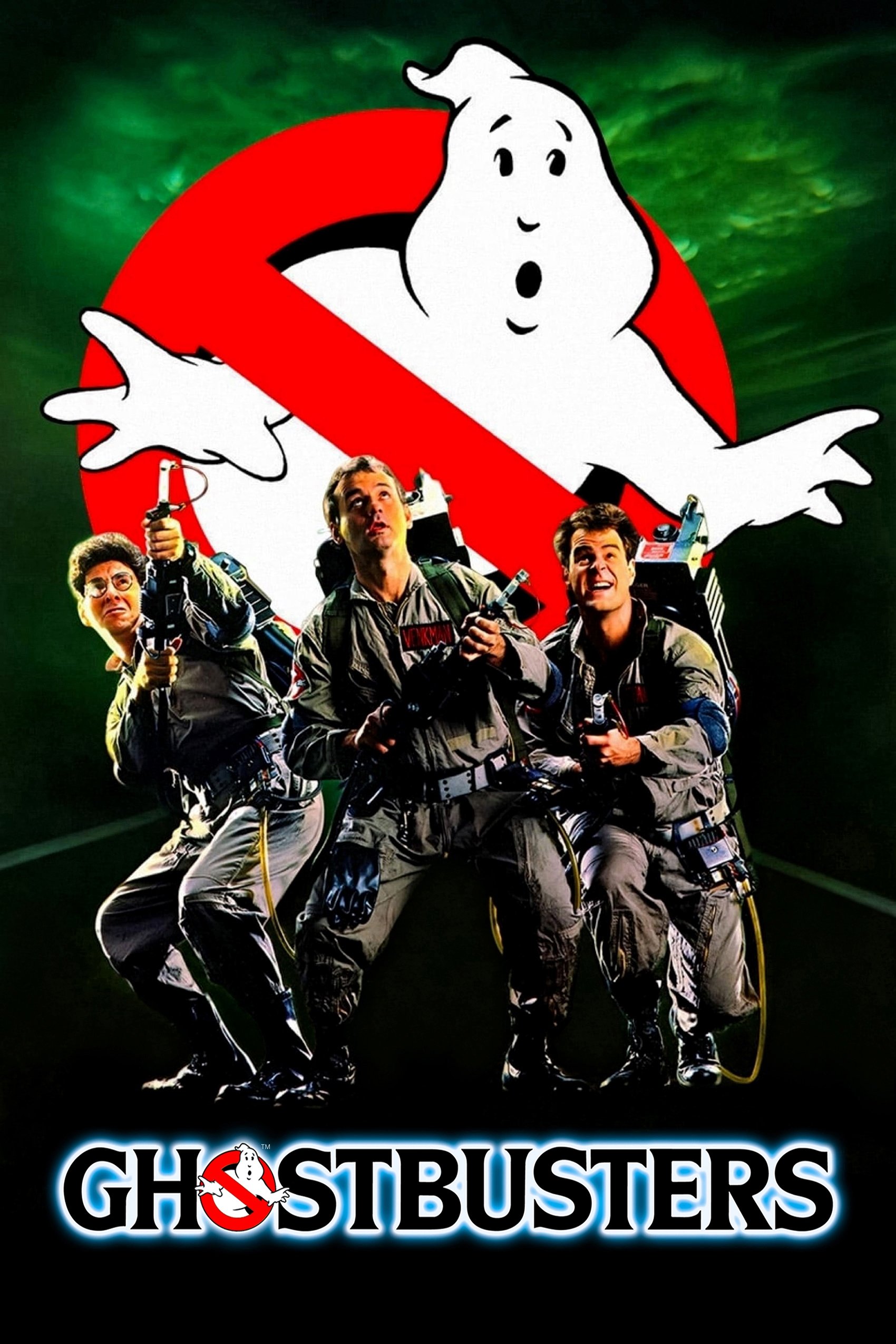
Is This Film Based on a True Story?
Almost from the moment I first saw “Ghostbusters,” I was swept away by its oddball charisma and the inventive, science-gone-sideways logic of its supernatural adventure. Yet even as a child, I never quite believed what played out on screen was rooted in anything remotely real—and my subsequent research as a film historian confirmed my gut feeling. If I’m being completely honest, “Ghostbusters” (1984) is entirely a work of fiction. There’s no direct documentation, case file, or verifiable account tying this film to real-life events or individuals battling paranormal phenomena with futuristic gadgets in the heart of New York City. The story sprang from the imagination of Dan Aykroyd, who wrote the original script and concept, and his intent was always firmly in the realm of comedy and speculative fantasy. While some inspiration drew on his personal interests and family background—especially a fascination with the occult and supernatural—the finished film doesn’t claim to dramatize true events or reinterpret actual cases. In my experience, “Ghostbusters” operates freely within the imagined, not the historical, and that’s a key distinction when thinking about its origins.
The Real Events or Historical Inspirations
When I dive into the roots of “Ghostbusters,” the clearest thread tying it to reality isn’t a secret government agency or a series of hauntings but instead Dan Aykroyd’s lifelong curiosity about the unexplained. I found it fascinating that Aykroyd’s own family has a rich history connected to spiritualism—his father wrote a book on ghosts, and there were family stories of séances and metaphysical exploration. Growing up with such influences, Aykroyd developed a genuine interest in the theoretical and anecdotal side of ghosts, mediums, and paranormal investigation, especially as chronicled in mid-century pop culture. I discovered, for instance, his enthusiasm for the Society for Psychical Research and other groups from the late 19th and early 20th centuries who attempted to use science to probe spiritual phenomena.
But it quickly became clear to me that no single case, document, or group served as a direct inspiration for the plot of “Ghostbusters” as it appears in the film. Instead, Aykroyd drew broadly from what he termed “the tradition of ghost story-telling and actual ghost hunters”—think spiritualists, mediums, and scholars who investigated psychic phenomena. He even referenced the comedic tone of Abbott and Costello, the slapstick logic of “The Bowery Boys Meet the Monsters,” and the playful side of classic Hollywood ghost comedies as his launching pad. I think what sets “Ghostbusters” apart, and what many overlook, is its blending of earnest pseudo-science with satirical elements—a sort of parody and loving homage at the same time.
It’s important to note, as I’ve learned, that the “paranormal investigator” archetype, while popular in literary fiction and occult history, had not been realized on screen the way “Ghostbusters” did it. The idea of private contractors responding to supernatural emergencies with technological flair has no direct analog in genuine historical records. However, Aykroyd’s references go beyond cultural touchstones and family lore—he also folded in the scientific curiosity of figures like Sir Arthur Conan Doyle, who famously engaged with psychical research. So while I can trace thematic and aesthetic influences, I find no evidence of specific ghostbusting teams operating in any city—New York or otherwise—prior to the film’s release.
What Was Changed or Dramatized
As I peel back the layers of “Ghostbusters,” I see a work that freely lifts motifs from occult history but gleefully transforms them into something utterly unique. Dan Aykroyd’s early drafts involved interdimensional travel, rival ghostbusting teams, and storylines too elaborate for the film’s eventual budget or tone. By the time the film took its final shape, Harold Ramis had joined as co-writer, and together they spun the premise into a contemporary setting—with clear roots in classic American city life, blue-collar hustle, and the rise of entrepreneurial culture in the 1980s.
One drastic fictionalization, from my point of view, lies in the technology the Ghostbusters employ: proton packs, ghost traps, meters, and containment units. None of these fantastical devices have any basis in actual scientific equipment or tools ever used by parapsychologists or ghost hunters. I’ve followed the evolution of real-life ghost investigations, and while audio recorders, EMF meters, cameras, and infrared thermometers are common, the elaborate gadgets of “Ghostbusters” are pure fabrication—serving as both comedic props and a satirical take on the trappings of pseudo-science.
The supernatural occurrences depicted—such as a giant marshmallow mascot lumbering through Manhattan, ancient Sumerian gods awakening atop skyscrapers, or the spontaneous manifestation of ghosts as green, ectoplasmic creatures—are all creative inventions. What’s more, the film’s bureaucratic subplots (with the Environmental Protection Agency serving as an antagonist) and the blending of the supernatural with corporate start-up culture represent a modern twist I haven’t found mirrored anywhere in the actual annals of paranormal inquiry.
Even the professional dynamics of the characters—the cocky Peter Venkman, the earnest Ray Stantz, the highly technical Egon Spengler, and the everyman Winston Zeddemore—draw more from comedic archetypes and character-driven ensemble films than from a pattern in reported paranormal investigations. Their journey from disgraced academics to city heroes is overtly dramatized for comedic impact. Thus, every structural pillar of the film seems, to my eyes, to be altered or inflamed for maximum entertainment, rather than verisimilitude.
Historical Accuracy Overview
When I examine “Ghostbusters” for historical accuracy, I’m struck by how purposefully unbound it is by real-world constraints. On the one hand, there is accuracy in the mood and tone of mid-1980s New York—its grit, humor, and the social texture of the era feel absolutely genuine to me. The way the film captures the city’s mosaic makes it, in some aspects, a time capsule of its era. The interplay with urban institutions—the mayor’s office, police, and even the token antagonistic environmental regulator—mirrors civic life of the city in a broad, comedic way that wouldn’t read as false to anyone familiar with the period.
But once I pivot to the film’s central conceits—namely ghosts as a literal, material threat that can be trapped, studied, and even weaponized using advanced technology—I see no alignment with documented history. There are no records of city-wide spectral events, no gadgets with energy streams capable of ensnaring wandering phantoms, and certainly no budgeted government contracts offered to private ghost-catching firms. While the idea of paranormal investigators has some foundation in real societies and amateur detective groups, their efforts have always been bounded by the limitations of contemporary science and often blurred with skepticism and trickery.
One thing I find especially interesting is how the film’s occult references—like the invocation of Sumerian gods or the allusion to psychokinetic energy—are loosely drawn from historical and mythological sources but are then entirely remixed. Gozer, the film’s antagonist, is a product of narrative invention, not a true mythological figure. Even the rituals, summoning, and pseudo-academic jargon are parodies or distorted versions of real occult practices. The Science of Ghostbusting, as portrayed, never existed and remains squarely within the realm of speculative fiction.
In my research, I’ve seen the film memorialized as a playful synthesis of ghost lore, urban satire, and science parody—not as a credible depiction of true events. While it playfully borrows from the trappings of parapsychology and spiritualism, the film is always most at home in its invented world, not in historical fact.
How Knowing the Facts Affects the Viewing Experience
For me, learning that “Ghostbusters” is untethered from any actual historical occurrence liberates the film from the kind of close reading or expectation one might bring to a biopic or a movie “ripped from the headlines.” Instead of scrutinizing its plot twists or technological flights of fancy for realism, I’m free to appreciate the creativity and humor at play—even to revel in its anachronisms and absurdities. Recognizing that the proton pack never existed means I can delight in its look and sound without wondering if someone, somewhere, actually tried to construct such a thing.
At the same time, knowing that the film took some inspiration from Aykroyd’s genuine curiosity about the supernatural adds a fascinating subtext for me. It frames the film as a sort of comedic love letter not just to 20th-century ghost stories but also to the oddball fringe science and unsolved mysteries that have always lurked at the edge of popular culture. While the specter of “truth” is never looming over the plot, I find the film gains depth as a piece of pop mythology: it’s about our desire to explain the unexplainable, to professionalize (and commercialize) the inexplicable, all with a grin.
When I watch “Ghostbusters” with the understanding that there is no “real” spectral crisis at its core, I find myself focusing more on the dynamics between characters, the rhythms of New York life, and the way the film gleefully pokes fun at bureaucracy, business, and the chutzpah of would-be entrepreneurs. If anything, knowing the film’s fictional foundations allows me to see more clearly how it comments on contemporary anxieties—scientific uncertainty, economic precarity, and changing social landscapes—filtered through a lens of exuberant comedy.
I also believe this context shifts the relationship between the viewer and the story; rather than examining it as a document, I treat it as an artifact—a product of its time reflecting the zeitgeist of the 1980s, when entrepreneurial spirit and disdain for establishment authority ran high in cinema. For all of its fantastic inventions, the film ultimately points back toward real cultural moods, even if its story is one hundred percent made up.
For those who come seeking factual basis, I think that awareness recalibrates expectations: you won’t find a blueprint for ghost containment or a case file referenced in academic journals, but you just might discover a witty, meta-meditation on how we mythologize science and blur the lines between the fantastic and the plausible. In that sense, knowing the film’s fictional status doesn’t diminish the experience at all—in some ways, it amplifies the joy of discovery and invention at its heart.
After learning about the film’s origins, you may want to see how audiences and critics responded.
🎬 Check out today's best-selling movies on Amazon!
View Deals on Amazon