
Is This Film Based on a True Story?
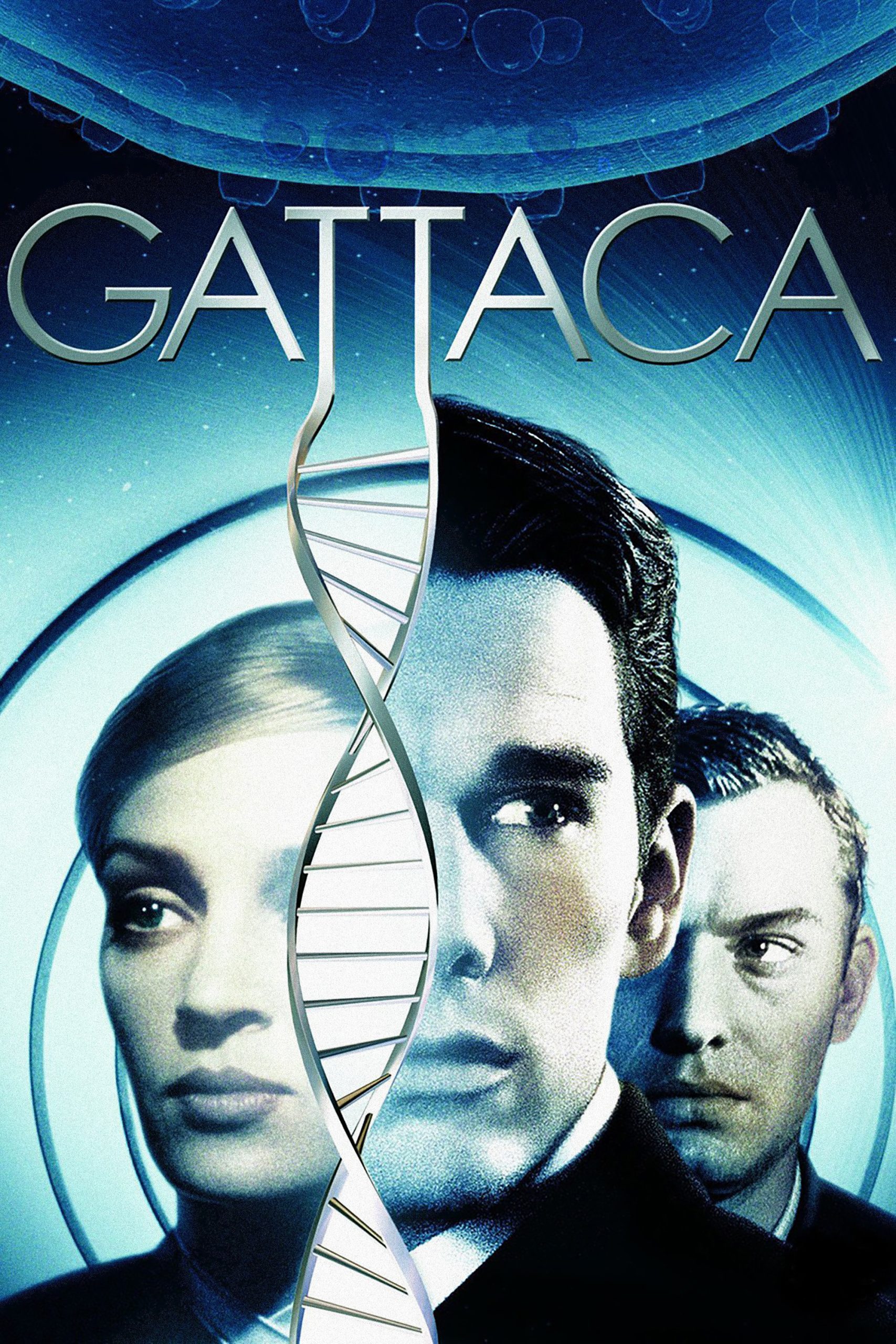
Gattaca has always struck me as a film that feels plausible despite being entirely fictional. When I first dove into its elegant depiction of a genetically stratified society, I immediately wondered whether it stemmed from a real-life event or a cautionary historical moment. However, Gattaca is not based on actual events, real people, or any documented scientific project. It’s an original work of speculative fiction, conceptualized by writer-director Andrew Niccol in the mid-1990s. No true story or biography underpins its core drama, but rather a tapestry of imagined futures woven from ideas and ethical dilemmas circulating in scientific circles at the time. I find its power rests in how entirely it invents—yet chillingly anticipates—possible scenarios rather than recounts existing history.
The Real Events or Historical Inspirations
In my own view, Gattaca is a product of the anxieties and technological hopefulness that characterized late 20th-century science. While not rooted in a specific real event, the film draws heavily on the real-world advances of the Human Genome Project, which began in 1990 and was well underway by the time of Gattaca’s release in 1997. At the time, news outlets were regularly reporting breakthroughs in gene sequencing, and bioethicists were voicing concerns over the potential for eugenics—a term indelibly linked to regretful historical episodes, especially those of the early-20th-century United States and Nazi Germany.
As I researched the film’s background, I realized that Gattaca’s premise grows out of fears about genetic discrimination. This was not merely a science fiction worry. The term “genetic discrimination” became prominent in American policy discussions in the 1990s, eventually leading to the Genetic Information Nondiscrimination Act (GINA) a decade later. When I consider Gattaca’s starkly divided world, it’s impossible not to see how it channels public dialogue about who should have access to genetic technologies, and who decides which traits are “desirable.” Still, there’s no record of a 20th-century society executing such widespread genetic selection or social engineering on Gattaca’s scale—at least not with the precision or ubiquity the film imagines.
The broader philosophical and literary echoes are also hard for me to ignore. The film borrows a vein of thought from classic dystopian literature, such as Aldous Huxley’s “Brave New World,” which in the 1930s speculated about a society organized on genetic hierarchies. Public debates over test tube babies, surrogacy, and gene therapy in the 1980s and 1990s further set the stage for Gattaca’s imagined future. For all its originality, I see Gattaca as a mirror to real doubts and ambitions within late-20th-century science, rather than an adaptation or retelling of any specific real event or biography.
What Was Changed or Dramatized
Reflecting on the movie’s worldbuilding, I’m always struck by how Gattaca pushes the contemporary debate around genetics far past its actual scientific limitations. In reality, as I know from my readings, gene editing and analysis are nowhere near as thoroughly deterministic or surgical as portrayed on screen. The accuracy with which Gattaca’s society predicts life outcomes—down to the expected age of death—has never been possible, either by 1997 or today. The ease of DNA sampling and the immediacy of result interpretation, from sweat off a keyboard or a strand of hair, is another dramatic embellishment invented to create tension and narrative stakes.
What fascinates me most about Gattaca’s dramatizations are its social implications. The film posits a rigid class structure, where access to jobs, relationships, and even spaceflight are strictly controlled by one’s genetic profile. This kind of formalized genetic caste system is a storytelling device; while institutional and informal discrimination certainly has existed in various forms, the surveillance and enforcement mechanisms in Gattaca are pure invention. The urgency of Vincent’s story, as a “faith birth” or “in-valid” fighting to transcend his genetic lot, ramps up the dramatic stakes far beyond anything reflected in practical employment or healthcare regimes of the late 20th century.
I also notice that Gattaca compresses decades’ worth of scientific progress and ethical debate into one seamless reality, where society has both the technology and the will to organize itself almost entirely around DNA. While real-world progress in gene therapy, pre-implantation genetic diagnosis, and bioinformatics is ongoing, science has yet to deliver—let alone distribute—these abilities with anything like Gattaca’s precision. Elements like identifying the protagonist’s DNA from a lost eyelash, or instant job screening from a blood prick at a turnstile, remain artifacts of dramatization, simplifying what are incredibly complex and evolving technologies.
There is, too, the matter of spaceflight: Gattaca makes it a pinnacle of achievement, yet reserves it for the genetically privileged. Actual space program recruitment never used such biologically restrictive measures during the 1990s. NASA and other agencies certainly employed rigorous health screenings, but these have always been medically based, not driven by DNA forecasts. Gattaca’s rocket launches thus serve as symbolic rather than scientifically plausible gatekeeping moments.
Historical Accuracy Overview
When I weigh Gattaca’s scientific and social framework against historical fact, I see that its accuracy is more philosophical than factual. Yes, the Human Genome Project and advances in biotechnology made news during the film’s development, and some of the speculative scenarios—like employer interest in genetic risk factors—echoed genuine debates. But I’m not aware of any contemporary society, past or present, that ever executed genetic classification on Gattaca’s scale, with the persistent, automated discrimination envisioned in the story.
From my perspective, the clinical accuracy of gene sequencing, and the capacity to predict disease, still falls short of what Gattaca suggests. We now know there’s tremendous complexity between one’s genes and actual health outcomes. Genetic determinism, as shown in the film, has been largely refuted by scientific studies mapping interactions between DNA, environment, and chance. Fictional devices such as instant genetic identification from minute samples or public bio-surveillance at large scale have no direct parallel in history or contemporary forensic practice, even today.
However, I can’t ignore the ways Gattaca feels prescient on an ethical level. The movie’s depiction of social sorting—assigning privilege based on characteristics from birth—does resonate with episodes in real history. From the eugenics movements of the early 1900s in America and Europe, to the forced sterilization policies in various countries, societies have long grappled with the desire to “improve” populations according to some (highly contested and often pseudoscientific) ideal. I see the emotional heart of Gattaca, the struggle against predetermined identity, as rooted in these very real struggles, but the narrative and mechanisms are all invention.
I also find the futuristic aesthetic interesting: Gattaca’s sets, costumes, and technology are not modeled after actual historical artifacts or organizations. They reflect a stylized, almost timeless vision of the mid-century modern era, fused with speculative technology. The design choices are a creative interpretation, rather than a faithful recreation of any real or projected environment.
Summing up my own view, Gattaca hews closest to historical and scientific reality in its questions—not its answers. Its specifics are fictional, but its central anxieties are tethered to genuine concerns that were (and still are) debated in policy circles, laboratories, and households. The result is a film that feels plausible, and perhaps even prophetic, despite its total invention.
How Knowing the Facts Affects the Viewing Experience
The more I learn about the film’s origins and the history of genetics, the richer my response to Gattaca becomes. Once I know that Gattaca’s society has no historical precedent, and that its science is extrapolated beyond any contemporary reality, I’m able to appreciate the story as a work of speculative inquiry rather than literal prediction. I’ve found that understanding the fictional nature of Gattaca doesn’t diminish its impact; if anything, it opens up new layers of meaning for me as a viewer.
With every subsequent viewing, I find myself less inclined to treat Gattaca’s events as a warning of inevitable futures, and more as a meditation on what-ifs—how quickly science fiction can crystallize public fears and aspirations. The absence of a true story foundation means I’m invited to ask bigger, more personal questions. How much do we still judge people by traits beyond their control? Where is the line between prevention and prejudice? Knowing that Gattaca’s world is imagined makes me reflect on the slippery slope between intention and outcome—especially when technology and ethics collide.
I also see how an awareness of the historical context—the rise of genetics in the 1990s, the echoes of past eugenics—shapes how I interpret the characters’ struggles. Knowing that Vincent’s battle is not lifted from a biography, but instead created to explore themes, heightens my sense of empathy and possibility. I don’t wait for the story to match real-world precedent; instead, I track how convincingly it dramatizes the universal tension between destiny and agency.
The knowledge that Gattaca is original fiction, yet born of contemporary debates, ultimately makes the film seem more urgent to me. It functions almost like a thought experiment: what could happen if society prioritized genetic “purity” above individuality or effort? Seeing how the facts diverge from the film gives me space to weigh the plausibility of the world shown, while also evaluating the arguments embedded within. The film pushes the science beyond its actual reach, but it doesn’t stray far from the ethical dilemmas genuine scientists, lawmakers, and families were already facing.
In my experience, knowing that Gattaca isn’t a dramatization or documentary enhances its power. I approach it as an artistic creation unbound by factual limits, yet shaped by real hopes and fears. The story’s roots in history and policy aren’t literal—they are emotional, philosophical, and increasingly relevant as gene-editing technologies (like CRISPR) enter public consciousness. When viewers like me bring historical awareness to the movie, the drama feels deeper, not lessened; its fictions serve, paradoxically, to sharpen questions about truth, fairness, and the future we wish to create.
After learning about the film’s origins, you may want to see how audiences and critics responded.
🎬 Check out today's best-selling movies on Amazon!
View Deals on Amazon