
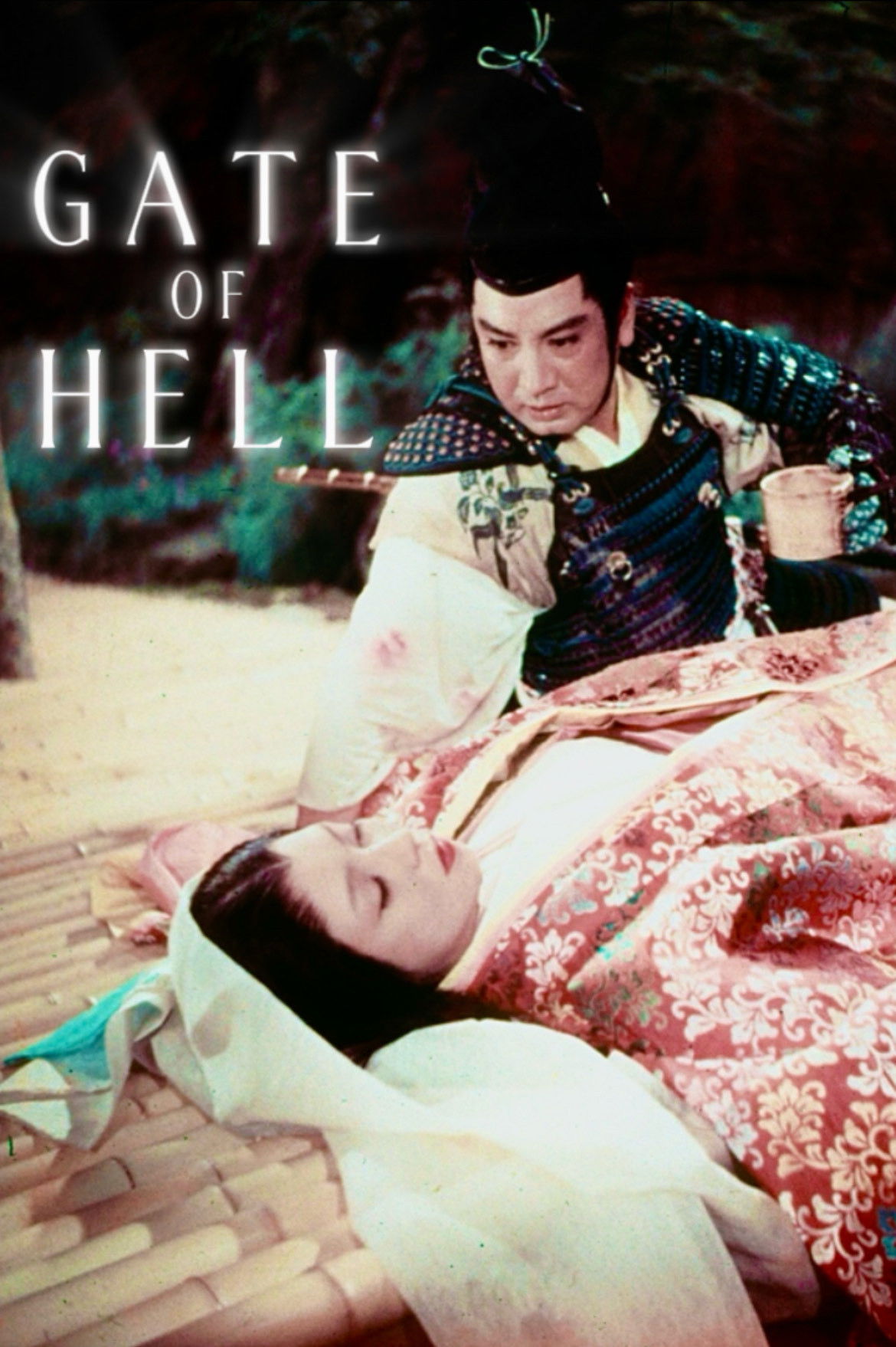
The Question of Truth Behind the Film
The first time I watched “Gate of Hell,” I found myself wrestling with a question that lingers behind so many historical dramas: is this what really happened? The moment the film’s narrative opened in the shadow of feudal upheaval, I couldn’t help but wonder how much came from the annals of history versus the imagination of its creators. For me, this curiosity wasn’t born out of skepticism but from an urge to situate the unfolding emotions and conflicts against something solid and factual. I think many viewers fall into this habit. When a story feels both distant and vividly alive—like the tale of a samurai’s love set against the Heian era’s political turbulence—I notice a pattern of questioning: is this based on a true story, or is it wholly invented? The assumption, I feel, is that if it is real, it grants a kind of immediacy and consequence to the drama; the events portrayed are inherited from a tangible past, not just conjured for narrative effect.
There’s a particular weight audiences assign to the “true story” label. I see it in the seriousness with which discussions unfold after the credits roll—if viewers think they have glimpsed actual people and documented events, interpretations tend to tilt toward ethical reflection or social analysis, rather than just aesthetic appreciation. It’s almost as if the film’s emotional impact is meant to double as a lesson rooted in reality. I notice that sometimes this attitude leads to heightened engagement; other times, it produces a set of expectations that weigh on the film’s storytelling, with people demanding fidelity to accounts recorded in history books. And yet, even as I crave to know what is real, I’m aware that cinema, by its nature, can never be a transparent window to the past. Instead, it offers a vision—a refracted and selective one—even when anchored by fact.
With “Gate of Hell,” the question is even more pronounced because of its period setting, sumptuous attention to cultural detail, and invocation of samurai codes of honor. Knowing how much audiences attach to “truth” in such a context, I find myself reflecting on what brought about this appetite for authenticity. It’s as if we hope to use films not only to entertain, but to educate. Even when little of what is shown is documentary fact, the allure of reality colors how I process each scene.
Historical Facts and Cinematic Interpretation
As I delved deeper into the background of “Gate of Hell,” I realized just how interwoven the boundaries are between factual record and cinematic artistry. The backdrop is undeniably historical: the Heian period, a time of political intrigue, shifting loyalties, and complex hierarchies. Yet, the specific narrative—Morito’s passionate obsession with Lady Kesa—draws not from a single historical event, but rather from centuries-old literary sources. The film adapts the noh play “Kesa no Tojin” and borrows details from folklore and medieval ballads, transforming these fragments into a tightly constructed cinematic story.
I notice how, even when a historical tradition is invoked, much of the drama operates in the realm of possibility rather than established fact. For instance, the political turmoil—the siege, the betrayals—serves more as a backdrop than as a direct recounting of any singular battle or reign. Characters are rendered with a historical sensibility, their actions guided by codes and customs verifiable in ancient texts, but their story, as told in the film, is artfully condensed and arranged for emotional immediacy.
What strikes me as especially fascinating is how the film simplifies the sprawling complexity of the era to focus on the collision between individual desire and social order. In actual Heian society, relationships, marriage customs, and court protocol were mired in intricate politics and subtext. Yet “Gate of Hell” distills these to highlight key emotional decisions, often reorganizing or abbreviating real practices to keep the story moving and to keep the audience’s attention where it matters most: on the characters’ inner lives. I think this is a common trait of historical cinema. The need to condense decades, even centuries, into two hours imposes selective pressure—the result is always an interpretation rather than a documentation. I find myself admiring how the film reconstructs the past: styles of dress, architectural details, and ceremonial gestures are scrupulously researched, but the personal drama is crafted with dramatic efficiency, often favoring symbolic truth over literal accuracy.
What Changes When Reality Is Shaped for Cinema
For me, the most revealing part of watching “Gate of Hell” lies in noticing what happens in the translation from history—or myth or legend—into the cinematic form. Each decision to condense, embellish, or transpose a historical element is a kind of compromise. I find it impossible not to reflect on what these trade-offs mean. On one hand, strict adherence to historical precision could anchor every detail: only actions with documented basis, only dialogue taken (however loosely) from a contemporaneous source. But in practice, this is rarely what audiences are presented. In reshaping reality for the screen, the filmmakers must make practical decisions—about pace, arc, focus—that inevitably introduce elements removed from the original inspiration.
One trade-off I notice is that the complexity of real-world events is often transformed into a more straightforward narrative arc. This allows for clarity, emotional engagement, and a sense of closure that isn’t always accessible in the staggered and often ambiguous sequences of history. For example, the relentless progression of Morito’s obsession, from loyalty to betrayal, is given a single, coherent arc. In contrast, lived history tends toward the fragmented and unresolved. This tightening of the narrative heightens dramatic tension but at the expense of the messiness that marks historical reality.
I also see the inverse—where the texture of lived experience, with its ambiguities, is sometimes lost in pursuit of a story that fits the contours expected by cinematographic convention. In the case of “Gate of Hell,” motivations are presented as clear-cut, often symbolized by visual motifs: brightly colored costumes, choreographed rituals, or the spatial arrangement of characters in traditional settings. These choices foreground emotional clarity over historical opacity and often make the thematic content more accessible to modern audiences. This is not to say one approach is greater than the other but to highlight the shift that occurs—characters step out of the shadowy complexities of real events and into the luminous precision of a composed story.
I am fascinated, too, by the way dramatic license allows the film to compress background information into a gesture or glance. A centuries-long tradition becomes a single, telling symbol—a lock of hair, a whispered vow. While this compresses the temporal distance between viewer and subject, it simultaneously alters the authenticity of what is portrayed. For me, the adjustment is necessary: film thrives on resonance, not just veracity. But it does shift how I engage with the supposed “truth” of what I am seeing, making me always aware of the divide between what might have been and what has been crafted for effect.
Audience Expectations and the “True Story” Label
When a film is billed as “based on a true story,” I notice my own expectations shift almost immediately. Suddenly, my engagement moves beyond simply enjoying the characters’ fates or marveling at the cinematography—I find myself weighing each decision, each emotional turn, against an imagined standard of truthfulness. If a film like “Gate of Hell” presented itself as a direct recounting of real events, I would likely approach it with a hunger for historical insight, checking the accuracy of rituals, fashions, and power dynamics. Instead, knowing that it hovers between the real and the mythic, I allow myself a different kind of immersion—one rooted more in archetype and moral resonance than in documentation.
I’ve seen how this tendency plays out among viewers and critics alike. When audiences understand a film to be purely fictional, the suspension of disbelief becomes part of the contract; poetic license is expected, perhaps even celebrated. When the same audience, myself included, is told that what we are watching actually happened, every deviation or symbolic flourish can feel jarring or misleading. The burden of representation weighs heavily—any flourish that cannot be sourced to reality is scrutinized or discounted. Yet, paradoxically, I also witness that even when knowing a story to be myth, the power of authenticity can seep in through details: a historically accurate costume, a landscape faithfully recreated, a phrase borrowed from ancient letters. In “Gate of Hell,” these touches persuade me, against my better judgment, that I am brushing against the genuine fabric of the past.
Sometimes, the “true story” label invites a deeper empathy. Believing a character really lived—that they suffered, hoped, or triumphed within the constraints imposed by their era—can heighten my emotional investment. If I know the shape of a narrative is entirely conjured by the filmmaker, I can focus more on allegory and theme—how the story illuminates broader ideas of loyalty, obsession, or sacrifice. If I imagine that the story is at least rooted in someone’s lived experience, I feel an urgency to decode which parts are fact and which are fabrication. The process almost becomes a puzzle, engaging my historical curiosity alongside my aesthetic appreciation.
I think this dual awareness—the allure of authenticity and the freedom of fiction—is intrinsic to how audiences navigate period films. The transparency (or lack thereof) about what is real and what is interpolated can foster a range of responses, from scholarly nitpicking to rapt emotive involvement. The films that straddle the line, like “Gate of Hell,” put me in the paradoxical position of constantly questioning and suspending disbelief in equal measure.
Final Perspective on Fact vs Fiction
Reflecting on my journey with “Gate of Hell,” I realize that my experience of the film cannot be cleanly separated from my evolving sense of how much it draws from reality versus invention. The awareness that the story is adapted from literary tradition, rather than direct history, colors every frame I watch: the dialog becomes a stylized rendering rather than a transcript, and each image appears twice—once as a window on the past and again as an imaginative reworking. This doesn’t weaken the film’s emotional or intellectual power for me; it simply reframes how I interpret its aims.
Tracing the line between fact and fiction, I notice that my understanding of the underlying reality allows the film to work on a double register—it can simultaneously evoke the spirit of an era and employ the flexibility of myth to probe timeless moral and emotional questions. I find that when I watch “Gate of Hell” with full awareness of its adapted, symbolic nature, I am drawn less to the particulars of what happened and more to the universal dilemmas it dramatizes. The samurai’s plight, the impossible triangle of loyalty, love, and principle, all feel more archetypal than literal.
At the same time, my knowledge of the care taken in evoking the period—the costumes drawn from museum archives, the gestures mirroring classical etiquette—grounds my engagement. The film requires me to be comfortable with ambiguity, to accept that cinema based on history will always be incomplete, a partial rendering, sometimes more honest to the spirit than the letter of the times it depicts. For me, this is not a flaw but a defining characteristic of historical film.
Ultimately, knowing what is real and what is constructed in “Gate of Hell” does change how I view and interpret its story. The boundary between fact and fiction becomes part of the viewing experience—prompting me to think not only about what was, but about how we choose to remember and retell the past through art. It isn’t that one approach (faithful reconstruction or imaginative adaptation) is better, but that the interplay between the two opens up broader avenues for engagement. My awareness of this interplay transforms passive watching into active interpretation, and that, I find, is where the richest rewards of historical cinema lie.
For additional context, you may also explore the film’s overview and how it was received by audiences and critics.
🎬 Check out today's best-selling movies on Amazon!
View Deals on Amazon