
Is This Film Based on a True Story?
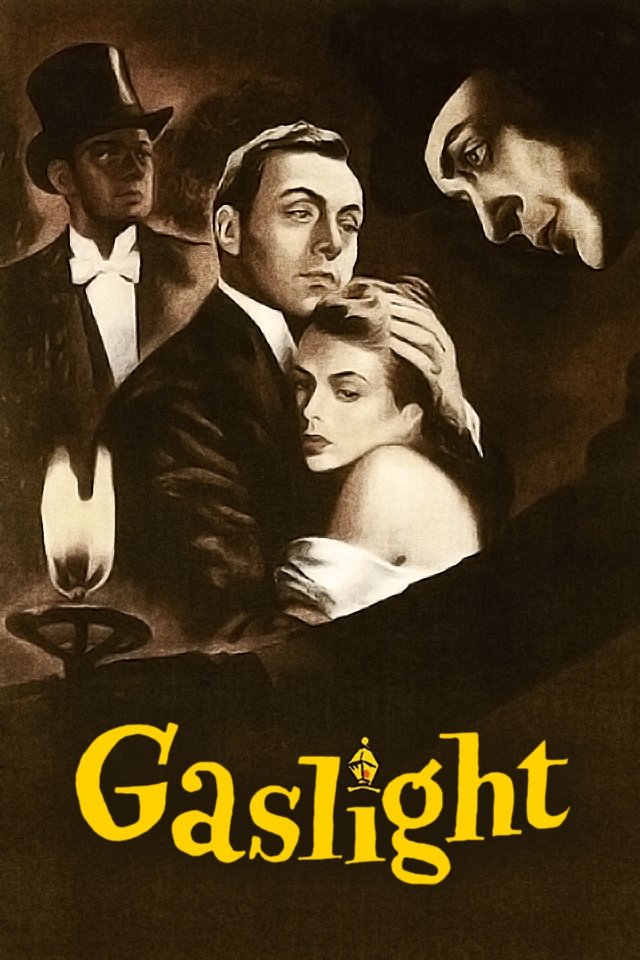
From the moment I witnessed the shadowy world of “Gaslight” flickering to life onscreen, I was gripped by the chilling intimacy that felt almost uncomfortably real. I have often wondered, when exploring films anchored in psychological manipulation, if I’m witnessing echoes of real-life torment. For “Gaslight” (1944), the answer is less straightforward than simply labeling it fiction or fact. The film is not directly based on a true story—there are no documented historical individuals whose lives map directly onto its narrative—but it doesn’t emerge from a vacuum either. Instead, “Gaslight” adapts a 1938 stage play of the same name by British playwright Patrick Hamilton. Hamilton’s work was itself born from the author’s probing imagination and observations about the dark corners of domestic life, rather than from a single real-life crime or event. While gaslighting as a psychological phenomenon is very real and has since been studied extensively, the narrative structure, specific characters, and central crime at the heart of the film are fictional creations. As I immersed myself further in both the history of the term and the making of the film, I recognized that “Gaslight” occupies that gray zone—firmly fictional in storyline, yet hauntingly effective in evoking issues that do, unfortunately, arise in real households and relationships.
The Real Events or Historical Inspirations
Digging into the roots of “Gaslight,” I quickly discovered that this film does not owe its existence to a newspaper clipping, a high-profile criminal case, or a diary unearthed from London’s foggy underbelly. “Gaslight” takes inspiration chiefly from Hamilton’s earlier theatrical work, which premiered in London under the title “Gas Light” and was later retitled “Angel Street” for American audiences. While Hamilton drew on the prevailing concerns and anxieties of 19th-century urban society—especially notions of domestic privacy, the fragility of women’s mental health, and Victorian fears of duplicity—he invented the specific plot: a husband methodically undermining his wife’s grip on reality in order to conceal his own criminal behavior. There are no actual reports from Victorian England that match the elaborate scenario of Gregory and Paula Anton. As far as I can determine, Hamilton’s play and the subsequent Hollywood adaptation synthesized broader social anxieties into personal, psychological drama.
What fascinates me about “Gaslight” is how it takes these ambient historical moods and weaves them into a story that feels plausibly real. The idea of a man manipulating his wife for personal gain echoes genuine cases of psychological abuse that came to be more widely reported and studied in the 20th century, but not as part of a single event that made headlines and inspired the film directly. Additionally, the Victorian setting—complete with gaslit rooms, fog-drenched streets, and heavy curtains—is meticulously stylized, but not the product of a specific moment captured in archival detail. In my view, the most substantial real-world “inspiration” is the lived experience of individuals who have suffered manipulation in private, rather than any one crime or person.
What Was Changed or Dramatized
Analyzing how “Gaslight” takes theatrical material and transforms it for the screen, I was struck by the ways the adaptation amplified, condensed, and occasionally softened aspects of Hamilton’s original play to fit the Hollywood storytelling mold. For starters, the screenplay sharpened the psychological manipulation, creating moments where I could almost feel Paula’s mounting paranoia in my own chest. The intricate ways her husband, Gregory, isolates and controls her—not only emotionally but also through physical evidence and staged events—seem deliberately heightened for dramatic effect.
Another point that caught my attention is the character adjustments. In the play, the antagonist’s motivations and identity are somewhat different, giving the film a more polished narrative of personal betrayal and criminal intent. The movie version presents Gregory Anton as a suave, calculated villain with a clear motive centered around a hidden cache of jewels, which streamlines the story but lacks the kind of ambiguity found in messier—and perhaps more realistic—settings.
Hollywood’s approach to suspense and resolution diverged substantially from the stage version. In the film, the climactic confrontation delivers a catharsis for the audience—a definitive reckoning between Paula and Gregory—whereas real cases of domestic manipulation rarely end so cleanly. The addition of new characters (like the detective, Brian Cameron), embellishments in visual details (such as the flickering gaslights themselves as a plot device), and a more pronounced redemptive arc for Paula further distance the film from any plausible historical documentation. The psychological subtlety of her breakdown and recovery, while emotionally powerful, distills a very complex process into dramatic beats designed to satisfy an audience in under two hours.
Historical Accuracy Overview
When I reflect on the film’s verisimilitude, I’m reminded of how “Gaslight” expertly harnesses its historical setting while sidestepping the need for factual exactitude. The London of Paula and Gregory is a stylized composite, evoking 19th-century domestic architecture, lighting, and social hierarchies with flair rather than forensic precision. The production design—draped in velvet and soft shadows—conjures the period’s atmosphere more than it mirrors any brick-and-mortar location I could verify in archives. Though gas lighting itself was common in upper-middle-class homes of the period, the technical accuracy of the gaslight dimming whenever someone else in the building uses gas falls within the believable, even if it is used more as a narrative device than a documented engineering fact.
The core dynamic at the heart of “Gaslight”—coercive control, or psychological manipulation—has since become recognized as a real phenomenon by psychologists and legal professionals alike. The term “gaslighting” entered popular vocabulary as a direct result of this story, which speaks to its resonance with genuine dynamics of abuse. However, the specifics of how Gregory orchestrates his campaign against Paula are heightened for narrative effect. While cases of psychological abuse abound in historical records, and the broad themes reflect real social issues, I found no direct analogs to the precise events depicted. The clarity with which Gregory’s villainy is plotted and Paula’s recovery achieved reflects the need to tell a story with a clear antagonist and redemption, rather than the messier realities of emotional abuse where villain and victim are not always so immediately visible or vindicated.
Fashion, language, and social customs in the film are evocative, but, as far as I can tell, not painstakingly reconstructed from period sources. The script incorporates a few Victorian turns of phrase and a certain understatement in emotional expression that feels true to the era, but it is more about conveying mood than faithfully reproducing dialogue from 19th-century London drawing rooms. I see the film’s accuracy as being most complete in its psychological insight, less so in the minute details of setting or individual events.
Perhaps the most lasting connection to history is the film’s cultural impact. While the specific story is fabricated, the vocabulary it introduced—“gaslighting” as a term denoting a form of abuse—anchored itself in the real world, influencing how future generations would articulate and understand manipulative relationships. The film thus stands as an important artifact of psychological insight, rather than documentary-style retelling.
How Knowing the Facts Affects the Viewing Experience
Understanding the film’s origins invariably shifts the lens through which I watch “Gaslight.” When I first encountered the story, my instinct was to search for the “real case” behind it, much as I would with a true-crime drama or a biopic. Realizing that no such case exists, and that the film operates in the territory of psychological allegory rather than reenactment, invited a different kind of engagement. Instead of parsing each moment for factual fidelity, I found myself focusing on how accurately the film portrays the broader reality of emotional abuse and its effects on victims.
Knowing the narrative springs from a theatrical source and not specific events liberates the film from literal scrutiny and allows me to concentrate on its psychological truth. I find that this does not lessen the impact at all—in many ways, it increases it. The story’s power comes from its ability to dramatize patterns of manipulation that, while fictionalized in detail, are terrifyingly plausible. Watching how Paula’s world shrinks under Gregory’s slow, methodical gaslighting, I am reminded that fiction can, at times, reveal truths obliquely, by heightening and clarifying what real-life stories might obscure with complexity or lack of closure.
For viewers equipped with the knowledge that “Gaslight” is a product first of a play, then a film script, and not the annals of Victorian criminal history, there comes a freedom to focus on the film’s style, performances, and emotional shading rather than “did this really happen.” It prompts me to view the film as both a period piece and a kind of proto-psychological case study—a demonstration of patterns of abuse that have since been meticulously catalogued in clinical research. The experience becomes less about verifying dates and more about empathy, identification, and recognizing subtle cues of manipulation that may replicate themselves in countless unseen stories.
Most of all, my awareness of its fictional roots highlights why “Gaslight” endures as a cultural artifact. Had it been based on a singular incident, it might have felt limited in resonance—anchored to one place and time. Instead, by drawing from ambient social anxieties and crafting a story shaped by, but not shackled to, reality, the film manages to speak across generations. It leaves me with the understanding that emotional manipulation, unlike the jewel theft at the heart of the plot, is rarely so tidily resolved. The story’s lasting influence is not in any court record or police file, but in the way it has helped generations of viewers recognize, name, and resist patterns of psychological control in their own lives. In that sense, the “facts” behind “Gaslight” matter less as points to be checked than as inspirations for a heightened, lasting awareness.
After learning about the film’s origins, you may want to see how audiences and critics responded.
🎬 Check out today's best-selling movies on Amazon!
View Deals on Amazon