
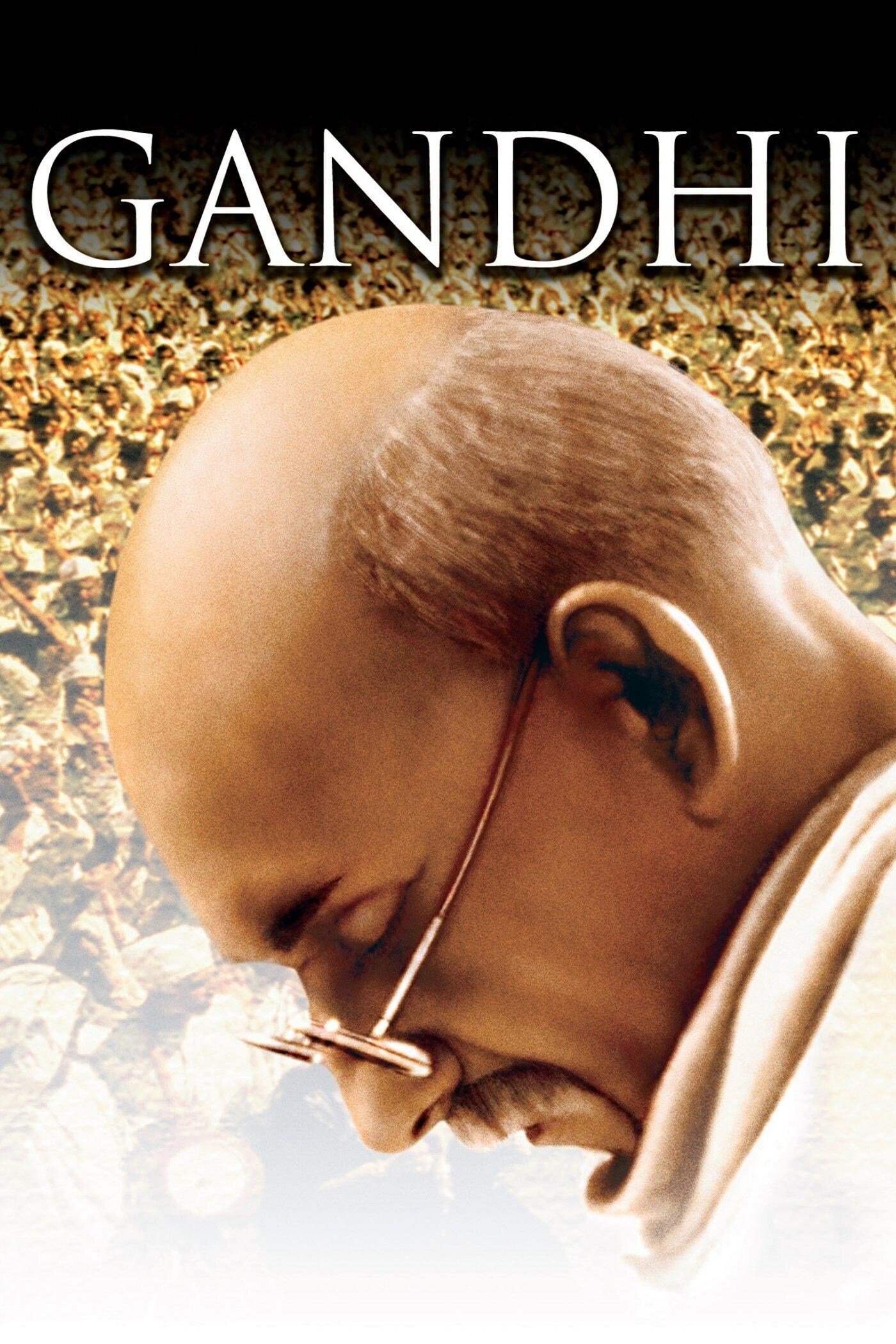
The Question of Truth Behind the Film
Every time I sit before a film like Gandhi, I’m struck by an uneasy tug-of-war between my own fascination with history and the conscious awareness that what I see is, fundamentally, someone’s recreation. As I reflect on my engagement with Gandhi, the first question that presses on me is: what parts of this story are rooted in documented events, and where does dramatization quietly step in? For me, this question is inseparable from the very act of watching; knowing I’m encountering a narrative presented as “true” shapes not only my expectations but also colors my interpretation of its images and characters.
Whenever a film touts itself as “based on a true story,” I find myself wavering between wanting authenticity and appreciating the artistry that might emerge from reinterpretation. I realize this isn’t merely curiosity about the specifics; it’s part of a broader, almost instinctual desire to anchor powerful stories to reality. There’s something comforting, even exhilarating, about believing I’m being offered a glimpse into real lives and historic moments. However, this very desire seems to prompt an assumption: if a film’s marketing frames the narrative as truthful, I catch myself presuming a foundational accuracy, as if the filmmakers are holding themselves to an unspoken contract to deliver reality, not fiction.
Yet, even as I hunger for this “truth,” I recognize the complexity behind the label. The phrase “based on real events” can be slippery and subjective. While I like to think I’m attuned to narrative invention, I often have to remind myself that the presence of recognizable figures and dates doesn’t guarantee fidelity. In the case of Gandhi, I admit to feeling a personal tension: each time I learn a scene was invented or modified for dramatic effect, I wonder how much that shapes my sense of the past. Am I being shown a documentary window or a dramatic fresco? Asking these questions enriches my experience, drawing me deeper into the interplay between fact and film.
Historical Facts and Cinematic Interpretation
When I look at Gandhi as a cinematic work springing from actual events, I’m repeatedly confronted by the deliberate reshaping that the medium almost demands. The film draws from a vast tapestry of well-documented history—major incidents, iconic moments, and, of course, the legendary figure of Mohandas Gandhi himself. However, I’ve noticed that the sequence and nature of these events are almost always subject to rearrangement in the service of coherence.
Take the film’s opening, for instance: It introduces Gandhi’s assassination as a framing device, a nod to cinematic convention as much as to historical chronology. This out-of-order presentation isn’t unique to Gandhi, but here I find it establishes an emotional anchor. Yet, in my estimation, this choice isn’t necessarily about enhancing history so much as making it artistically graspable, especially for audiences who might be unfamiliar with the intricacies of Gandhi’s life. By starting at the “end,” the film primes viewers for a retrospective journey—one that I’ve often felt is more streamlined than the true, meandering course of history.
Throughout the film, the broad sweep of India’s independence movement is distilled into a relatively tight, linear progression. The partition of events, the Salt March, or the Jallianwala Bagh massacre each receive concentrated, dramatic treatments. In my view, these instances reflect a conscious narrowing of focus: the timeline is compressed, and the interpersonal and political complexities of decades are rendered into digestible vignettes or emblematic scenes. Individual characters are sometimes amalgamated or invented outright, making it easier for viewers like me to connect to emotional through-lines and overarching themes.
Often, I catch moments in Gandhi that feel particularly illustrative: for example, the recreation of mass protests, or key conversations between Gandhi and British officials. Historians might point out that these dialogues are speculative, not verbatim records. When I notice this, it’s clear to me that the dialogues are often more about conveying the stakes and spirit of the era than delivering precise accounts. The effect is two-fold. On one hand, these choices aid comprehension and keep me engaged. On the other, I sometimes find myself questioning where empathetic dramatization ends and historical alteration begins.
My experience with the film becomes a balancing act: I’m aware every adaptation and condensation is a product not just of time constraints but also of the need to forge meaningful arcs for the audience. As I revisit crucial sequences, such as Gandhi’s return from South Africa or the depiction of Non-Cooperation campaigns, I sense the filmmakers’ hands selectively arranging events. At times, chronologies blur and motivations become simplified, which leaves me pondering the impact of such choices on my understanding of actual history.
What Changes When Reality Is Shaped for Cinema
For me, the most intriguing part of watching a historical drama like Gandhi is realizing how the careful curation of facts—whether minor or monumental—reshapes the essence of real-world events into something simultaneously familiar and strange. There is a certain necessity, I think, in compressing time, consolidating characters, and even heightening conflict. Without these measures, most true stories, sprawling and uneven, would lose the momentum essential to film.
I see this in Gandhi most clearly in the treatment of secondary figures. The film introduces characters who stand in for broader social or political movements, using composite roles to represent forces like colonial resistance or internal opposition. When I learn, for example, that certain advisors or adversaries are inventions or amalgams, I realize this permits the screenplay to streamline many perspectives into a handful of recognizable faces. This is an artistic strategy, built to elicit coherent reactions from viewers (including myself). The trade-off, of course, is nuance and complexity: real-life political entanglements, which could take hours to unravel, are briefly intuited through cinematic shorthand.
The practical benefits are apparent. For one, narrative economy keeps the film’s attention focused and its pacing strong—both crucial for a wide audience. It also allows the director and writers to drive home thematic arcs, letting me draw clear parallels between Gandhi’s personal evolution and the country’s collective struggle. On the other side, I recognize that clarity comes at the expense of ambiguity and contradiction, qualities that often define actual history.
I also notice that the film’s emotional arcs are tailored for maximum resonance. Scenes are sometimes imbued with symbolic weight that wasn’t present in the real events. When watching Gandhi’s arrest or witnessing the Dandi Salt March, I sense that narrative structure often overrules the subtler, more diffuse currents of the past. Such events are tidily constructed as climaxes or turning points, while in actual history, such moments can be beginnings, endings, or something in between.
Another practical consideration I dwell on is the visual language. Films like Gandhi must transform text, letters, or secondhand accounts into tangible images and conversations. When I see a moment recreated with great visual precision—a march, a massacre, an arrest—I’m aware that the aesthetic composition is as important as the informational payload. In so doing, the film becomes an interpretation, not simply a recitation. The result: I’m left with vivid emotional impressions that sometimes carry more persuasive power than any purely factual retelling could.
Audience Expectations and the “True Story” Label
It’s always amazed me how the framing of a film as “based on real events” can recalibrate not just an audience’s anticipation, but the whole tenor of our response. I see it in myself: when I watch something presented as strictly factual, I instinctively become more scrutinizing, almost as if the film is a lecture rather than a performance. This happened to me with Gandhi; I found myself frequently evaluating not just what was being shown, but how faithfully it echoed what I’ve read or heard about the historical record.
This expectation isn’t limited to history buffs. I think there’s a shared cultural tendency to view films “inspired by true events” as educational, or at least inherently trustworthy. For instance, when I talk to others who, like me, grew up thinking of Gandhi as a definitive guide to his life and times, I’m struck by how powerful that label can be. It imbues the visuals with a sense of gravity that mere fiction rarely commands. I notice that the film’s close adherence to period detail—costuming, sets, era-specific language—signals to viewers that we’re being offered a reliable window into the past, even as artistic license shapes the underlying narrative.
On the flip side, once audiences become aware that a film is not strictly factual—that it “borrows” or dramatizes—their interpretative lens often shifts. I feel this shift in myself: I become more inclined to appreciate the artistry or rhetorical strategies at work, rather than treating the narrative as a chronicle. For example, upon learning that some events or relationships in Gandhi are compressed or streamlined, I find I’m more willing to forgive inconsistencies, seeing them as part of cinematic convention rather than lapses in credibility.
Of course, the label “fiction” or even “inspired by” carries its own baggage. I’ve noticed that when viewers approach a film forewarned that it plays freely with real events, their expectations skew toward entertainment rather than information. The impact, for me, is a more relaxed stance—I watch less as a student, more as an observer of theme and character. When examining Gandhi after learning what was invented and what was not, I’m increasingly aware of how these boundaries function not just as artistic choices, but as cues guiding my own engagement and critical stance.
Ultimately, I come away convinced that the “true story” label is a powerful framing device, one that molds not just the experience of a film but the entire conversation around it. Whether it intensifies emotional investment or provokes critical skepticism, it’s never simply neutral.
Final Perspective on Fact vs Fiction
Stepping back from my experiences with Gandhi, I’m left mulling over how knowledge of the boundary between fact and fiction acts as both a compass and a filter for interpretation. When I know in advance which narratives or characters are drawn directly from the archives and which are constructions, it adds layers to my understanding, prompting me to see the film both as an artifact and as an argument.
This awareness doesn’t necessarily diminish my engagement, but it leads me to approach Gandhi in dual mode. On one hand, I let the cinematic vision sweep me up, admiring how the film makes dense history accessible and emotionally nourishing. On the other, I maintain an analytical curiosity: I notice moments where the story diverges from documentation and wonder what these divergences offer or obscure.
Being aware of these adaptation choices sharpens my sense of what’s at stake—not in terms of right or wrong, but in the shaping of collective memory. In this light, Gandhi becomes more than a biopic; it serves as a dialogue partner, inviting me to think critically about how stories acquire meaning and how meaning is, in turn, influenced by the sources we trust. By tracing departures from history—noticing which scenes are invented, which timelines are compressed—I find myself gaining a richer, more informed appreciation not simply of Gandhi the man, but of Gandhi the film as a crafted, interpretive work.
To me, the process of distinguishing between historical record and cinematic adaptation doesn’t have to settle questions of accuracy or render judgment on the result. Instead, this knowledge acts as a lens, bringing certain creative decisions into focus and prompting reflection on why stories are told the way they are. I come away from each viewing with new questions and, admittedly, a deeper curiosity about the real-life figures depicted on screen. Ultimately, for me, knowing what is real or fictional in a film like Gandhi doesn’t just change the facts; it transforms the entire act of watching—from passive reception to active interpretation.
For additional context, you may also explore the film’s overview and how it was received by audiences and critics.
🎬 Check out today's best-selling movies on Amazon!
View Deals on Amazon