
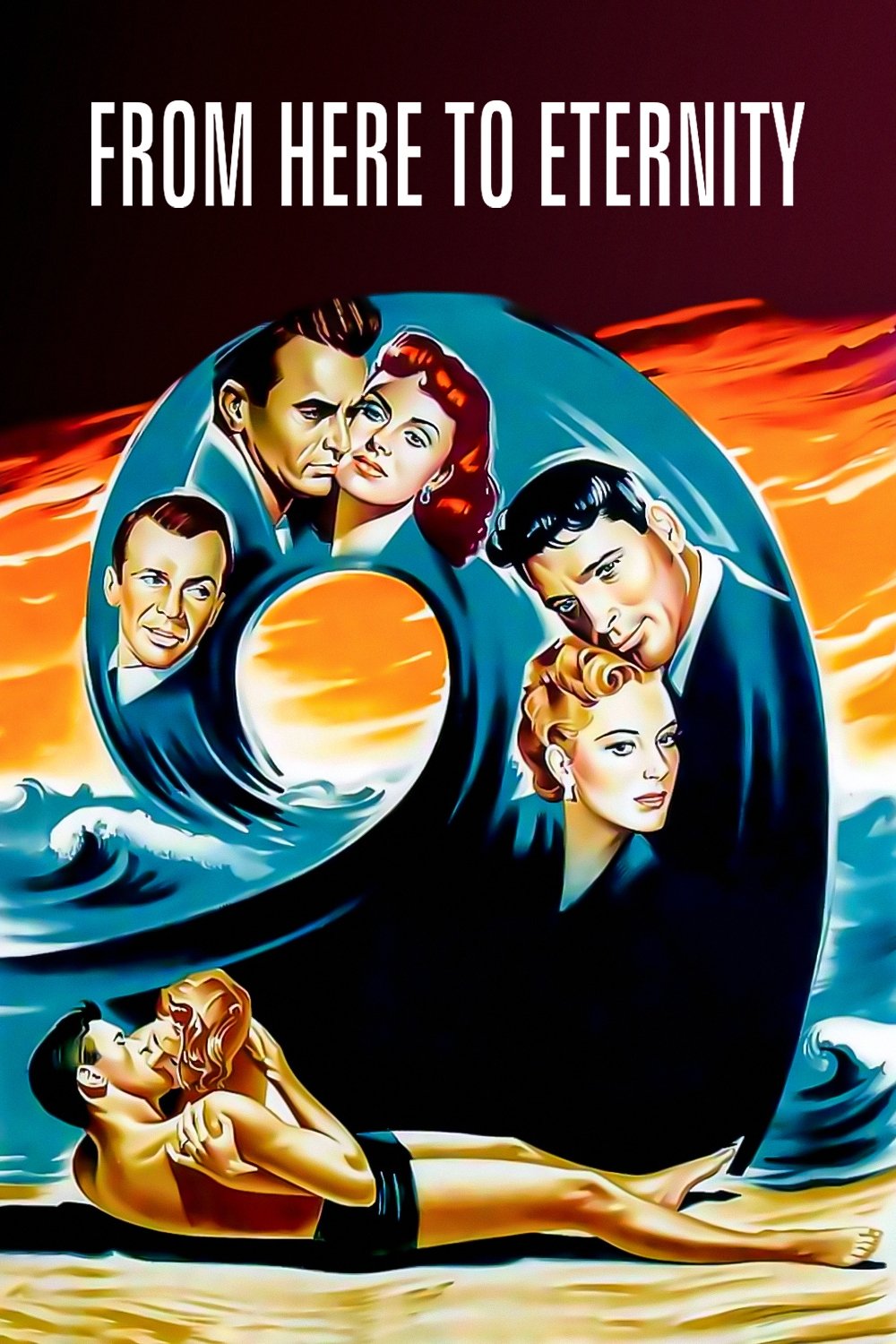
The Question of Truth Behind the Film
Whenever I watch a film like “From Here to Eternity,” I can’t help but feel a tug-of-war between what I’m being shown and what actually happened. That question—“How much of this is real?”—seems almost instinctive, arising unbidden the moment a character feels too vivid, a setting too specific. I notice the effect grows stronger when a film is set against the backdrop of something as monumental as World War II. The desire to know whether the drama unfolding before me actually took place, or whether these characters ever really walked the hot, dusty roads of pre-war Hawaii, is not just idle curiosity. It reveals a deeper wish to anchor my cinematic experience in something tangible, as though reality guarantees meaning.
I think audiences reach for this sense of “truth” as a way of seeking guidance: if it’s a true story, perhaps it offers life lessons or some window into real human experience. That urge carries its own assumptions. I find myself, perhaps unfairly, expecting that true stories need to follow reality closely, lending a weight I might not apply to pure fiction. When the marketing tells me a film is “based on true events,” I go in primed to watch for what feels authentic and to wonder how much artistry has intervened. The implied promise of authenticity heightens my engagement—yet also sets me up for a continual process of comparison and questioning.
This is especially apparent in a film woven from the threads of history. In the case of “From Here to Eternity,” I often catch myself scanning for documentary-like details, searching out the historical contours beneath the melodrama. That standard is not applied with the same force to fantasy or science fiction, where I’m free to drift into symbolic or allegorical readings. Here, because the film engages such a well-known event—the attack on Pearl Harbor—I find my mind weighing each moment for accuracy or deviation, feeling either reassured or momentarily jolted by whatever seems real or not quite right. The label of “truth” acts both as a compass and a point of tension, guiding my expectations and sometimes complicating my relationship to what is onscreen.
Historical Facts and Cinematic Interpretation
Whenever I confront a film set in a definitive historical era, I become acutely aware of how facts and narrative are in constant negotiation. In “From Here to Eternity,” everything feels grounded in a reality that existed—Hawaii, 1941, American soldiers counting down unknowingly to the Pearl Harbor attack. I remind myself, though, that these are not transcripts or unrehearsed windows into the past; they are, fundamentally, stories being sculpted. I notice immediately how films distill decades or even lifetimes into a few hours, necessarily omitting and emphasizing to maintain momentum.
From what I’ve learned, the source material for “From Here to Eternity”—James Jones’s sprawling novel—was itself an evocation of experiences Jones had as a soldier, but not a direct autobiography. I see in the film how those seeds of genuine military life are adapted, trimmed, and sometimes reconfigured for the demands of coherent and efficient storytelling. Small details, like the army’s peacetime routines or the kinds of relationships between enlisted men and their officers, retain a hint of the historical; yet, as I watch, I recognize that many of the more dramatic turns—the affairs, the fateful boxing matches, the charged beach encounters—are products of literary invention sharpened by cinematic needs.
It strikes me that even when the broad strokes of history—like the timing of the Japanese attack—remain intact, films like this employ a kind of chronological shorthand. Events that might have played out over months or years become compressed, character arcs clarified for easier identification and emotional connection. I imagine the production’s limits, the runtime, and the censors of the era as invisible editors, reorganizing the facts to fit the shape of a story that could be told in a single sitting. What I witness, then, is not a direct reportage, but a carefully molded interpretation. Sometimes that means certain social realities—sexual mores, racial tensions, institutional abuses—are downplayed, especially given the early 1950s climate and the requirements imposed by the Hollywood Production Code.
As a viewer aware of these adaptations, I oscillate between admiration for the efficiency of the narrative and curiosity about what was shaped or left behind. I always feel a subtle invitation to fill in the gaps or to research the context for myself, to distinguish the layers of historical substrate from the topsoil of filmic storytelling. That interplay between fact and adaptation commands my interest far beyond the surface-level drama, leading me to think about the choices made not just for entertainment, but for clarity and accessibility in a demanding medium.
What Changes When Reality Is Shaped for Cinema
In my experience, the process of translating real-life events to the screen always involves negotiation—an exchange between what actually happened and what feels dramatically effective. When I think of “From Here to Eternity,” this negotiation is palpable in nearly every scene. What I find compelling is how the factual undercurrent gives the film gravitas, but I’m also keenly aware that, for the story to work in a cinematic frame, real-life ambiguities often must be streamlined or entirely recast.
For example, I can see how the practical limitation of a two-hour runtime demands collapsing timelines, merging or omitting characters, and focusing only on the conflicts that best illuminate the theme. The intricacies of army life in Hawaii leading up to Pearl Harbor probably encompassed a web of relationships and events, none as conveniently intertwined as those of Private Prewitt, Sergeant Warden, and Karen Holmes in the film. I note how this simplification allows the audience to follow the emotional throughlines while maintaining coherence—but it’s a simplification nonetheless. In the effort to capture the spirit, rather than the letter, of the historical moment, the film makes conscious choices about what to highlight and what to exclude.
The trade-off, as I see it, is that some of the untidy complexity of actual history must inevitably be shed. Personalities are heightened, conflicts become more archetypal, and the environments tend to be more symbolic than literal. For instance, the iconic beach scene, now etched into movie history, gives me a sense of forbidden romance that may never have occurred, at least not in any documented form. Yet, its emotional truth—the sense of longing, frustration, and defiance—transcends the boundaries of fact. I find myself wondering whether these composite moments might embody a broader truth about the era, even if they never happened. There’s both gain and loss: gain in narrative clarity, pace, and resonance; loss in the presence of overlooked details and the chaotic, unpredictable texture of lived events.
What fascinates me is how these transformations go largely unquestioned when I’m fully absorbed by the story. It’s only when I step back, aware of the shifts and elisions, that I feel the weight of these creative choices. I see strengths in how cinematic storytelling organizes meaning, but I’m never able to wholly forget the cost to historical precision. The film becomes less a recreation and more a meditation—one shaped as much by what is left out as by what is portrayed.
Audience Expectations and the “True Story” Label
Every time I encounter a film advertised as “inspired by true events,” I notice myself unconsciously approaching it with a different set of lenses. As viewers, myself included, we respond to these invitations with more than just passive interest; we come with expectations of learning, of connecting with the real past, and sometimes of drawing ethical or existential lessons from depicted struggles. “From Here to Eternity” operates in that in-between space, neither fully proclaiming itself a documentary nor retreating into outright fiction. That ambiguity shapes how I interpret and respond to what unfolds on screen.
I’ve talked with friends who feel betrayed when creative liberties become apparent—when they learn, for instance, that a pivotal romance or dramatic clash was mostly fabricated, or any real-life inspirations were only hinted at. For me, though, learning that a story is “just” inspired by true events doesn’t diminish my engagement, but it does cause a subtle recalibration. When watching something widely known to draw from a novelist’s reflections on his military life rather than a factual account, I adjust the criteria I use to judge authenticity. Moments that feel contrived or melodramatic are less bothersome if I recognize them as narrative devices rather than attempts at pure reportage.
At the same time, knowledge of the “true story” label can intensify the emotional impact of some scenes. The lead-up to the attack on Pearl Harbor feels more immediate and unsettling when I reflect on the reality that thousands of people faced similar uncertainties, many unaware of what was about to happen. That sense of “this could have really happened” hovers in the room, lending gravity even to invented conversations and relationships. Still, I am mindful that such labels can sometimes mislead: they may oversimplify, or set up a kind of challenge between the audience’s research and the filmmakers’ version of events. If I come to the film with the assumption of strict accuracy, any deviation tends to stand out sharply, almost as a flaw, rather than as a creative adaptation.
Curiously, when I revisit the film as a work of fiction—rooted in historical context but not chained to fact—I experience a different kind of freedom. I notice I am more receptive to the thematic currents and the filmmakers’ interpretations, less focused on checking off a list of historical touchstones. The balance between fact and fiction, for me, becomes a spectrum rather than a binary. The more transparent the film is about this balance, the more comfortable I feel accepting its version of the past as one possible rendering, rather than a single definitive account.
Final Perspective on Fact vs Fiction
My journey through “From Here to Eternity” draws strength from that tension between what happened and what is imagined. Knowing the factual roots undergird the film, I find myself both enriched and more attuned as a viewer; I recognize details that echo the documented anxieties and institutional structures of pre-war Hawaii, while staying alert to the cinematic flourishes that nudge the story into the realm of melodrama. The interplay between truth and invention doesn’t resolve for me into a tidy hierarchy. Instead, it affects how I interpret meaning, immersing me deeper into the psychological realities the film unfolds.
When I watch, I become hyper-aware of my own engagement with the material. Facts lend a feeling of proximity to history, encouraging me to reflect on the lived experiences behind the surface. Yet, the very knowledge that creative changes have been made helps me remain open to broader, perhaps more symbolic resonances within the film. The fictionalized elements, far from diminishing my engagement, provide a useful distance—a space where I can contemplate, abstract, and consider the themes in ways that pure documentary might not allow. I find this awareness prompts more active inquiry, as I weigh what might have been real against what the film suggests about courage, conformity, longing, and fate.
Ultimately, I don’t see my understanding as weakened by the film’s departures from strict history; instead, I feel invited to reflect more deeply on why those choices might have been made—not to judge, but to comprehend the demands and possibilities of cinematic storytelling. That knowledge of fact versus fiction becomes less a test of fidelity, and more a tool for nuanced appreciation—one that colors my interpretation but doesn’t prescribe it. Even after the credits roll, the boundary between history and imagination remains a site of fascination, shaping the afterimage of the film in my mind and my continuous exploration of its layered meanings.
For additional context, you may also explore the film’s overview and how it was received by audiences and critics.
🎬 Check out today's best-selling movies on Amazon!
View Deals on Amazon