
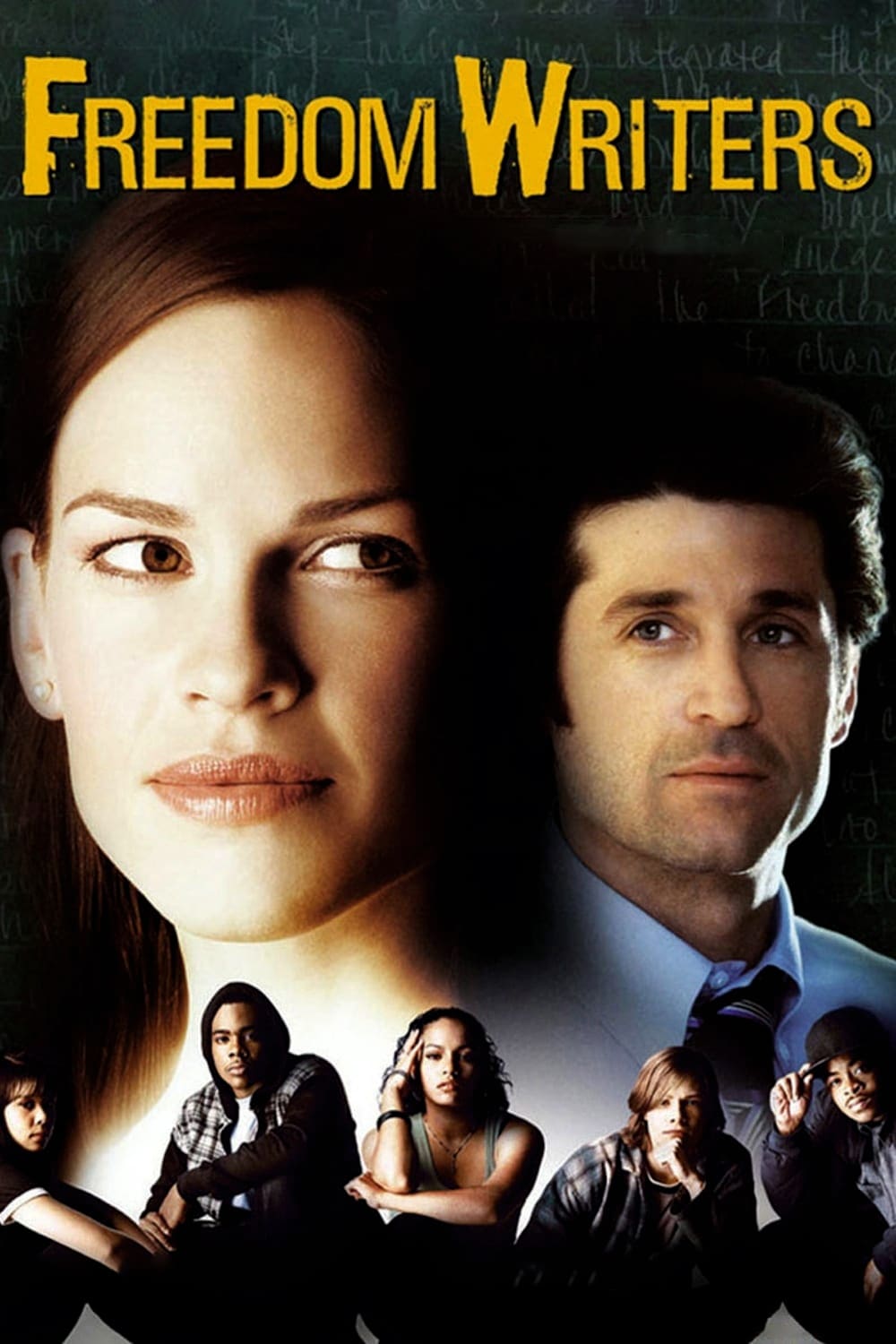
Is This Film Based on a True Story?
When I first watched “Freedom Writers,” I was struck by how authentic its depiction of classroom life felt, and that genuine quality led me to dig deeper into its origins. From my research and immersion in the background of the film, I discovered that “Freedom Writers” is indeed based on a true story. The narrative is inspired by the real-life experiences of Erin Gruwell, an English teacher at Woodrow Wilson High School in Long Beach, California, during the mid-1990s. While the film dramatizes and condenses certain aspects for cinematic effect, at its core it is grounded in authentic events and the journaling project that eventually became known as “The Freedom Writers Diary.” This clear link to factual people and situations gives the story a powerful foundation in reality, even as it employs artistic license for storytelling purposes.
The Real Events or Historical Inspirations
As I sank into the heart of the film’s backstory, I realized that “Freedom Writers” draws directly from the published collection “The Freedom Writers Diary,” a compilation of actual diary entries written by Gruwell’s students. These students, whom Gruwell taught between 1994 and 1998, came from diverse backgrounds, with many facing daily adversity such as gun violence, gang association, poverty, and racial strife. The school itself was undergoing major racial integration during the time Gruwell arrived, with tensions running high in the wake of the LA riots and the O.J. Simpson trial dominating public consciousness.
Erin Gruwell’s teaching methods and her students’ transformation form the backbone of both the book and the movie. I was fascinated to discover the source material was not a standard memoir or biography but a collective voice—an anthology of raw, anonymous stories penned by high schoolers living through often traumatic life circumstances. Gruwell encouraged them to draw parallels between their lives and the stories of Anne Frank and Zlata Filipović, both of whom used diaries to record their experiences of conflict and survival. The film’s critical classroom activities—including reading “The Diary of Anne Frank” and inviting Zlata Filipović to speak with the students—were all directly inspired by real occurrences.
Groups such as the Freedom Writers Foundation, founded by Gruwell and her original students, further demonstrate the factual underpinnings of the narrative. Every major character, including Erin Gruwell herself (portrayed in the movie by Hilary Swank), is based on real people, and many of the students’ stories in both the book and the film reflect genuine accounts of hardship and growth. When I read the actual diaries, I could see how closely the film mirrors the sense of urgency and hope that characterized Gruwell’s classroom. The movie’s emotional pitches and major arcs are deeply rooted in the lived experiences of the Freedom Writers themselves.
What Was Changed or Dramatized
As much as I appreciate the film’s commitment to authenticity, there’s no denying that certain Hollywood flourishes were added. The real-life events spanned several years, but the movie condenses this timeline to create a more streamlined and emotionally punchy story. By drawing out the most dramatic arcs and sometimes merging or simplifying student characters, the filmmakers amplified the sense of transformation that occurred in Gruwell’s classroom. What stuck with me were the composite characters, where multiple students’ experiences were woven together into a handful of representative personas. Names were changed, and individual journeys condensed, but the essence remained.
Some aspects, like the friction between Gruwell and her fellow teachers or administration, are amplified for dramatic effect. In reality, Gruwell did face obstacles and skepticism, but the degree of overt resistance depicted in the film is heightened compared to the actual school environment. The intensity and uniformity of opposition serve the movie’s thematic goals, even if they don’t map perfectly onto historical events.
The film also focuses heavily on Gruwell’s personal sacrifices, particularly the dissolution of her marriage, as a way to underscore her dedication. While it is true that her teaching placed strain on her personal relationships, these intimate moments are dramatized in ways that may exaggerate or selectively foreground certain aspects for narrative focus. There are also pivotal scenes—such as everyone standing to symbolize solidarity against intolerance—that are dramatized amalgamations of real events but constructed for cinematic impact.
I also noticed the film emphasizes several “turning points,” like the infamous line exercise, which were based on techniques Gruwell used but re-imagined for clarity and brevity. The teaching of Anne Frank and the connection with Zlata Filipović all happened, but the timeframes are shortened, and the emotional beats more synchronized, to fit a feature-length film’s structure.
What’s mostly omitted or streamlined are the day-to-day complexities and setbacks that shaped the program over several years. While the real Freedom Writers journey was filled with hurdles and incremental progress—as opposed to a steady march toward victory—the movie opts for more linear storytelling, sacrificing some of the messy nuance of true events.
Historical Accuracy Overview
Reflecting on the detailed records from both Gruwell’s own writing and interviews, and on the Freedom Writers Diary itself, I’d say “Freedom Writers” maintains a core of factual integrity while embracing the liberties of adaptation. The emotional truths, the overarching themes of hope amid adversity, and the pedagogical innovations—these all stand as credible reflections of the original events.
I’ve found that the movie is especially accurate in its portrayal of certain pivotal moments: Gruwell’s introduction of Holocaust literature as a way to make her students see parallels in their own experiences, the group’s invitation to Zlata Filipović, and the students’ gradual shift from apathy to reflective authorship. The overall struggle for acceptance within the school system, the challenges of facing entrenched institutional biases, and the very real dangers students faced outside the classroom are all present in both the diaries and the film. In reading firsthand accounts, I saw how much pride the original Freedom Writers took in seeing their stories not only published, but brought to life on screen with their core narratives preserved.
Where the film departs most notably from reality is in its condensation of time and personalities. Classroom milestones that took years are sometimes shown unfolding in mere weeks. Most of the students in the film have been transformed into archetypes for expediency; the real diary writers are a more diverse and nuanced group than a two-hour screenplay could ever fully encapsulate. Minor events are re-ordered, and “big moments” are orchestrated to land emphatic notes of triumph or confrontation. These are hallmarks of biographical filmmaking and not unique to “Freedom Writers.”
One other area of divergence is in the level of antagonism directed at Gruwell from other staff. While she did encounter doubts and budgetary hurdles, the depiction of near-universal opposition within the faculty is a dramatization. Gruwell herself has noted that not all of her colleagues were obstructive, but for purposes of a clearer central conflict, the screenplay simplifies these dynamics.
Despite these embellishments, I would argue that the essential arc—the journey from marginalization and cynicism to self-respect and achievement—is preserved with diligence. Key factual details such as the publication of the students’ diaries, their engagement with Anne Frank’s legacy, and Gruwell’s transition to advocacy are all represented faithfully, lending the film a sturdy factual backbone even as some small bones are rearranged for effect.
How Knowing the Facts Affects the Viewing Experience
Diving into the real stories behind “Freedom Writers” gave me a fresh lens through which to interpret its emotional beats and thematic crescendos. Knowing the film is anchored in actual accounts, I felt more invested in the students’ individual battles—not because the movie guaranteed their authenticity, but because I understood they were drawn from an authentic well of lived experience. Viewing the dramatized arcs with the awareness that these were, in essence, the real victories and challenges of actual students added weight to every classroom scene and every moment of earned trust.
Instead of seeing the film as just another inspirational teacher movie, I found myself focusing on what “Freedom Writers” is really trying to say about empathy, narrative agency, and cultural intersection. It’s not only about “overcoming adversity,” but about real young people discovering the power of their voice. Knowing the actual Freedom Writers read and discussed Anne Frank and Zlata Filipović, and knowing their diaries launched a national conversation, gives those filmic moments an added layer of significance. It’s not fiction imitating life; it’s representation fueled by lived histories.
Details that might seem melodramatic at first—like the exercise where students step forward or back to illustrate their shared traumas—reveal themselves as rooted in Gruwell’s unorthodox but purposeful classroom methods. Awareness of the real timeline changed the way I interacted with scenes that seem to resolve too quickly. I was able to recognize the necessity of narrative compression for cinema, and appreciate how it distills years of struggle into emotional truths rather than just narrative neatness.
The film’s brief exploration of Gruwell’s personal sacrifices gains context when I know that these were genuine consequences of her commitment—though I also recognize how these elements are emphasized to fit generic expectations of the “self-sacrificing teacher” narrative. This dual awareness lets me parse what’s authentic from what’s artistically heightened, and helped me avoid falling into the trap of taking every beat at strict face value. Instead, I could see the ways in which the film preserves the spirit of the Freedom Writers’ journey, even as it dresses it for its Hollywood debut.
Unpacking the blend of fact and dramatization also helped me detect which aspects of the Freedom Writers legacy the filmmakers aimed to popularize: not just the struggle, but the profound shift that occurs when young people’s voices are honored. It’s clear to me that the movie strives to entwine genuine history with universal themes of education, cultural difference, and transformation, delivering a story that’s both about specific events and suggestive of larger social questions. Armed with knowledge of the facts, I found the impact of the film’s climactic scenes—students uniting, teachers learning from those they teach—to reverberate more deeply. The knowledge that the real Erin Gruwell and her students did form enduring bonds, and that their work continues to influence classrooms around the world, transformed fleeting cinematic moments into echoes of an ongoing legacy.
For viewers like me, awareness of the factual foundations isn’t just an academic exercise—it shapes the emotional resonance of every turning point. The movie becomes a dialogue not only between characters, but between lived experience and narrative aspiration, between what really happened and what the story means today. By weaving truth and dramatization so tightly, “Freedom Writers” invites us to look beyond the binary of “fact or fiction” and consider the lived truths behind the headlines. That’s what made its viewing, and my deeper dive into its history, so memorable.
After learning about the film’s origins, you may want to see how audiences and critics responded.
🎬 Check out today's best-selling movies on Amazon!
View Deals on Amazon