
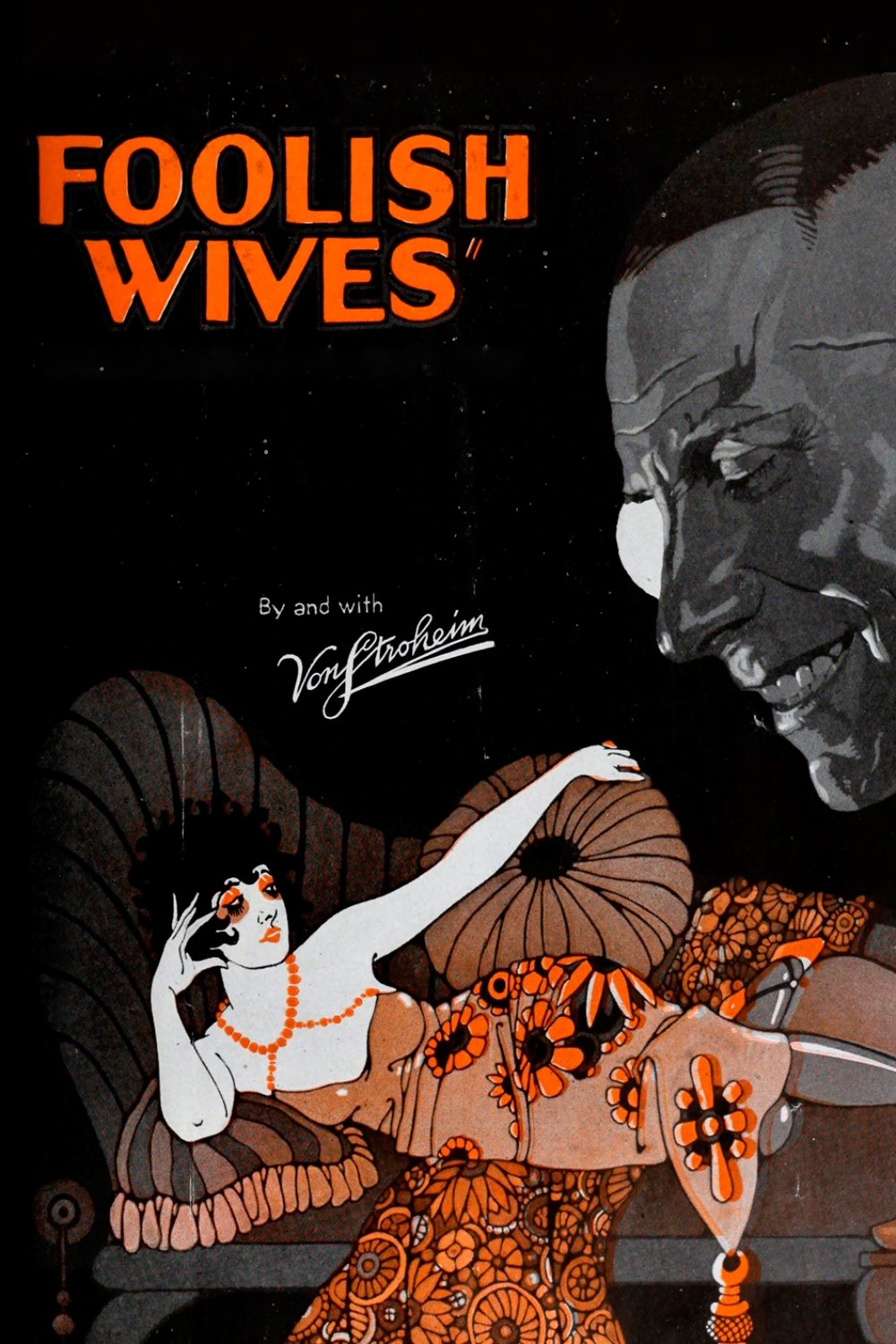
The Question of Truth Behind the Film
From the first moments I encountered Foolish Wives, I was struck by that perennial curiosity: Is this story something that actually happened? For me, this question never feels superficial; it comes from a deep need to distinguish the constructed world of cinema from the lived experiences of real people. Whenever I sit before a film claiming—or even hinting—at roots in reality, I find myself unconsciously making assumptions about its moral authority, its reliability, and the lens it offers on a particular historical moment. The label “based on a true story” swings a gravitational pull, inviting me to trust what I see and often encouraging a more emotionally invested viewing. When I realize a film is entirely invented, my posture shifts: I search for universal truths, metaphors, or social critique rather than strict documentation. That distinction, subtle or overt, colors every frame for me, as I weigh what is being claimed against what I already know or suspect about history’s messier contours.
With Foolish Wives, I found my expectations especially piqued because the film was released at a time when audiences were already grappling with questions of cinematic veracity. The roaring twenties, marked by both excess and anxiety, left many receptive to stories of decadence, manipulation, and tragedy. I notice that the mere suggestion of “reality” brings its own set of implications—about class, about gender, about morality itself. When a director like Erich von Stroheim sits behind a project, my critical faculties are sharpened; his reputation for blurring reality with fiction adds another level. Do we look for literal documentation, or do we surrender ourselves to the seduction of the cinematic spectacle? Each time, I can’t help but reflect on how the movie’s relationship to truth recalibrates the expectations I bring into the theater.
Historical Facts and Cinematic Interpretation
As I began to look beyond surface-level storytelling in Foolish Wives, I was drawn into a different layer—how history, fact, and creative vision interact under the constraints and opportunities of early Hollywood cinema. Unlike films rooted in famous, verifiable events, I realized that this feature draws inspiration from broader social realities rather than a single headline or biography. I saw von Stroheim’s Monte Carlo as an imagined amalgamation, fusing contemporary anxieties about continental morality, wartime aftershocks, and American innocence abroad. The film never explicitly announces its fidelity to particular individuals or cases, but I found echoes of real societal trends: tales of foreign imposters luring the unwary, and scandals involving the aristocracy and self-styled royalty. The factual fragments—stories of con artists, expatriate excess, and diplomatic embarrassment—are undeniably woven through the narrative’s fabric.
It fascinates me how von Stroheim and his team chose what to emphasize or reconstruct to create narrative coherence. Rather than a meticulous reenactment, I see a deliberate artistic distillation. Events are compressed to sustain tension, characters are enlarged to fill archetypal roles, and minor episodes are telescoped or left off-screen entirely. The figure of Count Karamzin, for example, seems to collect the various anxieties and rumors circulating in interwar society, embodying a generalized threat rather than a single, unmistakable historical person. Even the Monte Carlo setting is less a journalistic depiction than a heightened, almost dreamlike stage on which familiar dramas of seduction and consequence can play out. For me, what’s fascinating is not just what the film shows, but what it omits—how much daily life, political complexity, or mundane routine is pushed aside for the sake of spectacle and momentum. The “facts” are there, in a sense, but they are like raw marble, reshaped to fit the contours of a director’s vision.
What Changes When Reality Is Shaped for Cinema
When I engage critically with historical films, I always notice the persistent tension between factual accuracy and narrative drive. With Foolish Wives, I was reminded yet again of how every adaptation, no matter how scrupulous, involves deliberate alteration. Condensing numerous true-life stories into one character, or merging timelines for clarity and impact, shifts my understanding of what is being portrayed. I don’t consider this approach a deception, but rather a narrative necessity. For me, watching the ways choices about setting, character motivation, and plot structure are made leads to a richer experience. I find myself observing how historical imprecision allows for bolder statements, heightened emotion, and sometimes broader resonance.
The practical trade-offs in a film like this are starkly visible. Often, poorly documented historical events leave wide spaces for creative invention, which I see as both a gift and a complication for filmmakers. Every time a scene is intensified or dramatized—every time the social climbers in Monte Carlo appear more lavish or the moral consequences more abrupt—I’m reminded that films make history palatable, even thrilling. The risk, I think, is that what is lost in the rush to dramatize can include the granular everydayness that history actually comprises. Yet, I have to admit, the cinematic form is rarely patient with nuance for nuance’s sake; the need to grip audiences in a dark theater, before the age of digital distraction, dictated brisker pacing, sharper conflict, and more exaggerated personalities. In Foolish Wives, reality is made larger-than-life, and though I am occasionally aware of the tension between actual history and its retelling, I recognize that this shaping is integral to what draws me in as a viewer.
Audience Expectations and the “True Story” Label
The minute I learn that a film is “based on a true story,” my expectations subtly rearrange themselves. There’s a weight that comes from thinking I might be watching an examination of real lives, and I begin to judge what unfolds by that standard. With Foolish Wives, I noticed that audiences at the time—much like today—brought with them a hunger for the authentic, but were equally willing to participate in the fantasy. My own experiences echoed this: when I thought a narrative might carry the echoes of truth, I became more attentive to the details, looking for clues of verisimilitude and trying to separate what might be documentary from what is clearly invented. The “true story” label, I now believe, raises the stakes for viewers. It invites a search for moral or psychological lessons relevant to the actual world, rather than readings more confined to the boundaries of fiction.
At the same time, if I am told that a film is “inspired by” real events or entirely fictional, my interpretive lens shifts again. I find myself freer to explore metaphorical possibilities, to see character and setting as symbols rather than direct mirrors of history. In the case of Foolish Wives, the lack of a clearly stated basis in any specific case left my imagination more open—but never entirely untethered from the culture that produced it. I imagine 1922 audiences, confronted with its publicity campaigns which both hinted at “reality” and reveled in scandal, would have danced along the same line. Some viewers craved reassurance that these dramatics were safely fictional, while others extracted cautionary truths relevant to the era’s very real anxieties about wealth, duplicity, and the shifting roles of men and women in a rapidly changing Europe. For me, how a film presents its relationship to real events is never accidental. Those framing choices deeply influence the interpretive labor I am willing to perform, and the kinds of truths—emotional, psychological, or social—that I’m willing to let the film propose.
Final Perspective on Fact vs Fiction
Reflecting on my engagement with Foolish Wives, I have come to see the boundary between fact and fiction as less a line than a negotiable border, a space of continual renegotiation. My growing awareness of what is invented versus what is grounded in historical sources often doesn’t diminish my experience; instead, it equips me with new tools for reading what the film attempts. Knowledge of the film’s loose ties to real-life scandals or personality types of an earlier Europe brings context, but not closure. I find my interpretations becoming more layered: I can appreciate the audacity of von Stroheim’s creative amalgamation while also understanding that no single person or episode is being relayed precisely. This duality, for me, is where much of the film’s interest lies—it challenges me to weigh how much I care about literal fidelity, and how much I am willing to entrust to the transformative power of cinematic storytelling.
The personal thrill comes from tracing which elements are likely derived from history and which are pure invention, but I’m increasingly convinced that factual anchoring is only one dimension. The artistic reshaping, the telescoping of events, and the bold, sometimes operatic characterizations invite me to think about how stories function not only as records, but as arguments—proposals about what matters, what endures, and what deserves attention. When speaking with others who have seen Foolish Wives, I notice different levels of engagement depending on what they know or assume about its historicity. For those who cherish verifiable detail, every invention is a potential disappointment or a challenge to be explained; for others, the film’s ability to encapsulate the anxieties and allure of its era through fiction is precisely what is most compelling. My position, having lived with this film and its history over time, melds these approaches: the awareness of fact versus fiction sharpens my analytical gaze, but rarely persuades me to dismiss the film’s creative or cultural insights. Instead, I come away aware that all historical cinema occupies a spectrum, with neither pole ever providing the whole answer to why a story works or why it lingers in the mind. For me, knowing what is “real” does not resolve interpretation; it enriches and complicates it, demanding that I hold both evidence and imagination in productive tension as I consider what the film can mean.
For additional context, you may also explore the film’s overview and how it was received by audiences and critics.
🎬 Check out today's best-selling movies on Amazon!
View Deals on Amazon