
Is This Film Based on a True Story?
Force of Evil struck me as a film drenched in New York atmosphere, tight with anxiety and morally entangled characters. But after digging into its roots, I can say with certainty that it is not a direct retelling of real events or a true story in the literal sense. Rather, the movie is a work of fiction. Still, I came away with an impression that its world isn’t so removed from reality. It’s shaped by the economic currents and urban corruption so present in America’s postwar years. The crime, the corruption, the colliding ambitions—these feel plausible and lived-in. Yet, Force of Evil doesn’t explicitly portray actual figures or a documented historical incident. Its realism is a flavor, not a blueprint; it’s a fictional vision shaped in part by the era’s headlines, but not beholden to them. As much as I tried to uncover a real “Joe Morse” or a specific numbers racket collapse following a mob-backed legal change, I couldn’t find evidence that such a person or case inspired the film. The sharpness with which it draws its environment comes from its creators’ understanding of the period, not reportage. So, I have to say: Force of Evil is a fictional story, constructed to feel authentic rather than to duplicate fact.
The Real Events or Historical Inspirations
Reflecting on the context in which Force of Evil was created deepened my appreciation for its tactile realism. Though the film itself isn’t a cinematic retelling of a single event, it draws heavily on the genuine social and economic tensions of its time. The film’s co-writer and director, Abraham Polonsky, was himself the son of Russian Jewish immigrants in New York, and I sense that his background colored everything from the dialogue to the sense of place—Greenwich Village stoops, movie house marquees, and the intimidation lurking on city streets. What inspired Polonsky, it turns out, was the urban world around him: the rise of the numbers racket (an illegal gambling operation) that permeated working-class neighborhoods during the 1930s and 1940s. As I delved into the history of policy rackets, I was struck by how they provided a shadow economy—a way in which the marginalized and working poor could participate, often knowingly, in a system outside mainstream banking and politics. The numbers racket, while criminalized, also served as an economic engine for many Black, Italian, and Jewish communities. The details I found—cash pickups, coded lingo, and neighborhood “banks”—are reflected almost beat-for-beat in Force of Evil’s world, even if the plot is fictional. While researching, I also learned that civic attempts to legalize and centralize gambling (such as introducing lottery-like “race result” wagers) led to real turf wars among organized crime groups. These policy wars, though never cataloged as a neat, headline-ready story, became tinder for the film’s sense of impending catastrophe. The press coverage and anecdotal accounts from the late 1940s about organized crime in New York, the city’s attempts at reform, and the complex economic interdependence between criminals and ordinary workers—these are the documentary strands Polonsky weaves together. But still, the faces, dialogue, and pivotal events all emerge from the filmmaker’s and screenwriter Ira Wolfert’s imaginations, not from any one file in an archive.
What Was Changed or Dramatized
One thing I came to appreciate about Force of Evil is its apparent refusal to pin itself to docudrama rules. When the film opens on the Fourth of July, with threats and promises swirling in humid city air, I recognize immediately that the script is playing for dramatic, even poetic stakes. No historic “July Fourth fix” in the numbers racket occurred quite as described in the film, though operators did periodically attempt big takeovers or consolidations pegged to important dates. The relationship at the heart of the story—between Joe Morse and his older brother Leo—feels intensely personal. Its resonance might echo countless real families fractured by the pressures of economic choice and survival, but these are not drawn from a real duo whose biographies ended up in historical record. Instead, I see in this relationship a dramatic amplification: the conflict is imposed from above (the criminal syndicate) and below (family loyalty and guilt), so that the personal is always clashing with the systemic. This intensification gives the story a mythic power, rather than simple facticity.
I also noted the film’s approach to the mechanics of power and illegality. The “plan” to bankrupt small-time policy banks through a rigged winner on Independence Day is an ingenious device for drama, yet I couldn’t find corresponding evidence in crime annals. Though power grabs occurred, and sometimes criminal organizations did try to muscle out competitors, the kind of top-down, scheduled “legalization” gambit as dramatized in the film reads to me more as calculated screenwriting than a snapshot of a real event. The moral conflicts are similarly stylized: when Joe Morse tries to rationalize his involvement, I hear echoes of real political and legal debates about organized crime, but it is the script’s lyricism and focus that distills these conflicts to their cinematic most potent.
On a visual and atmospheric level, Force of Evil changed reality in subtle but effective ways—shooting on location, yes, but bathing the city in exaggerated shadows, surreal angles, and dialogue so tight it almost vibrates. While it conjures a time and place, it heightens it for effect, sometimes taking license with accents, occupational routines, or chain-of-command details within organized crime in service of relatively brisk storytelling. If I comb through preserved police records and period journalism, I find the crimes of the numbers racket were more persistent and dispersed, less melodramatic and compact than what the film condenses into its swift runtime. There was never, as far as I know, a singular moment when “legitimizing” gambling resulted in such a wholesale collapse of criminal alliances overnight as depicted here. For storytelling reasons, the narrative telescopes years of simmering tension into a few charged days—a liberty familiar to most historical fiction.
Historical Accuracy Overview
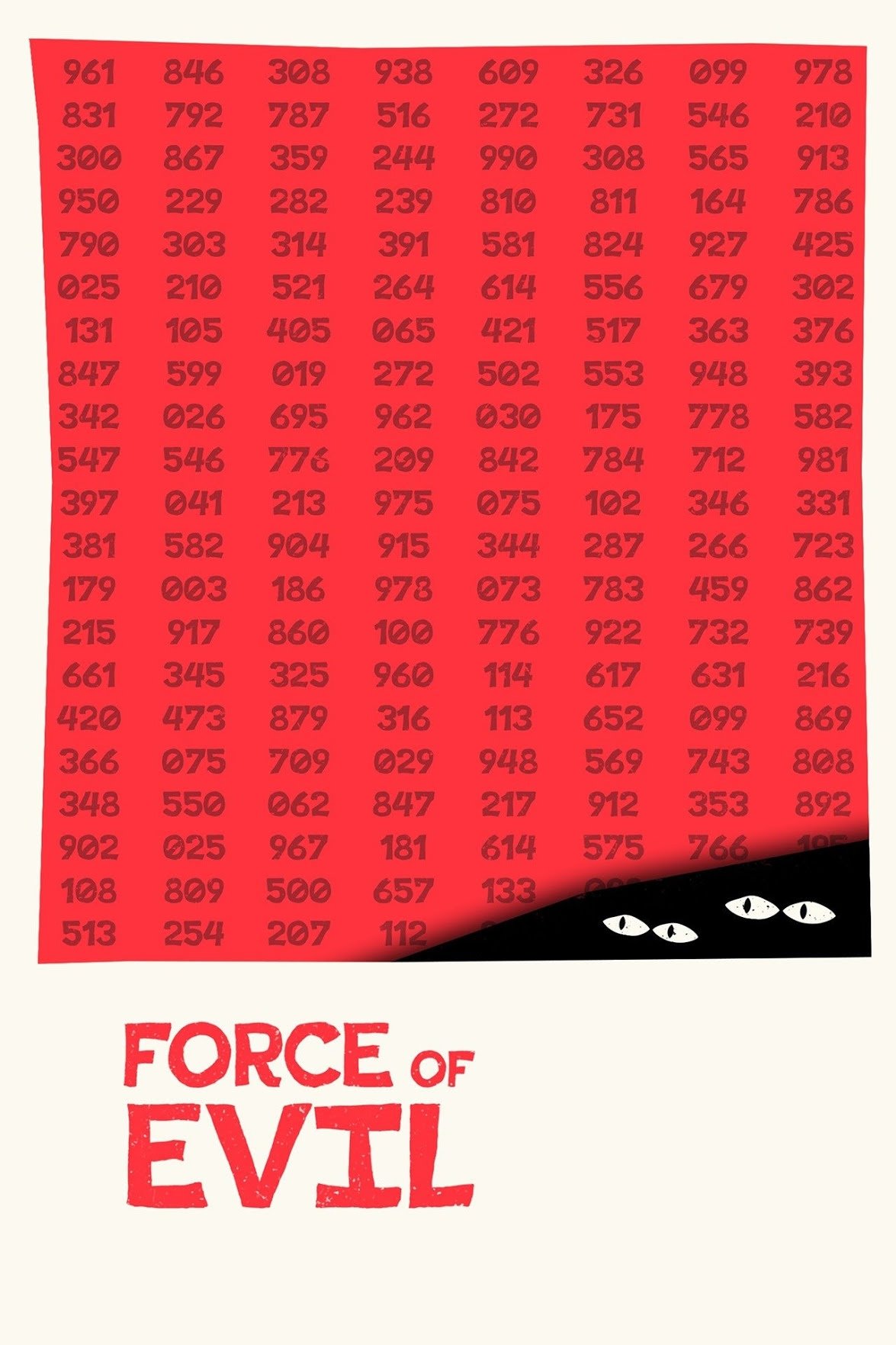
The more I interrogate the particulars of Force of Evil, the more I see a film that walks the knife edge between authenticity and invention. On one hand, its depiction of the numbers racket—a game of three-digit wagers, distributed across neighborhoods by small “banks”—is impressively close to the operations described in criminal investigations of the time. When I watched policy writers whispering about luck and betrayal, I was reminded of the oral histories of runners and bank tellers who once made their living in this economy. The film’s depiction of the ambiguities that come with such business—the gray areas where crime, survival, and legality overlap—is, in my view, historically astute, even if the particulars are imagined.
The characters, for all their emotional specificity, strike me as archetypes rather than portraits. There’s no smoking-gun document that says “Joe Morse” or “Leo Morse” existed, but I recognize elements of their personalities in contemporary reporting about lawyers, mob fixers, and corner bankers pulled into the criminal orbit. The emotional truth—in other words, the plausibility that some families faced these kinds of splits and pressures—feels solid. However, when I dig for factual accuracy about the plot’s machinations—a citywide collapse on a scheduled day, a single syndicate boss orchestrating everything—it becomes clear to me that these are dramatic exaggerations. Historically, the numbers racket was structured through a fragmented landscape of independent operators, not a single all-powerful cabal. When big reorganizations happened, they involved protracted struggles and many parties, frequently leading to violence dispersed over long intervals, rather than the melodramatic crescendo the film favors. In terms of law enforcement’s response, the film’s resonance with real crackdowns is partial; policing was at times efficient and at other times subject to bribes and inertia. The morality tales that unfold are, again, a scriptwriter’s device rather than a social worker’s casefile. While the city feels “right”—from subway platform to marble courthouse—the plot machinery remains a product of invention.
Still, I don’t want to minimize how the film’s texture is built from studious observation. Polonsky and Wolfert went to pains to have characters who talk, move, and plot like genuine New Yorkers. Even the depiction of the legal profession’s uneasy truce with organized crime reflects stories I’ve encountered in newspaper archives. The language—part legalese, part street argot—resonates with period detail, and the depiction of minority labor within the racket, though filtered through 1940s sensibilities, tracks with what’s known of who actually ran numbers and collected bets. If anything, I find that Force of Evil is truer to the spirit of its time than to any one news clipping or memoir. For me, that’s a kind of accuracy—an immersion in the currents of history, without cleaving to literalism.
How Knowing the Facts Affects the Viewing Experience
My understanding of Force of Evil has been fundamentally reshaped by looking for its historical footprints. The knowledge that it isn’t strictly rooted in any one real event liberated me to appreciate its moods and motives as interpretive, not prescriptive. Rather than ticking off boxes on a factual checklist, I found myself searching for the emotional and social textures that Polonsky and Wolfert are channeling. Knowing that the script is an invention, but also knowing how closely it maps to real economic anxieties and criminal innovations, pushed me deeper into its ambiguities. For instance, the movie’s fatalism—Joe Morse’s sense of being swept along by forces he cannot master—feels even more resonant to me given the real-life history of postwar America, when many sensed that powerful new syndicates (corporate, criminal, and governmental alike) were reshaping the rules overnight.
Understanding the film’s loose ties to actual rackets made me more alert to what’s stylized and what’s grounded in experience. When, for example, the plot orchestrates a giant one-day collapse of small policy banks, I no longer see that as a veiled exposé, but as a metaphor for the way slow erosion and fast disaster often coexist in real economies. Even the characters’ larger-than-life decisions—Joe’s moral contortions, Leo’s stubborn integrity—become for me less reportage and more allegory, dramatizing the kind of choices any number of real people might have faced in environments where legality and survival are at odds.
The richness of the film’s dialogue stands out all the more knowing that it was crafted from life, not copied. While I might initially mistake some lines for journalistic record, my research tells me these are inventions—graphic, sharp, evocative statements meant to get at the soul of something historical, rather than its surface. With this knowledge, my expectations shift. I don’t parse the film for evidence of true crime or real-life inspiration to the exclusion of the story’s dramatic force; instead, I embrace its role as a lens for understanding the psychic atmosphere of 1940s New York. The intensity of the familial friction, the weight of moral compromise, and the omnipresence of temptation and danger are, for me, the film’s lasting truths.
If anything, being aware that the story is a blend of research and imagination actually deepens my investment. I can appreciate the acute realism of tiny details—like the way cash is exchanged, or the nervous energy with which bets are placed—without demanding that the largest events carry historical footnotes. Not having to worry about “what really happened” also lets me focus on the film’s structure, its recursive dialogue, its shadowy imagery, and the almost metaphysical despair that shapes its tragedy. For me, Force of Evil becomes a hall of mirrors: it reflects the anxieties, ambitions, and erosions of its era, but always through a glass, and always a bit askew. Rather than reveal the secret truth of organized crime, it illuminates how the urge for respectability and the weight of loyalty twist people into impossible positions. That feels, if not historically literal, emotionally and socially true.
After learning about the film’s origins, you may want to see how audiences and critics responded.
🎬 Check out today's best-selling movies on Amazon!
View Deals on Amazon