
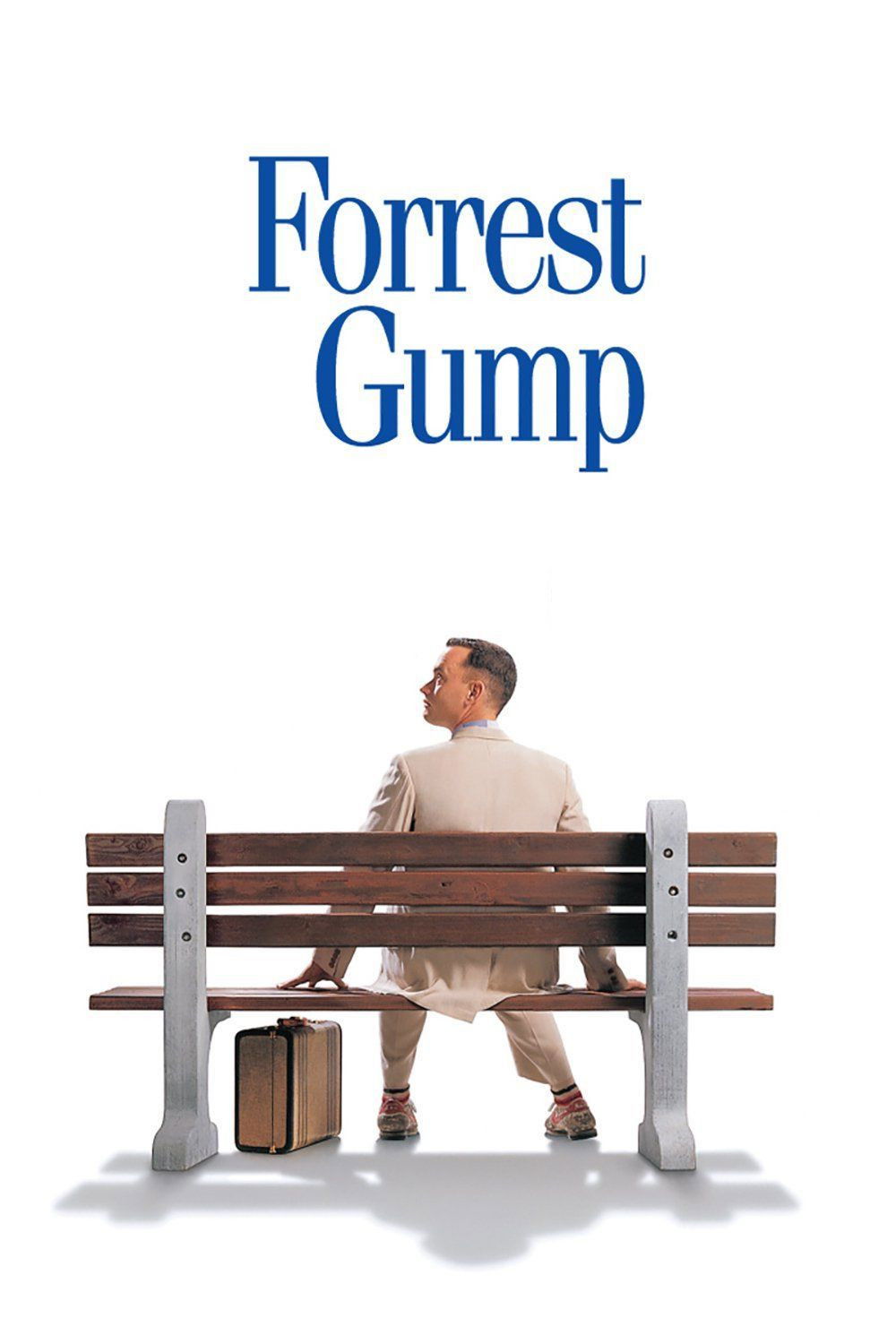
The Question of Truth Behind the Film
I still remember my first viewing of “Forrest Gump” not as a passive cinematic experience but as an encounter with something that felt oddly plausible. Sitting among an audience equally swept between laughter and tears, I couldn’t help wondering how much of what I saw was rooted in fact—a question that, I’ve found, lingers for many others, too. Whenever a film traces the arc of major historical moments through the life of a single individual, my mind drifts naturally toward that perennial inquiry: Is this what really happened, and if not, why present it as if it could have? I think audiences crave more than entertainment when faced with sweeping period films; we look for purpose, for validation of our collective memory, or even a sense of personal involvement in the monumental events portrayed. That search for what’s “based on a true story” isn’t just about curiosity. It’s almost a wish for events to be more accessible, approachable, or re-imagined through a lens that connects us to history. In the case of “Forrest Gump,” the interplay between the plausible and the fictional left me examining each scene for its authenticity—even as I was caught up in its charm—because that label, whether overt or subtly implied, shapes the framework through which stories like this are absorbed by viewers such as myself. Assumptions rise up quickly: that a “true story” is somehow more valid, more insightful, more important, or that it offers lessons found not just in imagination but in the lived experiences of real people. When I hear whispers of “that actually happened,” my engagement deepens, but so does my critical lens, questioning what might have been left out, altered, or reinvented, and why the filmmakers chose to blur the boundary at all.
Historical Facts and Cinematic Interpretation
With “Forrest Gump,” I am reminded of how cinema often takes historical timelines and bends them into narrative arcs that serve the emotional journey of its characters. The film is a veritable tour through modern American history, from the Vietnam War to the Watergate scandal, yet none of the key events or famous figures encountered are there by accident. I’ve noticed that each moment is intricately chosen and meticulously positioned—not with a strict adherence to chronology, but to chart Forrest’s unlikely path. The events themselves—whether the emergence of Elvis Presley’s iconic dance or the ping-pong diplomacy with China—are certainly drawn from the annals of American culture, but as I watched, I couldn’t ignore how they’re compacted and stylized to fit within Forrest’s unique life trajectory.
In my view, the film does not so much recreate history as it repurposes it. I see the screenplay treating genuine moments—landmarks in political and cultural history—as stepping stones, not destinations. Forrest is both participant and spectator, shuffled seamlessly from the deep South to Capitol Hill, by means that are sometimes comical or surreal. I’ve noticed that scenes such as his accidental uncovering of the Watergate break-in, or his impromptu speech at the Washington Monument protest, work less as faithful recreations and more as clever reinterpretations of documented moments. Sometimes characters amalgamate several historical figures, or collapse timelines for expediency: Forrest’s encounters with presidents and celebrities happen with fantastical ease, highlighting the ways in which film constructs a mosaic rather than a documentary record. When I reflect on how these events are reorganized or condensed, I realize that cinema often requires a deliberate focus—a winnowing of sprawling reality into scenes that can be immediately understood and felt. As a result, the film’s brushes with fact feel both familiar and strange, encouraging me to question how much artistic liberty lies behind each vivid tableau.
What Changes When Reality Is Shaped for Cinema
While watching Forrest’s cross-country run or his heroics in Vietnam, I am always aware that some aspects are possible, some improbable, and still others outright impossible. This is where the practical necessities of filmmaking, in my eyes, brush up against historical accuracy. The simple truth is that reality, in its vastness and unpredictability, rarely offers the neat symmetry or emotional resonance that a feature film demands. So, when I see Forrest inserted into historical footage, I recognize both a technological marvel and a storytelling expedient. The use of these effects isn’t simply to dazzle; it creates a bridge between audience memory and the character’s personal narrative, compressing what might have been years of historical complexity into a few transformative encounters. That trade-off, I believe, is as old as narrative itself. In shaping history for cinema, accuracy often yields to emotional logic: events are reordered, peripheral details are discarded, and composite experiences are invented to amplify a film’s themes.
For me, this is not an oversight but a conscious—and necessary—choice. Cinema trades in archetype and symbol just as much as in fact. When “Forrest Gump” chooses to place its central character, an everyman, at the heart of pivotal events, it isn’t merely retelling history but orchestrating it to serve a particular vision of innocence, chance, and destiny. I find that the cost of this approach, while ignoring some factual rigor, is a kind of emotional compression. The vast spectrum of real experience collapses into moments with immediate visceral clarity. Yet as I watch, I can never quite disengage from my own knowledge: realizing that Forrest’s ping-pong diplomacy, his childlike influence on popular culture, and his proximity to power, though evocative, come at the expense of the messier, less linear truths of actual events. So, my understanding of the film continually pivots between appreciation of its craft and an awareness of its carefully shaped illusions.
Audience Expectations and the “True Story” Label
My experience with films like “Forrest Gump” has taught me just how powerful that nebulous territory between fact and fiction can be in shaping a viewer’s expectations. When I enter a film knowing—or suspecting—it is based on true events, my entire lens shifts. I become more vigilant, parsing each historical detail with a measure of skepticism, and sometimes finding greater emotional investment precisely because I believe the story resonates beyond the confines of the screen. In the case of “Forrest Gump,” the environment is even trickier: positioned just plausibly enough to invite the question, yet so fantastical in its coincidences that suspension of disbelief is built into the viewing experience.
For me, the difference between “based on a true story,” “inspired by true events,” and pure fiction is not a matter of degree, but of kind. Each label primes me differently. If a film claims historical authenticity, I become an armchair detective, scrutinizing costume, speech, and incident against what I remember or have learned elsewhere. If it simply draws inspiration from life but admits to invention, I grant it more latitude. But with a story like Forrest’s—so deeply interwoven with recognizable milestones—I often find myself occupying a third space: engaged, curious, but always aware of the artifice. I sense that many viewers share this oscillation between wonder and incredulity. The “true story” label can confer a seriousness or weight to what unfolds, and may even bring a sense of responsibility—urging audiences to treat the film as a historical record rather than as an imaginative composition. Yet when the lines are as blurred as they are here, I detect a kind of creative permission to react differently: less as a historian, more as a participant in an extended national daydream. The film is both reliable and profoundly unreliable—revising collective memory in ways that can be both illuminating and misleading, depending on how closely we allow ourselves to look.
Final Perspective on Fact vs Fiction
As I step back and reflect on my own viewing of “Forrest Gump,” I recognize that my awareness of its fictional nature, woven so intricately with strands of real history, radically colors my interpretation. Knowing what is fabricated does not, for me, diminish the film’s resonance, but it does make me more conscious of what I bring to the experience: my own memories, biases, and factual knowledge interact within the cinematic space to produce a uniquely personal understanding. I find myself at once enchanted by the narrative’s sweep and gently resistant to its distortions, aware that what I am witnessing is as much a parable as it is a period piece.
For me, the distinction between fact and fiction in cinema is less about accuracy and more about intent. When I know that Forrest Gump sat through moments that never happened but could have—or, more precisely, could only happen on film—I read those scenes as inventions trying to excavate deeper truths, about chance, innocence, and history’s unpredictability, rather than as straightforward records of what transpired. The film, to me, is a canvas, blending memory and imagination, where historical figures and common people alike are bound together by narrative necessity more than by actual experience.
Ultimately, my recognition of what is real and what is invented shapes my empathy, my skepticism, and even my sense of nostalgia. It doesn’t prevent me from caring about Forrest’s journey, but it does remind me not to conflate skillful storytelling with unquestioned truth. The cinematic blurring of fact and fiction invites me to reflect on my own relationship with history: how stories shape what I remember or forget, and how my understanding of the past is perpetually rewritten by the narratives I choose to believe. That ongoing negotiation is, for me, both the film’s gift and its challenge—a prompt to see history not only as it happened but as it is continually reimagined through art.
For additional context, you may also explore the film’s overview and how it was received by audiences and critics.
🎬 Check out today's best-selling movies on Amazon!
View Deals on Amazon