
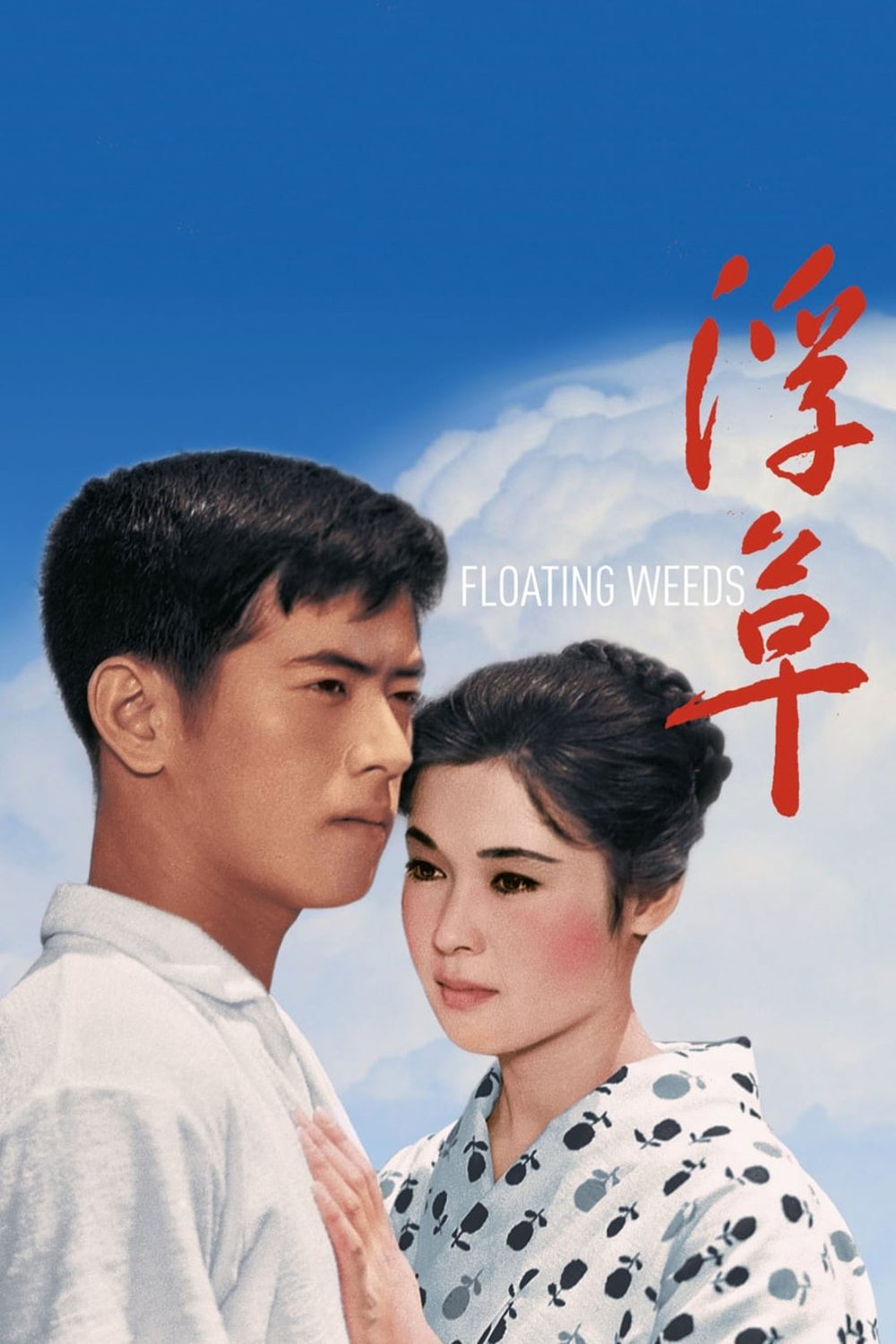
Is This Film Based on a True Story?
From the moment I watched “Floating Weeds” (1959), I knew I had stepped into a world that felt both familiar and entirely stylized. As someone fascinated by whether such films root themselves in factual events, I can say definitively that “Floating Weeds” is a completely fictional story. It is not retelling actual occurrences, nor is it inspired by any specific real events or documented historical figures. The narrative, characters, and intricate relationships come from the imagination of Yasujirō Ozu and his frequent collaborator, screenwriter Kogo Noda. While the film has a lived-in authenticity, especially in its depiction of rural Japan and traveling theater troupes, its story exists solely in the realms of fiction and cinematic artistry, not as a factual retelling or direct adaptation of real history.
The Real Events or Historical Inspirations
When I started tracing the threads of reality in “Floating Weeds,” I quickly realized the movie draws most directly from Yasujirō Ozu’s own oeuvre rather than external historical documents or real-life individuals. It is actually a remake of Ozu’s silent film “A Story of Floating Weeds” (1934), which itself was entirely a work of fiction. What I find most intriguing is how Ozu and Noda conjure a detailed slice of life in postwar Japan, capturing the tired customs of itinerant kabuki troupes and the quietly shifting social landscape of small provincial towns. While these elements certainly reflect real traditions and a vanishing theatrical lifestyle that once thrived across rural Japan, I have not found evidence or scholarly sources that link the film’s events to any particular traveling troupe, individual actor, or headline of the era.
Yet, when I immerse myself in the setting, I recognize clear echoes of Japanese culture and social change. The notion of a troupe, drifting as “floating weeds” from one temporary berth to another, draws metaphorical inspiration from actual experiences of theater groups facing decline in the 1950s. I sense Ozu’s respect for the mundane rhythms of daily life, which gives the film its lifelike feeling, but its narrative—centering on the leader, Komajuro, and his complicated family dynamics—sprouts from the screenwriters’ creative ambitions instead of any particular archive or biography. If there is a ‘truth’ beneath the surface, it’s the collective truth of generational tension, changing values, and the impermanence of artistic life, rather than any single documented event.
What Was Changed or Dramatized
Looking closely, I see that the storytelling decisions in “Floating Weeds” are shaped much more by the demand for personal drama and universal emotion than by any attempt to record reality. Film after all, especially in Ozu’s gentle hands, is a medium that exists between poetic expression and social observation. Here, every facet of the plot—the hidden paternity, the competing lovers, and the cascading misunderstandings—speaks less to historic record than to a deep exploration of human behavior. For example, the idea of Komajuro concealing the truth from his son about their relationship feels designed to probe questions of identity, parental duty, and the lies that bind families together, rather than echoing any singular, real-world incident I have encountered in my research.
As a longtime student of Japanese social history, I recognize that traveling actors were indeed a marginalized and somewhat romanticized community. Yet, Ozu sharpens and intensifies their challenges into a single, tightly woven narrative. The betrayals, jealousies, and heartbreaks of the troupe’s members are heightened for the audience’s benefit. The specifics of Komajuro’s past with Oyoshi, the introduction of Sumiko as a jealous lover, and the climactic confrontations all bear the hallmarks of carefully plotted fiction rather than testimony. None of these storylines or relationships match up with factual sources or verifiable historical accounts, and what dramatization exists is there to illuminate emotional states, not to preserve any quote-unquote truth about real-life individuals or events.
Historical Accuracy Overview
After watching “Floating Weeds” and examining its context, my impression is that Ozu delivers accuracy in spirit more than in documented detail. The world of traveling kabuki actors—once a fixture of Japan’s provincial communities—serves as both a background and an atmosphere, creating a credible sense of place and tradition. The costuming, the architecture of seaside towns, and everyday minutiae—from meals shared to the etiquette guiding personal exchanges—strike me as deeply researched and reflective of mid-century Japanese life. In this way, I would call the film highly authentic in its textures, gestures, and social undercurrents.
Yet, authenticity here doesn’t equate to historical accuracy in terms of the characters’ actions or biographies. The personal melodrama is not drawn from any real situation but is instead a fictional construct placed amid a genuine cultural setting. There are no claims in production notes or interviews from Ozu or his collaborators suggesting the plot was pulled from headlines, diaries, or interviews with real troupes. The film strives not to document the fate of any real company or individual, but to echo universal experiences through carefully observed fictional lives. As such, I assess that the film’s historicity lies mainly at the “background” level: it gets the world right, but doesn’t pretend its particular story actually happened.
For me, the distinction is crucial. When I watch movies “based on a true story,” my expectations for fidelity rise. With “Floating Weeds,” I discern that the makers aimed for resonance, not reportage. They render the cadence of a fading art form and the aches of interpersonal entanglements, with set pieces, period design, and behavior steeped in reality, but the events and fates at the heart of the plot are pure invention.
How Knowing the Facts Affects the Viewing Experience
I find my own engagement with “Floating Weeds” is greatly shaped by understanding its origins. Knowing the movie is not based on a true story frees me to experience it on distinct artistic terms. Instead of puzzling over which moments really happened or how accurately the characters represent flesh-and-blood people, I am able to focus on what Ozu is expressing about universal themes: impermanence, regret, and the fragile networks of kinship and trust. This awareness sharpens my appreciation for the ways art and life can mirror each other—how a wholly made-up tale can still evoke the deep truths of lived experience.
For viewers, this distinction clarifies how to interpret the film’s claims on “reality.” When a movie is drawn from real events, I often watch with a critical eye, comparing its drama to the facts, and sometimes judging its choices in what is changed or omitted. With “Floating Weeds,” the filmmaker’s contract with me is different: Ozu’s aim is, as I see it, to evoke a mood, to crystallize moments of grace or sorrow that feel real even if they never occurred. I find myself less inclined to interrogate the narrative’s plausibility and more attuned to its artistry—the framing of a silent confrontation, the quiet ripple of gossip through a small-town street, the ritual of meals—all of which feel true, even when the plot is pure invention.
Yet, my knowledge of Japanese theater history and the broader context enriches the experience. Recognizing the realities of traveling kabuki troupes—how they struggled, aged, and sometimes faded into obscurity—deepens my empathy for the characters. The fictional story becomes, in a way, a summation of many possible truths: the loneliness of the itinerant artist, the confusion wrought by shifting familial roles in postwar society, and the tension between old traditions and new realities. The film does not recount one true story, but, to me, it gestures toward countless untold stories that might easily have happened, given the social conditions of the period.
Reflecting on these elements, I also notice that Ozu’s style asks me to linger on emotional nuance, not historical particularity. Scenes play out with a measured calm, inviting contemplation rather than excitement, and as someone who researches the intersection of art and memory, I find this approach opens a different kind of truth—a truth about feeling and atmosphere, rather than names and dates. For some, knowing that a film is entirely fictional may lessen the urge to dig into archive or biography, but for me, it adds a challenge—how does the film convince me, how does it summon a sense of kinship with a disappeared world, without relying on the factual crutches?
I come away believing that “Floating Weeds” counts as a paragon of fictional realism: it crafts a plausible microcosm, populated by people whose heartbreaks and longings could be universal, but whose actual lives are known only to the film itself. Far from diminishing the work, knowing the fictional status sharpens my focus on what the film achieves as invention—and what it achieves in summoning the past, not as chroniclers do, but as artists do, weaving new stories from fragments of old ways of life.
After learning about the film’s origins, you may want to see how audiences and critics responded.
🎬 Check out today's best-selling movies on Amazon!
View Deals on Amazon