
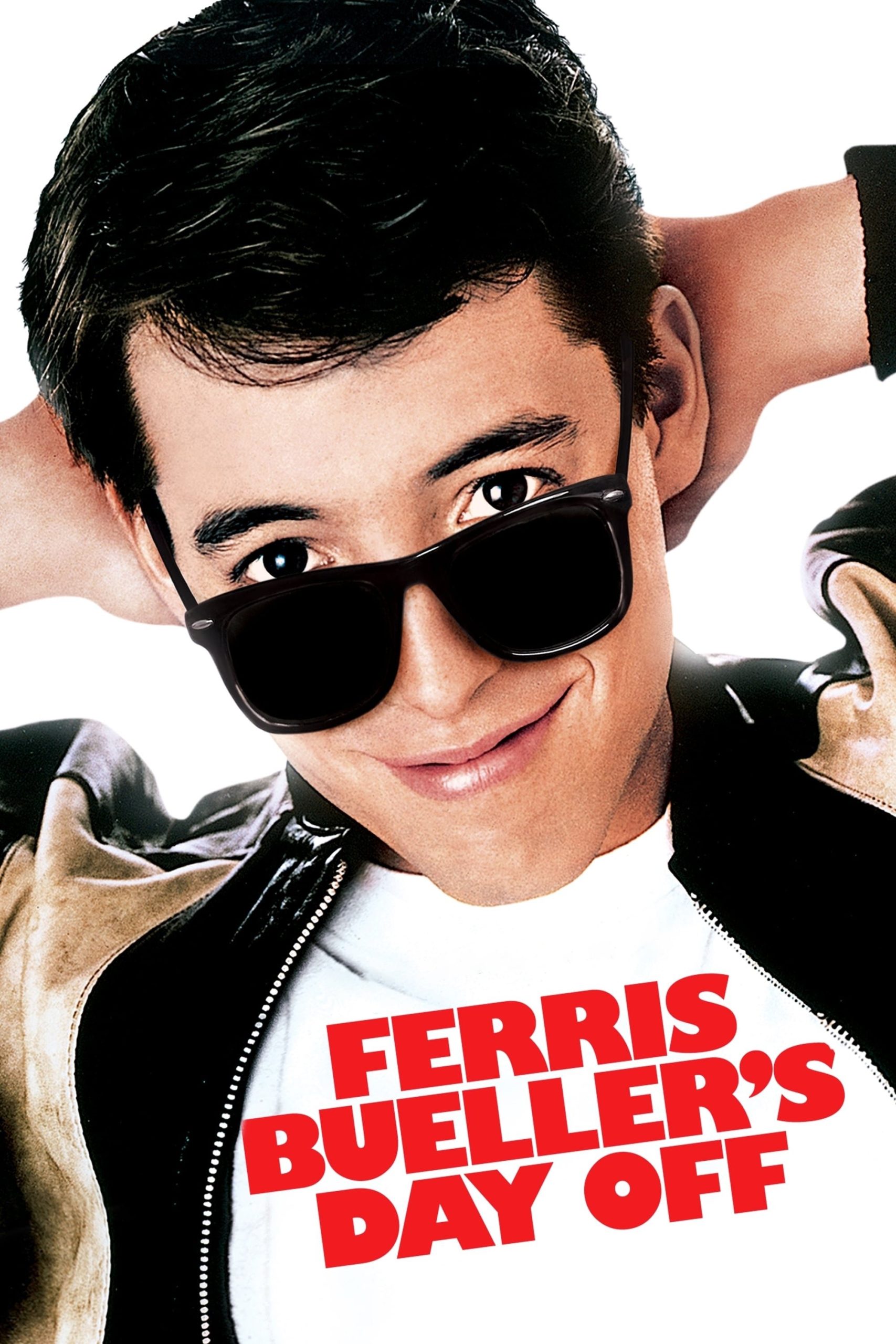
The Question of Truth Behind the Film
Every time I watch Ferris Bueller’s Day Off, I’m struck by how quickly viewers—myself included—wonder whether such an outlandish day could have been inspired by something real. I find myself asking, “Did anybody actually live a day like this?” or even, “Could these characters have been based on real people?” For me, that impulse comes from a lifelong fascination with the space where fact collides with fantasy. When a film carries even a hint of being “based on a true story,” I notice how easily it activates an extra layer of emotional connection or intrigue that pure fiction sometimes doesn’t. It’s as if the knowledge that something might have really occurred nudges me to invest more, to imagine that I’m seeing into a parallel life or reality. This quiet assumption—that true stories matter more, or have greater weight—seems almost innate when I’m in the audience. I think what complicates things is how the boundary between real and fabricated can both ground a story and invite skepticism, causing me to question to what extent I am witnessing someone else’s truth versus a carefully crafted fabrication. And while Ferris Bueller’s Day Off never explicitly claims to be based on real events, its specificity in the setting, the sense of Chicago’s summer pulse, and the recognizable teen frustrations make me wonder if that line between lived experience and exaggerated fiction is always as clear as we want it to be.
Historical Facts and Cinematic Interpretation
When reflecting on how films reflect historical facts, I realize just how rare it is for movies to act as mere documentation. Even in stories rooted in real events, filmmakers reshape, condense, and often reorganize incidents for clarity and momentum. In Ferris Bueller’s Day Off, what constantly catches my attention is the absence of any overt connection to actual events or people. I’ve searched for mentions of real teenagers who inspired the titular Ferris, or a viral news story about a suburban school skipping spree gone awry, but what I’ve discovered is the power of creative invention that feels deeply familiar. I notice how the specificity of the setting, the high school’s social structures, and the personal anxieties of the characters borrow liberally from the collective experience of American adolescence. Rather than a case-by-case retelling, the film—for me—compresses a whole era’s youthful longing for escape into one extravagant, tightly plotted day. Instead of seeking out a real “Ferris,” I find that the movie engineers a shorthand of relatable moments: the morning struggle to get out of bed, a principal’s suspicion, and the city’s vibrant texture. This reshaping isn’t about pinpointing real events, but about assembling feelings and scenarios that feel true, if not strictly factual. I realize that the director orchestrates a cinematic version of the “day off” that most of us have only imagined, stripping out the mundane to favor the remarkable, all the while evoking a broader social truth about teenage rebellion and friendship in the American Midwest during the 1980s.
What Changes When Reality Is Shaped for Cinema
Thinking about how cinema often negotiates between reality and invention, I’m reminded of how necessary those trade-offs can be. I recognize that filmmakers faced with the tedium and messiness of genuine events almost always have to decide what to amplify, what to omit, and what to skew for effect. What intrigued me most about Ferris Bueller’s Day Off is how it constructs a heightened version of an ordinary idea—a student playing hooky—and distills it into a day that is both universal and utterly improbable. In this process, I perceive the deliberate exaggeration of emotional stakes: the constant threat of being caught, the elaborate charades, the suspension of disbelief regarding consequences. When I view these choices through a factual lens, I notice what has been crafted for narrative propulsion—the unlikely series of lucky breaks, the comedic foibles of the adults, and the collective suspension of school routine on a quasi-holiday. It strikes me that, if the film were strictly mimicking a real student’s day off, the story would be punctuated with far fewer remarkable events and more mundane setbacks. Instead, the movie compresses months of high school daydreams into ninety minutes: joyrides, spontaneous parades, eyebrow-raising parental gullibility, and the freedom of the open city. This condensation doesn’t diminish the relatability of the characters for me; if anything, it magnifies the resonance of adolescent yearning. The practical upshot is that, by reassembling reality into story beats, the film reaches not for the literal truth but for emotional fidelity—a version of events shaped by what we wish were possible instead of what we know happened.
Audience Expectations and the “True Story” Label
There’s something deeply personal in how I interact with films that announce themselves as “based on a true story.” I find my patience for suspension of disbelief is invariably shorter when I expect those events to be accurate. When a film like Ferris Bueller’s Day Off makes no such claim, I allow it far more leeway—inviting myself to revel in its artifice, to accept without evidence that an entire city could conspire unwittingly in a teenager’s adventure. But because the film feels so rooted in a recognizable cultural milieu, it raises a subtler set of questions for me: To what extent do I, as a viewer, project my own experiences onto the story’s canvas? Would my understanding shift if the film had opened with a declaration that it was inspired by a notorious Chicago high school prank? My own experience is that the reassurance of truth can intensify my curiosity and provoke a yearning to know more about what the movie omits or distorts. On the other hand, fiction frees me from that compulsion, letting me focus on the film as a work of imaginative expression. I notice that labeling a film as real, inspired by reality, or entirely invented invites different kinds of scrutiny and engagement. For me, outright fiction like Ferris Bueller’s Day Off is less about evaluating what actually happened and more about exploring the possibilities and impossibilities of its world. The absence of a “true story” preamble means I treat the characters as authorial constructs rather than historical analogs, and I find myself savoring the narrative’s blend of ordinary and extraordinary without feeling the need to interrogate its factual authenticity.
Final Perspective on Fact vs Fiction
After years of watching and rewatching Ferris Bueller’s Day Off through this personal lens, I find that my awareness of its fictional nature doesn’t lessen its impact; rather, it shifts the interpretation away from forensic investigation toward a conversation about shared fantasies and social truths. When I know that what unfolds on screen is not a matter of record, I feel released from the obligations of historical analysis. My attention can settle on what the film aspires to capture—those moments of irreverence, hope, and connection that define adolescence not as specific, verifiable episodes but as a series of dreams and risks and inventions. I realize that fact and fiction serve different functions for me as a viewer: truth anchors my curiosity in research and context, while fiction opens space for metaphor and aspiration. In the case of Ferris Bueller’s Day Off, the lack of a factual basis enhances my appreciation for what the film attempts—a distillation rather than a duplication of reality. If anything, this awareness sharpens my focus on the ideas and social commentaries embedded within the movie: the perennial push-pull between authority and autonomy, the ache of temporary freedom, and the joy of bending the rules if only for a day. The blurred line between what is plausible and what is purely imagined becomes, for me, a central part of the film’s lasting allure. Rather than feeling cheated by the absence of documentary truth, I’m impressed by how effectively it conjures a world that feels simultaneously real and unattainable. This reflection leaves me comfortable in the film’s ambiguity—alert to the artifice and still able to locate my own sense of meaning within its vibrant, exaggerated version of youth.
For additional context, you may also explore the film’s overview and how it was received by audiences and critics.
🎬 Check out today's best-selling movies on Amazon!
View Deals on Amazon