
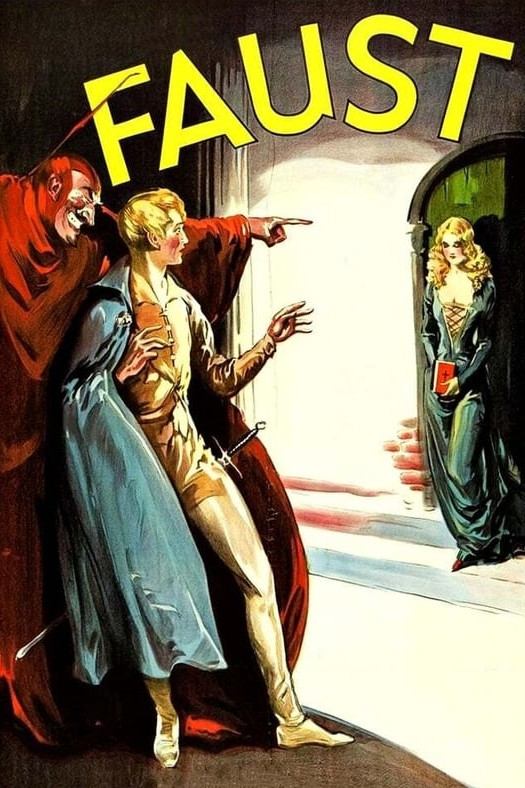
Is This Film Based on a True Story?
I remember the first time I sat down to watch F.W. Murnau’s “Faust” from 1926, my mind immediately flooded with questions about where such a hauntingly grand tale could have originated. Did a man named Faust really exist, or was this just an extraordinary flight of cinematic fancy? Over the years, as I dug deeper into the film’s background, it became clear to me that “Faust” is not based on any verifiable real-life events. It is, rather, a work drawn entirely from legend, folklore, and literary interpretation. No individual named Faust has a confirmed historical biography aligning with the film’s events; the narrative is rooted in European storytelling traditions that blend superstition, hope, and despair into cautionary lore. To me, then, “Faust” stands as a completely fictional tale, albeit one that draws upon cultural fears and aspirations to craft its unforgettable narrative tapestry. Every time I revisit the film, I marvel at how it transforms myth into cinematic reality, but its foundation remains firmly in the realm of legend rather than fact.
The Real Events or Historical Inspirations
When I explore the lineage of “Faust,” what captures my curiosity most is how such a story grew so deeply entwined with European culture despite its fantastical nature. The figure of Faust himself appears nowhere in verifiable historical documents as an actual person whose life followed the arc presented in the film. Yet, during my research, I came across references to a Johann Georg Faust, a traveling German alchemist and astrologer from the early 16th century, whose life and rumored magical dealings sparked the imagination of contemporaries. He was not a direct subject of the film, nor did his life track with the supernatural bargains or high-stakes cosmic battles depicted by Murnau, but he provided a touchstone for the legend to take hold.
What truly propelled the story, I noticed, were the literary interpretations that followed. The legend was first solidified in the 1587 chapbook “Historia von D. Johann Fausten,” which spun tales of a scholar who makes a pact with the devil. This morality tale quickly took root in German folklore and then spread throughout Europe. My fascination grows at this point, as the legend snowballs with subsequent adaptations, most notably by Christopher Marlowe in his Elizabethan play, “Doctor Faustus,” and by Johann Wolfgang von Goethe in his monumental dramatic poem, “Faust.” Murnau’s film leans heavily on these sources, and I noticed that it combines elements drawn most recognizably from Goethe’s version, which delves into philosophical questions about knowledge, temptation, and redemption.
Although no real events or people are depicted with historical accuracy, the enduring myth of Faust reflects tangible fears and desires of people living in eras when the boundaries between science, superstition, and religion were much blurrier than today. The story offers a lens through which I see Europe’s evolving anxieties about knowledge, morality, and the soul’s fate. Still, as I examine Murnau’s work, I am acutely aware: what he brought to the screen had roots in centuries-old legend and art, rather than newspaper headlines or verifiable chronicles.
What Was Changed or Dramatized
As someone who reads both the original legends and the many literary retellings, I find it impossible not to notice how each incarnation shapes Faust’s tale to match its times and creators’ preoccupations. Murnau, adapting a sprawling tradition, dramatically alters aspects of the legend for cinematic effect. One of the things that stands out most to me is the way Murnau condenses and visualizes decades of folklore and literature into a tight, emotional, visual language that silent film audiences could experience even without dialogue.
In the 1926 film, the visuals are grand and expressionistic, with shadow and light turning the battle between good and evil almost mythic in scope. The devil Mephisto, as portrayed by Emil Jannings, becomes more theatrical and visually distinctive than in the 16th-century chapbooks, where the devil is a lurking, often metaphorical presence. Here he is a looming, corporeal force, playing up both the horror and the seduction implicit in Faust’s bargain. I also notice that the film streamlines many of the subplot complexities present in Goethe’s text. For example, Goethe’s Faust is a deeply philosophical character struggling with existential despair, while the film’s Faust embodies a more direct conflict: a literal battle for his soul, ignited by very visual supernatural events like plagues and miraculous cures.
The romantic subplot involving Gretchen, or Marguerite, is a significant reimagining as well. The original Goethe play spends much time on her psychological decline and ultimate redemption, but Murnau has to tell her story largely through visual cues and gestures. As a result, much nuance is compressed—her fall from grace, public shaming, and heartache are quickly drawn, focusing the audience’s empathy in a more immediate, visceral way. The ending, where redemptive love thwarts Mephisto, seems more influenced by early cinematic melodrama than by Goethe’s more ambiguous philosophical conclusion.
Another major shift lies in the addition of spectacular, almost biblical spectacle: from giant wings enclosing the city to floods of light and shadow, reinforcing the polarities of evil and mercy. I see this as a dramatization not meant to reflect any documented “true” account, but to heighten the impact of the myth on audiences unfamiliar with the source texts. The themes of damnation, redemption, temptation, and fate are intensified by the silent film medium, aligning the narrative with both mass entertainment and the high art ambitions of Weimar cinema. Murnau’s prioritization of visual storytelling over textual fidelity introduces further abbreviations and alterations that serve the thrilling spectacle rather than historical context. In sum, what I experience in the film is not so much an adaptation of one true-to-life figure, but a distillation—and dramatization—of moral and philosophical anxieties refracted through the lens of art and legend.
Historical Accuracy Overview
Gauging the historical accuracy of “Faust” is a task that, in my view, reveals the film’s essential status as legend rather than history. Every time I look into the sources—archival, literary, and otherwise—I come away convinced that the film is a wholly imaginative work, with only fleeting connections to any real 16th-century individual. The alleged Johannes Faustus, whose name was attached to tales of alchemy and forbidden knowledge, leaves behind precious little verifiable information. Most of what survives about him comes from scattered anecdotal references or accusations of trickery, rarely rising above hearsay. For me, that shadowy historical footprint is not enough to claim the story is a factual account, even as it provides the seed for the myth.
The most accurate aspects, if I may call them so, lie in the film’s evocation of late medieval and early modern worldviews. I notice the details of costuming, town squares, and the popular belief in the supernatural do reflect what I’ve read about how people of those centuries perceived the world. The terror of plague, the reliance on mysterious healers, and the potential for spiritual peril all ring true to the social history of the time. Still, these elements ground the story in atmosphere rather than fact; they create authenticity of feeling without direct reference to actual events or people.
When it comes to the plot and character arcs, every major turn—Faust’s pact, the literal materialization of Mephisto, Gretchen’s tragic romance, supernatural interventions—emerges from literary tradition and artistic license, not history. Goethe’s philosophical musings, Marlowe’s witty asides, the anonymous folk chapbooks’ vivid warnings—all these are echoed in the film, but none purports to chronicle events as they actually unfolded. Instead, they mirror the fears, morals, and hopes of their times, which Murnau interprets visually for a new audience. For me, there’s a strange satisfaction in knowing that the truth of the legend lies more in its cultural impact than in any archival document.
If I parse accuracy in a broader sense, I’m struck by how “Faust” truthfully embodies the allegorical anxieties of its source centuries. It curates moods, beliefs, and ethical dilemmas—a window into the psyche of the European past—without ever depicting a factually reconstructed history. Historical accuracy, then, isn’t the film’s ambition or achievement. Its fidelity is to the spirit, not to the letter, of its sources. This realization deepens my appreciation for the ways artists translate inherited myths into compelling new forms for their era’s audiences.
How Knowing the Facts Affects the Viewing Experience
When I watch “Faust” with the knowledge that it is anchored in legend, not lived reality, my expectations recalibrate. Rather than awaiting meticulous reenactment of a real historical figure’s life, I am primed instead for archetypes and allegories—patterns of human feeling that recur across eras and cultures. The recognition that Faust, Mephisto, and Gretchen never truly walked the earth shifts my focus from fact-checking to exploring how those characters express eternal questions about good, evil, temptation, and redemption. I find myself watching more for emotional and philosophical resonance than empirical accuracy—which, in turn, allows me to appreciate the power of myth as a cultural tool for understanding our own struggles.
Knowing that the narrative originated in folklore and was shaped and reshaped by successive generations of storytellers frees me from expecting biographical precision. Instead, I can focus on how each layer of adaptation, from 16th-century chapbooks to Goethe’s Romantic genius, and finally to Murnau’s silent film grandeur, captures the spirit of its age. The film transforms from an ostensible biography to an artifact that reveals as much about Weimar Germany as it does about medieval Europe—or about universal human anxieties. Each time I watch it anew, I become more interested in how the film’s visual style, structure, and performances reflect both the source legend and the cultural climate of the 1920s.
It’s clear to me that understanding the film’s mythic rather than documentary basis deepens, rather than diminishes, my engagement. I can see how the film’s artistic flourishes—distorted sets, exaggerated acting, supernatural effects—echo the intensity of superstition and the longing for salvation that have defined the legend in every medium. The creative liberties Murnau takes become not a detraction, but a statement about the enduring power of stories to reimagine old truths for new times. When I introduce others to the film, I often frame it this way: not as history, but as an experience in encountering how deeply stories about fate and choice compel us, no matter the year or medium.
Ultimately, recognizing “Faust” as a captivating distillation of evolving myth brings me face-to-face with the film’s true achievement: it is less about what happened, and more about what humanity has always feared and desired. The knowledge that its origins are fictional, its inspirations literary, and its details dramatized, lets me surrender to the symbolism and wonder of its storytelling. I find myself watching less for the footprints of real-life counterparts, and more for the echoes of timeless, collective dreams encoded into the art of cinema.
After learning about the film’s origins, you may want to see how audiences and critics responded.
🎬 Check out today's best-selling movies on Amazon!
View Deals on Amazon