
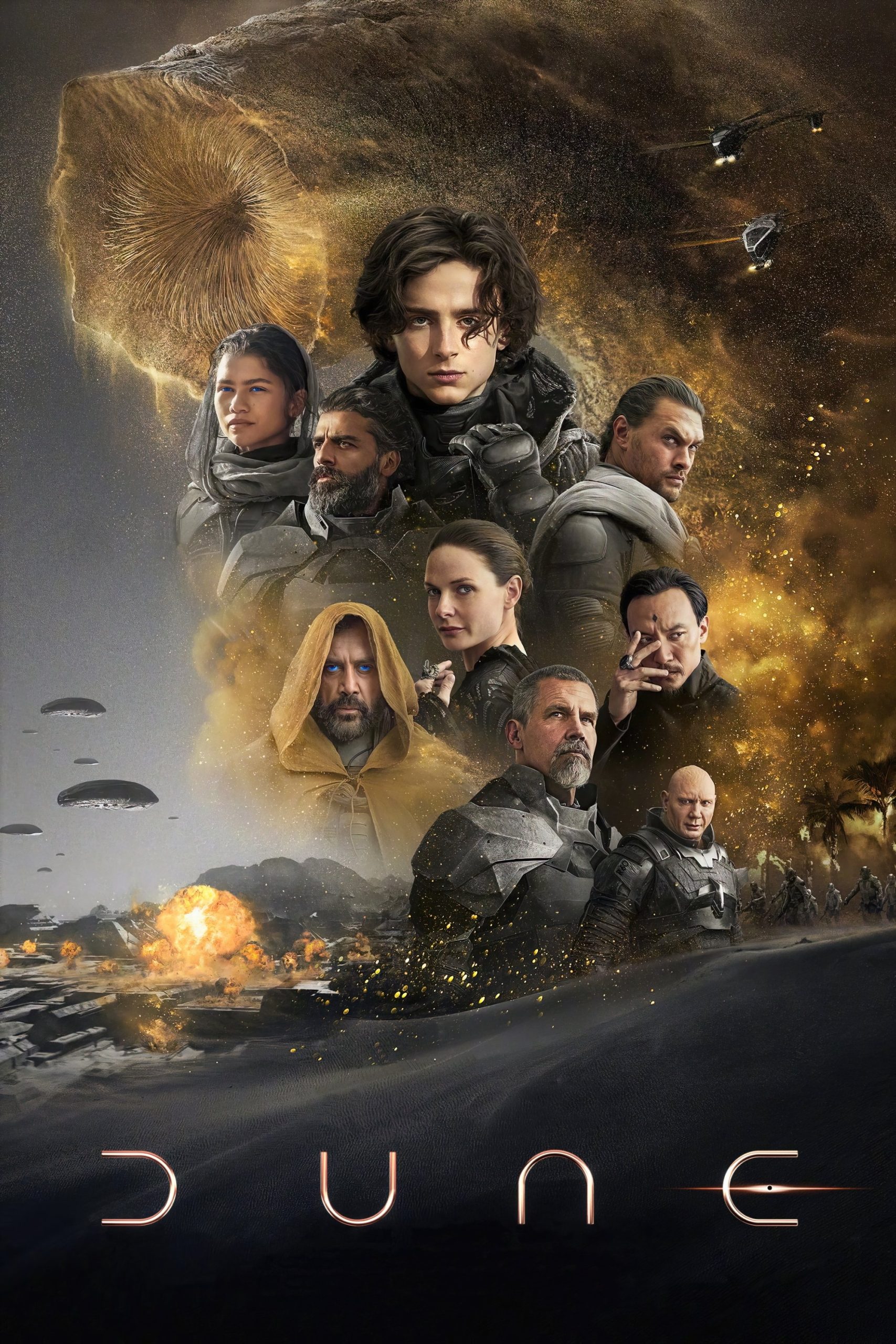
The Question of Truth Behind the Film
Whenever I approach a movie like “Dune,” I catch myself listening for echoes of the real world beneath its surface. Even with its vast deserts, interstellar travel, and monolithic sandworms, I don’t think I’m alone in wondering: is there some historical truth woven into this sweeping science-fiction tapestry? Films seemingly invite these questions, as if the more impressive their spectacle, the more eager I become to peel back the fiction and ask, “Did anything like this really happen?” I suppose it’s because movies operate in that fraught space between the imagination and the tangible world. The mere suggestion that part of a film is “based on a true story” adds weight to what I’m seeing, a sense that these struggles might reflect something deeper than entertainment. Underneath it all, I know many viewers share the assumption that movies gain credibility when their stories rest, even tenuously, on real events or recognizable histories. The promise of truth lures us in, suggesting we’ll witness not just drama, but resonance with real human experiences, no matter how disguised. In “Dune,” I’m not looking for a direct chronicle, but for those hidden shreds of reality, folded into fiction, that might make the onscreen world feel both strange and familiar.
Historical Facts and Cinematic Interpretation
As I reflect on “Dune,” it strikes me how much Denis Villeneuve’s adaptation, like Frank Herbert’s original novel, reincarnates the past within the shell of speculative fiction. There’s an undeniable pull to compare the struggle for Arrakis to real-world histories, particularly when I notice the unmistakable influence of colonial power dynamics, ecological exploitation, and messianic leadership. Although the events on screen are not historical records, I see countless indirect references to actual moments and structures—the scramble for oil, imperial conquest in the Middle East, and the history of indigenous resistance. Villeneuve’s work doesn’t claim to depict literal events, but in shaping the Atreides’ arrival, House Harkonnen’s domination, and the Fremen’s rebellion, I recognize patterns drawn from the colonial era and 20th-century geopolitics.
To me, this adaptation does what many science-fiction films achieve: it condenses broad, unwieldy trajectories from history into archetypes and dramatic turning points suited for cinema. For example, the control of the spice Melange mirrors real stories of resource conflict, specifically the extraction and contest for oil, reimagined in an intergalactic context. Yet, as I watch these elements unfold, I’m aware that they’ve been reshaped—streamlined, trimmed of ambiguity, and dramatized—until they fit the formal demands of a Hollywood epic. The plot jumps across years, personal motives are heightened for clarity, and intricate cultural practices of the Fremen are either suggested or left ambiguous, much as films often abbreviate or stylize the more intricate realities they evoke. While “Dune” draws significant inspiration from history’s broad brushstrokes, I see the resulting narrative less as a direct retelling and more as a cinematic mosaic, assembling pieces of fact and myth into a new whole.
What Changes When Reality Is Shaped for Cinema
I often think about the trade-offs directors and screenwriters face when adapting deeply layered source material—especially one that’s already an amalgam of real-world inspiration like “Dune.” When reality is contorted to fit the pace and cohesion of cinema, something is inevitably lost, but something is also gained. In this film, the practical concern seems to be clarity: with such a dense fictional universe, I notice how characters’ backstories are condensed, cultures amalgamated, and motivations clarified, in a way I imagine would be familiar to anyone studying historical films. Instead of depicting the slow emergence of religious belief or the gradual erosion of ecological balance, “Dune” oftentimes compresses these processes into singular events or vivid, symbolic images—a confrontation in a sandstorm, a whispered prophecy, or a single, pivotal betrayal.
From my perspective, these narrative choices serve the audience’s understanding at the expense of historical or even literary accuracy. The Fremen, for instance, are rendered with clear if idealized broad strokes, their culture sampled from various historical societies but distilled into a version easily grasped in a couple of scenes. Real-world analogs for messianic figures—figures like T. E. Lawrence or leaders from anticolonial struggles—are similarly compressed into Paul Atreides’ journey, forging a protagonist whose destiny is mapped in a way that’s narratively efficient, if not strictly plausible. I see how these changes are not arbitrary; they are demanded by the cinematic medium’s constraints: a finite runtime, an audience’s limited patience, and a need for visual coherence.
This approach, while sacrificing completeness, builds a universality into the film. By reshaping reality into more accessible or archetypal forms, the film enables viewers to extrapolate meaning across eras and societies, even if the specific nuances of history are ironed away in the process. The cost, as I see it, is that historical complexity sometimes gives way to mythic simplicity, with the jagged edges of real events dulled for the sake of story momentum.
Audience Expectations and the “True Story” Label
Sitting in the theater, I find my own expectations shift depending on the cues a film gives about its ties to reality. If a story opens with an assertion that it is “based on actual events,” I’m immediately more attuned to historical details, more likely to see the film as a lens into the past. On the other hand, when a film like “Dune” wears its fictionality on its sleeve, I’m granted a degree of imaginative freedom, yet I still can’t help but hunt for the ways its fantasy mirrors and distorts the structures of real history. There’s a fascinating paradox here: I feel both liberated and restrained by the “true story” label as it influences what I’m prepared to accept or question.
When confronted with a narrative set in a completely invented world but grounded in historical motifs, I often experience a dual awareness. Part of me is caught up in the spectacle, swept along by the unreal elements like the sandworms and Bene Gesserit order. Another part of me is busy mapping the fictional onto the familiar, analyzing which elements feel plausible or authentic based on my knowledge of colonialism, resource politics, or religious fervor. I’ve noticed that many peers and critics engage in a similar mental juggling act. The absence of a “true story” claim doesn’t prevent viewers from seeking meaning in allegory. Instead, it encourages discussion around why the story feels true despite its unreality—a kind of emotional or psychological veracity, rather than one grounded in fact.
It intrigues me how a fictional film that is deeply resonant with real history can prompt reflection or even controversy. Some viewers respond with greater skepticism, questioning the film’s intent or the legitimacy of its parallels; others immerse themselves more deeply, feeling that the abstraction from specific events unlocks a broader, more universal message. Ultimately, I’m reminded that audience reactions are shaped not only by content but by how filmmakers signal their relationship to historical truth. The “true story” label invites scrutiny but also suspicion, while pure fiction can sometimes smuggle in potent commentary. In the case of “Dune,” I sense that the ambiguity—how much is inspired, how much is invented—leaves room for a wide spectrum of responses, which makes watching and discussing the film a uniquely open-ended experience.
Final Perspective on Fact vs Fiction
Looking back at my own journey with “Dune,” I can’t escape the sense that the tension between fact and fiction is at the heart of what makes such works enduringly compelling. My awareness that the world of Arrakis is not historically real does not diminish its impact—in fact, it sharpens my focus on what the film is striving to say about power, culture, and destiny. The speculative trappings signal that the conflicts within the story transcend individual places and times, addressing patterns I’ve seen play out again and again in the real world.
Having some knowledge of the historical echoes in “Dune”—from the echoes of Lawrence of Arabia, to the dynamics of oil-rich states, to the patterns of resistance and adaptation in colonized societies—deepens my appreciation for the film’s ambitions. I no longer accept its visions at face value; instead, I approach them as crafted interpretations, as deliberate choices about what facets of reality to emphasize or collapse. The boundary between truth and fiction, for me, becomes less about factual correspondence and more about thematic coherence. If “Dune” had followed history point for point, it might have risked losing the mythic resonance that science fiction uniquely offers. Conversely, if all historical reference points were absent, I suspect it would feel untethered, a curiosity rather than a contemplation.
Personally, I find that awareness of what is real and what is invented changes the way I engage with a film. If I recognize certain inheritances from history—be they in costume, language, or political intrigue—I’m prompted to consider what aspects have been strategically altered and what implications those changes carry. This awareness doesn’t obligate me to judge whether the film is accurate or not, but it certainly reframes my analysis, moving my attention from passive absorption to active questioning. Instead of simply identifying with the plight of the characters, I find myself interrogating both their world and my own, drawing lines between fiction and reality, asking what their struggles reveal about human society.
In films like “Dune,” the interplay between historical fact and storytelling grants me a flexible framework for meaning-making. Some viewers might prefer strict adherence to real events, while others thrive on the suggestive power of allegory. For me, understanding what is real or fictional directs my focus, inviting alternative interpretations without foreclosing them. The film ultimately becomes a field for dialogue, not just with its creators, but with the histories and possibilities it evokes. In the absence of a neat separation between truth and invention, I’m reminded time and again of why I return to such works: not because they are true, but because they speak, in their own coded language, to truths I continue to search for both on and off the screen.
For additional context, you may also explore the film’s overview and how it was received by audiences and critics.
🎬 Check out today's best-selling movies on Amazon!
View Deals on Amazon