
Is This Film Based on a True Story?
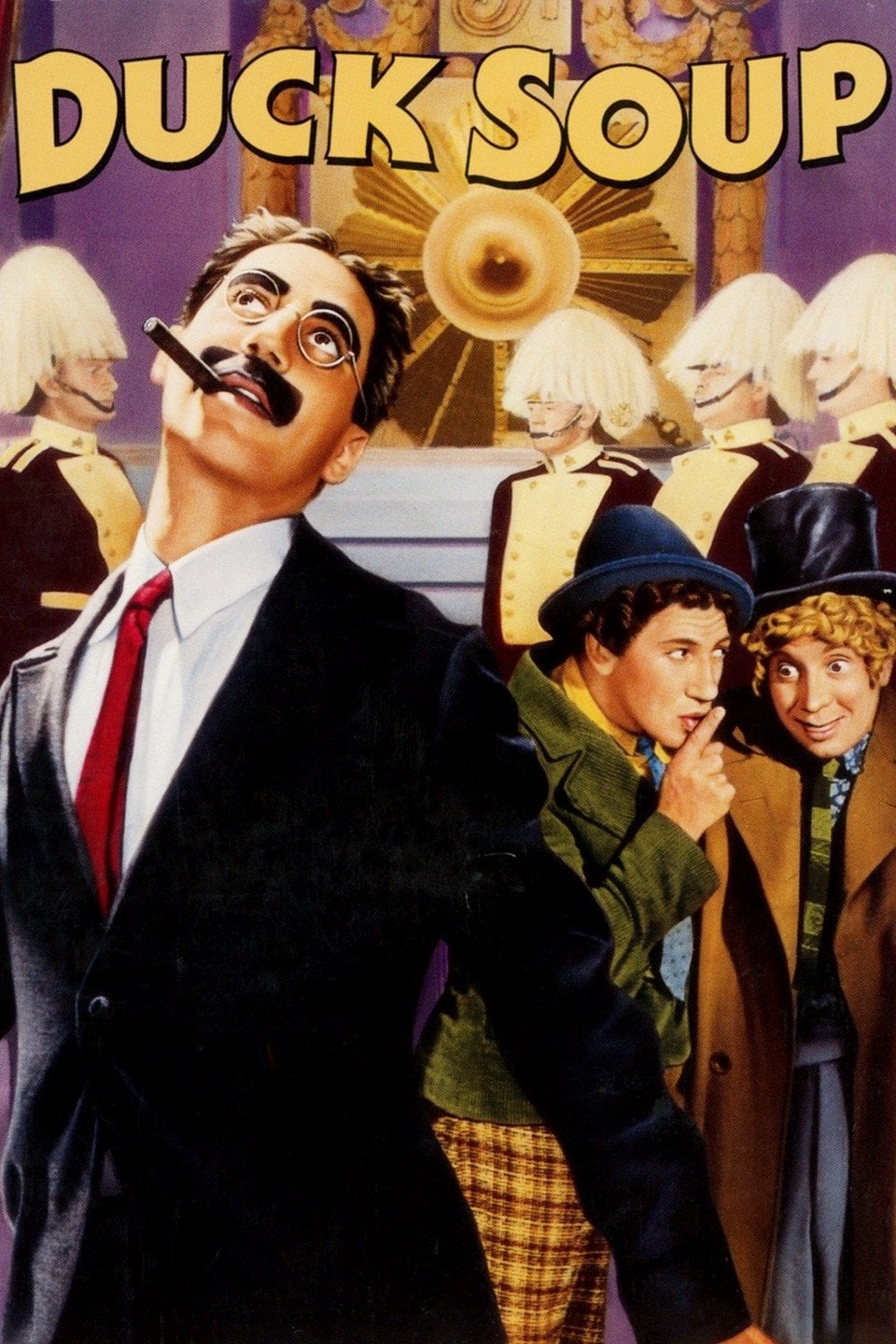
I’ve always thought there was something singularly unhinged about “Duck Soup,” a 1933 film that feels almost allergic to the very idea of reality. For me, sitting down to watch it again, the first thing that struck me was its pure absurdity and clear disconnect from any literal, historical event. From my research and personal understanding, “Duck Soup” is not based on a true story—it is a work of complete fiction. There’s no particular real-life incident, actual country, or political upheaval directly serving as its origin. The improbable country of Freedonia, the outlandish political leaders, and the cartoonish war are all inventions born of heightened satire. So when I approach this film, I do so knowing it is a product of wild imagination, not of documentary recollection or even “true events, loosely adapted.”
The Real Events or Historical Inspirations
Even though “Duck Soup” is manifestly not a dramatization of a real person or episode, I’ve always found its humor and mayhem to be reflective of the political and social winds swirling when it was made. The early 1930s, as I look back, were marked by the Great Depression and mounting international tensions, especially in Europe. Although “Duck Soup” does not recreate any actual war or leader, it resonates with direct nods to the chaos of demagogues and the farcical nature of some government operations in that period.
As I delve deeper, I notice that while Freedonia, the fictional country at the center of the story, doesn’t correspond to any actual nation, the portrayal of a tiny, bankrupt state teetering on collapse does echo the real fiscal crises of smaller European nations during the era. I’ve always thought it plausible that the Marx Brothers, known for their satirical edge, were responding to the zeitgeist: Mussolini in Italy, the rise of dictators elsewhere, and the general sense of unease about political instability. Yet, the writers never cited a specific country or individual as a model for their characters or situations.
For me, the broader inspiration seems to come from an atmosphere of political absurdity rather than a singular historical event. The script, drafted by Bert Kalmar and Harry Ruby, riffs on the surreal qualities of government, especially as seen through the lens of vaudeville and musical farce. The film, in my experience and in study, is also said to draw on traditions of burlesque, slapstick, and even classical comic operas like Gilbert and Sullivan’s “The Mikado” or “Iolanthe,” where invented nations and preposterous leaders lampoon real-world politics. If there’s an inspiration, it’s the overall feeling of the times—precarious economics, the shadow of war, and the dangers of unchecked authority—not a headline or historical dossier.
What Was Changed or Dramatized
In thinking about what, if anything, might have been altered for dramatic effect, I realize that “change” in the conventional adaptation sense doesn’t really apply here. Since there’s no foundational real-world source, the writers and Marx Brothers created almost every component from scratch. Still, I do find interesting how historical realities were intentionally bent or parodied until unrecognizable. For example, rather than dramatizing specific political figures, the film’s protagonist, Rufus T. Firefly, becomes a larger-than-life stand-in for inept rulers everywhere—a walking lampoon rather than an allusion to, say, any one European monarch.
I also notice that while the film lampoons war, government bureaucracy, and diplomatic relations, all these are presented through the lens of broad comedy. Actual wars of the period, along with their atrocious consequences, are absent; instead, battles become pie-throwing, hat-switching escapades where the pain of real conflict is replaced by the farcical volatility of slapstick violence. The film’s political assassination attempts and machinations are not calculated, suspenseful operations, but escalating chains of sight gags and musical numbers.
One element that seems quietly “changed” or adapted is the use of universal comedic language, rather than a direct American or European context. While Americans do populate Freedonia, and some costumes and set designs evoke vaguely European states, there’s a determined vagueness at play. In my view, this choice removes any sense of real accountability, enabling ridicule of broad archetypes rather than pointed critique of actual leaders. This likewise allows the film to play fast and loose with geography, politics, and social structures, inventing laws and customs as the gag requires.
Interestingly, some scenes—such as the mirror gag—are adapted not from history, but rather from earlier stage routines and silent comedies. My sense is that these are “dramatic changes” in the sense of repurposing time-honored comic devices for new political and social targets. The “change” lies in transposing these old routines into a context that parodies sovereign affairs, rather than simply mining them for easy laughs.
Historical Accuracy Overview
Every time I try to locate a thread of historical accuracy in “Duck Soup,” I end up with my hands empty, except for stray feathers of satire. Certainly, there are no maps of early 20th-century Europe containing Freedonia or Sylvania, nor is there any faithful portrayal of how Cabinet meetings or international diplomacy operated in the interwar years. Costuming is similarly a world unto itself, mixing military uniforms, tailcoats, and oversized hats without regard for historical detail.
Yet, I admit there’s a level on which the film captures the absurdity that sometimes pervaded early 1930s politics—not through documentary accuracy but through exaggeration. The appointment of unsuited leaders for comic effect may have rung true for some viewers disillusioned with real governments and economic blunders. I see the depiction of governmental incompetence and sudden declarations of war not as accurate reporting, but as accurate exaggeration of perceived folly. These flourishes are the film’s version of “commentary”—its accuracy is that of a caricature, not a chronicle.
War, as presented here, is stripped of realism entirely. For instance, when Firefly and his cabinet find themselves besieged, the chaos unfolds like a live-action cartoon rather than a tactical operation. There are no casualties, only slapstick reversals, fast costume changes, and vaudeville gags. The famous “mirror scene” makes no pretense at capturing the mannerisms or intrigues of real diplomats; its accuracy lies solely in its comedic timing.
One could reasonably say that “Duck Soup” is historically accurate in portraying the emotional climate of cynicism, disillusionment, and anxiety that pervaded the early 1930s in America and Europe. That’s what I feel every time I watch it: not a lesson in history, but a parodic echo of its worries and distractions. But if I’m searching for a true-to-life timeline, a faithful retelling of major world events, or even a single actual person’s full name and story, I won’t find it here. All details, from place names to plot contrivances, are products of the film’s creative imagination.
There’s also the matter of style over substance. Dialogue in “Duck Soup” is a string of wisecracks, puns, and non-sequiturs, drawn more from the vaudeville tradition than from real-world political debate. Even the film’s songs and musical numbers belong to its own invented world, rather than reflecting authentic period details. For me, what accuracy exists is entirely tonal—not documentary, but emotional, as if refracting the anxieties of the period through a funhouse mirror.
How Knowing the Facts Affects the Viewing Experience
I feel like understanding that “Duck Soup” is fundamentally a work of fiction, without any direct basis in true events, only deepens my appreciation for its boldness as a satirical farce. Knowing that there’s no “real” Freedonia or Rufus T. Firefly frees me from searching for literal connections and allows me to take in the film as a pointed, anarchic critique of all authority figures, not just the ones from the history books. I’m able to watch the escalating nonsense—the quick reversals, absurd proclamations, and gleeful disregard for logic—without expecting any resolution rooted in actual world history.
But this knowledge also lets me see the ways in which the film’s humor was (and still is) a kind of commentary on its era. Even if “Duck Soup” doesn’t replay a particular event from the 1930s, it feels like a reaction to the relentless headlines of government failure, economic collapse, and political demagogues of the time. I catch the spirit of protest and skepticism that its audience might have felt, especially those viewers living through the Great Depression or watching the rise of those would-be dictators across the oceans.
This fictional status gives me the freedom to focus on the intent of the satire, rather than being distracted by questions of fidelity to fact or biography. For someone who cares about the difference between cinematic invention and historical reconstruction, there’s no confusion: “Duck Soup” stakes its territory firmly in parody and invention. For me, this is liberating, letting the film function as a universal send-up, not a case study.
Sometimes, I wonder whether the absence of a historical anchor enhances or reduces my emotional engagement. In this case, I would say that the sheer surrealism—the fact that “anything can happen” because nothing is bound by real-world precedent—actually amplifies my engagement with the underlying ideas. The film’s universe, unmoored from actual events, gives its creators free rein to lampoon the fundamental, recurring follies of human government: pomposity, vanity, and the sometimes farcical logic of war. I’m able to step back and laugh not at specific people or states, but at perennial tendencies—bureaucratic bumbling, leaders devoted to ego over welfare, and the spirals of senseless conflict.
However, my awareness of its satirical edge also helps me recognize its clever use of indirect allusion. When I see an over-the-top inauguration, a ludicrous policy proposal, or the cavalcade of yes-men ministers, I can’t help but feel the ghost of real governments—though none named—hovering in the background. Freedonia never existed, but its follies reflect the authors’ awareness of what did. It’s possible, by knowing history, to see not just what’s being mocked, but why the mockery struck a chord.
Instead of expecting any education about the 1930s, I approach “Duck Soup” as social commentary, a method that the Marx Brothers turned into an enduring form of comedic protest. This in turn shapes my expectations: I’m not looking for historical enlightenment, but for the catharsis of seeing the perennial absurdities of power and authority sent up on screen. The fictional status of the film is an open invitation to laugh at the mechanisms of politics in any era, not just the one implied by the set decorations or fleeting references.
In the end, it becomes clear to me that “Duck Soup” is a unique case—one where knowing the lack of a real-world foundation removes any obligation for fact-checking, while simultaneously sharpening the audience’s sense of the period’s anxieties. It’s a film that invents a story, but in doing so, finds a way to satirize the ever-present spectacle of government and leadership. Watching with this awareness, I’m able to savor its humor, recognize its context, and appreciate the boundary between cartoon logic and historical fact.
After learning about the film’s origins, you may want to see how audiences and critics responded.
🎬 Check out today's best-selling movies on Amazon!
View Deals on Amazon