
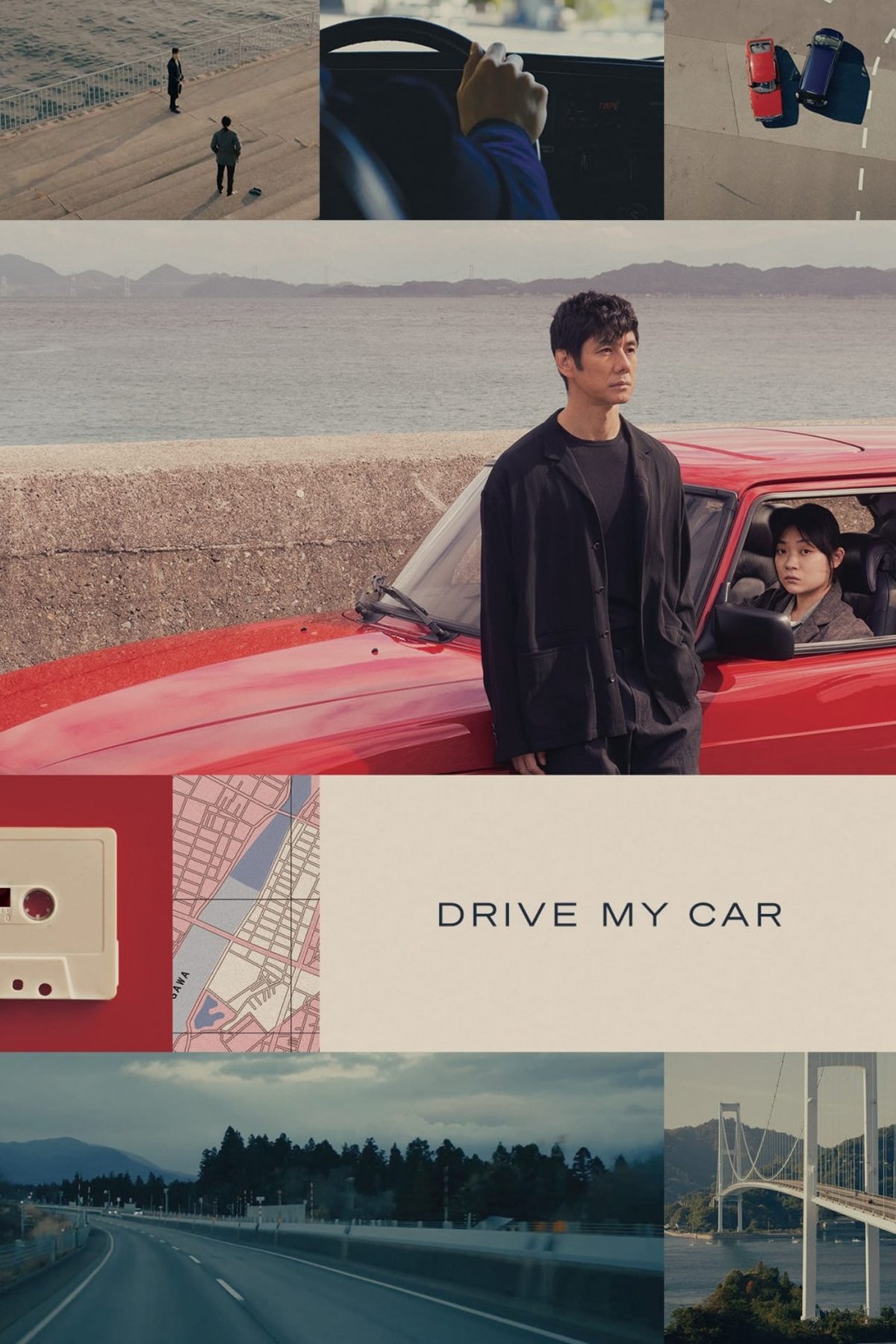
The Question of Truth Behind the Film
When I entered the world of “Drive My Car,” I couldn’t help but bring with me the perennial question I secretly harbor for almost every film I see: “Is any of this real?” Beyond mere curiosity, there’s something about the possibility of truth that stirs me—it carves an invisible but nevertheless powerful path into the way I understand every gesture on screen. I realize that my instinct to search for real-life roots is less about a desire for facts and more about hoping that the ache, grief, and subtle joy I witness has historical weight. I find it fascinating that so many of us walk into a theater or press “play” at home already armed with assumptions tied to what it means for a film to be “based on a true story.” It isn’t just about fact-checking; it’s almost a search for permission to feel more deeply or to suspend disbelief for longer.
The moment a film brands itself as “inspired by real events” or, conversely, declares itself as a work of pure fiction, the context shifts in my mind. The first label makes me hyper-attentive, almost forensic in looking for correspondences between the cinematic and the historical. It turns acts of narrative invention into possible distortions or, conversely, acts of witness. But if a film is pure fiction—or, as in “Drive My Car,” layered with adaptation from literature and intensely subjective characterization—my own expectations subtly recalibrate. I become alert to symbols, metaphors, and aesthetic choices rather than achievements of documentation. Still, I must admit: there is a certain bias within me, rooted deep, that looks to the truth label for validation, even as I know that art’s resonance so often comes from what it invents rather than what it records.
Historical Facts and Cinematic Interpretation
With “Drive My Car,” I quickly realized that my usual hunt for historical accuracy would yield a complicated answer. I had to remind myself that the film’s genesis lies not in a single factual event but in a short story by Haruki Murakami. My experience with such films—works that draw from literature rather than explicit history—challenges my impulse to ask, “Did this really happen?” What counted as the real, in this context, was already a negotiation before any camera rolled. I was dealing with layers of adaptation: Murakami’s story, shaped by his own creative instincts, and then Ryusuke Hamaguchi’s interpretation, which brought an entirely new set of cinematic decisions.
Yet even though the central characters aren’t pulled from newspaper headlines or historical record, I noticed how the film weaves together emotional truths that feel, if not factual, then deeply experiential. The fact that “Drive My Car” is not anchored in real-life personalities or specific reported events means that most of the reshaping, condensation, or rearrangement is about turning inner landscapes into cinematic language. I noticed Hamaguchi expanding upon the short story’s relatively concise plot, introducing new backstories and layering in additional characters, like Misaki Watari and the multilingual cast of the Chekhov production at the film’s heart. In my viewing, these choices function as a kind of narrative archaeology: unearthing emotional dynamics that are only implied, and translating the suggestive silences of prose into something visual, auditory, and performative.
This process is not one of strict documentation but of creative transplantation. The source material’s thematic ambiguities—loss, communication, estrangement—are both condensed and magnified. I saw how the screenplay reorganizes chronology, stretches moments that might have been fleeting in prose, and uses repetition (the ritual of rehearsals, the careful structuring of dialogue in multiple languages) as a way to suggest both stasis and transformation. Even the structuring of time is altered for narrative clarity: the film’s prologue gives more detail than Murakami’s brief setup, allowing me, as an audience member, to inhabit the before and after of tragedy in ways that prose might only suggest elliptically. There’s no single “event” at the heart of “Drive My Car” that history can verify, but I feel the rhythm of real experience beating beneath the surface, shaped and reordered to serve the emotional logic of storytelling.
What Changes When Reality Is Shaped for Cinema
Every time I reflect on a film that isn’t strictly historical, I’m struck by the delicate balance it must maintain between the open-endedness of real life and the inexorability of narrative structure. “Drive My Car,” for me, exemplifies the kind of trade-off I so often see when a story moves from either fact or literature into the visual and temporal logic of movies. Even without the scaffolding of concrete historical record, there is the persistent question of what is omitted, amplified, or rearranged—and why. Although a director or screenwriter must whittle down the multitude of human experience into the shape of a storyline, I notice the subtler impact: a sense of order that rarely exists in actual living, and an emphasis on moments of emotional clarity that real memory tends to blur or fragment.
It’s clear to me that this structuring isn’t just a matter of convenience; it’s a necessity imposed by the medium itself. Take, for example, the way “Drive My Car” employs the format of theatrical rehearsal as a recurring device. In real life—or even in a stage company—these processes might sprawl with interruptions, disappointments, and false starts. But on film, these moments are condensed and organized, given clear narrative functions and emotional beats. This isn’t a distortion so much as a kind of translation, one that inevitably tidies up the messiness of life for the sake of coherence, pacing, and thematic unity.
Yet I also see how this process can narrow the ambiguities and contradictions that are inherent to both history and lived experience. Ambiguity has its virtues: it gestures toward the unknown, retains a sense of mystery, and resists simplistic resolution. Cinema thrives on mood, imagery, rhythm; these elements are marshaled to evoke the ineffable, but always in service of forward movement and dramatic development. In “Drive My Car,” I see Hamaguchi (and the original Murakami) making choices about which silences to keep, which gaps to close, and which lessons—implicit or explicit—should be teased out into the open. These are not always choices that would survive in the strict context of reporting or memoir, but they are vital for the cinematic spell the film casts. I find myself attentive to what gets reshaped: the boundaries between people become clearer or fuzzier, relationships gain new narrative arcs, and pivotal events are recast as metaphors or existential puzzles.
Audience Expectations and the “True Story” Label
When I discuss a film like “Drive My Car” with others, I notice a split in expectations that quietly echoes through every conversation. Some friends, upon hearing it’s “based on a short story” rather than “based on real events,” immediately treat the narrative as a playground for interpretation rather than a record of what someone actually lived. I sense that the “true story” label brings its own gravity, a kind of demand that I treat the characters and situations with a documentary sensibility—that I look for evidence of justice, fidelity to the facts, or some underlying message about the world as it actually is.
In my own viewing, I find that films explicitly billed as factual or “inspired by true events” trigger my curiosity about verification. I’m drawn into side-quests of research, uncovering what happened “for real,” where artistic license takes precedence, and when dramatization strays furthest from the historical record. I suspect this tendency isn’t unique to me. For many, carrying the knowledge that a film reflects verifiable reality lends every development a sharper sense of relevance or ethical resonance—almost as though the stakes have been raised.
With “Drive My Car,” though, I find my expectations shift. Instead of searching for the historical Yūsuke Kafuku or a documented theater production matching the film’s arc, I become more receptive to layers of allegory and thematic abstraction. The experience frees me to respond more intuitively, less hampered by questions of physical evidence or accuracy. I can imagine the characters as archetypes, their struggles as attempts to capture emotional truths rather than documentary realities. Yet I also recognize that there is a powerful emotional authenticity at work—a sense that, while the film is not “true” in the literal sense, it still reaches toward something real in the lives of those who have lost, grieved, or attempted to piece together meaning after devastation. For me, the distinction between literal truth and emotional truth becomes the crux. The film may not document actual events, but it insists on the relevance of its emotions and questions, inviting me (and, I think, most viewers) to reflect on my own life in the process.
I often wonder if the difference in audience experience is less about the content itself than about the frame we’re provided. When I recall how I interpreted certain scenes—especially the protracted silences, the repetition of Chekhovian lines, or the understated confrontation of grief—the lack of a “true story” label felt liberating. I wasn’t scanning for clues about whose life was being depicted. Instead, I felt more attuned to poetic resonance, to the ways in which fiction can carve a space for contemplation and ambiguity rather than simply depicting something that already happened. The interplay between expectation and form is, in my experience, one of the most fascinating dimensions of the fact-versus-fiction debate.
Final Perspective on Fact vs Fiction
Reflecting on my engagement with “Drive My Car,” I’m left with the sense that awareness of what is real or fictional isn’t just a background detail—it’s an active ingredient in how I make sense of cinematic art. For this film in particular, I find that knowing its origins in short fiction and the absence of direct historical precedent reframes my viewing entirely. I’m less invested in validating events and more concerned with following the film’s emotional logic, its rhythms of silence and revelation, its persistent meditation on loss and the limits of communication. The absence of a literal true story doesn’t diminish my investment; instead, it invites a different kind of participation, one in which my own experiences and uncertainties are mirrored back to me in complex, indirect ways.
At the same time, I recognize that this relationship between reality and storytelling is not static. In other films—those that claim to reconstruct facts or dramatize real lives—I find myself more constrained, bound to questions of justice, representation, and fidelity. But with “Drive My Car,” the fact that its “truth” is a careful curation of literary source, creative adaptation, and experiential feeling makes my engagement more porous, more speculative, and perhaps more personally meaningful. It’s not that I believe fiction is somehow less “true”—if anything, I’m reminded by this film of how storytelling, in departing from the merely factual, can sometimes burrow more deeply into the dilemmas I recognize from my own experience.
For me, then, the distinction between fact and fiction in cinema is not about choosing one as more valuable or trustworthy than the other; it’s about understanding the different contracts I enter into as a viewer. In “Drive My Car,” the contract is one of interpretive freedom, poetic searching, and contemplative engagement—a dynamic that, for me, shifts the emphasis away from verification and toward resonance. It leaves me with more questions than answers, but those questions themselves feel like the most honest response to the film’s ambitions. This is a work that resists easy classification, and in doing so, it invites me to reflect on the ways in which both fact and fiction shape not only what I see on screen, but how I inhabit the space between art and reality in my own life.
For additional context, you may also explore the film’s overview and how it was received by audiences and critics.
🎬 Check out today's best-selling movies on Amazon!
View Deals on Amazon