
Is This Film Based on a True Story?
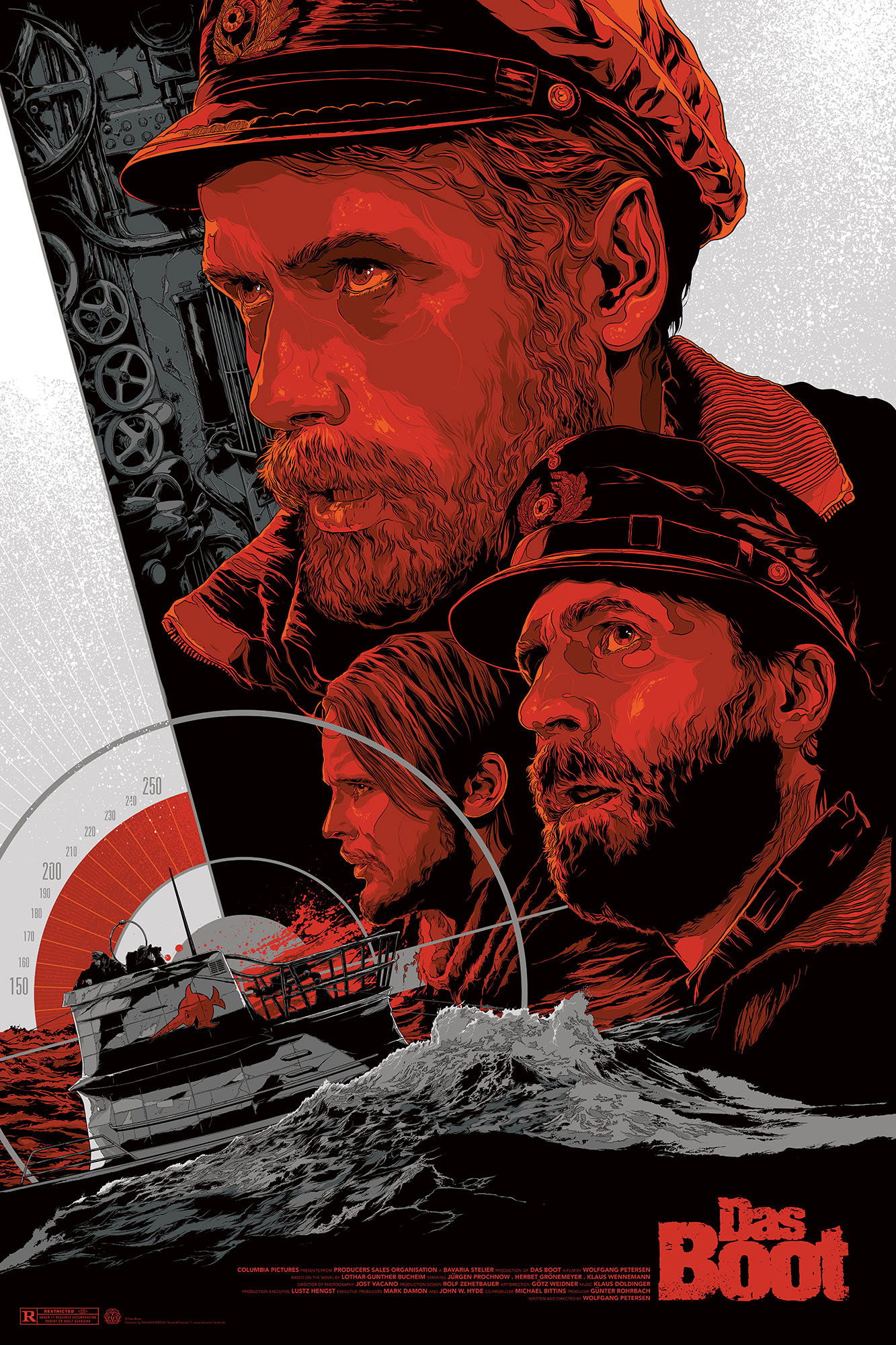
Stepping into “Das Boot” for the first time, I was hit by a nagging sense of realism that set it apart from so many other war films. This wasn’t just a fictionalized account of World War II submarine missions—I discovered it’s not a wholly fabricated story, nor is it a precise retelling of a single historical event. “Das Boot,” released in 1981, is best described as being inspired by real experiences, meticulously reconstructed from the memories and notes of someone who was present, but at the same time, dramatized for cinematic impact. I would say it’s partially true, stitched together from reality but inevitably shaped into something that transcends mere documentation. What I found most fascinating is how the film threads that fine line: drawing directly on the wartime career of a writer who served aboard a German U-boat, yet choosing to anonymize the boat and crew, crafting a kind of “everyman’s” experience rooted in fact but not bound to a strict historical record. The result is a film that, I feel, immerses viewers in a psychological and sensory reality that feels authentic, even as the details of the voyage are composites rather than direct historical recreations.
The Real Events or Historical Inspirations
What really drew me into investigating “Das Boot” was learning about its source material and the life behind it. The film is directly adapted from the 1973 novel “Das Boot” by Lothar-Günther Buchheim. Unlike many writers who rely purely on research, Buchheim actually lived through the events—the novel is based on his own experiences as a war correspondent aboard the German U-boat U-96 in 1941. Buchheim’s assignment placed him in the thick of submarine warfare, and he meticulously chronicled the day-to-day grind, the psychological stress, and the harrowing realism of life underwater. For me, this aspect is hugely important: Buchheim didn’t create fictional characters plucked from his imagination, but drew from real officers and sailors he had actually traveled with, using his own journals and memories as the backbone of his novel and, by extension, the film.
That said, when I dug deeper, I learned that while specific technical details, routines, and character archetypes in the film reflect Buchheim’s recollections, the adaptation does not name the vessel or crew directly. The U-96, commanded by Heinrich Lehmann-Willenbrock, is widely understood to be the chief inspiration, but within the film, the team is presented as anonymous—a narrative choice, but also a way to universalize the experience for all German U-boat personnel of that era. I find it significant that Buchheim was deeply invested in historical accuracy, even as he worked within the bounds of a personal memoir. The events depicted in “Das Boot”—from the monotonous stretches of waiting to the nerve-wracking attacks by Allied forces—mirrored events that countless submariners faced, and the film-makers strove to retain that texture of lived experience. Production research reportedly included consulting surviving U-boat veterans, studying war diaries, and even reconstructing detailed replica sets that matched actual U-boat interiors down to the smallest detail.
For me, the historical fuel behind “Das Boot” comes less from a single battle or mission and more from the accumulation of personal accounts and technical documentation—official records, logbooks, survivor interviews, and of course, Buchheim’s own photographic and written archive. All of these elements blend together in the film’s DNA, giving it a documentary-like edge that’s hard to shake, even as the characters themselves remain, strictly speaking, composites or stand-ins for their real-life counterparts.
What Was Changed or Dramatized
Whenever I watch a historical adaptation, I’m always curious about what made it from real life to the screen and what had to be transformed for drama’s sake. “Das Boot” stands as a fascinating example because, while its foundation is unmistakably authentic, several important aspects were intentionally altered or amplified. The most apparent shift is the anonymity granted to the crew and the submarine itself. Rather than using the historical names, the film presents its boat simply as “U-boat” and the captain as “The Old Man,” encouraging viewers to see the story as emblematic of many crews rather than a biographical portrait of U-96 and Lehmann-Willenbrock. To me, this choice makes the crew’s struggles and fears resonate not just as historical footnotes, but as proxies for countless other sailors whose personal stories may never have been told.
I see a deliberate ramping up of tension and conflict throughout the film, particularly in interactions among the officers, crew, and the relentless pressure of command decisions. While Buchheim did document conflict and boredom, the film intensifies these elements—lengthening moments of suspense, stretching out attacks, and inserting flashes of personal rivalry or existential dread to maximize emotional impact. There’s a subtle but perceptible difference between living through hours of monotony punctuated by seconds of terror, and translating that to cinema in a way that keeps an audience engaged. Filmmaker Wolfgang Petersen utilizes these creative liberties to draw out the inner anxieties and camaraderie that might otherwise remain understated in reportage or raw memoir.
Another area where fiction edges in is the ending. In Buchheim’s novel, as reported by historians and Buchheim himself, the landing back at La Rochelle is anticlimactic and bitter, but the extended dramatic devastation in the film’s final moments—particularly the sudden Allied air raid that inflicts heavy casualties—was not drawn directly from Buchheim’s own U-96 voyage. Instead, it serves as a powerful, cinematic punctuation mark meant to reinforce the futility of survival and the omnipresent dangers faced by all who served on Germany’s Atlantic wall. From my perspective, moments like these—heightened for emotional resonance—bring the true psychological stakes of war to the surface, even if they stretch factual specifics.
One subtle form of dramatization that struck me is the portrayal of the crew’s ideological outlook. I noticed the film downplays overt Nazi fervor among the sailors, emphasizing their personal dilemmas, fatigue, and longing for home over their commitment to the regime. While this is not necessarily inaccurate—the bulk of Wehrmacht and Kriegsmarine personnel spanned a range of beliefs—this angle is subject to some debate: memoirs and secondary sources show that a variety of political attitudes coexisted among submarine crews, and reducing ideological expression may make the characters more accessible for international audiences, even if it’s not fully representative of all real-life crews.
Visually and atmospherically, I think the film leans on stylization to communicate claustrophobia and tension. The tight framing, sweat-drenched faces, and constant mechanical sounds are exaggerated compared to what a real submarine patrol may have offered moment to moment. Yet, these flourishes, born of directorial intent and creative license, serve a purpose: they translate the internal pressure-cooker sensation, documented in memoirs and interviews, into something viewers can almost physically feel.
Historical Accuracy Overview
After dissecting “Das Boot,” I find it difficult to label it completely accurate or fictional—it’s a thoughtfully crafted hybrid. From everything I’ve read and compared, the core routines, operational hazards, and emotional states ring true to historical testimony. U-boat veterans who’ve commented on the film generally agree that its depiction of life aboard a submarine, from the perpetual dampness to the intricacies of maneuvering and attack, is among the most authentic in cinema. When I compared the film’s technical details—like the procedures for diving and silent running, food storage, and torpedo operations—with declassified war manuals and oral histories, most align remarkably well. Even subtle touches like the soundscape, lighting, and crowdedness mirror original photographs and technical layouts of the Type VII-C U-boat, the model Buchheim sailed on.
That said, some elements stretch or condense for dramatic efficacy. As I mentioned before, the final air raid was not part of Buchheim’s actual patrol, nor is there a definitive record of a single U-boat crew experiencing such a denouement immediately upon return. The voyage’s route, stops, and sequences closely reflect that of the real U-96, albeit with consolidated timelines and composite incidents inserted to streamline the narrative. At times, the film clusters dangers and technical malfunctions for maximum tension, when in reality, luck and routine could mean long stretches punctuated by only a handful of intense episodes. Real patrol reports from U-96 and similar boats suggest that while attacks and repairs did occur, the relentless pace of crisis after crisis is exaggerated and rendered more immediate for the viewer, collapsing what might have happened over weeks or months into a single journey.
One area where scrutiny has focused, especially among historians, is the political neutrality of the crew. As I suggested earlier, the film primarily shows officers and sailors resigned to duty—or openly skeptical or weary—rather than deeply invested in Nazi ideology. Firsthand accounts indicate that this stance isn’t wholly unrealistic, but may understate the spectrum of belief and loyalty present in actual crews, some of whom were more politically aligned with the regime. Still, this artistic choice allows viewers, especially non-German audiences, to focus squarely on personal and collective survival rather than the broader context of World War II’s ideology.
Overall, the most faithful aspect of “Das Boot,” in my view, is its psychological texture. The isolation, psychological attrition, group dynamics, and fluctuating morale are verified again and again in memoirs and postwar interviews with U-boat men. The human cost, the sense of hopelessness and the exhaustion of repeated sorties—these elements stand up to historical scrutiny, lending the film its lasting reputation for realism, even if its individual plot points are remixed or selectively heightened for the screen.
How Knowing the Facts Affects the Viewing Experience
Delving into the factual background behind “Das Boot” transformed my relationship with the film. On my first viewing, I was absorbed by the suspense and technical authenticity, but it was only after learning about Buchheim’s personal chronicles and the real-life basis for so many details that the film gained a new layer of significance for me. Recognizing how closely many sequences hew to actual logistical and emotional realities made moments that seemed outlandish—like the feverish scramble to repair valves at crush depth—feel more like windows into lived experience, albeit heightened by storytelling needs.
At the same time, knowing what was adapted or exaggerated sharpened my attention, prodding me to look past the specifics of plot to the deeper emotional truths. Understanding that the final catastrophic air raid wasn’t drawn directly from Buchheim’s patrol, for example, didn’t lessen the power of the scene but framed it for me as an attempt to give voice to the perils faced by so many crews who left port never to return. Instead of asking whether every detail “really happened,” I became more attuned to the cumulative impact of duty, isolation, and fear, aware that the filmmakers shaped certain events to convey the relentless uncertainty that defined U-boat service as a whole. In a sense, this kind of “truthful fiction” can sometimes clarify the psychological landscape better than any purely literal documentary could.
For viewers who might worry about authenticity, I think it’s useful to approach the film both as a crafted narrative and as a cultural document shaped by survivor testimony and firsthand reporting. The knowledge that Buchheim, too, struggled with the adaptation—sometimes criticizing dramatized elements—reminded me that even those closest to history understand the difference between “based on real events” and pure reenactment. But for me, the real value of knowing the facts is not to nitpick discrepancies, but to appreciate just how much of the everyday reality—the waiting, the stress, the sense of being hunted and forgotten—is drawn directly from those who were there.
Ultimately, learning about “Das Boot’s” roots in personal experience has deepened my engagement with the film, not because it is flawless in its fidelity to every incident, but because it so successfully transmits the textures of danger, despair, and fleeting camaraderie that history itself records. I now see it as a bridge between direct testimony and collective memory, telling a story that may not be exclusively one crew’s, but that taps into the lived reality of an entire generation of sailors. Whether I’m scrutinizing each technical maneuver or simply absorbing the atmosphere, knowing the film’s origins only makes its world more vivid, and its emotional truths more strikingly real.
After learning about the film’s origins, you may want to see how audiences and critics responded.
🎬 Check out today's best-selling movies on Amazon!
View Deals on Amazon