
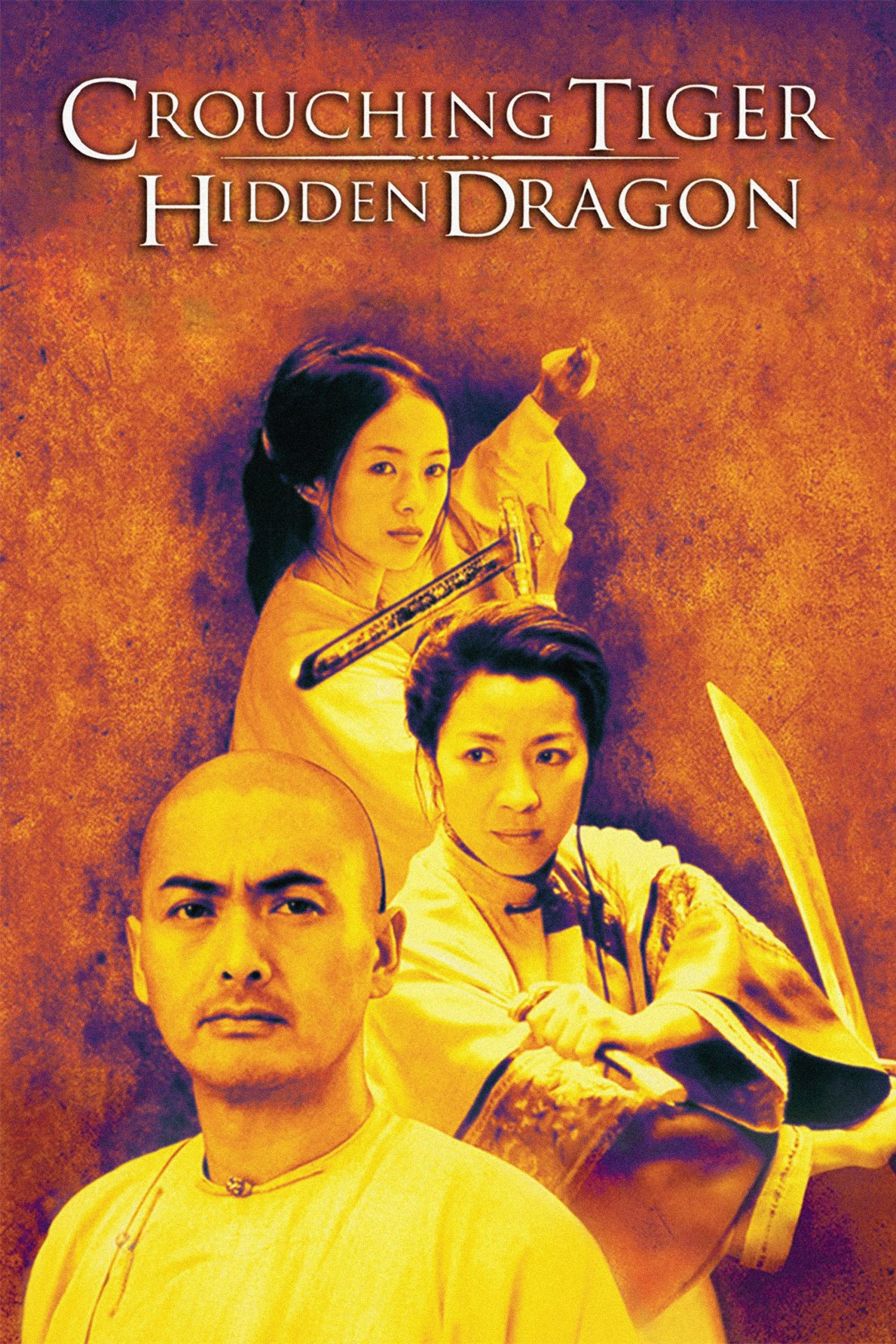
The Question of Truth Behind the Film
It struck me the first time I encountered Crouching Tiger, Hidden Dragon that audiences usually arrive with a question lingering just beneath any cinematic surface: “Did this really happen?” There’s something about historical or period films, especially one that evokes grand martial exploits and ancient codes, that triggers in me and in others an instinctive search for the “real story.” I know that I’m hardly alone here. For some, the allure of “based on true events” carries the promise of insight into another world or era; for others, it offers an anchor in the ever-shifting realm of mythic storytelling. When a film trades on a “true story” label, I notice that expectations of authenticity rise, as if the screen might briefly become a window onto untarnished reality. What I’ve found is that the boundary between fact and fiction in cinema is less a line and more a foggy borderland, fraught with assumptions—such as the idea that historical basis guarantees accuracy, or that familiar customs must be depicted exactly as they once were. For me, this preoccupation with truth adds a unique tension: it asks whether I should respond to the film as a document, a meditation, or a flight of fancy.
Historical Facts and Cinematic Interpretation
The interplay between “truth” and storytelling feels especially profound in a movie like Crouching Tiger, Hidden Dragon. When I look beneath its poetic title, I see that the film is not a direct re-telling of any single historical occurrence. Instead, it draws from the tradition-steeped Chinese wuxia literature—particularly Wang Dulu’s Crane-Iron Pentalogy—blending the mythic with the everyday. While the world onscreen echoes Qing Dynasty China’s landscape, martial traditions, and social hierarchies, I realize that these elements are choreographed and streamlined for narrative effect. For me, this means grappling with a film that invents within the shape of history rather than strictly reporting it.
Imagining the likely decisions made behind the scenes, I picture the filmmakers compressing the sprawling literary source into the focused tale of Li Mu Bai, Yu Shu Lien, and Jen Yu. They reorganize, amalgamate, and sometimes even obscure period-accurate details to heighten drama or emphasize emotion. For example, while the martial arts depicted are inspired by actual disciplines, they operate within a cinematic logic that intentionally blurs the plausible and the fantastic. Feats like weightless running atop bamboo groves or scaling rooftops in moonlit silence have poetic roots in ancient storytelling, yet are visually heightened in a way I could never confuse for documentary reality. It’s this selective stylization—taking core ideas from literature, re-arranging them, and inventing visual ways to express inner turmoil—that reveals how cinematic interpretation reshapes “fact” for artistic ends.
What Changes When Reality Is Shaped for Cinema
As I reflect on the transformation of raw reality into cinematic tapestry, I see an intricate negotiation between historical accuracy and the needs of the screen. Whenever I watch historical films, I notice that realism is often sacrificed to honor deeper resonances—emotional arcs, symbolic themes, or even rhythmic pacing. In Crouching Tiger, Hidden Dragon, these choices become particularly visible through the stylized action sequences and the formalized dialogue, which, while inspired by literary conventions, do not attempt to reconstruct the everyday speech or movement of Qing Dynasty China.
For me, the most visually distinctive trade-off emerges in the choreography of martial arts—the balletic duels defy both gravity and probability. If I step outside the story, I recognize that there’s no historical evidence of warriors leaping from branch to branch or gliding across rooftops. Yet these moments conjure a kind of emotional or psychological truth, embodying the aspirations and spiritual longing of their characters. Likewise, the romantic entanglements, secret loyalties, and moral codes are condensed and heightened beyond their literary origins, compressing expansive narrative threads into a tight, emotionally charged focus.
The implication, in my view, is that filmmakers prioritize elements designed to engage me viscerally and intellectually, sometimes at the expense of historical detail. Costuming, set design, and even hairstyle, though studied for period effect, often take on an idealized, symbolic quality. This mediation leaves me, as an audience member, with a hybrid reality: one foot in recognizable history, the other in a meticulously composed myth. I do not see this as a misstep, but as a conscious balancing act—one that invites me to invest emotionally without demanding that I suspend all disbelief regarding historical precision.
Audience Expectations and the “True Story” Label
Over the years, I’ve noticed just how differently people respond to a film depending on how it frames its relationship to truth. If a movie begins with “Based on a true story,” I tend to approach it with a mindset primed for authenticity, perhaps even hoping to glean insights into forgotten lives or misunderstood eras. In contrast, when a film is explicitly presented as inspired by fiction, I give myself permission to embrace the fantastical, the allegorical, or the outright dreamlike. With Crouching Tiger, Hidden Dragon, my experience hovers somewhere in between. The film’s foundation in established literary tradition gives it the sheen of cultural depth and historical resonance, yet it does not explicitly posture as a “true story.”
For me, this opens an intriguing interpretive space. I am encouraged to pay attention less to the archival details and more to the inner landscapes—longing, honor, loss—that transcend specific times and places. Friends and fellow viewers have sometimes told me that they were surprised by how real the world of the film feels despite its overt stylizations. For those unfamiliar with wuxia conventions, there can be initial confusion: Do these martial feats have some forgotten historical precedent? Are the characters analogs for actual heroes and villains of Chinese history? When the label of “true story” is absent, I find there is both more freedom and more ambiguity. I watch with less anxiety about what is “correct” and greater openness to the film’s poetic license.
On the other hand, when a film leans into its fictional nature, I’ve observed that audiences may become less forgiving of apparent inconsistencies or stylizations—sometimes dismissing emotional authenticity in favor of literal plausibility. Conversely, when “based on real events” is invoked, small deviations or artistic liberties can provoke strong reactions, as if the film owes fidelity to the historical record above all else. Crouching Tiger, Hidden Dragon sidesteps some of these pressures by existing in an interstitial zone: it draws from a reservoir of myth and tradition, but does not insist on any particular version of historical truth. This, for me, creates a unique viewing context. I am invited to see historical China not as a fixed tableau, but as a living idea—subject to reinvention through art.
Final Perspective on Fact vs Fiction
When I reflect on how awareness of factual versus invented elements shapes my understanding of Crouching Tiger, Hidden Dragon, I find that it encourages a mode of watching that values resonance over literalness. My perception of the film shifts depending on what I take to be “real.” If I approach every scene expecting a faithful re-enactment of Qing history, I become preoccupied with historical accuracy, perhaps scrutinizing costume details or researching the plausibility of martial techniques. I have done this in the past, only to find that such an approach narrows my engagement, boxing the film into a pedagogical role it never claimed for itself.
However, when I remind myself that the film is rooted in a long tradition of myth, legend, and literary imagination, I am able to participate more fully in its emotional truth. The film’s inventive use of martial arts and its rendering of cultural codes—however stylized—allow me to intuit the desires, constraints, and existential struggles of its characters. I do not find myself searching for a historical Li Mu Bai or Jen Yu; instead, I see these figures as archetypes, each exploring the tension between freedom and duty within a richly imagined past. My knowledge of the source material, and the film’s position in the wuxia tradition, rescues it from the conventional yardsticks of biographical or historical cinema.
For me, the awareness of what is invented, and what is borrowed from history or literature, enhances rather than diminishes my appreciation of the work. The film’s selective adaptation is not a “shortcoming,” but a declaration of intent: to build a world that resonates in timeless, human ways. This understanding influences how I talk about the film with others, how I revisit it, and how I teach myself to look—both for the specific echoes of history and the universal patterns of longing and transcendence. What is real, and what is imagined, become two sets of windows onto the same landscape. Each frame, each leap above the trees, reveals more than a simple recounting of past events ever could.
For additional context, you may also explore the film’s overview and how it was received by audiences and critics.
🎬 Check out today's best-selling movies on Amazon!
View Deals on Amazon