
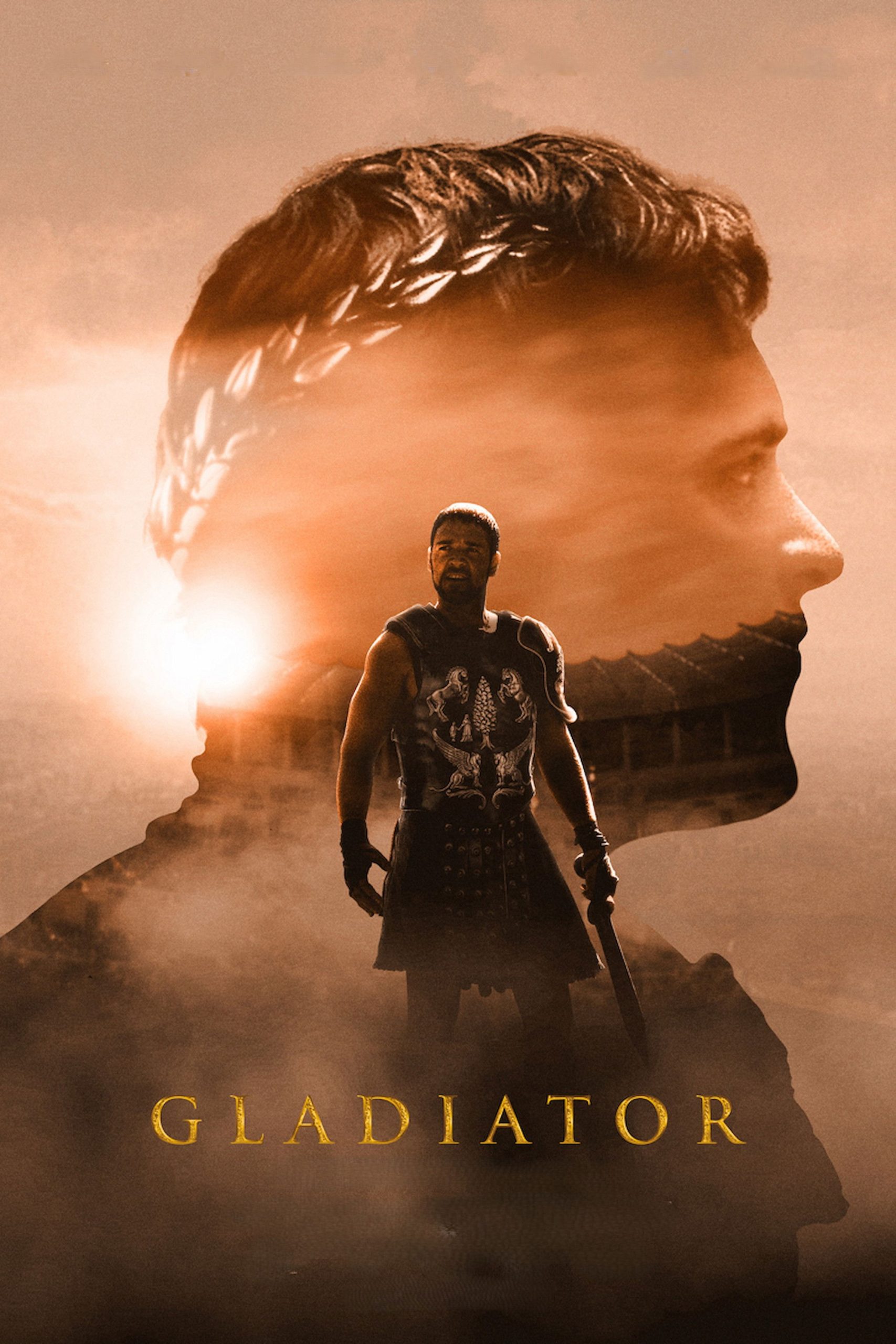
The Question of Truth Behind the Film
Encountering Gladiator for the first time, I remember being swept into its grandeur—dust rising off the Colosseum, the roar of the crowd vibrating through the screen, and the palpable clash of flesh and ambition. Yet even as I became engrossed in the journey of Maximus, a thread of curiosity tugged at me: how much of this was pulled from the annals of Roman history, and how much arose from the screenwriter’s imagination? This question isn’t simply academic for me; it colors the entire emotional experience of watching a film built on the bones of the past. I’ve noticed that when a movie claims to be “inspired by true events,” I instinctively bring a particular set of expectations—a readiness to view the narrative both as entertainment and as a window into a world long gone. There’s an assumption, almost a hope, that the story will teach me something authentic about ancient lives, ethical dilemmas, or the unstoppable tides of history. Yet, I’m always equally aware that cinematic storytelling can rarely serve pure fact. As I reflect on the way Gladiator frames its narrative, I recognize that it rides the line between documentary solemnity and mythic spectacle, constantly negotiating what it means to present history on a movie screen.
Historical Facts and Cinematic Interpretation
When I try to untangle what in Gladiator owes itself to history and what springs from invention, I realize just how elastic the boundary between the two can be. The reign of Emperor Commodus, to whom the film owes a central antagonist, forms a rough historical anchor; the real Commodus was indeed the son of emperor Marcus Aurelius and eventually met a violent end. However, the character of Maximus—this iconic general who becomes a slave and then rises through the ranks of the arena to challenge the emperor—emerges, as far as I can discern, out of a blend of composite biographies and dramatic necessity. He borrows attributes from figures who perhaps fought in the arena or resisted corrupt emperors, but he does not correspond precisely to any known person. When the film depicts Commodus murdering his father, all my prior readings of Roman history queue up to remind me that historians argue over whether Marcus Aurelius died of natural causes.
I’m struck by how the film compresses years of political shifts, the complexity of Roman government, and the messiness of real insurrections into a streamlined heroic narrative. I notice moments where minor historical figures are omitted, and events that likely unfolded gradually are packed into scenes of explosive drama. This isn’t simply a matter of minor tweaks—I find entire motivations reshaped, such as the film’s suggestion that Rome could return to being a republic, an idea tastefully mournful yet, as I’ve discovered, anachronistic by the time of Commodus. Watching Gladiator with even a basic prior knowledge of Rome, I recognize the careful reorganization of political facts to fit a framework familiar to contemporary audiences: the fallen hero, the corrupt ruler, and the ideal of liberty regained. The underlying reality, with its many shades of gray and scattered motivations, is recast into the clear moral contrasts cinema loves. And yet, I can’t really fault this—if only because I understand that the purpose isn’t to replicate a textbook but to capture something more immediate and comprehensible about power, loss, and vengeance.
What Changes When Reality Is Shaped for Cinema
Each time I watch a film that borrows from history’s ledger, I become acutely aware of the trade-offs directors, writers, and designers must navigate. In the case of Gladiator, prioritizing Maximus’s personal journey sometimes means eliding larger historical complexities. I appreciate how this focus allows audiences, myself included, to invest emotionally in a single protagonist’s turmoil, but I also notice that deeper layers—such as the day-to-day lives of Roman citizens and the philosophy undergirding the empire’s laws—are largely sacrificed. For me, this doesn’t represent a misstep but rather an illustration of the impossibility of being simultaneously comprehensive and dramatically efficient.
The condensing of months or years into cinematic minutes, or the invention of relationships and events never described in ancient texts, allows Gladiator to deliver a potent, driven narrative. Yet as someone who values historical detail, I can’t help pausing when something jars against what I know: for example, the Roman practice of succession wasn’t quite as straightforward as the film’s plot sketch suggests, and the Colosseum spectacles portrayed are more concentrated and bloodier than most archeological evidence supports. These creative liberties, while undeniably effective for drama, often reshape the internal logic of the real Rome into the logic of the screenplay.
In watching Gladiator, I’m reminded how the camera’s gaze, set design, and costuming come together to reinforce a vision that is perhaps truer to mythic memory than to daily reality. The hues, dust, and blood play into what I imagine ancient Rome to have felt like—informed as much by literature and popular culture as by actual archaeological remains. The result, to my eyes, is a story that feels real even as it diverges from the detailed timelines and political intrigue that characterized the historical period. I find myself reflecting on whether I prefer narrative truth or factual truth, and I notice that the film seems more invested in resonance than in detail. It’s a balance I find both necessary and endlessly debatable.
Audience Expectations and the “True Story” Label
The phrase “based on a true story” acts on me almost like a promise—I expect honesty, or at least a certain respect for documented fact. However, when a film like Gladiator leans heavily on this phrase without spelling out where invention begins, I sense a unique kind of tension in the audience’s response. In post-screening discussions, I’ve observed my friends and fellow viewers parsing what they believe to be true—did Commodus really die in the arena? Was there an actual general-turned-slave hero like Maximus? That ambiguity becomes part of the movie’s legacy, shaping not just how the story is received but how history itself is later remembered in popular conversation.
I realize that knowing the film isn’t a direct retelling of factual events changes my immersion. At times, I find myself pulled out of the immediacy of the story, second-guessing the authenticity of what I’m seeing, checking details in my mind or on my phone while the credits roll. Yet the awareness of fabrication can also be freeing; it permits me to see the story’s emotional or thematic resonance as more important than its documentary value. Other times, I notice a mild sense of disappointment among those who discover after watching that much of what they saw was reshaped or invented—a quiet irritation that the promise implicit in “true story” marketing hasn’t been fully kept. Conversely, for viewers who treat the film as pure fiction, I see a tendency to accept greater flights of fancy, to relax into the spectacle without expecting a civics lesson.
There’s a fascinating spectrum of responses: some seem to value the liberties taken as essential for storytelling, others treat them as misleading. Personally, I oscillate—I sometimes appreciate that the lines are blurred, recognizing that strict adherence to history could yield a more diffuse, less compelling film. Other times, I wonder whether the mythic approach sacrifices potential engagement with messier, richer truths. Yet I never really expect a perfect marriage between fact and fiction on screen; I simply become more aware of where the boundaries lie, and how those boundaries accentuate certain ideas about heroism, morality, or cultural transformation.
Final Perspective on Fact vs Fiction
Reflecting on my experience with Gladiator, I keep returning to the idea that knowing the extent of the film’s historical liberties fundamentally shifts the framework within which I interpret what unfolds onscreen. If I approach the film as a facsimile of Roman history, I find myself focusing on what’s missing or altered—wondering, for example, about the philosophy of Marcus Aurelius or the true scope of Commodus’s villainy. But if I come to the movie understanding that it uses the past as a scaffolding for broader narrative concerns, I notice how the thematic content—questions about loyalty, corruption, the nature of vengeance—come to the fore.
This dual awareness doesn’t lead me to reject what the film has crafted; rather, I view it as an opportunity to revisit the ancient world from a different vantage point. I find myself engaging with history as a series of stories, sometimes literal and sometimes reimagined for modern needs. Knowing the interplay between fact and invention allows me to separate the pleasures of cinematic immersion from the pleasures of historical reconstruction, appreciating both as valid but distinct experiences. I also realize that the gaps and divergences are themselves sources of curiosity—they prompt me to research, to read, and to seek out other interpretations of Rome.
Ultimately, whether the factual record aligns with the spectacle of Gladiator only matters to me insofar as it shapes the questions I bring to the film. When I am aware of the creative rewrites, I find my appreciation for the movie’s artistry enhanced rather than diminished—I see the conscious molding of raw material into a narrative capable of stirring collective imagination. At the same time, I carry with me a keener awareness of the mileposts and crossroads between what happened and what is performed. My understanding becomes more layered, less certain—and perhaps, in the end, that uncertainty is both the price and the gift of cinema’s relationship to history.
For additional context, you may also explore the film’s overview and how it was received by audiences and critics.
🎬 Check out today's best-selling movies on Amazon!
View Deals on Amazon